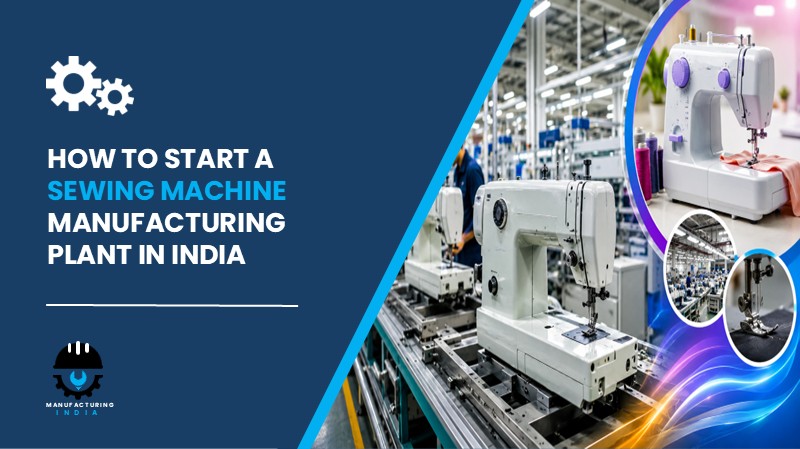
Sewing Machine Manufacturing Plant in India
Setting up a sewing machine manufacturing plant in India presents a compelling investment case backed by the country’s expanding apparel manufacturing sector, rapid growth in textile processing, and a surging consumer base for home sewing and DIY crafting activities. Sewing machines are critical to India’s industrial fabric the power the garment factories of Tirupur and Ludhiana, support automotive upholstery production, enable the home furnishing industry, and equip millions of small-scale tailoring businesses across the country. As the primary machinery behind both mass-scale apparel production and precision craft work, sewing machines occupy an irreplaceable position across India’s diverse manufacturing economy.
India’s advantages for this investment are structural and long-lasting. The Make in India initiative has actively encouraged domestic manufacturing of precision engineering products, reducing dependence on imports. Competitive land and labour costs, robust supplier ecosystems in states such as Gujarat, Tamil Nadu, Punjab, and Maharashtra, and a large addressable domestic market make India strategically sound for establishing a sewing machine production unit. As global brands increasingly seek supply chain diversification out of East Asia, India-based manufacturers are well-positioned to serve both domestic demand and export markets across South Asia, Africa, and the Middle East.
Establishing a sewing machine manufacturing plant in India combines policy support through Make in India, cost-competitive production backed by a skilled engineering workforce, and strong demand from the apparel, textile, home furnishing, and automotive upholstery sectors. With the global sewing machine market growing at a CAGR of 4.4% and projected to reach USD 10.92 Billion by 2034, the financial case for India-based production supported by attractive margins and a clear break-even pathway is both timely and viable.
What is a Sewing Machine?
A sewing machine is a mechanical or computerized device designed to stitch fabric and other materials together using thread. It automates the process of sewing, significantly increasing efficiency and consistency compared to manual stitching. Sewing machines are widely used in both domestic and industrial settings, catering to various applications including garment construction, upholstery, embroidery, and textile manufacturing.
These machines are available in several types mechanical, electronic, and computerized models each offering specific features tailored to different user needs. Advanced machines often include programmable functions, automatic thread cutters, and multiple stitch patterns. Sewing machines exist in four different operating modes: manual, electric, computerized, and fully automated, enabling users to create stitch patterns ranging from straight stitch and zigzag stitch to overlock stitch and embroidery designs. The machines are strong, speed-controlled, and programmable, making them vital equipment for garment manufacturing, upholstery production, and household tailoring.
The primary production method involves metal casting, CNC machining, component assembly, motor integration, electronic board installation, calibration, and quality testing. The end-use industries served include apparel manufacturing, textile processing, home furnishing, automotive upholstery, and small-scale tailoring businesses.
Cost of Setting Up a Sewing Machine Manufacturing Plant in India
The total investment required to establish this facility depends on plant capacity, technology choices, degree of automation, site location, and regulatory compliance obligations.
1. Capital Expenditure (CapEx)
Land and site development form the first major capital outlay. Investors may consider industrial estates, MIDC-notified zones in Maharashtra, GIDC plots in Gujarat, or Special Economic Zones (SEZs) offering tax benefits and pre-developed infrastructure. Site selection must prioritise proximity to raw material suppliers and distribution corridors.
Civil works cover construction of the production shed, quality control laboratory, raw material storage area, finished goods warehouse, and administrative block. The layout must be optimised for workflow efficiency with clearly designated zones for each production stage, including space for future capacity expansion.
The machinery and equipment investment represents the largest capital component of this unit. Key machinery required includes:
- CNC machines
- Metal casting systems
- Motor winding machines
- PCB assembly lines
- Testing benches
- Automated calibration equipment
Other capital costs include effluent treatment systems where applicable, pre-operative expenses, commissioning charges, and import duties on specialised components sourced internationally.
Request a Sample Report for In-Depth Market Insights: https://www.imarcgroup.com/sewing-machine-manufacturing-plant-project-report/requestsample
2. Operational Expenditure (OpEx)
Raw material cost is the dominant recurring expense for this type of plant. The primary inputs include die-cast parts, motors, needle bars, bobbins, and plastic or metal housing components. Securing long-term supplier contracts — ideally with domestic vendors in precision engineering hubs stabilises input costs and reduces procurement risk. Minimising transportation costs by selecting suppliers in nearby industrial corridors is a key procurement strategy recommended in the IMARC project report.
Utility costs encompass electricity (powering CNC machines, casting systems, and assembly lines), water, and compressed air for assembly operations. Other operating costs include inbound and outbound transportation, packaging materials, staff salaries across production, quality control, and administrative functions, routine maintenance, depreciation on plant and machinery, and applicable taxes. Investors should model a 5-year cost increase projection accounting for raw material price movements, utility tariff revisions, and wage inflation.
3. Plant Capacity
The facility’s output capacity can be customised to meet investor requirements and market demand projections. Profitability improves materially with higher capacity utilisation, as fixed costs — civil infrastructure, machinery depreciation, and core workforce salaries are spread over a larger production volume. This makes operating at or above rated capacity a key driver of financial performance.
4. Profit Margins and Financial Projections
A detailed financial model for this type of plant includes analysis of Net Present Value (NPV), Internal Rate of Return (IRR), payback period, gross margin, and net margin. Sensitivity analysis and uncertainty modelling help investors stress-test the project under varying raw material costs, selling prices, and capacity utilisation scenarios. Income projections, fixed versus variable cost mapping, and a comprehensive profit and loss account are all components of a professionally prepared feasibility study for this investment.
Why Set Up a Sewing Machine Plant in India?
Growing Apparel and Textile Sector Demand. India’s apparel manufacturing industry is a large-scale consumer of industrial sewing machines, with thousands of garment factories across major production clusters. The growing demand for efficient textile production equipment in this sector directly drives investment viability for domestic sewing machine manufacturers.
Rising Adoption of Automated Stitching Solutions. Industrial manufacturing units across India are increasingly adopting automated stitching solutions to improve productivity, reduce cycle times, and maintain stitch consistency. This shift creates sustained demand for electronically advanced and fully computerized sewing machine models with programmable functions.
Home Sewing and DIY Crafting Growth. Increasing interest in home sewing, customisation culture, and DIY crafting activities has expanded the consumer segment for mechanical and electronic sewing machines in India. Growth in e-commerce platforms has also boosted accessibility to sewing machines and related accessories, supporting retail market expansion.
Policy and Regulatory Tailwinds. The Make in India initiative actively supports precision engineering and machinery manufacturing, with incentives available for new manufacturing units established in designated industrial zones and SEZs. State-level industrial policies in Gujarat, Tamil Nadu, and Maharashtra further reduce entry costs for new manufacturers.
Cost-Competitive Manufacturing Base. India’s competitive land acquisition costs, availability of skilled engineering labour, and a well-developed domestic supplier ecosystem for metal castings, motors, and electronic components provide a strong cost advantage relative to manufacturing in higher-cost economies. Selecting suppliers in nearby industrial corridors further minimises operational costs.
Active Global Market Expansion. The global sewing machine market was valued at USD 7.41 Billion in 2025 and is projected to reach USD 10.92 Billion by 2034 at a CAGR of 4.4%. An India-based production facility is well-positioned to capture a share of this growing market through both domestic sales and export-oriented supply to neighbouring markets.
Manufacturing Process Step by Step
The sewing machine manufacturing process uses metal casting, CNC machining, component assembly, motor integration, electronic board installation, calibration, and quality testing as the primary production methodology. Each stage is interconnected, and quality control runs throughout the process flow.
- Metal Casting: Raw die-cast parts and housing components are produced using metal casting systems, forming the structural frame and key mechanical parts of the machine.
- CNC Machining: Cast metal parts are precision-machined using CNC machines to exact dimensional tolerances required for component fit and functional reliability.
- Component Sub-Assembly: Individual sub-assemblies including needle bar units, bobbin mechanisms, and motor housings are prepared in designated work zones.
- Motor Integration: Electric motors are integrated into the machine frame using motor winding machines and appropriate mechanical fixtures, connecting the drive system to the stitch mechanism.
- PCB and Electronic Board Installation: For electronic and computerized models, PCB assembly lines are used to mount and connect electronic control boards, enabling programmable stitch functions and automation features.
- Calibration: Automated calibration equipment is used to set stitch parameters, tension settings, and speed controls to manufacturer specifications.
- Quality Testing: Completed machines are subjected to performance testing on testing benches, verifying stitch quality, speed, noise levels, and safety compliance before clearance.
- Packaging and Dispatch: Quality-cleared machines are packaged and dispatched to apparel manufacturers, textile processors, home furnishing producers, automotive upholstery firms, and small-scale tailoring businesses.
Key Applications
Sewing machines manufactured at this facility serve a broad range of industries, from large-scale industrial users to household consumers.
- Apparel Manufacturing – Used for high-speed garment stitching across all fabric types including cotton, denim, knitwear, and synthetics in factory settings.
- Textile Processing – Supports industrial fabric joining, finishing operations, and textile assembly in processing units.
- Home Furnishing – Applied in the production of curtains, cushions, bed linen, and other soft furnishing products.
- Automotive Upholstery – Used for stitching car seat covers, headrests, and interior fabric components requiring durable, consistent seam quality.
- Small-Scale Tailoring Businesses – Powers tailoring shops, boutiques, and custom clothing operations requiring versatile, reliable stitch performance.
- Embroidery and Decorative Textile Work – Enables embroidery, quilting, leather stitching, and decorative fabric design across craft and industrial applications.
Leading Manufacturers
The global sewing machine market includes a mix of long-established Japanese, European, Chinese, and American manufacturers, all of whom represent competitive benchmarks for a new India-based production facility.
- Brother Industries Ltd.
- Bernina International AG
- New Jack Sewing Machine Co. Ltd.
- Jaguar International Corporation
- Janome Sewing Machine Co. Ltd.
- Elna International Corp. SA
- Juki Corporation
- Million Special Industries Co. Ltd.
- Necchi Macchine per cucire S.r.l.
- Pegasus Sewing Machine Mfg. Co. Ltd.
- SEIKO Sewing Machine Co. Ltd.
- SGSB Group Co. Ltd.
- Singer Sewing Company
- SiRUBA
- SunStar Precision Co. Ltd.
- SVP Worldwide
- TAJIMA Group
- Xi’an Typical Industries Co. Ltd.
- Zhejiang Doso Sewing Machine Co. Ltd.
Timeline to Start the Plant
The following phases outline a realistic implementation roadmap for this type of facility in India:
- Feasibility study and project report preparation
- Land acquisition and site development
- Regulatory approvals and environmental clearances
- Factory licence and fire safety compliance
- Machinery procurement and installation
- Raw material supplier agreements and supply chain setup
- Trial production and quality testing
- Commercial production launch
Licences and Regulatory Requirements
Starting a sewing machine manufacturing unit in India requires several approvals:
- Business registration (Proprietorship, LLP, or Pvt Ltd)
- Factory Licence under the Factories Act
- Environmental Clearance from State Pollution Control Board
- GST Registration
- Fire Safety NOC
- Effluent Treatment Plant (ETP) operational clearance
- Occupational Health and Safety compliance
Key Challenges to Consider
High Capital Requirements. Establishing a precision manufacturing unit with CNC machining, metal casting systems, PCB assembly lines, and automated calibration equipment demands substantial upfront capital investment, making pre-project financial planning and phased investment strategies essential.
Raw Material Price Volatility. The cost of key inputs die-cast parts, electric motors, needle bar assemblies, bobbins, and housing components is subject to price fluctuations driven by global metal markets and supply chain disruptions. Long-term supplier contracts and multi-vendor sourcing strategies help mitigate this risk.
Regulatory Compliance. Meeting environmental clearance requirements, maintaining ETP operations, and adhering to factory safety and occupational health norms requires dedicated compliance investment and ongoing monitoring.
Technology and Innovation Pressure. The sewing machine market is driven by rapid technological advancement, including the integration of smart features, automation, and computerized controls. Manufacturers must keep product lines current to remain competitive against established global players.
Competition from Global Players. Competing with deeply established international manufacturers such as Brother Industries Ltd., Juki Corporation, Singer Sewing Company, and Janome Sewing Machine Co. Ltd. requires differentiated product positioning, competitive pricing, and strong after-sales support networks in the Indian market.
Skilled Manpower. Operating CNC machines, PCB assembly lines, and automated calibration systems requires trained technical personnel. Recruiting and retaining skilled engineers and technicians in precision manufacturing disciplines is a recurring operational challenge.
Frequently Asked Questions
1. How much does it cost to set up a sewing machine manufacturing plant in India? The total investment depends on plant capacity, technology, automation level, and location. A detailed feasibility study covering CapEx and OpEx is essential for accurate project budgeting.
2. Is sewing machine manufacturing profitable in India in 2026? Yes, the global sewing machine market is valued at USD 7.41 Billion and growing at 4.4% CAGR, with strong domestic demand across apparel, textile, and home furnishing sectors supporting profitable operations at viable capacity levels.
3. What machinery is required for a sewing machine plant in India? Key equipment includes CNC machines, metal casting systems, motor winding machines, PCB assembly lines, testing benches, and automated calibration equipment.
4. What licences and approvals are required to start a sewing machine plant in India? Required approvals include business registration, Factory Licence under the Factories Act, Environmental Clearance, GST Registration, Fire Safety NOC, ETP clearance, and Occupational Health and Safety compliance.
5. What raw materials are needed for sewing machine manufacturing? The primary raw materials are die-cast parts, electric motors, needle bars, bobbins, and housing components.
6. What are the environmental compliance requirements for a sewing machine plant in India? Operators must obtain Environmental Clearance from the State Pollution Control Board and maintain an operational Effluent Treatment Plant, in addition to adhering to factory health and safety regulations.
7. What is the best location to set up a sewing machine plant in India? States with strong precision engineering ecosystems and apparel industry clusters including Tamil Nadu, Punjab, Gujarat, and Maharashtra are strong candidates, offering supplier proximity, skilled labour, and developed industrial infrastructure.
8. What is the break-even period for this type of plant in India? The break-even period depends on capacity utilisation, selling price realisation, and operational efficiency. A professionally prepared project report with NPV and IRR analysis provides investor-specific projections.
9. What government incentives are available for manufacturers in India? Investors may access benefits under the Make in India programme, state industrial policies, SEZ incentives, and capital subsidy schemes available through state industrial development corporations.
Key Takeaways for Investors
A sewing machine manufacturing plant in India offers access to high-growth demand from the apparel manufacturing, textile processing, home furnishing, automotive upholstery, and small-scale tailoring sectors, all of which are expanding in scale and sophistication. The investment is financially viable across a range of plant capacities, with profitability scaling meaningfully at higher utilisation levels and supported by detailed NPV, IRR, and payback analysis available through a formal project report. The global sewing machine market, valued at USD 7.41 Billion in 2025 and projected to reach USD 10.92 Billion by 2034 at a CAGR of 4.4%, confirms robust and sustained long-term demand. As India’s manufacturing infrastructure matures and domestic consumption continues to grow, an India-based production unit is structurally positioned to deliver durable returns across a multi-decade investment horizon.
About the Author