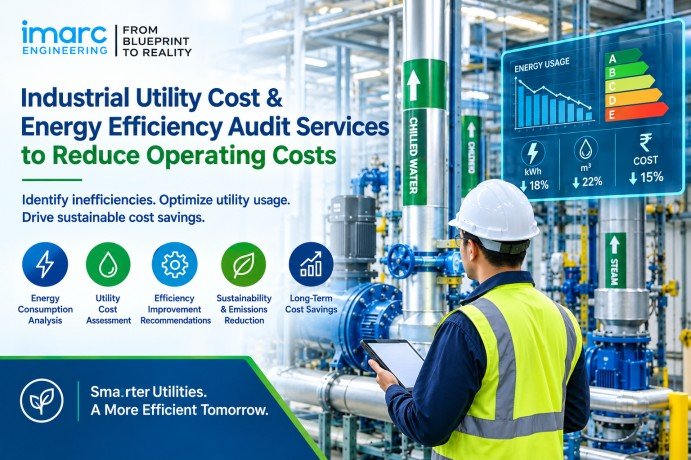
Industrial Utility Audit and Efficiency
If your electricity and fuel bills keep rising while output stays flat , or even drops , it’s worth asking why. The cause isn’t always the tariff. In many plants, however, a significant part of the increase can originate inside the facility , from inefficient equipment, outdated operating setpoints, utility losses, changing load profiles, or systems that are no longer matched to current production. None of this shows up on a monthly bill. It only shows up when someone actually measures it.
That’s what an industrial utility cost and energy efficiency audit does. It isn’t a generic checklist exercise , it’s a structured, measurement-based investigation into where a plant’s energy is going, why it’s being lost, and what it would take to recover it.
This guide covers how such an audit works, what it should include, and how to judge whether the findings are worth acting on.
Why Factory Utility Costs Rise Even When Production Doesn’t
Efficiency rarely erodes in one dramatic event. It happens gradually:
- Equipment is sized for a production volume that no longer matches current output
- Maintenance teams fix breakdowns but rarely revisit efficiency
- Utility systems (compressed air, steam, HVAC) run on legacy setpoints nobody questions
- Limited sub-metering makes it hard to say which line, shift, or department is driving the bill
- Expansions get added onto existing utility infrastructure instead of triggering a fresh capacity review
What Does an Industrial Utility & Energy Efficiency Audit Cover?
A proper audit doesn’t stop at the electricity meter. It typically examines these interconnected systems:
- Electrical distribution , transformer loading, power factor, harmonics, distribution losses
- Electrical cost structure , maximum demand, load factor, time-of-day consumption, tariff structure
- Compressed air , leakage, pressure settings, compressor sequencing
- Steam and boilers , combustion efficiency, blowdown losses, trap condition, insulation
- Motors, pumps, and fans , loading, oversizing, throttling losses
- HVAC and chillers , COP, part-load performance, control logic
- Process heating and waste heat , furnace/oven losses, unrecovered exhaust heat
- Water and refrigeration systems , pumping and treatment energy
- Utility monitoring , sub-metering, energy dashboards, energy performance indicators (EnPIs)
- Renewable and alternative energy potential , rooftop solar, waste heat recovery, electrification opportunities
How an Industrial Energy Audit Works
- Baseline development , utility bills, production records, operating hours, and equipment data are pulled together, ideally over more than one year.
- Utility mapping , tracing how energy actually moves through the plant, from incoming power or fuel to the point of use, exposes where it’s transformed, distributed, and lost.
- Field measurement , depending on audit scope, this may include ultrasonic leak detection, power-quality analysis, thermal imaging, electrical load monitoring, flow and pressure measurement, combustion analysis, and temperature profiling.
- Energy balance , purchased energy rarely equals useful energy delivered to the process; the gap is where savings potential lives.
- Normalization consumption is expressed as Specific Energy Consumption (SEC) , energy per tonne, unit, batch, or operating hour , so figures are comparable across periods and production levels.
- Opportunity identification , findings are converted into Energy Conservation Measures (ECMs), each tied to a specific system and root cause.
- Financial evaluation , every ECM should answer: what is wrong, how much energy is being lost, how much money can be saved, what investment is required, and how the savings will be verified.
- Prioritization , measures are sequenced by impact, cost, and payback, with no/low-cost fixes typically implemented first.
- Measurement & verification , a defined process for confirming that projected savings actually materialize after implementation.
Where Industrial Plants Commonly Lose Energy
A few patterns turn up across most audits:
- Compressed-air leaks create continuous demand on compressors even when production hasn’t changed. Impact depends on leak size, pressure, compressor efficiency, and operating hours , which is why leakage should be measured, not estimated from a rule of thumb.
- Steam traps stuck open can leak live steam for months without detection, since the sound blends into normal plant noise.
- Oversized motors can run well below their intended load range for extended periods, potentially increasing avoidable losses , a condition only confirmed through actual load measurement.
- Chillers and HVAC systems often run on setpoints configured years ago, rarely revisited after production or occupancy patterns change.
- Limited sub-metering means consumption spikes get treated in aggregate instead of traced to their source.
Many of these opportunities can begin with low- or moderate-cost corrective actions, although some findings may lead to larger retrofit or replacement projects.
Energy Efficiency Planning for Greenfield Projects
Greenfield projects have an advantage brownfield plants don’t: utilities can be sized correctly from the outset rather than retrofitted later. A greenfield energy-efficiency assessment can help determine:
- Electrical load and demand profile
- Boiler and compressed-air capacity requirements
- Chilled-water and HVAC loads
- Utility redundancy and future expansion allowance
- Sub-metering architecture from day one
- Energy-efficient equipment selection
- Renewable integration potential
- Realistic utility operating-cost benchmarks
Brownfield Utility Optimization & Expansion
Brownfield plants rarely have that luxury. Production volumes shift, product mixes change, and lines get added , but the compressors, boilers, and chillers installed years ago often stay untouched. A brownfield audit isn’t just about finding waste; it answers a more specific question: is the existing utility infrastructure still matched to what the plant actually produces today, or is it carrying capacity , and cost , for a production profile that no longer exists?
A brownfield utility audit should typically examine installed capacity versus actual demand, peak versus average load, equipment utilization and age, redundancy requirements, bottlenecks that could constrain future expansion, control-system limitations, and retrofit-versus-replacement economics.
This matters most before an expansion decision, since it determines whether new capacity can be added within existing utility infrastructure or whether the utility plant itself needs re-engineering first.
ISO 50002-1:2025 Energy Audit Levels
ISO 50002-1:2025, published in June 2025 as the current international standard for energy audits, recognizes three tiers:
- Level 1 , Walk-through audit: a quick visual and data-based screening to flag obvious losses and decide if deeper investigation is worthwhile
- Level 2 , Detailed survey: field measurement and analysis of major utility systems, with quantified savings estimates
- Level 3 , Comprehensive engineering analysis: full instrumentation, energy balance, and investment-grade financial modeling
A plant preparing for a brownfield expansion or a major utility CAPEX decision may require a Level 2 or Level 3 audit, depending on project complexity. Facilities subject to India’s PAT requirements should align the audit scope with the applicable BEE guidelines.
BEE, PAT & Specific Energy Consumption
India’s Bureau of Energy Efficiency uses Specific Energy Consumption as a core framework under its Perform, Achieve and Trade (PAT) mechanism for designated energy-intensive consumers. For facilities covered under PAT, production-normalized energy performance can support both compliance-related analysis and day-to-day operational cost management , though PAT applicability depends on whether a facility qualifies as a designated consumer under the applicable rules.
What Should an Industrial Energy Audit Report Include?
A useful audit report should give a plant head or CFO enough to act without further translation:
- Utility consumption baseline and energy balance
- Specific Energy Consumption benchmarks
- Utility system performance findings
- Identified losses and their root causes
- Energy Conservation Measures with annual energy-saving potential
- Annual monetary savings and CAPEX estimate for each measure
- Simple payback period
- Implementation priority
- Measurement & verification plan
- Brownfield expansion or greenfield capacity implications, where relevant
How to Verify Energy Savings After Implementation
An audit identifies potential savings; actual savings depend on implementation, operating conditions, and verification. A sound M&V approach compares:
- Baseline-period consumption against post-implementation consumption
- Production-normalized figures, not raw totals
- Adjustments for operating-condition changes (weather, shift patterns, product mix)
- Meter data and EnPIs tracked over time
This step closes the loop between identified savings → approved project → implemented savings → verified savings, and is what distinguishes a credible audit from a one-time report.
How IMARC Engineering Can Help
IMARC Engineering provides industrial utility and energy-efficiency assessment support for both greenfield and brownfield manufacturing projects. This can include utility baseline development, field measurement, energy balance, system-level performance assessment, energy-saving opportunity identification, financial evaluation, and implementation planning across electrical systems, compressed air, steam, boilers, HVAC, chillers, motors, pumps, and process utilities.
Speak With An Expert: https://www.imarcengineering.com/contact?service=utility-cost-energy-efficiency-audits
Conclusion
Industrial utility costs can significantly affect manufacturing profitability, particularly when inefficient equipment, utility losses, outdated operating conditions, or mismatched capacity remain unnoticed. A structured utility cost and energy efficiency audit helps move beyond assumptions by measuring actual consumption, identifying root causes of energy losses, and converting findings into practical Energy Conservation Measures.
The objective is not simply to reduce energy consumption, but to build a more efficient, cost-effective, and sustainable utility infrastructure that supports reliable production and future capacity requirements.
FAQs
What is an industrial energy efficiency audit?
A structured assessment that measures how a plant’s utility systems consume energy and identifies opportunities to reduce cost without affecting production reliability.
How much can a factory save through an energy audit?
Savings vary by plant, equipment condition, and implementation , an audit quantifies the specific potential rather than offering a generic figure.
What is Specific Energy Consumption (SEC)?
Energy consumed per unit of production output, used to compare efficiency across time periods and production volumes.
When should a brownfield plant conduct an energy audit?
Before a capacity expansion, major utility replacement, or when utility costs have risen without a clear operational explanation.
What is an investment-grade energy audit?
A Level 3 audit under ISO 50002-1:2025, providing detailed engineering and financial analysis suitable for capital investment decisions.
Contact Us:
IMARC Engineering
Phone: +91-120-433-0800
Email: sales@imarcengineering.com
India: C-130, Sector 2, Noida, Uttar Pradesh 201301
LinkedIn: https://www.linkedin.com/showcase/imarc-engineering/
About the Author