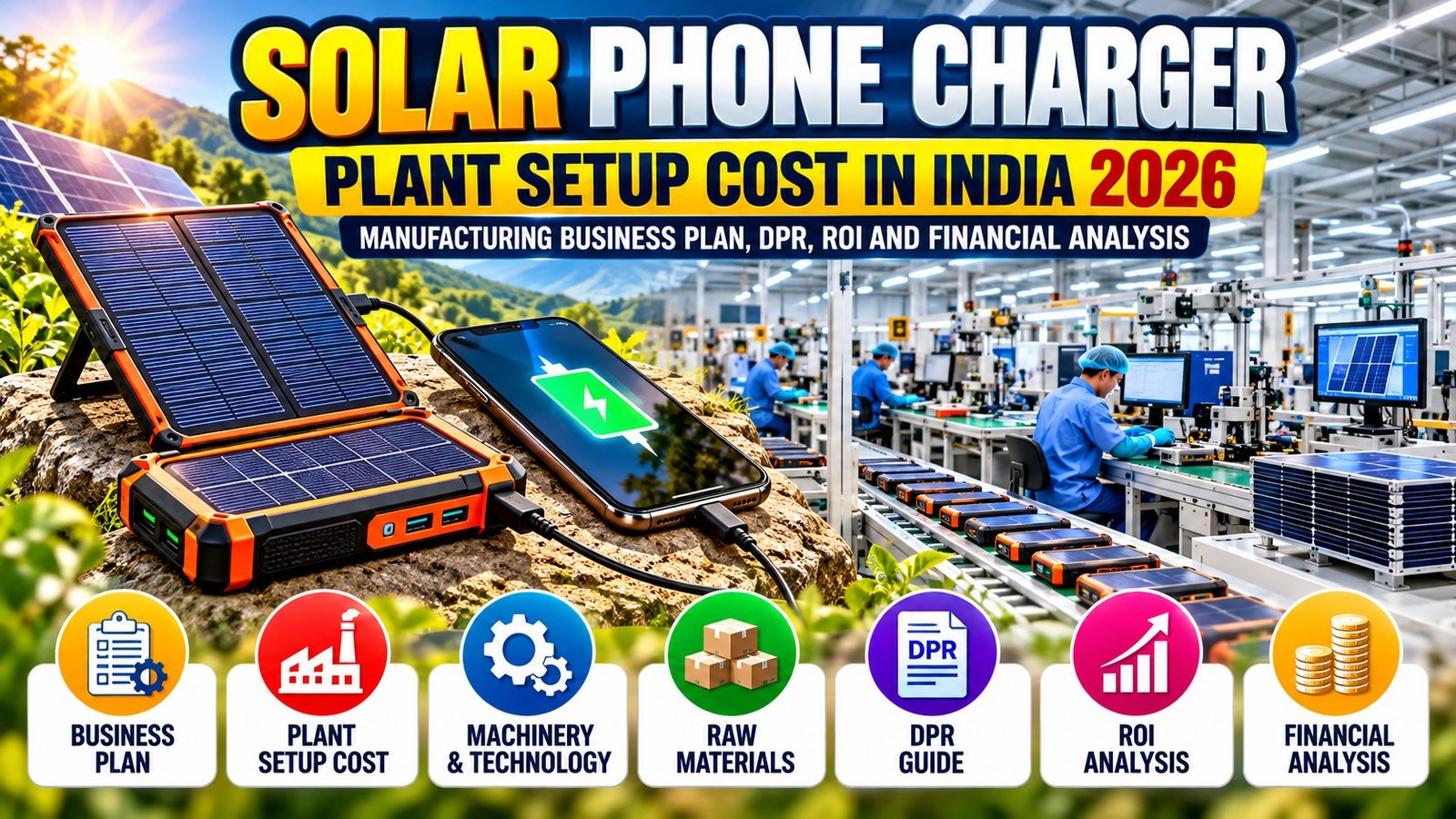
Setting up a solar phone charger manufacturing plant in India presents a compelling investment case, given demand from consumer electronics, telecommunications, travel and outdoor equipment, emergency power solutions, renewable energy, and personal electronics sectors. Growing focus on reducing dependence on conventional electricity sources is encouraging innovation among manufacturers, with APAC already the largest regional market at about 42.0% of global share.
India’s renewable energy momentum positions the country as a strategically sound location for this production. As per the Ministry of New and Renewable Energy, India added a record 44.5 GW of renewable energy capacity in 2025, reflecting a policy and infrastructure environment supportive of solar-powered products such as portable chargers.
Backed by APAC’s 42.0% share of the global market, gross margins of 20–30%, and India’s record 44.5 GW of renewable energy capacity added in 2025, this investment offers a cost-competitive route into portable solar electronics, with steady demand from outdoor, off-grid, and emergency-power segments supporting sound break-even viability.
What is Solar Phone Charger?
A solar phone charger is a portable device that uses sunlight to create electrical power for a mobile phone. It collects energy from the sun with small solar panels and converts that light into safe power for the battery, letting a person charge their phone anywhere outside without a wall outlet.
The solar phone charger manufacturing process uses solar cell assembly, PCB assembly and soldering, battery spot welding, charge controller testing, housing assembly, USB connector assembly, electrical testing, and charging performance testing. This method serves end-use industries such as consumer electronics, telecommunications, travel and outdoor equipment, emergency power solutions, renewable energy, and personal electronics.
Cost of Setting Up a Solar Phone Charger Manufacturing Plant in India
The cost of a solar phone charger manufacturing plant depends on capacity, technology, location, automation, and regulatory compliance.
1. Capital Expenditure (CapEx)
Capital investment covers land acquisition, site preparation, and infrastructure, optimized through industrial estates or SEZ-linked plots with developed utilities and faster approvals. Civil works cover the production shed, laboratory, storage areas, and administrative block.
Machinery is the largest portion of capital expenditure for a solar phone charger manufacturing plant, since equipment costs scale with automation level and capacity. Key machinery required includes:
- Solar cell assembly machines
- PCB assembly and soldering stations
- Battery spot welders
- Charge controller testing systems
- Ultrasonic welding or housing assembly machines
- USB connector assembly tools
- Electrical testing equipment
- Charging performance testers
- Packaging machines
Other capital costs include effluent treatment, monitoring systems to detect leaks or process deviations, pre-operative and commissioning expenses, and import duties.
Request a Sample Report for In-Depth Market Insights: https://www.imarcgroup.com/solar-phone-charger-manufacturing-plant-project-report/requestsample
2. Operational Expenditure (OpEx)
Raw material cost is the largest OpEx component, at approximately 55–65% of total OpEx, comprising solar cells, charge controller IC, Li-ion battery cell, PCB substrate, polycarbonate/ABS housing, and USB connector. Long-term supplier contracts help stabilize pricing and secure consistent supply.
Utility cost, covering electricity, water, and steam, accounts for approximately 8–12% of OpEx. Other costs include transportation, packaging, salaries, depreciation, taxes, and maintenance. By the fifth year, operational cost is expected to rise on inflation, market fluctuations, and supply chain disruptions.
3. Plant Capacity
The proposed facility is designed with an annual manufacturing capacity ranging between 5–20 million units, enabling economies of scale while maintaining flexibility. Capacity can be customized to investor requirements, and profitability improves with higher capacity utilisation as fixed costs spread across greater output.
4. Profit Margins and Financial Projections
Financial projections cover net present value (NPV), internal rate of return (IRR), payback period, liquidity, and profitability analysis. Under normal conditions, a solar phone charger manufacturing plant typically shows gross margins of 20–30% and net margins of 7–14%, reflecting profitability supported by stable demand and value-added applications.
Why Set Up a Solar Phone Charger Plant in India?
Crucial Off-Grid Charging Solution: These devices provide an accessible source of portable power for charging smartphones and other small electronics, particularly in remote, off-grid, and outdoor environments, positioning them as practical products for emergency preparedness, travel, and rural connectivity.
Moderate but Justifiable Entry Barriers: While requiring lower capital than conventional power-electronics manufacturing, consistent solar panel efficiency, battery performance, charging compatibility, compact design, and safety standards create entry hurdles favouring experienced producers focused on reliability and competitive pricing.
Megatrend Alignment: The rapid growth of smartphones, outdoor recreation, remote connectivity, off-grid applications, and decentralized renewable energy is driving demand for portable solar charging solutions, with rising consumer interest in clean energy and energy independence further supporting adoption.
Policy and Renewable Energy Push: Government initiatives promoting renewable energy, rural electrification, energy access, and decentralized solar solutions indirectly support demand, with India’s Ministry of New and Renewable Energy reporting a record 44.5 GW of new renewable capacity added in 2025.
Localization and Dependability in Supply Chains: Consumers, retailers, and institutional buyers increasingly favour reliable local suppliers to shorten lead times, control component costs, and customize products for regional requirements, opening opportunities for regional manufacturers with streamlined sourcing and assembly.
Technology and Efficiency Improvements: Advancements in photovoltaic technology, lightweight designs, higher energy-conversion efficiency, and power bank integration are improving product performance, usability, and market appeal.
Manufacturing Process — Step by Step
The solar phone charger manufacturing process uses solar cell assembly as the primary production method, followed by a series of unit operations, material handling steps, and quality checks.
- Solar Cell Assembly: Solar cell assembly machines position and connect solar cells to form the charging panel.
- PCB Assembly and Soldering: PCB assembly and soldering stations mount and connect electronic components onto the circuit board.
- Battery Welding: Battery spot welders connect the Li-ion battery cell to the circuit assembly.
- Charge Controller Testing: Charge controller testing systems verify correct voltage regulation and charging behaviour.
- Housing Assembly: Ultrasonic welding or housing assembly machines seal the polycarbonate/ABS housing around the internal components.
- Connector Assembly: USB connector assembly tools fit and secure the USB connector.
- Electrical Testing: Electrical testing equipment checks circuit integrity and safety compliance.
- Charging Performance Testing and Packaging: Charging performance testers verify output before packaging machines prepare units for dispatch to consumer electronics and retail end-users.
Key Applications
These devices serve a broad set of end-use industries centered on portable power:
- Consumer Electronics: Smartphones, tablets, smartwatches, and other portable electronic devices.
- Outdoor and Travel: Camping, hiking, trekking, and emergency charging applications.
- Off-Grid and Remote Areas: Rural electrification, remote communication devices, and areas with limited access to conventional electricity.
- Emergency and Disaster Management: Backup power for mobile phones and communication devices during power outages and natural disasters.
Leading Manufacturers
Leading manufacturers in this global industry include several multinational companies with extensive manufacturing capacities and diverse application portfolios. Key players include:
- Anker
- RAVPower
- Nekteck
- BigBlue
- Goal Zero
Timeline to Start the Plant
- Feasibility study and project report preparation
- Land acquisition and site development
- Regulatory approvals and environmental clearances
- Factory licence and fire safety compliance
- Machinery procurement and installation
- Raw material supplier agreements and supply chain setup
- Trial production and quality testing
- Commercial production launch
Licences and Regulatory Requirements
Starting a solar phone charger manufacturing unit in India requires several approvals:
- Business registration (Proprietorship, LLP, or Pvt Ltd)
- Factory Licence under the Factories Act
- Environmental Clearance from State Pollution Control Board
- GST Registration
- Fire Safety NOC
- Electronics and battery-safety compliance covering component certification
- Effluent Treatment Plant (ETP) operational clearance
- Occupational Health and Safety compliance
Key Challenges to Consider
High Capital Requirements: Machinery is the largest share of capital expenditure, with assembly and testing lines demanding significant investment.
Raw Material Price Volatility: Solar cells, charge controller IC, Li-ion battery cell, PCB substrate, polycarbonate/ABS housing, and USB connector are subject to price fluctuations that can affect operating costs.
Regulatory Compliance: Electronics and battery-safety standards, SOPs, documentation protocols, and regular audits govern each stage of production.
Competition from Established Players: Anker, RAVPower, Nekteck, BigBlue, and Goal Zero hold extensive manufacturing capacities and diverse application portfolios.
Technology and Efficiency Pressure: Manufacturers must continually improve photovoltaic efficiency, battery integration, and product design to remain competitive as the category evolves.
Skilled Manpower: Assembly, soldering, and quality control require trained personnel for consistent standards.
Frequently Asked Questions
1. How much does it cost to set up a solar phone charger manufacturing plant in India?
Cost depends on capacity, automation level, land and site development, and civil works; a detailed CapEx and OpEx breakdown is covered in the full feasibility report.
2. Is solar phone charger manufacturing profitable in India in 2026?
The facility demonstrates healthy profitability potential, with gross margins of 20–30% and net margins of 7–14% under normal operating conditions.
3. What machinery is required for a solar phone charger plant in India?
Key machinery includes solar cell assembly machines, PCB assembly and soldering stations, battery spot welders, charge controller testing systems, ultrasonic welding or housing assembly machines, USB connector assembly tools, electrical testing equipment, charging performance testers, and packaging machines.
4. What licences and approvals are required to start a solar phone charger plant in India?
Requirements include business registration, a Factory Licence, Environmental Clearance, GST Registration, Fire Safety NOC, electronics and battery-safety compliance, ETP clearance, and occupational health and safety compliance.
5. What raw materials are needed for solar phone charger manufacturing?
Solar cells, charge controller IC, Li-ion battery cell, PCB substrate, polycarbonate/ABS housing, and USB connector are the primary raw materials.
6. What are the environmental compliance requirements for a solar phone charger plant in India?
Plants require Environmental Clearance from the State Pollution Control Board, an operational Effluent Treatment Plant, and adherence to emission and safety monitoring standards.
7. What is the best location to set up a solar phone charger plant in India?
Sites should offer access to raw materials, proximity to target markets, robust transportation and utility infrastructure, and compliance with zoning and environmental regulations.
8. What is the break-even period for this type of plant in India?
Break-even timing depends on capacity utilisation, pricing, and cost structure, assessed through payback period and net present value analysis.
9. What government incentives are available for manufacturers in India?
Incentives vary by state and are typically tied to industrial estate or SEZ location, land and infrastructure support, and regulatory compliance; India’s renewable energy push further supports demand for domestically manufactured solar products.
Key Takeaways for Investors
A solar phone charger manufacturing plant offers a compelling opportunity supported by demand from consumer electronics, telecommunications, travel and outdoor equipment, emergency power solutions, renewable energy, and personal electronics. Financial projections indicate sound viability across capacities of 5–20 million units annually, with gross margins of 20–30% and net margins of 7–14%. APAC’s 42.0% share of the global market, alongside India’s record 44.5 GW of renewable energy capacity added in 2025, points to sustained demand for portable, solar-powered charging solutions.
About the Author