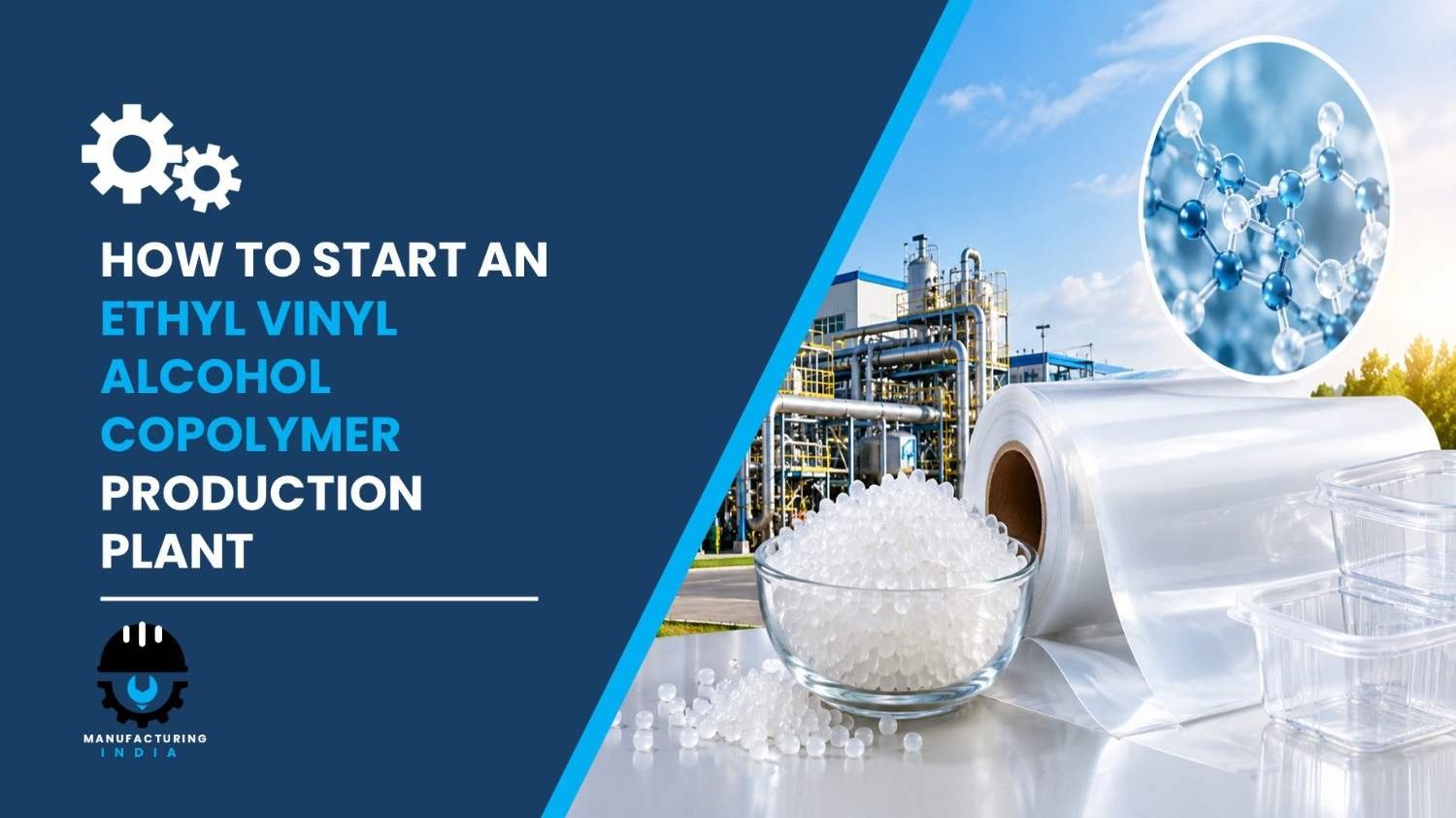
An ethyl vinyl alcohol copolymer production plant setup in India presents a compelling investment case, anchored by strong demand from the packaging, pharmaceutical, automotive, and electronics industries. This high-performance thermoplastic blocks oxygen and aroma transmission, which extends the shelf life of packaged food and protects sensitive drugs from moisture and oxygen. That makes it critical to modern packaging value chains.
India offers a supportive backdrop for this type of investment. Rapid urbanisation, expanding infrastructure, and the Make in India initiative are lifting consumption of packaged goods and encouraging domestic manufacturing, while key manufacturing states such as Gujarat and Maharashtra provide established industrial belts. As per United Nations data reported in 2025, over 12,000 cities worldwide had populations exceeding 50,000, together accounting for 45% of a global population of 8.2 billion. This widening urban base is accelerating demand for barrier materials.
The investment case rests on policy support, cost competitiveness, and steady demand from packaging, pharmaceutical, automotive, and electronics users. With gross margins of 30-40%, net margins of 15-22%, and a break-even period of 4 to 7 years, a well-run unit can deliver attractive long-term returns.
What is Ethyl Vinyl Alcohol Copolymer?
Ethyl vinyl alcohol copolymer is a high-performance thermoplastic polymer known for excellent gas barrier properties, chemical resistance, and transparency. It is produced through the hydrolysis of ethylene vinyl acetate copolymer, resulting in a material that effectively prevents oxygen and aroma transmission. The polymer offers strong mechanical strength, thermal stability, and compatibility with processing techniques such as extrusion and injection molding.
It is available in different grades depending on ethylene content, so it can be tailored for flexible or rigid applications. Its recyclability and ability to enhance the shelf life of packaged products make it increasingly preferred in sustainable packaging. The production route combines polymerization of ethylene and vinyl acetate, saponification (hydrolysis), purification, drying, pelletizing, and packaging. End-use industries include packaging, pharmaceutical, automotive, electronics, and industrial manufacturing.
Cost of Setting Up an Ethyl Vinyl Alcohol Copolymer Production Plant in India
The overall cost depends on capacity, technology, location, automation level, and regulatory compliance.
1. Capital Expenditure (CapEx)
Land and site development covers land registration, boundary development, and related charges. Investors can evaluate SEZ or industrial estate options with reliable access to raw materials, transport, and utilities. Civil works include the production shed, laboratory, raw material and finished goods storage, and an administration block, laid out for efficient workflow and future expansion. Machinery accounts for the largest share of capital expenditure. Key machinery required includes:
- Polymerization reactors
- Hydrolysis units
- Distillation columns
- Filtration systems
- Dryers (drying equipment)
- Extruders
- Pelletizers (extrusion or pelletizing machines)
- Packaging machines
- Storage tanks
Other capital costs include effluent treatment, pre-operative expenses, installation and commissioning, import duties on any imported equipment, and initial working capital. All machinery should be corrosion-resistant and meet safety and reliability standards.
Request a Sample Report for In-Depth Market Insights: https://www.imarcgroup.com/ethyl-vinyl-alcohol-copolymer-manufacturing-plant-project-report/requestsample
2. Operational Expenditure (OpEx)
Raw material cost is the dominant item, accounting for approximately 65-75% of OpEx. Ethylene is the main driver, alongside vinyl acetate, methanol, and catalyst, and long-term contracts with reliable nearby suppliers help stabilise pricing and secure steady supply. At an ethyl vinyl alcohol copolymer production plant, utility cost, covering electricity, water, and steam, represents roughly 15-20% of OpEx. Other operating costs include transportation, packaging, salaries and wages, repairs and maintenance, depreciation, and taxes. By the fifth year, total operating cost is expected to rise substantially owing to inflation, market fluctuations, higher prices of key materials, supply chain disruptions, and rising demand.
3. Plant Capacity
The proposed ethyl vinyl alcohol copolymer production plant is designed for an annual capacity of 10,000-30,000 tons, enabling economies of scale while maintaining operational flexibility. Capacity can be customised to investor requirements, and profitability improves with higher capacity utilisation.
4. Profit Margins and Financial Projections
The project shows healthy profitability under normal operating conditions, with gross profit margins of 30-40% and net profit margins of 15-22%, supported by stable demand and value-added applications. Financial projections for the ethyl vinyl alcohol copolymer production plant cover income and expenditure, NPV, IRR, ROI, and payback period, with break-even typically ranging from 4 to 7 years depending on capacity, operational efficiency, raw material pricing, and market demand.
Why Set Up an Ethyl Vinyl Alcohol Copolymer Plant in India?
Rising Demand for High-Barrier Packaging: The need for extended shelf life in food and pharmaceutical products is driving consumption. Growing awareness of food preservation and waste reduction favours high-barrier materials such as EVOH.
Sustainability and Recycling Trends: The material supports eco-friendly packaging with reduced material waste.
Policy and Regulatory Tailwinds: Governments may offer capital subsidies, tax exemptions, reduced utility tariffs, export benefits, or interest subsidies under industrial policies.
Cost-Competitive Production: Choosing a site close to suppliers and target markets minimises transportation and distribution costs. As a high value-added product, it offers premium pricing potential due to its specialised properties.
Active Industry Investment and Research: In December 2025, a National Library of Medicine study found that ethylene vinyl alcohol boosted stiffness and oxidation stability in recycled polypropylene packaging, while lowering film impact strength. In November 2024, a Chemical Engineering Journal study reported a dual-layer composite coating with strong hydrogen gas barrier performance.
Local Supply Chain Preference: Packaging, pharmaceutical, and automotive users benefit from dependable local supply. Reliable sourcing of key raw materials supports consistent quality.
Production Process – Step by Step
The ethyl vinyl alcohol copolymer production process uses polymerization of ethylene and vinyl acetate, followed by saponification, as the primary production method.
- Raw Material Collection: Ethylene, vinyl acetate, methanol, and catalyst are received.
- Copolymerization: Ethylene and vinyl acetate are polymerized in reactors to form ethylene-vinyl acetate (EVA) copolymer.
- Hydrolysis (Saponification): Vinyl acetate units are hydrolysed in hydrolysis units.
- Separation and Purification: Distillation columns and filtration systems purify the material.
- Drying: Dryers remove residual moisture.
- Pelletizing: Extruders and pelletizers convert the material into pellets.
- Storage and Packaging: Finished pellets are stored and packed, then dispatched to packaging, pharmaceutical, automotive, and electronics customers.
Key Applications
The product serves industries that need high-barrier performance:
- Packaging Industry: Multilayer packaging films where high oxygen barrier properties extend shelf life and keep products fresh.
- Pharmaceutical Industry: Blister packaging and medical containers that protect drugs from moisture and oxygen.
- Automotive Sector: Fuel tanks and emission control systems, thanks to resistance to hydrocarbons and permeability control.
- Electronics Industry: Specialty films and coatings needing insulation and protection from environmental factors.
Leading Manufacturers
Several multinational companies with extensive capacities lead the global market:
- Kuraray Co., Ltd
- Mitsubishi Chemical Corporation
- Chang Chun Petrochemical
- SK Functional Polymer
- Elephchem
- Bouling Chemical Co., Ltd
Timeline to Start the Plant
The timeline usually ranges from 18 to 36 months, depending on design, permitting, construction, specialised equipment installation, and commissioning.
- Feasibility study and project report preparation
- Land acquisition and site development
- Regulatory approvals and environmental clearances
- Factory licence and fire safety compliance
- Machinery procurement and installation
- Raw material supplier agreements and supply chain setup
- Trial production and quality testing
- Commercial production launch
Licences and Regulatory Requirements
Starting an ethyl vinyl alcohol copolymer production unit in India requires several approvals:
- Business registration (Proprietorship, LLP, or Pvt Ltd)
- Factory Licence under the Factories Act
- Environmental Clearance from State Pollution Control Board
- GST Registration
- Fire Safety NOC
- Hazardous/chemical compliance, including safety protocols and leak detection
- Effluent Treatment Plant (ETP) operational clearance
- Occupational Health and Safety compliance
Key Challenges to Consider
- High Capital Requirements: Machinery, land, and civil works demand substantial upfront funding.
- Raw Material Price Volatility: Ethylene, vinyl acetate, methanol, and catalyst make up most operating cost, so long-term contracts matter.
- Regulatory Compliance: Environmental clearances, factory licences, and fire safety certifications must be secured.
- Technology or Innovation Pressure: Advances in polymer processing and recyclability tradeoffs demand continuous adaptation.
- Competition: Established players include Kuraray Co., Ltd, Mitsubishi Chemical Corporation, Chang Chun Petrochemical, and SK Functional Polymer.
- Skilled Manpower: Specialised operations need trained staff, and training helps control operating costs.
Frequently Asked Questions
How much does it cost to set up an ethyl vinyl alcohol copolymer production plant in India?
The total varies with capacity, technology, and location. It covers land acquisition, construction, equipment procurement, installation, pre-operative expenses, and initial working capital, with machinery the largest share.
Is ethyl vinyl alcohol copolymer production profitable in India in 2026?
Gross margins of 30-40% and net margins of 15-22% indicate healthy profitability, which improves with capacity expansion and higher utilisation.
What machinery is required for an ethyl vinyl alcohol copolymer plant in India?
Polymerization reactors, hydrolysis units, distillation columns, filtration systems, dryers, extruders, pelletizers, packaging machines, and storage tanks.
What licences and approvals are required to start an ethyl vinyl alcohol copolymer plant in India?
Business registration, environmental clearances, factory licences, fire safety certifications, and industry-specific permits, depending on local, state, and national rules.
What raw materials are needed for ethyl vinyl alcohol copolymer production? Ethylene, vinyl acetate, methanol, and catalyst; ethylene and vinyl acetate are polymerized to form an intermediate copolymer.
What are the environmental compliance requirements for an ethyl vinyl alcohol copolymer plant in India?
Effluent treatment systems, adherence to emission standards, local zoning rules, and monitoring systems that detect leaks or process deviations.
What is the best location to set up an ethyl vinyl alcohol copolymer plant in India?
Look for easy access to ethylene, vinyl acetate, methanol, and catalyst, proximity to target markets, and robust transport, utilities, and waste management, such as in Gujarat or Maharashtra.
What is the break-even period for this type of plant in India?
Typically 4 to 7 years, depending on capacity, efficiency, raw material pricing, and demand.
What government incentives are available for manufacturers in India?
Capital subsidies, tax exemptions, reduced utility tariffs, export benefits, and interest subsidies may be available under industrial policies.
Key Takeaways for Investors
The opportunity is anchored in high-barrier packaging, pharmaceutical, automotive, and electronics demand. Financial viability holds across capacities of 10,000-30,000 tons per year, with gross margins of 30-40% and net margins of 15-22%. The global market was valued at USD 1.52 billion in 2025 and is expected to reach USD 2.63 billion by 2034, a CAGR of 6.3% from 2026 to 2034. With shelf-life, sustainability, and healthcare needs rising, demand for this material looks set to stay durable.
About the Author