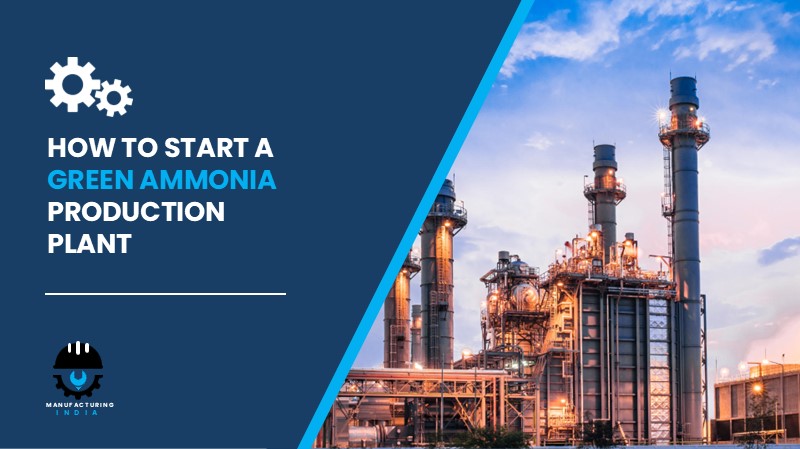
Setting up a green ammonia manufacturing plant in India presents a compelling investment case at the forefront of the country’s clean energy transition – one that simultaneously addresses the demand for sustainable fertilisers across India’s vast agricultural sector, the national ambition to become a major global green hydrogen and green ammonia exporter, and the industrial imperative to decarbonise chemical and energy production. Green ammonia – produced using renewable energy sources such as wind, solar, or hydropower to power the electrolysis of water, generating hydrogen that is then combined with nitrogen – offers a zero-carbon alternative to conventional ammonia production processes and is rapidly emerging as one of the most strategically critical molecules in the global energy and food security transition. The global green ammonia market was valued at USD 722.0 million in 2025 and is projected to reach USD 46,630.0 million by 2034, exhibiting an extraordinary CAGR of 58.9% – making this the highest-growth-rate investment category across the entire chemical and energy manufacturing landscape.
India’s strategic positioning for this investment is exceptional. According to the Ministry of New and Renewable Energy, India added a record 44.5 GW of renewable energy capacity in 2025, providing the abundant, low-cost clean electricity that is the core feedstock – and dominant cost driver – for green ammonia production. India’s long coastline offers coastal industrial sites with access to seawater desalination for water supply and port infrastructure for export logistics. The National Green Hydrogen Mission, which targets making India a global hub for green hydrogen and its derivatives including green ammonia, provides direct policy, financial, and regulatory support for new production facilities. Industrial states including Odisha, Rajasthan, Gujarat, Andhra Pradesh, and Tamil Nadu offer large land parcels, renewable energy resource richness, and proximity to both agricultural demand centres and export ports – creating a convergence of conditions that positions India as one of the world’s most attractive locations for green ammonia manufacturing investment.
A green ammonia manufacturing plant in India is backed by the fastest-growing market in chemicals manufacturing – expanding from USD 722.0 million in 2025 toward USD 46,630.0 million by 2034 at a CAGR of 58.9% – India’s record renewable energy capacity additions, the National Green Hydrogen Mission’s production incentives, and structural demand from agriculture, maritime, power generation, and energy storage sectors. With gross profit margins of 25–30%, net margins of 10–15%, and India-specific projects already under active development, this is a generational investment opportunity in the green energy transition.
What is Green Ammonia?
Green ammonia is ammonia produced using renewable energy sources – such as wind, solar, or hydropower – to power the electrolysis of water, generating hydrogen. This green hydrogen is then combined with nitrogen through the Haber-Bosch process to form ammonia without emitting CO₂, making it a sustainable alternative to conventional ammonia production processes that rely on natural gas or coal as feedstocks and emit significant quantities of greenhouse gases. Green ammonia is primarily used as a fertiliser in agriculture – the world’s largest ammonia end-use – but is also gaining rapidly growing attention as a potential energy carrier in renewable energy systems, for hydrogen storage and transport, as a fuel for power generation, and as a zero-carbon fuel for maritime shipping.
The primary production method involves three integrated processes: electrolysis for hydrogen production, air separation for nitrogen extraction, and the Haber-Bosch process for ammonia synthesis, all powered by renewable energy integration. End-use industries served include agriculture, renewable energy, power generation, maritime, and industrial applications. Key product applications include use in synthesis reactors, fuel combustion systems, catalytic cracking units, refrigerant circuits, hydrogen carrier transport, and grid-balancing turbines – positioning green ammonia as a multi-sector, strategic molecule at the intersection of food security and the clean energy economy.
Cost of Setting Up a Green Ammonia Manufacturing Plant in India
The total investment required to establish a green ammonia manufacturing plant in India depends on plant capacity, electrolyser technology selection, renewable energy integration model, geographic location, and compliance with chemical safety and environmental regulatory frameworks. Investors must account comprehensively for both one-time capital expenditure and recurring operational costs when preparing a feasibility study or detailed project report (DPR) for this facility.
1. Capital Expenditure (CapEx)
Land and Site Development constitutes a substantial foundational investment, particularly for a capital-intensive facility of this type. Green ammonia plants require large land areas to accommodate electrolysis arrays, renewable energy generation equipment, synthesis reactors, compression systems, storage tanks, and loading infrastructure. Site selection prioritises locations with high renewable energy capacity factors — such as high solar irradiance zones in Rajasthan and Gujarat, or high wind resource areas in coastal Tamil Nadu and Andhra Pradesh – along with access to water supply, port infrastructure for export, and compliance with chemical industrial zone zoning requirements.
Civil Works and Construction encompasses the electrolyser hall, hydrogen compression and purification building, air separation unit structure, ammonia synthesis reactor building with high-pressure containment design, refrigeration and liquefaction plant, storage tank farm with ammonia containment and vapour recovery systems, water treatment facility, quality control laboratory, and administrative block. The high-pressure, cryogenic, and toxic material handling requirements of ammonia synthesis and storage mandate significantly higher civil specification standards – including reinforced containment structures, explosion-proof electrical installations, and chemical-resistant materials throughout – compared to conventional manufacturing facilities.
Machinery and Equipment represent the single largest component of capital expenditure. Key machinery required includes:
- Electrolysers for hydrogen generation
- Air separation units (ASU) for nitrogen production
- Synthesis reactors (Haber-Bosch or alternative process)
- Compression systems
- Purification units
- Refrigeration and liquefaction plants
- Storage tanks and loading facilities for distribution
- Water treatment equipment
- Advanced process control and safety systems
- Heat exchangers
Other Capital Costs include the effluent treatment plant (ETP), ammonia vapour recovery and scrubbing systems, pre-operative expenses covering regulatory filings and environmental impact assessment preparation, plant commissioning charges, renewable energy infrastructure connection fees, and import duties applicable to large-scale electrolyser stacks, synthesis reactor vessels, or advanced process control systems sourced internationally.
Request a Sample Report for In-Depth Market Insights: https://www.imarcgroup.com/green-ammonia-manufacturing-plant-project-report/requestsample
2. Operational Expenditure (OpEx)
Raw Material and Energy Cost is the overwhelmingly dominant driver of operating expenditure, accounting for approximately 70–80% of total OpEx. The primary inputs are water, air for nitrogen extraction, and renewable electricity – with renewable electricity being the core cost driver. The economics of green ammonia production are fundamentally tied to the cost of renewable electricity: lower renewable electricity tariffs directly reduce the cost of electrolytic hydrogen production, which in turn determines the overall competitiveness of green ammonia versus conventionally produced alternatives. India’s record renewable energy capacity additions – including 44.5 GW added in 2025 – are progressively driving down renewable electricity tariffs, improving the production economics of green ammonia manufactured in India over time. Long-term Power Purchase Agreements (PPAs) with renewable energy developers at fixed tariffs are essential to stabilising the dominant cost line in this business model.
Utility Costs – covering process water, cooling water, steam for heat integration, and facility electricity beyond the core electrolysis and synthesis processes — account for approximately 10–15% of total OpEx. Water availability and treatment costs are particularly important for coastal or semi-arid site locations, where seawater desalination may be required to provide electrolysis-grade purified water at the required volumes.
Other Operating Costs include outbound transportation and shipping of liquid ammonia to agricultural fertiliser distributors, maritime fuel buyers, power generation offtakers, and export terminals; packaging and logistics for bulk ammonia distribution; employee salaries and wages for chemical process engineers, plant operators, safety personnel, and quality assurance specialists; equipment maintenance for electrolysers, synthesis reactors, and compression systems; quality assurance and purity testing for ammonia product specifications; depreciation on civil and machinery assets; and applicable taxes. By the fifth year of operations, total operational costs are expected to increase substantially due to inflation, market fluctuations, and shifts in the global green energy economy, partially offset by declining renewable electricity tariffs over the same period.
3. Plant Capacity
The proposed green ammonia production facility is designed with an annual production capacity of approximately 50,000 metric tons, enabling economies of scale while maintaining operational flexibility across different market offtake agreements. This capacity level is well-aligned with the requirements of agricultural fertiliser distributors, regional maritime fuel buyers, industrial gas consumers, and export shipment volumes to international markets. Capacity can be customised based on investor requirements, renewable energy availability, and offtake contract commitments. The break-even period for a green ammonia production business typically ranges from 5 to 8 years, depending on scale, regulatory compliance costs, raw material pricing, and market demand – with efficient production and export opportunities helping to accelerate returns. Profitability improves substantially with higher capacity utilisation and declining renewable electricity costs as India’s renewable energy buildout continues.
4. Profit Margins and Financial Projections
The green ammonia manufacturing plant demonstrates healthy profitability potential under normal operating conditions as the market matures and renewable electricity costs continue to decline. Gross profit margins typically range between 25–30%, supported by strong and rapidly growing demand and the premium that green ammonia commands over conventional ammonia in sustainability-conscious agricultural, maritime, and energy markets. Net profit margins range between 10–15%, reflecting the high capital intensity of the facility and the energy cost dominance of the operating model. A comprehensive financial analysis should include income projections, expenditure forecasts, gross and net margin tracking across Years 1 through 5, net present value (NPV), internal rate of return (IRR), payback period, and a full profit and loss account. Sensitivity analysis covering renewable electricity tariff movements and green ammonia spot price variability is essential for investment-grade planning in this sector.
Why Set Up a Green Ammonia Manufacturing Plant in India?
Record Renewable Energy Capacity Creating World-Class Green Ammonia Economics. According to the Ministry of New and Renewable Energy, India added a record 44.5 GW of renewable energy capacity in 2025. This exceptional renewable buildout is progressively driving Indian renewable electricity tariffs to among the most competitive in the world – directly improving the economics of electrolytic green hydrogen production and, by extension, green ammonia synthesis. For a production model where renewable electricity is the core cost driver at 70–80% of total OpEx, India’s renewable energy cost trajectory is the single most important commercial differentiator.
National Green Hydrogen Mission Providing Direct Policy and Financial Support. India’s National Green Hydrogen Mission establishes explicit production targets, financial incentives, and regulatory frameworks specifically designed to accelerate domestic green hydrogen and green ammonia production capacity. This dedicated policy infrastructure – combined with the broader Make in India and PLI framework for clean energy manufacturing – provides investors with a level of policy visibility and financial support that is among the most comprehensive available for green ammonia investment globally.
Extraordinary Market Growth Rate Creating Early-Mover Advantage. The global green ammonia market is growing at a CAGR of 58.9% – expanding from USD 722.0 million in 2025 to USD 46,630.0 million by 2034. This exceptional growth rate, driven by agricultural sector decarbonisation, renewable energy integration, and maritime fuel transition, creates a rare early-mover opportunity where investors who establish production capacity during the market’s formative growth phase can secure long-term offtake agreements, develop export market relationships, and build operational experience that translates into sustainable competitive advantage.
India-Specific Projects Validating Commercial and Technical Viability. In September 2025, ACME Group and IHI Corporation have been jointly developing India’s largest green ammonia project in Gopalpur, Odisha, since signing their initial MoU in 2023. This flagship project – combining a major Indian clean energy developer with a leading Japanese industrial corporation – validates both the technical feasibility and commercial attractiveness of large-scale green ammonia production in India at the specific scale and location parameters relevant to new investors. It also demonstrates the export-oriented revenue model that positions Indian production for sale to industrial buyers in Japan and other high-value international markets.
Global Technology Milestones Confirming Production Scalability. In July 2025, Envision officially commissioned the world’s largest and most advanced green hydrogen and ammonia production facility – powered entirely by the largest off-grid renewable energy system and the first of its kind to be fully AI-enabled, achieving real-time optimisation and stability at scale. This milestone confirms that large-scale, AI-optimised green ammonia production is commercially operational and sets the technology standard that Indian producers can adopt through technology licensing or equipment procurement from global technology leaders.
Diverse Demand Across Agriculture, Maritime, Power, and Energy Storage. Green ammonia serves as a low-emission nitrogen fertiliser for sustainable farming, a zero-carbon fuel for maritime shipping, a clean energy carrier for hydrogen transport and storage, and a fuel for power generation. This demand diversification across multiple large-scale end-use sectors means that green ammonia manufacturers are not dependent on any single market or price signal — providing revenue resilience that conventional chemical commodity producers rarely enjoy.
Manufacturing Process – Step by Step
The green ammonia manufacturing process uses electrolysis for hydrogen production, air separation for nitrogen extraction, and the Haber-Bosch process for ammonia synthesis, all integrated with renewable energy as the primary production method. Below are the main stages involved in the green ammonia production process flow:
- Renewable Energy Generation: Solar, wind, or hydropower installations generate the clean electricity that powers the entire green ammonia production chain, with output managed through grid connection or off-grid battery storage systems to provide consistent power supply to electrolysers and synthesis equipment.
- Water Treatment and Purification: Raw water – sourced from surface water, groundwater, or seawater desalination – is processed through water treatment equipment to remove impurities and achieve the electrolyser-grade purity standards required for efficient electrolysis operation.
- Water Electrolysis – Green Hydrogen Production: Electrolysers split purified water molecules into hydrogen and oxygen using renewable electricity, producing green hydrogen as the primary feedstock for ammonia synthesis. Electrolyser efficiency and capacity factor directly determine the cost of green hydrogen and, therefore, the overall economics of the plant.
- Air Separation – Nitrogen Production: Air separation units (ASUs) separate atmospheric air into its primary components, producing high-purity nitrogen gas as the second feedstock for the Haber-Bosch synthesis process.
- Hydrogen and Nitrogen Compression: Compression systems pressurise the green hydrogen and nitrogen streams to the high pressures required for efficient ammonia synthesis in the Haber-Bosch reactor – typically in the range of 150–300 bar.
- Ammonia Synthesis – Haber-Bosch Process: Synthesis reactors combine compressed green hydrogen and nitrogen over an iron-based catalyst at high temperature and pressure via the Haber-Bosch process, producing ammonia with a conversion rate per pass of typically 15–25%, with unreacted gases recycled back into the synthesis loop for continued conversion.
- Purification: Purification units remove residual hydrogen, nitrogen, and inert gases from the ammonia product stream, achieving the required product purity specification for agricultural, industrial, or energy sector offtake.
- Cooling and Liquefaction: Refrigeration and liquefaction plants cool the purified ammonia gas to cryogenic temperatures – approximately -33°C at atmospheric pressure – converting it to liquid ammonia for efficient storage and transportation.
- Quality Inspection and Testing: Analytical instruments monitor ammonia product concentration, purity, moisture content, and the absence of contaminants at multiple process checkpoints, with batch release conditional on meeting all specification acceptance criteria.
- Storage and Loading: Liquid ammonia is transferred to storage tanks equipped with ammonia vapour recovery and containment systems, then loaded into distribution vessels, tanker trucks, or ship loading facilities for dispatch to agricultural fertiliser distributors, maritime fuel buyers, power generation offtakers, and export terminals.
Key Applications
Green ammonia produced at this type of facility serves four primary end-use categories, each representing a large and growing market segment:
- Fertiliser and Agriculture: Used as a low-emission nitrogen fertiliser supporting sustainable farming the world’s largest current ammonia end-use application and the primary market for Indian green- ammonia production in the near term.
- Energy Storage and Transport: Functions as a carbon-free carrier for storing and transporting renewable energy, addressing the intermittency challenge of solar and wind power by providing a storable, transportable energy medium that can be converted back to hydrogen or used directly as fuel.
- Power and Fuel Applications: Used as a clean fuel for power generation, maritime shipping, and industrial heat applications – including use in synthesis reactors, fuel combustion systems, and grid-balancing turbines – as the maritime sector transitions away from heavy fuel oil under IMO decarbonisation mandates.
- Industrial Applications: Used in catalytic cracking units, refrigerant circuits, and hydrogen carrier transport systems across chemical processing, cold chain infrastructure, and industrial hydrogen supply chains.
Leading Green Ammonia Producers
The global green ammonia industry is led by a group of pioneering producers with expanding production capacities and diverse end-use sector relationships. Key players include:
- Yara International
- Haldor Topsoe
- OCI N.V.
- CF Industries
- Siemens Energy
Timeline to Start the Plant
Investors planning to establish a green ammonia manufacturing plant in India should anticipate the following project development phases, with an overall timeline typically ranging from 24 to 36 months:
- Feasibility study and project report preparation
- Land acquisition and site development
- Regulatory approvals and environmental clearances
- Factory licence and fire safety compliance
- Machinery procurement and installation
- Raw material supplier agreements and supply chain setup
- Trial production and quality testing
- Commercial production launch
Licences and Regulatory Requirements
Starting a green ammonia manufacturing unit in India requires several approvals:
- Business registration (Proprietorship, LLP, or Private Limited Company)
- Factory Licence under the Factories Act
- Environmental Clearance from the Ministry of Environment, Forest and Climate Change (MoEFCC) and State Pollution Control Board – including Environmental Impact Assessment for a Schedule A hazardous chemical facility
- Hazardous chemical safety compliance under the Manufacture, Storage and Import of Hazardous Chemical (MSIHC) Rules
- GST Registration
- Fire Safety NOC – including ammonia vapour and toxic gas hazard compliance
- Effluent Treatment Plant (ETP) operational clearance
- Occupational Health and Safety compliance covering high-pressure process operations and toxic gas handling
- Petroleum and Explosives Safety Organisation (PESO) approval for ammonia storage and handling
- National Green Hydrogen Mission registration for eligibility to access production incentives and green hydrogen certification
Key Challenges to Consider
Exceptional Capital Intensity. Green ammonia production is among the most capital-intensive manufacturing investments in the Indian chemical sector, requiring large-scale electrolyser arrays, synthesis reactors, compression systems, cryogenic storage, and co-located renewable energy infrastructure. The break-even period of 5 to 8 years reflects this capital intensity and requires investors to secure long-term offtake agreements and structured project finance to manage the extended payback timeline.
Renewable Electricity Cost as the Dominant Commercial Variable. Renewable electricity – the core cost driver at 70–80% of total OpEx – determines the competitiveness of green ammonia relative to conventional ammonia production and sets the floor on achievable margin. Any increase in renewable electricity tariffs, PPA costs, or grid transmission charges directly and materially impacts production economics. Long-term PPA agreements at fixed tariffs are the primary risk mitigation tool but require careful counterparty and duration assessment.
Regulatory and Safety Compliance Complexity. Ammonia is a toxic gas under Schedule I of India’s MSIHC Rules, requiring extensive regulatory compliance across environmental impact assessment, PESO approval, emergency response planning, and ongoing safety management system documentation. The additional renewable energy and green hydrogen certification requirements under the National Green Hydrogen Mission add further regulatory complexity to the approvals process.
Technology Selection and Electrolyser Availability. Electrolyser technology — including alkaline electrolysis, PEM (Proton Exchange Membrane), and solid oxide variants – is evolving rapidly in cost, efficiency, and scale, creating both opportunity and risk for investors who must select and commit to a technology stack during the plant design phase. Global electrolyser supply chains remain constrained relative to the scale of announced green hydrogen projects globally, requiring early procurement planning and supplier qualification.
Competition from Established Global Producers. The market includes well-capitalised global producers including Yara International, OCI N.V., and CF Industries, which are investing in green ammonia capacity at scale. Indian producers must leverage their renewable energy cost advantage and proximity to Asian and agricultural export markets to build competitive differentiation against these established players.
Skilled Manpower in Chemical Process Engineering. Operating high-pressure synthesis reactors, electrolysers, cryogenic liquefaction plants, and advanced process control systems requires chemical engineers and process technicians with specialised training in clean hydrogen production, ammonia synthesis, and hazardous chemical plant operations. Sourcing qualified personnel with this rare combination of skills — at a point when the entire green hydrogen and ammonia sector is competing for the same limited talent pool globally – is a significant and ongoing operational challenge.
Frequently Asked Questions
1. How much does it cost to set up a green ammonia manufacturing plant in India?
The total cost depends on plant capacity (approximately 50,000 MT per annum), electrolyser technology selection, renewable energy integration model, and location. CapEx covers land, high-specification chemical plant civil construction, and equipment including electrolysers, air separation units, Haber-Bosch synthesis reactors, compression systems, purification units, refrigeration and liquefaction plants, and storage tanks, along with pre-operative and regulatory costs.
2. Is green ammonia manufacturing profitable in India in 2026?
Yes, with growing policy support under the National Green Hydrogen Mission, India’s record renewable energy capacity additions reducing electricity costs, and a global market expanding at 58.9% CAGR toward USD 46,630.0 million by 2034, the investment presents a strong and improving profitability case – particularly for early-mover investors who establish offtake agreements and operational experience during the market’s formative growth phase.
3. What machinery is required for a green ammonia manufacturing plant in India?
Key equipment includes electrolysers for hydrogen generation, air separation units for nitrogen production, synthesis reactors (Haber-Bosch process), compression systems, purification units, refrigeration and liquefaction plants, storage tanks and loading facilities, water treatment equipment, heat exchangers, and advanced process control and safety systems.
4. What licences and approvals are required to start a green ammonia manufacturing plant in India?
Required approvals include business registration, Factory Licence, Environmental Clearance including EIA, MSIHC hazardous chemical compliance, GST Registration, Fire Safety NOC with ammonia vapour compliance, ETP operational clearance, PESO approval for ammonia storage, Occupational Health and Safety compliance, and National Green Hydrogen Mission registration.
5. What raw materials are needed for green ammonia production?
The primary raw materials are water, atmospheric air for nitrogen extraction, and renewable electricity as the core cost driver. Green hydrogen produced from water electrolysis and nitrogen extracted by air separation units are the two direct feedstocks combined in the Haber-Bosch process to synthesise ammonia.
6. What are the environmental compliance requirements for a green ammonia manufacturing plant in India?
Environmental Clearance from MoEFCC including a full Environmental Impact Assessment is mandatory, along with State Pollution Control Board clearance, MSIHC hazardous chemical compliance, ammonia vapour recovery and scrubbing systems, ETP operational clearance for process wastewater, and compliance with toxic gas emergency response planning requirements.
7. What is the best location to set up a green ammonia manufacturing plant in India?
Locations with high renewable energy resource richness – including high solar irradiance zones in Rajasthan, Gujarat, and Andhra Pradesh, or high wind resource coastal areas in Tamil Nadu – combined with access to water supply, chemical industrial zone infrastructure, and port access for export logistics offer the best combination of production economics and market connectivity for green ammonia manufacturing investment.
8. What is the break-even period for this type of plant in India?
The break-even period typically ranges from 5 to 8 years, depending on plant scale, renewable electricity tariff secured through PPA, product pricing, and offtake contract structure. Efficient production and securing export offtake agreements to high-value markets can help accelerate returns.
9. What government incentives are available for green ammonia manufacturers in India?
The National Green Hydrogen Mission provides production incentives, viability gap funding, and green hydrogen certification frameworks. The Ministry of New and Renewable Energy’s renewable energy expansion programs indirectly reduce production costs. State-level industrial incentives in Odisha, Rajasthan, Gujarat, and Andhra Pradesh, PLI scheme benefits for clean energy manufacturing, and export promotion support through the Green Hydrogen Mission’s export strategy all provide meaningful financial support for qualifying green ammonia manufacturing investments.
Key Takeaways for Investors
A green ammonia manufacturing plant in India represents one of the most exceptional early-stage investment opportunities in the global clean energy economy – positioned within a market growing at 58.9% CAGR from USD 722.0 million in 2025 toward USD 46,630.0 million by 2034, supported by India’s record renewable energy capacity additions, the National Green Hydrogen Mission’s production incentives, and structural demand across agriculture, maritime, power generation, and energy storage sectors. Financial viability is supported at a plant capacity of approximately 50,000 MT per annum, with gross margins of 25–30% and net margins of 10–15% achievable as renewable electricity costs continue their structural decline. India-specific green ammonia projects are already under active development – including the ACME Group and IHI Corporation joint project in Gopalpur, Odisha, announced in September 2025 – validating commercial viability at scale within the Indian regulatory and resource context. With global technology milestones including Envision’s July 2025 commissioning of the world’s largest AI-enabled green hydrogen and ammonia facility confirming production scalability, and Asia-Pacific, Europe, and North America all leading demand growth for green ammonia, early-mover Indian investors in this sector are positioned to capture long-term supply relationships with high-value international buyers throughout the decade ahead.
About the Author