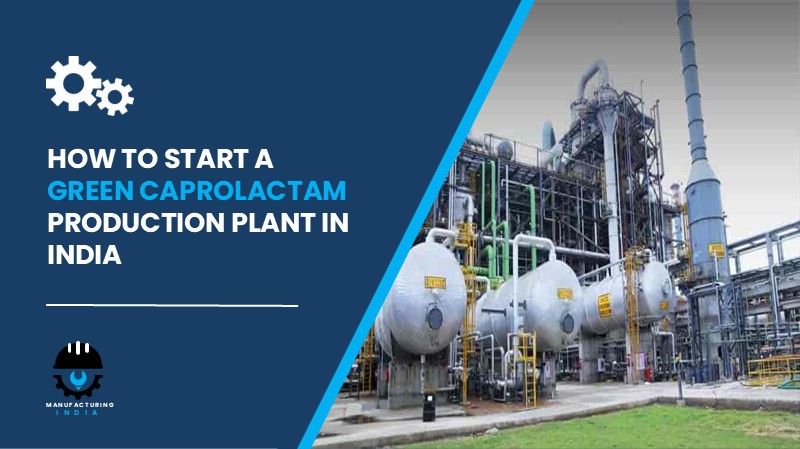
Green Caprolactam Production Plant in India
Setting up a green caprolactam production plant in India presents a compelling investment case driven by expanding consumption of nylon 6 across textiles, automotive components, engineering plastics, industrial yarns, and packaging films. As the primary monomer for nylon 6 production via ring-opening polymerization, green caprolactam sits at the heart of a high-growth value chain that serves both domestic consumption and export markets. Rising urbanisation, infrastructure development, and the accelerating substitution of metals with high-performance polymers in electrical and industrial applications are collectively intensifying demand for green caprolactam-derived materials across the country.
India offers a strategically compelling environment for this investment. The country’s rapidly growing textile and technical fabrics sector, combined with automotive lightweighting initiatives and the government’s Make in India push for specialty chemicals and downstream plastics production, creates sustained demand for domestically produced green caprolactam. Industrial hubs in Gujarat and Maharashtra provide access to petrochemical feedstock corridors, reliable utilities, and established supply chains that reduce logistics risk and capital drag. Downstream nylon 6 producers and compounders across these states increasingly prefer regional suppliers to reduce import dependence and price volatility a structural advantage that India-based producers are well positioned to capture.
India’s nylon 6 market, a direct downstream of green caprolactam, generated USD 788.5 million in revenue in 2023 and is projected to reach USD 1,232.1 million by 2030. Combined with Make in India policy tailwinds, cost-competitive production, and gross profit margins of 20–30%, a green caprolactam production facility in India offers defensible margins, robust break-even viability, and long-term demand sustainability across textiles, automotive, and packaging sectors.
What is Green Caprolactam?
Green caprolactam is an organic compound with a cyclic amide structure, primarily derived from cyclohexanone or cyclohexane. It presents as white crystals and is highly soluble in water, exhibiting excellent polymerization ability. Most significantly, it is the principal monomer in the production of nylon 6 through ring-opening polymerization. As a polymer material, green caprolactam delivers excellent chemical stability, good heat resistance, and strong mechanical property performance. Its ability to enhance strength, elasticity, abrasion resistance, and dyeability makes nylon 6 derived from green caprolactam widely used as a fiber material, film material, and engineering plastic material.
The primary production method used in the green caprolactam production process is hydrolysis, purification, and crystallization a multi-step operation that converts cyclohexanone through oximation and Beckmann rearrangement into a high-purity final product. End-use industries served include textiles, automotive, electronics, packaging, and industrial plastics. Specific applications include nylon 6 fibers, engineering resins, industrial filaments, film production, and copolymer synthesis.
Cost of Setting Up a Green Caprolactam Production Plant in India
The total cost of establishing a green caprolactam production plant in India depends on a range of factors including production capacity, technology selection, plant location, degree of automation, and regulatory compliance requirements. Investors should approach cost planning across three distinct dimensions: capital expenditure, operational expenditure, and capacity-linked financial projections.
1. Capital Expenditure (CapEx)
Land and site development form a substantial component of the total capital investment, covering land registration, boundary development, and site infrastructure. For greenfield investors, proximity to petrochemical hubs or location within a Special Economic Zone (SEZ) or notified industrial estate can reduce acquisition costs and provide fiscal benefits including duty exemptions. Civil works — encompassing production sheds, quality control laboratories, raw material storage bays, effluent treatment areas, and administrative blocks — represent another significant layer of expenditure.
Machinery and equipment costs account for the largest single portion of total CapEx. Key machinery required includes:
- Hydrogenation reactors
- Oxidation units
- Oximation reactors
- Beckmann rearrangement vessels
- Neutralization systems
- Distillation columns
- Crystallization units
- Flakers
- Packaging systems
- Cyclohexanone/cyclohexanol storage, transfer lines, and feed systems
- Ammonia handling systems and hydroxylamine processing units
- Extraction systems
- Advanced process control and automation systems
- Reactors and temperature-controlled vessels for conversion units
Other capital costs include effluent treatment plant (ETP) installation, pre-operative expenses, commissioning charges, and import duties applicable to specialized reactor components and control systems sourced internationally.
Request a Sample Report for In-Depth Market Insights: https://www.imarcgroup.com/green-caprolactam-manufacturing-plant-project-report/requestsample
2. Operational Expenditure (OpEx)
Raw material cost is the single dominant driver of operating expenditure, accounting for approximately 70–80% of total OpEx. The primary raw materials required are cyclohexanone and ammonia, supplemented by hydroxylamine sulfate, sulfuric acid, and various catalysts. Steam, cooling water, and electricity are essential process utilities. Investors are advised to negotiate long-term supplier contracts for cyclohexanone and ammonia to stabilize pricing and ensure continuity of supply, given the sensitivity of production economics to feedstock cost movements.
Utility costs covering electricity consumption across reactors and distillation columns, process steam, and industrial water typically represent 10–15% of total OpEx. Additional operating costs include transportation and outbound logistics, packaging materials, staff salaries and wages, routine maintenance, depreciation on plant and machinery, and applicable taxes. By the fifth year of operations, total operational cost is expected to increase substantially due to inflation, market fluctuations, and potential rises in the cost of key materials a factor investors should model conservatively in their financial planning.
3. Plant Capacity
The proposed production facility design benchmarked in industry analysis targets an annual production capacity of 100,000 to 200,000 MT, enabling economies of scale while maintaining operational flexibility. This capacity range reflects the minimum efficient scale required to achieve competitive unit economics in green caprolactam production. Capacity can be customized based on individual investor requirements, and profitability consistently improves with higher capacity utilisation rates, as fixed costs are spread over a larger production base.
4. Profit Margins and Financial Projections
The financial projections for a green caprolactam production plant demonstrate healthy profitability under normal operating conditions. Gross profit margins typically range between 20–30%, supported by stable downstream demand and the value-added nature of nylon 6 applications. Net profit margins are projected at 8–12%. Full financial analysis covers net present value (NPV), internal rate of return (IRR), payback period, gross margin progression across years one through five, and sensitivity analysis under different raw material cost and capacity utilisation scenarios.
Why Set Up a Green Caprolactam Plant in India?
Critical Nylon 6 Value Chain Position. Green caprolactam is the foundational raw material for nylon 6, which is widely used in engineering plastics, fibers, films, and industrial yarns. India’s downstream nylon 6 sector generated USD 788.5 million in revenue in 2023 and is projected to grow to USD 1,232.1 million by 2030, creating sustained, growing demand for locally produced green caprolactam.
Automotive Lightweighting and Technical Textiles Demand. Growth in lightweight automotive materials is driving higher adoption of nylon-based components across Indian vehicle manufacturers. Simultaneously, the rise of technical textiles and industrial plastics in construction, packaging, and consumer goods is broadening the end-use base and reducing demand concentration risk.
Policy and Regulatory Tailwinds. Government initiatives promoting domestic chemical production, import substitution, and textile value-chain strengthening including the Make in India programme and specialty chemicals incentives indirectly support sustained demand for green caprolactam. These policies improve the risk-return profile for greenfield investors in this space.
Cost-Competitive Production Environment. India offers compelling advantages in land acquisition costs, construction labour, and feedstock supply chain proximity in petrochemical clusters. These structural cost advantages support unit economics that are difficult to replicate in higher-cost production geographies.
Active Industry Investment and Technology Transfer. In November 2024, Sumitomo Chemical Co., Ltd. and HighChem Co., Ltd. entered into an agreement to transfer Sumitomo Chemical’s intellectual properties related to its green caprolactam production technology, specifically its vapor-phase Beckmann rearrangement process. This signals active technology commercialization and accessibility for new entrants.
Local Supply Chain Preference. Downstream nylon 6 producers and compounders increasingly prefer reliable, regionally located green caprolactam suppliers to reduce import dependence, logistics risk, and price volatility. This preference creates durable demand for domestic production capacity and supports pricing stability for Indian producers.
Production Process Step by Step
The green caprolactam production process uses hydrolysis, purification, and crystallization as the primary production method. The production sequence is a multi-step operation involving the following unit operations:
- Raw Material Handling: Cyclohexanone and cyclohexanol are received, stored in dedicated storage tanks, and fed into the process via transfer lines and feed systems. Ammonia is handled through dedicated ammonia handling systems.
- Oximation: Cyclohexanone undergoes oximation in dedicated reactors using hydroxylamine processing units to produce cyclohexanone oxime. Ammonia handling systems support this stage.
- Beckmann Rearrangement: Cyclohexanone oxime is converted to green caprolactam in acid reactors and temperature-controlled vessels using the Beckmann rearrangement reaction, a critical conversion step.
- Neutralization: The acid-containing reaction mixture passes through neutralization systems to remove sulfuric acid and by-products from the conversion stage.
- Purification and Extraction: Extraction systems remove impurities from the crude green caprolactam stream to achieve the required product purity specifications.
- Crystallization and Drying: Crystallization units produce high-purity green caprolactam crystals, which are subsequently dried to the specified moisture content.
- Quality Control and Testing: Analytical instruments monitor product concentration, purity, and stability at multiple points in the process to ensure compliance with end-use specifications.
- Storage and Packaging: Finished green caprolactam is flaked using flakers, then packaged using dedicated packaging systems for dispatch to textiles, automotive, electronics, packaging, and industrial plastics customers.
Key Applications
Green caprolactam serves as the foundational input across several high-growth industries, with each application leveraging nylon 6’s distinctive performance characteristics:
- Textiles: Used in the production of nylon 6 fibers for apparel, hosiery, industrial textiles, and technical fabrics requiring strength, elasticity, and dyeability.
- Automotive: Engineering resins and nylon-based components for lightweight automotive parts, reducing vehicle weight in line with fuel efficiency regulations.
- Electronics: Engineering plastics for housings, connectors, and components requiring heat resistance and dimensional stability.
- Packaging: Film production for flexible and semi-rigid packaging applications demanding barrier properties and mechanical durability.
- Industrial Plastics: Industrial filaments and copolymer synthesis for high-performance applications in machinery, construction, and consumer goods.
Leading Manufacturers
The global green caprolactam market features several multinational producers with large-scale capacities and diversified application portfolios. Key players operating in this market include:
- BASF
- UBE Corporation
- DSM Engineering Materials
- Sinopec
- AdvanSix
- Toray Industries
Timeline to Start the Plant
Investors should plan for a structured pre-commercial phase covering regulatory, procurement, and commissioning activities:
- Feasibility study and project report preparation
- Land acquisition and site development
- Regulatory approvals and environmental clearances
- Factory licence and fire safety compliance
- Machinery procurement and installation
- Raw material supplier agreements and supply chain setup
- Trial production and quality testing
- Commercial production launch
Licences and Regulatory Requirements
Starting a green caprolactam production unit in India requires several approvals:
- Business registration (Proprietorship, LLP, or Pvt Ltd)
- Factory Licence under the Factories Act
- Environmental Clearance from State Pollution Control Board
- GST Registration
- Fire Safety NOC
- Hazardous and chemical compliance clearances (applicable given use of ammonia, sulfuric acid, and hydroxylamine sulfate in the production process)
- Effluent Treatment Plant (ETP) operational clearance
- Occupational Health and Safety compliance
Key Challenges to Consider
High Capital Requirements. Establishing a green caprolactam production plant demands significant upfront investment in specialized reactor systems, distillation infrastructure, and process control technology, creating a high bar for entry that requires careful financial structuring.
Raw Material Price Volatility. Cyclohexanone and ammonia the primary raw materials are subject to global commodity price fluctuations. Managing this exposure through long-term supply contracts and hedging strategies is critical to protecting margins.
Regulatory Compliance. The use of hazardous chemicals including sulfuric acid and ammonia requires ongoing compliance with environmental, safety, and effluent management regulations. Non-compliance carries significant operational and financial risk.
Technology and Innovation Pressure. The industry is actively evolving, as evidenced by the November 2024 technology transfer of Sumitomo Chemical’s vapor-phase Beckmann rearrangement process to HighChem. Investors must assess technology selection carefully to ensure competitiveness over a 10–15 year production horizon.
Competition from Established Players. The presence of well-capitalised global producers such as BASF, Sinopec, AdvanSix, and Toray Industries with established relationships with downstream buyers means new entrants must compete on price, reliability, and supply chain proximity to gain market share.
Skilled Manpower. Operating hydrogenation reactors, Beckmann rearrangement vessels, and advanced process control systems requires experienced chemical engineers and trained operators. Availability of qualified talent in non-metro industrial locations may require dedicated recruitment and training investment.
Frequently Asked Questions
1. How much does it cost to set up a green caprolactam production plant in India? Total capital investment varies based on plant capacity (100,000–200,000 MT per annum is the benchmarked range), technology choice, location, and automation level. The cost covers land, civil works, machinery including hydrogenation reactors and Beckmann rearrangement vessels, and pre-operative expenses.
2. Is green caprolactam production profitable in India in 2026? Yes. Gross profit margins of 20–30% and net profit margins of 8–12% indicate strong profitability potential, particularly at higher capacity utilisation rates. India’s growing nylon 6 market, projected to reach USD 1,232.1 million by 2030, underpins long-term demand.
3. What machinery is required for a green caprolactam plant in India? Key equipment includes hydrogenation reactors, oxidation units, oximation reactors, Beckmann rearrangement vessels, neutralization systems, distillation columns, crystallization units, flakers, packaging systems, and process automation and control systems.
4. What licences and approvals are required to start a green caprolactam plant in India? Required approvals include business registration, Factory Licence under the Factories Act, Environmental Clearance from the State Pollution Control Board, GST Registration, Fire Safety NOC, hazardous chemical compliance certificates, ETP clearance, and occupational health and safety compliance.
5. What raw materials are needed for green caprolactam production? The primary raw materials are cyclohexanone and ammonia. Additional inputs include hydroxylamine sulfate, sulfuric acid, and various catalysts. Utilities required include steam, cooling water, and electricity.
6. What are the environmental compliance requirements for a green caprolactam plant in India? A green caprolactam production unit must obtain Environmental Clearance from the State Pollution Control Board, maintain an operational Effluent Treatment Plant, install advanced monitoring systems to detect process deviations, and comply with emission standards for chemical production facilities.
7. What is the best location to set up a green caprolactam plant in India? Locations offering access to key raw materials such as cyclohexanone and ammonia, proximity to target markets, reliable transportation infrastructure, and established utilities are preferred. Petrochemical industrial estates in Gujarat and Maharashtra are strategically suitable.
8. What is the break-even period for this type of plant in India? Break-even typically ranges from 3 to 7 years depending on plant scale, raw material cost management, capacity utilisation, and prevailing market prices. Strategic supply chain partnerships and vertical integration can help shorten this timeline.
9. What government incentives are available for manufacturers in India? Incentives may include capital subsidies, tax exemptions, reduced utility tariffs, export benefits, and interest subsidies under Make in India and specialty chemicals production promotion schemes, subject to state and central government policy frameworks.
Key Takeaways for Investors
A green caprolactam production plant in India offers a strategically sound investment opportunity anchored by robust downstream demand across textiles, automotive components, engineering plastics, electronics, and packaging sectors that are all on structural growth trajectories in the Indian economy. The investment demonstrates financial viability across plant capacities of 100,000–200,000 MT per annum, with gross margins of 20–30% and net margins of 8–12% confirming defensible unit economics at scale. India’s nylon 6 market, the direct downstream consumer of green caprolactam, is projected to grow from USD 788.5 million in 2023 to USD 1,232.1 million by 2030, providing a quantifiable demand runway for production capacity established today. With government policy actively supporting domestic chemical production, import substitution, and downstream plastics and textile value chain development, demand sustainability for Indian green caprolactam producers is well-supported over the medium and long term.
About the Author