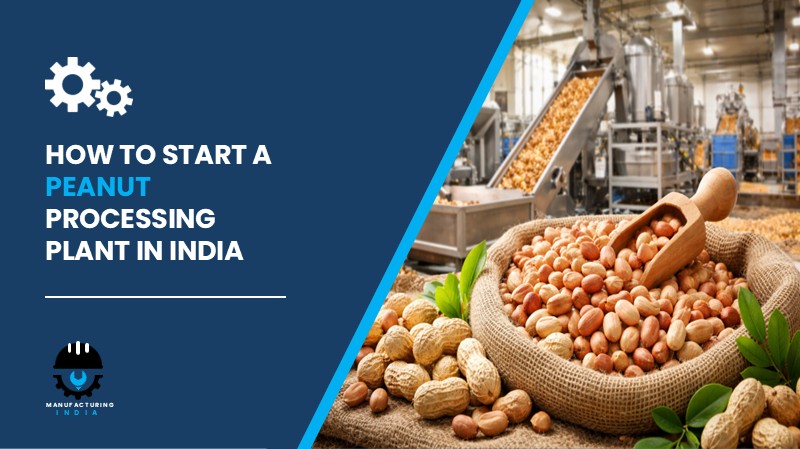
Setting up a peanut processing plant in India presents a compelling investment case driven by the country’s position as one of the world’s largest groundnut producers, an expanding food and beverage industry with surging demand for peanut-based products, rising health consciousness among consumers, and a rapidly growing organised snacks and ready-to-eat food sector that is placing peanuts and peanut-derived products at the centre of India’s packaged food growth story. Peanut, also known as groundnut, is a legume grown underground on the Arachis hypogaea plant that is rich in protein, fats, fibre, vitamins, minerals, magnesium, phosphorus, and other essential nutrients. Its consumption is associated with numerous health benefits including improving heart health, maintaining cholesterol levels, lowering blood pressure, promoting weight management, controlling blood sugar levels, boosting brain health, and reducing inflammation — attributes that align strongly with the rising health consciousness driving India’s premium snack and functional food markets.
India’s structural advantages for peanut processing investment are exceptional. The country is one of the world’s leading groundnut producers, with major cultivation belts in Gujarat, Andhra Pradesh, Rajasthan, Karnataka, and Tamil Nadu providing cost-competitive raw material access directly at the farm gate. The Make in India initiative and the Production-Linked Incentive scheme for food processing are actively supporting investment in agricultural value addition, and well-developed agri-processing zones and food parks in Gujarat, Maharashtra, and Andhra Pradesh offer the infrastructure, logistics connectivity, cold chain support, and regulatory frameworks that a commercial peanut processing facility requires. With India’s rising working population, rapid urbanisation, expanding purchasing power, and improving living standards all driving demand for ready-to-eat and on-the-go peanut-based food items, the domestic market is both large and growing at a commercially compelling pace.
Investing in a peanut processing plant in India today aligns the country’s unmatched raw material availability and agricultural cost advantage with surging consumer demand for healthy, protein-rich snacks, peanut butter, peanut oil, and plant-based food ingredients. With the growing food and beverage industry, expanding restaurant and QSR sector, and rising preference for organic and gluten-free peanut products providing multi-channel demand drivers, the unit economics of a well-structured peanut processing facility support viable and profitable returns across a range of production scales.
What is Peanut Processing?
Peanut (also known as groundnut) is a legume grown underground on the Arachis hypogaea plant, processed by harvesting the plant and removing the peanut pods from the soil. It is rich in protein, fats, fibre, vitamins, minerals, magnesium, phosphorus, and other essential nutrients, and its consumption is associated with health benefits spanning heart health improvement, cholesterol maintenance, blood pressure reduction, weight management support, blood sugar control, brain health promotion, and inflammation reduction.
Peanuts are consumed in various forms including roasted, salted, and boiled, and are used in the production of butter, sauce, oil, and flour, making a peanut processing plant a multi-product facility capable of serving several high-value output markets simultaneously. The product serves as a foundational ingredient across a broad range of food categories including sandwiches, trail mixes, granola bars, candies, chocolates, cookies, brownies, cakes, ice cream, coffee, teas, and shakes, as well as a key ingredient for livestock and poultry feed given the growing demand for meat and eggs. The rising demand for organic and gluten-free food products is further strengthening the market for high-quality, traceable processed peanuts across both consumer and food manufacturing buyer segments.
Cost of Setting Up a Peanut Processing Plant in India
The cost of establishing a peanut processing plant in India depends on plant capacity, the range of processed output formats — whole roasted peanuts, peanut butter, peanut oil, peanut flour, or peanut-based snack products — geographic location, degree of automation, and the food safety and FSSAI compliance requirements applicable to food-grade processing facilities.
1. Capital Expenditure (CapEx)
Land and Site Development forms a foundational component of total capital investment, covering land acquisition charges, site registration, boundary development, drainage infrastructure, and site utilities. Investors may explore agri-processing zones, food parks established under the Pradhan Mantri Kisan Sampada Yojana (PMKSY), or established industrial estates in major groundnut-producing states such as Gujarat, Andhra Pradesh, and Rajasthan, where proximity to groundnut cultivation belts substantially reduces raw material procurement and inbound logistics costs and dedicated food processing infrastructure is already available.
Civil Works and Construction cover the main production building housing cleaning, shelling, roasting, and processing lines, raw material storage for incoming groundnut pods and shelled peanuts with appropriate moisture management, a quality control laboratory for aflatoxin testing, moisture measurement, and nutritional composition analysis, finished goods warehousing with temperature and humidity control for packed products, an administrative block, and utilities infrastructure including steam for roasting operations and water for washing and cleaning processes.
Machinery and Equipment represent the largest single component of total CapEx for a peanut processing plant. Key machinery required includes:
- Cleaning and destoning machines
- Shelling machines
- Roasting machines or ovens
- Blanching machines
- Sorting and grading systems
- Oil expellers or presses (for peanut oil production)
- Peanut butter making machines (for peanut butter lines)
- Flavouring and coating drums
- Packaging machines
Other Capital Costs include an effluent treatment plant (ETP) for managing process water and organic waste streams, dust collection systems for pod and shell handling operations, pre-operative expenses, FSSAI licence and food safety compliance infrastructure costs, commissioning charges, and any import duties applicable to specialised food processing machinery.
Request a Sample Report for In-Depth Market Insights: https://www.imarcgroup.com/peanut-processing-plant-project-report/requestsample
2. Operational Expenditure (OpEx)
Raw Material Cost is the dominant operational expense for a peanut processing facility, with raw groundnut pods or shelled peanuts constituting the primary input. India’s large domestic groundnut production base in Gujarat, Andhra Pradesh, Rajasthan, and Karnataka provides cost-competitive raw material access, and proximity to cultivation zones is the single most important factor in reducing the inbound logistics cost on this highest-volume input. Procurement strategy should incorporate seasonal buying during harvest periods, with adequate storage infrastructure to bridge inter-seasonal supply gaps and manage price volatility. Long-term agreements with farmer producer organisations or aggregators can help stabilise procurement costs and ensure consistent quality across production runs.
Utility Cost covers electricity for processing machinery including roasters, shelling machines, oil expellers, peanut butter grinders, and packaging lines, steam or LPG for roasting operations, and water for washing, blanching, and cleaning processes. Utility management is particularly important for roasting operations, where fuel efficiency directly impacts the cost per unit of processed output.
Other Operating Costs include transportation and distribution to food manufacturers, snack brands, QSR chains, supermarket chains, and export buyers, packaging materials for consumer retail packs and bulk institutional formats, salaries and wages for processing operators and quality control staff, routine machinery maintenance, depreciation on processing equipment, FSSAI compliance and audit costs, and applicable taxes. By the fifth year of operations, total operational costs are projected to increase substantially due to inflation, market fluctuations, potential rises in groundnut prices, supply chain pressures, rising consumer demand, and shifts in global edible oils and food markets — all variables requiring careful multi-year financial planning.
3. Plant Capacity
Plant capacity for a peanut processing facility can be customised per investor requirements, from small-scale artisanal units processing a few hundred tonnes per year to large commercial facilities processing tens of thousands of tonnes annually. The establishment of more peanut product facilities is making it easier to manufacture and distribute peanut items to cater to high and varying consumer requirements. In April 2024, Tiger Brands inaugurated its 300 Million rand peanut butter production facility in Krugersdorp, South Africa, capable of producing approximately one million jars of peanut butter monthly — a global benchmark for the scale that commercially successful peanut processing operations can achieve. Profitability improves meaningfully with higher capacity utilisation, and building product diversification across roasted peanuts, peanut butter, peanut oil, and peanut flour maximises the revenue per tonne of raw material processed.
4. Profit Margins and Financial Projections
The financial projections for a peanut processing plant demonstrate commercially viable profitability potential across a range of product formats and capacity scales. Margins vary by output product — peanut butter and flavoured roasted peanuts command higher per-unit value addition than commodity peanut oil or raw shelled peanuts — making product mix strategy a central determinant of profitability outcomes. A comprehensive financial analysis covering NPV (net present value), IRR (internal rate of return), payback period, gross margin progression, and net margin development across a five-year horizon is essential before committing capital. The project’s ROI profile and long-term sustainability are assessed against realistic assumptions on capital investment, production capacity utilisation, groundnut procurement pricing, and demand outlook from the food and beverage, snacks, confectionery, QSR, and livestock feed end-use sectors.
Why Set Up a Peanut Processing Plant in India?
Rising Health Consciousness and Demand for Protein-Rich Snacking. The market is experiencing steady growth driven by increasing health awareness among people, which encourages the usage of peanuts as they are rich in protein, essential vitamins, and minerals, making them a popular choice for health-conscious consumers. As India’s middle class expands and nutritional awareness deepens, peanuts and peanut-based products are increasingly positioned as affordable, accessible, high-protein snacking options — a category with sustained structural demand growth.
Rising Popularity of Peanut Butter. The rising popularity of peanut butter is propelling growth across the broader peanut processing market. Individuals enjoy peanut butter for its flavour and its abundance of vital nutrients, and it is a multipurpose ingredient utilised in sandwiches, smoothies, baked items, and as a dip. Brands are producing different varieties including crunchy, smooth, and flavoured ranges to serve expanding consumer preference, and the category is growing rapidly across organised retail, quick commerce, and food service channels in India’s urban markets.
Expanding Plant-Based Food Trend. The rising appetite for plant-based goods is driving market growth broadly. Peanuts serve as a preferred option because they are high in protein, beneficial fats, and fibre — a strong alternative to meat-based protein sources. As plant-based diets gain popularity, peanut items including peanut snacks and protein bars are rising in demand. In October 2024, Treets Piasten partnered with ChoViva to launch vegan peanut dragées — peanuts covered in vegan chocolate created from sunflower seeds — demonstrating the product innovation opportunities available for peanut processors targeting the premium and plant-based consumer segments.
Growing Food and Beverage Industry and QSR Expansion. The expanding food and beverage industry represents one of the major factors impelling peanut market growth. The growing number of commercial spaces including restaurants, hotels, cafes, and quick service restaurants (QSRs) are incorporating peanuts in their dishes and menus to expand their consumer base. Peanuts are used in the preparation of sandwiches, trail mixes, granola bars, candies, chocolates, cookies, brownies, cakes, ice cream, and beverages, creating a diverse and growing institutional buyer base for processed peanuts from commercial food manufacturers.
Rising Demand for Ready-to-Eat and On-the-Go Products. The rising working population, rapid urbanisation, expanding purchasing power, and improving living standards of individuals are driving demand for ready-to-eat and on-the-go peanut-based food items. In January 2025, ManiLife broadened its portable snacking line with the introduction of 25g peanut packets available in three flavours — Cocoa Dusted Peanuts, Deep Roast Salted Peanuts, and Chilli and Lime — available nationwide in Tesco, demonstrating the commercial viability of convenience-format peanut snack products in organised retail.
Livestock and Poultry Feed Application. Beyond human food consumption, the increasing usage of peanuts as feed for livestock and poultry on account of growing demand for meat and eggs is creating additional demand for processed peanut by-products including peanut cake and peanut meal from the oil extraction process, providing a secondary revenue stream that improves overall facility economics.
Manufacturing Process — Step by Step
The peanut processing plant uses cleaning, shelling, roasting, blanching, sorting, value-added processing, and packaging as the primary production method. Each stage requires careful process control and food safety management to deliver processed peanuts and peanut-derived products that meet FSSAI food safety, aflatoxin, and quality specifications required by food manufacturer, retail, and export customers.
- Receiving and Initial Cleaning: Incoming raw groundnut pods are received, weighed, and subjected to initial cleaning using cleaning and destoning machines to remove soil, stones, plant debris, and foreign matter before further processing.
- Shelling: Cleaned pods are fed into shelling machines that crack and separate the groundnut shells from the kernels, with shell and kernel fractions separated by air classification or screening for onward processing.
- Kernel Cleaning and Sorting: Shelled peanut kernels are cleaned, sorted, and graded using sorting and grading systems to separate damaged, discoloured, or undersized kernels and deliver uniform-grade peanuts for roasting, blanching, or further value-added processing.
- Roasting: Selected peanut kernels are roasted in roasting machines or ovens at controlled temperatures and durations to develop the characteristic flavour, colour, and crunch of roasted peanuts — the most widely consumed processed peanut format in India.
- Blanching: Where required for peanut butter or blanched peanut production, peanut kernels are processed through blanching machines to loosen and remove the seed coat, producing white or blanched peanuts with a clean appearance suitable for high-end food manufacturing applications.
- Value-Added Processing: Roasted or blanched peanuts may be further processed into peanut butter using peanut butter making machines, into peanut oil using oil expellers or presses, into peanut flour through milling, or into flavoured snack products through flavouring and coating drums with salt, spices, or other seasonings.
- Quality Inspection: Finished products undergo quality testing covering aflatoxin levels, moisture content, oil content, microbiological compliance, and sensory evaluation before release for packaging, ensuring conformance with FSSAI food safety specifications and export market standards.
- Packaging: Inspected products are weighed, filled, and sealed into consumer retail packs or bulk institutional packaging using packaging machines, then palletised and dispatched to food manufacturers, snack brands, QSR chains, supermarket retailers, livestock feed producers, and export buyers.
Key Applications
Peanuts processed in India serve a broad and commercially diverse range of food manufacturing, consumer, institutional, and agricultural end-use applications:
- Snacking and Ready-to-Eat Products: Roasted, salted, flavoured, and coated peanuts for direct consumer snacking, trail mixes, granola bars, and packaged snack formats sold through retail and quick commerce channels.
- Peanut Butter Production: Processed peanuts as the primary input for peanut butter manufacturing serving consumer retail, food service, bakery, confectionery, and food ingredient markets.
- Edible Oil: Peanut oil extracted from processed kernels for cooking, food manufacturing, and the edible oils market across India’s domestic food industry.
- Food Manufacturing Ingredients: Processed peanuts used in sandwiches, candies, chocolates, cookies, brownies, cakes, ice cream, coffee, teas, shakes, and packaged meal products by food manufacturers and QSR chains.
- Livestock and Poultry Feed: Peanut meal and peanut cake by-products from oil extraction used as high-protein livestock and poultry feed ingredients, supporting the growing domestic meat and egg production industry.
Leading Manufacturers
The global peanut processing and peanut products industry is served by a growing number of established producers and innovative new entrants across snacking, peanut butter, and ingredient segments. Key recent developments include Tiger Brands’ 300 Million rand peanut butter facility in South Africa producing approximately one million jars monthly, ManiLife’s January 2025 expansion of its portable snacking line with 25g peanut packets in three flavours, and PLANTERS’ September 2024 launch of PLANTERS Special Reserve peanuts. The branded peanut snack and peanut butter segment is highly active with ongoing product innovation and capacity investment globally.
Timeline to Start the Plant
Establishing a peanut processing plant in India involves a structured multi-phase development sequence. Investors should plan for the following phases:
- Feasibility study and project report preparation
- Land acquisition and site development
- Regulatory approvals and environmental clearances
- Factory licence and fire safety compliance
- Machinery procurement and installation
- Raw material supplier agreements and supply chain setup
- Trial production and quality testing
- Commercial production launch
Licences and Regulatory Requirements
Starting a peanut processing unit in India requires several approvals spanning business registration, food safety, environmental, and industrial compliance domains:
- Business registration (Proprietorship, LLP, or Pvt Ltd)
- Factory Licence under the Factories Act
- Environmental Clearance from the State Pollution Control Board
- GST Registration
- Fire Safety NOC
- FSSAI (Food Safety and Standards Authority of India) Central or State licence, mandatory for all food processing facilities producing, storing, and distributing food products for commercial sale
- Effluent Treatment Plant (ETP) operational clearance for managing process water and organic waste streams from washing and blanching operations
- Occupational Health and Safety compliance
Key Challenges to Consider
Raw Material Price Volatility and Seasonal Supply. Groundnut is an agricultural commodity whose pricing is subject to seasonal crop cycles, monsoon variability, and competing demand from edible oil processors. Procurement prices can fluctuate significantly between seasons, and post-monsoon crop quality and aflatoxin contamination risk vary year to year. Building adequate raw material storage capacity and implementing seasonal procurement strategies are essential for cost stability and year-round production continuity.
Aflatoxin Contamination Management. Peanuts are susceptible to aflatoxin contamination from Aspergillus mould, particularly in high-humidity storage conditions. Managing aflatoxin risk requires careful procurement from reliable sources, post-harvest storage management, and rigorous incoming material testing — a food safety challenge that is especially important for export market compliance where aflatoxin limits are stringently enforced.
Competition in a Fragmented Market. The Indian peanut processing market includes a large number of unorganised small-scale processors alongside established branded players, creating competitive pressure on pricing for commodity-grade processed peanuts. New entrants must differentiate through product quality, value-added formats, private label supply agreements, or branded consumer product development to compete effectively and achieve commercial-scale market penetration.
Food Safety and FSSAI Compliance. Supplying processed peanuts and peanut products to food manufacturers, organised retail, and export markets requires comprehensive FSSAI compliance covering facility hygiene, food safety management systems, product labelling, aflatoxin limits, and microbiological standards. Maintaining these compliance requirements demands dedicated quality management infrastructure, laboratory testing capability, and well-trained food safety personnel across all production shifts.
Rising Popularity Driving Demand for Product Innovation. The rising popularity of peanut butter in diverse formats — crunchy, smooth, flavoured — and the growing demand for plant-based and organic peanut products require processors to invest in product development, flavour innovation, and new format capabilities to capture premium market segments beyond commodity roasted and shelled peanuts.
Skilled Manpower for Food-Grade Processing Operations. Maintaining hygiene standards, processing consistency, and food safety compliance across multi-product peanut processing operations requires trained food processing operators, quality control technicians, and food safety managers — a workforce that demands ongoing investment in training, food hygiene certification, and competitive retention programmes.
Frequently Asked Questions
1. How much does it cost to set up a peanut processing plant in India?
The total setup cost depends on plant capacity, product output mix — whether the facility produces roasted peanuts, peanut butter, peanut oil, peanut flour, or a combination — location, and automation level. CapEx covers land and site development, food-grade civil construction, core machinery including cleaning and destoning machines, shelling machines, roasting ovens, blanching machines, sorting systems, oil expellers, peanut butter machines, flavouring drums, and packaging machines, along with FSSAI compliance infrastructure, ETP, and other capital costs. A detailed project report with full CapEx and OpEx breakdowns is available on request.
2. Is peanut processing profitable in India in 2026?
Yes. Peanut processing is commercially viable across a range of output formats, with higher-value products such as peanut butter, flavoured roasted peanuts, and specialty peanut flour commanding significantly better margins than commodity shelled or roasted peanuts. India’s domestic raw material cost advantage, combined with growing demand from the food and beverage, snacking, QSR, and livestock feed sectors, supports a commercially sound investment case.
3. What machinery is required for a peanut processing plant in India?
Key machinery includes cleaning and destoning machines, shelling machines, roasting machines or ovens, blanching machines, sorting and grading systems, oil expellers or presses for peanut oil production, peanut butter making machines, flavouring and coating drums, and packaging machines. The specific equipment configuration depends on the planned product output mix.
4. What licences and approvals are required to start a peanut processing plant in India?
Required approvals include business registration, a Factory Licence under the Factories Act, Environmental Clearance from the State Pollution Control Board, GST registration, a Fire Safety NOC, FSSAI Central or State food safety licence, ETP operational clearance, and Occupational Health and Safety compliance.
5. What raw materials are needed for peanut processing?
The primary raw material is raw groundnut in pod or shelled kernel format. Additional inputs depend on the product mix and include edible salt, flavouring agents and spices for seasoned snack products, and packaging materials for consumer and institutional formats.
6. What are the environmental compliance requirements for a peanut processing plant in India?
The unit must obtain Environmental Clearance from the State Pollution Control Board, operate a certified ETP for managing process water and organic effluents from washing and blanching operations, implement dust collection systems for pod and shell handling, and comply with solid organic waste management regulations applicable to agricultural processing facilities.
7. What is the best location to set up a peanut processing plant in India?
Optimal locations offer proximity to major groundnut cultivation belts, reliable utilities, access to food manufacturing and organised retail customer markets, and cold chain and logistics infrastructure. Agri-processing zones and food parks in Gujarat, Andhra Pradesh, Rajasthan, Karnataka, and Tamil Nadu — India’s primary groundnut-producing states — are among the most strategically relevant options for this investment.
8. What is the break-even period for this type of plant in India?
The break-even period depends on plant capacity, product output mix, capacity utilisation rate, groundnut procurement pricing, and the balance between branded consumer sales and institutional or commodity supply. A detailed financial analysis including payback period, NPV, and IRR projections is included in the full project report, available via the sample request link.
9. What government incentives are available for manufacturers in India?
The Make in India initiative, PLI scheme for food processing, Pradhan Mantri Kisan Sampada Yojana (PMKSY) food park and agro-processing cluster schemes, and state-level agriculture processing incentives provide financial and regulatory support for peanut processing investments. Capital subsidies, interest subvention, power tariff concessions, and export promotion benefits may be applicable depending on the chosen location and production profile.
Key Takeaways for Investors
A peanut processing plant in India represents a commercially well-grounded and agri-business strategically sound investment opportunity anchored by multiple convergent demand drivers — rising health consciousness, expanding peanut butter popularity, growing plant-based food adoption, the booming organised snacks and QSR sector, and the increasing use of peanuts in livestock and poultry feed — that together constitute one of the most diverse and resilient demand bases available to any food processing investment in the country. The project demonstrates financial viability across a wide range of production scales and product output mixes, with higher-value formats such as peanut butter, flavoured roasted peanuts, and peanut flour offering significantly enhanced margin potential relative to commodity peanut processing. India’s position as one of the world’s leading groundnut producers in states such as Gujarat, Andhra Pradesh, Rajasthan, Karnataka, and Tamil Nadu provides an unmatched domestic raw material cost advantage that few other countries can replicate. With health-conscious consumption rising, product innovation active across peanut butter varieties and plant-based snack formats, and the food and beverage industry continuing to grow robustly, demand sustainability for India-based peanut processing is structurally robust and commercially compelling across the full investment horizon.
About the Author