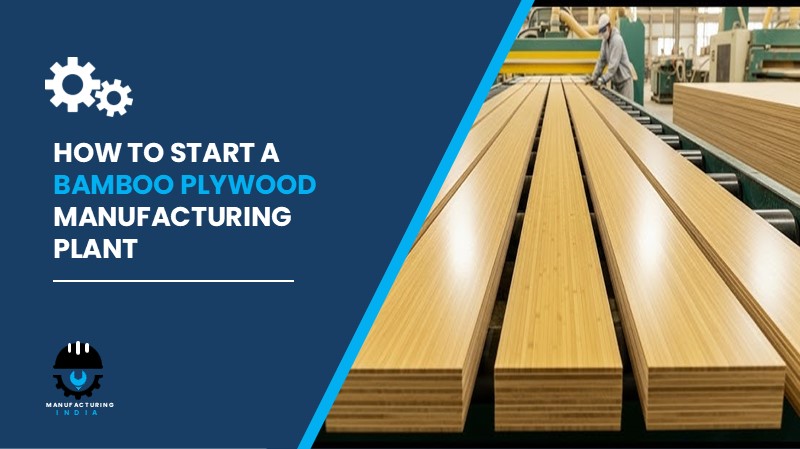
Setting up a bamboo plywood manufacturing plant in India presents a compelling investment case driven by rising demand across the building and construction sector, furniture manufacturing, interior design, and transportation industries. Bamboo plywood is an engineered wood product made by bonding thin strips of bamboo into solid sheets – a durable, lightweight, and eco-friendly alternative to traditional hardwood plywood that is gaining rapid commercial acceptance as global awareness of environmental issues deepens and demand for sustainable construction practices accelerates. With India’s construction sector expanding rapidly under government-led infrastructure programmes, and with the country’s furniture and interior design industries scaling to meet rising urban consumer demand, the domestic market for high-quality bamboo plywood is structurally positioned for sustained long-term growth.
India’s structural advantages make this investment strategically compelling. The country possesses one of the world’s largest bamboo reserves – covering approximately 13.96 million hectares, as per the Forest Survey of India – providing a domestically available, fast-growing, and renewable raw material base that eliminates the import dependency risks associated with conventional hardwood plywood manufacturing. Bamboo can sequester as much as 12 tons of carbon dioxide every year, and the oxygen produced can be as much as 35% more than what is produced by the same area of forest, according to TheRoundup – a sustainability credential that gives bamboo plywood a powerful positioning advantage in green building certification programmes and ESG-aligned procurement policies. The Government of India’s Make in India initiative, combined with rapidly urbanising housing, hospitality, and commercial real estate demand, provides a ready and expanding institutional market for a new bamboo plywood manufacturing plant in India.
India’s vast bamboo reserves, growing demand for sustainable building materials, rapidly expanding construction and furniture sectors, and the product’s exceptional environmental credentials make a bamboo plywood manufacturing plant a financially sound and forward-looking investment. With gross margins of 30–40%, net margins of 12–20%, and a global market growing from USD 306.52 million in 2025 to USD 554.11 million by 2034, the demand foundation is structurally durable and commercially compelling.
What is Bamboo Plywood?
Bamboo plywood is an engineered wood product made by bonding thin strips of bamboo into solid sheets. The bamboo is harvested, processed, and laminated to create a durable, lightweight material that is highly resistant to bending and warping. Bamboo plywood offers a high strength-to-weight ratio, making it ideal for use in furniture, interior design, and construction. It is an eco-friendly alternative to traditional hardwood plywood, as bamboo is a fast-growing, renewable resource that requires less water and pesticides compared to conventional hardwoods.
The product is available in various finishes and thicknesses, making it suitable for a wide range of applications from flooring to cabinetry and furniture. Its unique appearance, combined with eco-consciousness, makes it an ideal choice for both residential and commercial spaces. Advances in plywood manufacturing techniques and adhesive technologies are continuously improving the production processes, enhancing the strength and quality of bamboo plywood and making it an increasingly viable alternative to traditional wood-based plywood products.
The primary production method is harvesting and preparation, strand or veneer production, drying, lamination, bonding and pressing, and finishing – a multi-stage manufacturing process that converts harvested bamboo culms into precision-engineered, specification-compliant plywood sheets ready for construction, furniture, interior design, and transportation applications. End-use industries served include building and construction, furniture manufacturing, interior design, and transportation.
Cost of Setting Up a Bamboo Plywood Manufacturing Plant in India
The cost of establishing this facility depends on capacity, technology selection, plant location, degree of automation, and regulatory compliance requirements.
1. Capital Expenditure (CapEx)
Total capital investment for a bamboo plywood manufacturing plant in India covers land acquisition, site preparation, civil construction, machinery, and pre-operative expenses. The cost of land and site development – including charges for land registration, boundary development, and other related expenses – forms a substantial part of the overall investment. This allocation ensures a solid foundation for safe and efficient plant operations. Investors can reduce land acquisition costs significantly by locating the unit within an agro-processing zone, wood-based industries cluster, or Special Economic Zone (SEZ), which also provide shared utility infrastructure and potential state-level fiscal incentives aligned with India’s forest-based industries development programmes.
Civil works and construction cover the main processing and production building, bamboo raw material storage areas, adhesive storage, a finished goods warehouse with humidity control, a quality control laboratory, and an administrative block. Given that bamboo processing generates significant dust and requires adhesive handling, civil infrastructure must incorporate dust extraction systems, fire safety provisions, and appropriate ventilation throughout the facility.
Machinery costs account for the largest portion of total capital expenditure. Key machinery required includes:
- Bamboo cutting machines
- Laminating presses
- Sanding equipment
- Finishing equipment
Other capital costs include the effluent treatment plant (ETP), advanced process monitoring systems, pre-operative expenses, trial production costs, and commissioning charges. All machinery must comply with industry standards for safety, efficiency, and reliability applicable to engineered wood product manufacturing.
Request a Sample Report for In-Depth Market Insights: https://www.imarcgroup.com/bamboo-plywood-manufacturing-plant-project-report/requestsample
2. Operational Expenditure (OpEx)
The operating cost structure of a bamboo plywood manufacturing plant is primarily driven by raw material consumption. Bamboo strips – the dominant feedstock – account for approximately 60–70% of total operating expenses (OpEx), making raw material procurement strategy the single most critical determinant of production economics and margin protection. Adhesive in the form of phenol resin or urea-formaldehyde (UF) resin is the secondary raw material input. Securing long-term supply agreements with reliable bamboo strip suppliers located in proximity to the plant is essential to mitigate price volatility, minimise transportation costs, and ensure consistent material quality throughout the production process.
Utility costs – comprising electricity for bamboo cutting machines, laminating presses, sanding equipment, and finishing equipment, as well as water and steam – account for 10–15% of total OpEx. Other ongoing operating costs include transportation, packaging, salaries and wages, depreciation, taxes, equipment repairs and maintenance, and other miscellaneous operating expenses.
By the fifth year of operations, the total operational cost is expected to increase substantially due to factors such as inflation, market fluctuations, and potential rises in the cost of key materials. Additional factors including supply chain disruptions, rising consumer demand, and shifts in the global economy are expected to contribute to this increase.
3. Plant Capacity
The proposed manufacturing facility is designed with an annual production capacity ranging between 50,000 and 200,000 cubic metres, enabling economies of scale while maintaining operational flexibility. Capacity can be customised per investor requirements based on target construction, furniture, or export markets, available capital, and chosen processing technology. Profitability improves materially with higher capacity utilisation, making domestic supply agreements with construction contractors, furniture manufacturers, and interior design firms – as well as export channel development to global green building markets – a commercial priority from the commissioning stage.
4. Profit Margins and Financial Projections
The project demonstrates healthy profitability potential under normal operating conditions. Gross profit margins typically range between 30–40%, supported by stable demand and value-added applications. Net profit margins range between 12–20%. A comprehensive financial model covering NPV (net present value), IRR (internal rate of return), payback period, liquidity analysis, uncertainty analysis, sensitivity analysis, and a full five-year profit and loss account provides investors with a rigorous analytical framework for assessing financial viability and long-term sustainability across different capacity and pricing scenarios.
Why Set Up a Bamboo Plywood Plant in India?
Surging Demand for Sustainable Building Materials. The bamboo plywood market is primarily fuelled by the rising demand for green and eco-friendly construction materials, which are gaining importance as a sustainable option across global construction markets. Bamboo can sequester as much as 12 tons of carbon dioxide every year, and the oxygen produced can be as much as 35% more than what is produced by the same area of forest, according to TheRoundup. This positive environmental impact is resulting in increased specification of bamboo plywood products in green building certifications and ESG-aligned procurement policies across India’s rapidly expanding construction sector.
Fast-Growing Global Market at 6.8% CAGR. The global bamboo plywood market was valued at USD 306.52 million in 2025 and is projected to reach USD 554.11 million by 2034, growing at a CAGR of 6.8% from 2026 to 2034 according to IMARC Group estimates. This steady and sustained growth rate reflects the structural shift across global construction, furniture, and interior design industries toward renewable, durable, and aesthetically appealing wood-alternative materials where bamboo plywood is uniquely well-positioned.
Growing Furniture Market Driving Consistent Demand. The increasing demand for furniture and the expansion of the furniture market are generating demand for bamboo plywood, specifically used for the manufacture of tables, chairs, desks, and shelves. India’s rapidly growing organised furniture retail sector, rising urban household incomes, and the shift toward premium eco-friendly home furnishing products are collectively creating a large and expanding domestic demand base for bamboo plywood among furniture manufacturers across the country.
Renewable Resource Advantage Over Conventional Timber. Bamboo is a fast-growing, renewable resource that requires less water and pesticides compared to traditional hardwoods, making bamboo plywood production a lower environmental degradation alternative that supports sustainable construction practices. Bamboo is inexpensive to cultivate and harvest, making bamboo plywood a cost-effective alternative to traditional hardwood plywood – a commercial advantage that is particularly resonant in India’s cost-sensitive construction and housing markets.
Technological Advancement Improving Product Quality. Technological advancements in the production of plywood are improving the quality and durability of bamboo products, making them a more viable alternative to traditional wood-based plywood. Advances in adhesive technologies – including the development of low-emission phenol and UF resin formulations – and improvements in laminating press precision are enabling Indian producers to manufacture bamboo plywood to international quality standards for both domestic and export markets.
Active Global Industry Investment Validating Commercial Momentum. In February 2025, Smith & Fong Plyboo launched a new line of sustainable architectural bamboo wall panels branded Pleat&Weave, made from FSC-certified bamboo plywood and offering visual depth, versatile finishes, and improved acoustic performance suitable for commercial, hospitality, and residential interiors. In December 2024, Magic Bambu established a production facility in Bangkok, Thailand, to diversify its manufacturing base and strengthen its global supply chain, enabling production of bamboo, wood, and metal home products with improved logistics and cost competitiveness from a site near Laem Chabang Port that enhances access to key export routes. These investments confirm that the global bamboo plywood industry is actively scaling production capacity and product innovation to meet accelerating demand.
Manufacturing Process – Step by Step
The bamboo plywood manufacturing process uses harvesting and preparation, strand or veneer production, drying, lamination, bonding and pressing, and finishing as the primary production method. Each stage is designed to ensure dimensional consistency, structural integrity, and compliance with the strength, durability, and finish quality standards required by construction, furniture, interior design, and transportation customers.
- Raw Material Receipt and Inspection: Bamboo culms and adhesive – phenol resin or UF resin – are received at the facility and subjected to incoming quality checks for bamboo maturity, moisture content, dimensional specification, and resin quality before entering the production flow.
- Harvesting and Preparation: Bamboo culms are processed into strips or veneers through initial sizing and splitting operations using bamboo cutting machines. Outer skin, nodes, and sub-specification material are removed at this stage to produce clean, uniform bamboo strips suitable for lamination.
- Strand or Veneer Production: Prepared bamboo strips are further processed into the specific strand or veneer format required for the target plywood construction – horizontal lamination, vertical lamination, or strand-woven configuration – each delivering different aesthetic and structural performance characteristics.
- Drying: Bamboo strands or veneers are dried under controlled temperature and humidity conditions to reduce moisture content to within the specification limit required for adhesive bonding. Proper drying is critical to bond quality, dimensional stability, and long-term durability of the finished plywood.
- Lamination and Adhesive Application: Dried bamboo strips or veneers are coated with adhesive – phenol or UF resin – and layered in the required orientation and construction sequence to build up the target plywood thickness and structural configuration.
- Bonding and Pressing: Assembled bamboo-adhesive lay-ups are loaded into laminating presses where controlled heat and pressure are applied to cure the adhesive, consolidate the laminate structure, and produce dimensionally stable, void-free bamboo plywood panels.
- Sanding and Finishing: Pressed panels are processed through sanding equipment to achieve the surface smoothness, flatness, and thickness tolerance required by furniture, interior design, and flooring customers. Finishing equipment applies surface treatments, coatings, or textures as required for specific product grades and end-use applications.
- Quality Inspection and Testing: Finished bamboo plywood panels are tested for bending strength, bonding quality, moisture resistance, surface finish, and dimensional compliance before release for packaging and dispatch.
- Packaging and Dispatch: Approved panels are packaged and dispatched to end-use customers across the building and construction sector, furniture manufacturing, interior design, and transportation applications.
Key Applications
The bamboo plywood manufacturing plant serves a diverse and growing range of industries and applications across India’s construction and consumer economy.
- Construction Industry: Used in structural and non-structural applications including flooring, panelling, partitioning, and roofing – where bamboo plywood’s high strength-to-weight ratio, moisture resistance, and sustainability credentials make it a preferred alternative to conventional hardwood plywood in green-rated buildings.
- Furniture Manufacturing: Increasingly popular for producing durable, eco-friendly furniture items such as tables, desks, chairs, and shelves – where bamboo plywood’s aesthetic appeal, workability, and competitive cost relative to hardwood make it a commercially attractive input for both mass-market and premium furniture brands.
- Interior Design: Used for decorative wall panels and countertops in residential and commercial spaces where bamboo plywood’s unique natural grain appearance and eco-conscious positioning make it a preferred material for architects and interior designers seeking sustainable specification options.
- Transportation: Gaining traction for use in automobile interiors, bus panels, and marine applications, where bamboo plywood is valued for its light weight, durability, and ability to reduce the environmental impact of transportation materials relative to conventional wood and synthetic panel alternatives.
- Wall Panelling and Countertops: Applied as a premium surface material in commercial hospitality, retail, and office interiors where visual depth, versatile finishes, and acoustic performance – as demonstrated by Smith & Fong Plyboo’s Pleat&Weave launch in February 2025 – are key specification criteria for architects and interior fit-out contractors.
- Packaging: Used in high-strength packaging applications where lightweight, renewable, and structurally reliable panel material is required for industrial and export packaging requirements.
Leading Manufacturers
The global bamboo plywood industry is served by several established manufacturers with extensive production capacities and diverse application portfolios. Key players operating in this market include:
- Moso International BV
- Smith & Fong Co.
- Plyboo
- Bamboo Surfaces
- Teragren
- EcoPlanet Bamboo
- Dasso Group
All of these manufacturers serve end-use sectors including building and construction, furniture, interior design, and transportation – the same markets that a domestic Indian bamboo plywood manufacturing plant can target as local and export demand accelerates.
Timeline to Start the Plant
Investors should plan for a structured pre-production and commissioning phase covering the following key stages:
- Feasibility study and project report preparation
- Land acquisition and site development
- Regulatory approvals and environmental clearances
- Factory licence and fire safety compliance
- Machinery procurement and installation
- Raw material supplier agreements and supply chain setup
- Trial production and quality testing
- Commercial production launch
Licences and Regulatory Requirements
Starting a bamboo plywood manufacturing unit in India requires several approvals:
- Business registration (Proprietorship, LLP, or Private Limited Company)
- Factory Licence under the Factories Act
- Environmental Clearance from the State Pollution Control Board
- GST Registration
- Fire Safety NOC
- Hazardous chemical compliance for storage and handling of phenol resin or UF resin adhesives
- Effluent Treatment Plant (ETP) operational clearance
- Occupational Health and Safety compliance
Key Challenges to Consider
High Capital Requirements. Establishing a fully equipped bamboo plywood manufacturing plant – with bamboo cutting machines, laminating presses, sanding equipment, finishing equipment, and an ETP – at the 50,000–200,000 cubic metre annual capacity range requires significant upfront capital investment. Access to wood-based industries financing under MSME credit-linked schemes and state government investment promotion grants can help bridge funding requirements.
Raw Material Price Volatility. Bamboo strips – accounting for 60–70% of total OpEx – are subject to seasonal availability fluctuations and transportation cost variability depending on proximity to bamboo-growing regions. Long-term supply contracts with bamboo farmers or bamboo strip processors in Assam, Meghalaya, Tripura, Odisha, or other bamboo-rich states are essential for production cost stability and consistent material quality.
Regulatory Compliance. Bamboo plywood manufacturing involves the use of phenol resin or UF resin adhesives, which are subject to formaldehyde emission regulations. Facilities must comply with indoor air quality standards, effluent treatment requirements for resin wastewater, and dust management regulations for bamboo processing operations. Maintaining continuous environmental compliance and documentation adds to ongoing operational overhead.
Competition from Global Players. Established international manufacturers – including Moso International BV, Smith & Fong Co., Plyboo, Teragren, and Dasso Group – set high benchmarks for product quality, FSC certification, surface finish consistency, and brand equity in premium construction and interior design markets. Indian producers must compete through locally sourced bamboo content, competitive pricing, rapid domestic delivery, and the ability to achieve internationally recognised quality certifications for both domestic and export market access.
Sustainability and Certification Pressure. The global bamboo plywood market increasingly requires FSC certification and low-emission adhesive compliance as baseline procurement criteria for commercial construction, hospitality, and international export customers. Indian producers who do not invest in sustainability certification and low-formaldehyde resin systems may face growing barriers to premium market access.
Skilled Manpower. Operating bamboo cutting machines, laminating presses, sanding equipment, and finishing equipment while maintaining quality control and documentation for regulatory compliance requires trained wood-processing and engineered wood product personnel. Recruiting, training, and retaining qualified production and quality assurance staff is a recurring operational challenge in India’s agro-processing and wood-based industries sector.
Frequently Asked Questions
1. How much does it cost to set up a bamboo plywood manufacturing plant in India?
Total setup cost depends on plant capacity, location, machinery selection, and automation level. Key cost components include land and site development, civil construction with dust and fire safety provisions, machinery (bamboo cutting machines, laminating presses, sanding equipment, finishing equipment), and pre-operative expenses. A detailed feasibility study is recommended to generate accurate project-specific cost estimates.
2. Is bamboo plywood manufacturing profitable in India in 2026?
Yes. The project delivers healthy financial performance, with gross margins of 30–40% and net profit margins of 12–20% under normal operating conditions. The global bamboo plywood market is projected to grow from USD 306.52 million in 2025 to USD 554.11 million by 2034 at a CAGR of 6.8% according to IMARC Group, with India’s vast bamboo reserves and growing construction and furniture sectors positioning domestic producers for a strong share of regional and global demand.
3. What machinery is required for a bamboo plywood plant in India?
Essential equipment includes bamboo cutting machines, laminating presses, sanding equipment, and finishing equipment.
4. What licences and approvals are required to start a bamboo plywood plant in India?
Required approvals include business registration, Factory Licence, Environmental Clearance from the State Pollution Control Board, GST Registration, Fire Safety NOC, hazardous chemical compliance for phenol resin or UF resin adhesive handling, ETP operational clearance, and Occupational Health and Safety compliance.
5. What raw materials are needed for bamboo plywood manufacturing?
The primary raw materials are bamboo strips and adhesive – phenol resin or urea-formaldehyde (UF) resin. Bamboo strips are the dominant cost driver, accounting for 60–70% of total operating expenses, and must be sourced from mature, specification-compliant bamboo culms from established bamboo-growing regions.
6. What are the environmental compliance requirements for a bamboo plywood plant in India?
The facility must obtain Environmental Clearance from the State Pollution Control Board, operate an approved ETP for resin wastewater management, and comply with formaldehyde emission standards for indoor air quality and adhesive handling. Dust extraction and management systems must be installed to control bamboo processing particulate emissions throughout operations.
7. What is the best location to set up a bamboo plywood plant in India?
Locations offering proximity to bamboo raw material supply – including states such as Assam, Meghalaya, Tripura, Odisha, Chhattisgarh, and Maharashtra, which host India’s largest bamboo growing areas – combined with reliable utility supply and access to construction, furniture, and interior design end-user markets, are preferred. Proximity to major port infrastructure also supports export market access for FSC-certified bamboo plywood to global green building buyers.
8. What is the break-even period for this type of plant in India?
The break-even period depends on plant capacity, total capital investment, product selling price, and capacity utilisation rate. A comprehensive financial analysis covering NPV, IRR, payback period, and uncertainty and sensitivity analysis is the most reliable method for generating project-specific break-even timelines.
9. What government incentives are available for manufacturers in India?
Bamboo plywood manufacturers in India can access the National Bamboo Mission (NBM) grants for bamboo-based industries, MSME credit-linked capital subsidy schemes, state government investment promotion subsidies in agro-processing zones, and export promotion incentives for certified sustainable wood products under schemes administered by the Ministry of Commerce and Industry. Forest-based industry development support under the Ministry of Environment, Forest and Climate Change is also available for qualifying bamboo product manufacturers.
Key Takeaways for Investors
A bamboo plywood manufacturing plant in India offers a well-grounded investment opportunity anchored by growing demand across the building and construction sector, furniture manufacturing, interior design, and transportation industries – all of which are actively seeking sustainable, durable, and cost-competitive alternatives to conventional hardwood plywood. The project is financially viable across the 50,000 to 200,000 cubic metre annual capacity range, with gross margins of 30–40% and net margins of 12–20% providing a strong return framework for investors at multiple capital scales. According to IMARC Group estimates, the global bamboo plywood market is set to grow from USD 306.52 million in 2025 to USD 554.11 million by 2034 at a CAGR of 6.8%, with bamboo’s exceptional sustainability credentials – including its ability to sequester up to 12 tons of CO₂ per year and produce 35% more oxygen than an equivalent forest area per TheRoundup – firmly establishing it as a preferred material in green building programmes and ESG-aligned procurement policies worldwide. With India’s vast bamboo reserves, National Bamboo Mission support, and rapidly expanding construction and furniture markets creating a well-resourced domestic production and demand ecosystem, the long-term demand sustainability for domestically produced bamboo plywood is structurally sound across all investment planning horizons.
About the Author