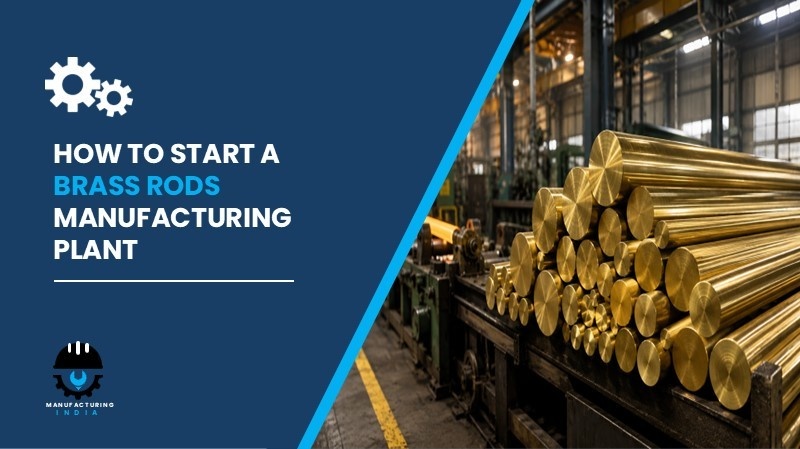
A brass rods manufacturing plant setup in India presents a compelling investment case for entrepreneurs evaluating metals and engineering sector. Demand for brass rods is driven by the construction and plumbing industries, rising use of brass components in electrical and electronics applications, expanding automotive manufacturing, and growing infrastructure development. Because brass rods serve as raw material for fasteners, plumbing fittings, electrical connectors, valves, and decorative items, they sit at the intersection of several large, fast-moving end-use industries, making them critical to India’s broader industrial and infrastructure economy.
India’s accelerating urbanisation and infrastructure growth strengthen the case further. The country’s urban population is expected to reach 600 million, or 40% of the population, by 2036, with urban areas projected to contribute nearly 70% of GDP. An anticipated $840 billion infrastructure investment by 2036, around $55 billion annually, will directly boost construction and plumbing activity that consumes brass fittings, valves, and hardware. This combination of urban expansion, infrastructure spending, and steady automotive and electrical demand makes India a strategically sound base for this production line.
The brass rods manufacturing plant opportunity is underpinned by strong demand from construction, plumbing, electrical, and automotive sectors, cost-competitive raw material access, and healthy gross margins of 15-25%. With a global market valued at USD 16.90 Billion in 2025 and projected to reach USD 21.18 Billion by 2034, this investment combines durable demand with sound break-even viability.
What are Brass Rods?
Brass rods are semi-finished metal products made primarily from an alloy of copper and zinc, sometimes with small additions of lead, tin, or aluminum to enhance specific properties. They are valued for excellent machinability, corrosion resistance, electrical conductivity, and aesthetic appearance, and are produced in various diameters, shapes, and grades to meet different industrial applications.
The production process involves raw material selection, melting and alloying in furnaces, casting into billets, hot extrusion or rolling, rod drawing and sizing, heat treatment, surface finishing, straightening and cutting, and packaging. This process feeds end-use industries including construction and plumbing, electrical and electronics, automotive, industrial machinery, and hardware and decorative products.
Cost of Setting Up a Brass Rods Manufacturing Plant in India
The cost of the plant depends on capacity, technology, automation level, location, and regulatory compliance requirements.
1. Capital Expenditure (CapEx)
Capital investment covers land acquisition, site preparation, and infrastructure, and can be planned around industrial estates or SEZ locations offering ready utility connections. Civil works costs cover production sheds, a quality-testing laboratory, storage, and an administrative block.
Machinery represents the largest portion of capital expenditure for a brass rods manufacturing plant, with scale of production and automation level determining total cost. Key machinery required includes:
- Induction or reverberatory melting furnaces
- Continuous casting machines
- Hot extrusion presses
- Rolling mills
- Rod drawing machines
- Annealing furnaces
- Straightening and cutting machines
Other capital costs include effluent treatment systems for environmental compliance, pre-operative expenses, and commissioning costs associated with bringing the plant into operation.
Request a Sample Report for In-Depth Market Insights: https://www.imarcgroup.com/brass-rods-manufacturing-plant-project-report/requestsample
2. Operational Expenditure (OpEx)
Raw material cost dominates the operating expense structure, with copper, zinc, and lead accounting for approximately 85-90% of total operating expenses. Securing reliable suppliers and negotiating long-term contracts helps mitigate price volatility and ensures consistent supply.
Utility costs, covering electricity, water, and steam, account for roughly 5-10% of OpEx and support the melting, casting, and extrusion stages. Other operating costs include transportation, packaging, salaries and wages, depreciation, taxes, and repairs and maintenance.
By the fifth year of operations, total operational cost is expected to rise substantially due to inflation, market fluctuations, supply chain disruptions, and shifts in the global economy.
3. Plant Capacity
The facility is designed with an annual production capacity ranging between 5,000 and 20,000 MT, enabling economies of scale while maintaining operational flexibility. Capacity can be customized based on investor requirements, and profitability generally improves with higher capacity utilisation.
4. Profit Margins and Financial Projections
A brass rods manufacturing plant demonstrates healthy profitability potential under normal operating conditions. Gross margins typically range between 15-25%, while net margins range between 5-12%, supported by stable demand and value-added applications. Financial projections, including NPV, IRR, and payback period, are developed based on capital investment, operating costs, capacity utilisation, pricing trends, and demand outlook.
Why Set Up a Brass Rods Plant in India?
Strong Industrial Demand: Brass rods are widely used across plumbing, automotive, and electrical sectors, reducing dependence on any single end-use industry for sales.
Excellent Machinability: Brass alloys offer superior machinability, reducing manufacturing costs for downstream producers of fasteners, connectors, and fittings.
Corrosion Resistance: Brass components perform well in harsh environments, especially in plumbing applications, supporting long-term demand from construction.
Infrastructure Development: Growing construction and infrastructure projects increase demand for brass fittings and hardware. India’s urban population is expected to reach 600 million (40% of the population) by 2036, and the anticipated $840 billion infrastructure investment by 2036 will further boost demand for fittings, valves, and hardware.
Active Industry Investment: In June 2024, Sprayking Limited secured a 25-tonne brass rod order worth ₹15 million from a new domestic customer, supporting utilisation of its newly launched facility built for rising demand.
Recyclability and Cost Efficiency: The recyclability of copper-based alloys promotes sustainable manufacturing practices and supports cost efficiency, benefiting long-term operating economics.
Manufacturing Process – Step by Step
The brass rods manufacturing process uses melting, casting, extrusion, and drawing as the primary production stages.
- Raw Material Selection: Copper, zinc, and lead are selected and prepared for alloying based on the required grade.
- Melting and Alloying: Raw materials are melted and alloyed using induction or reverberatory melting furnaces.
- Casting into Billets: The molten alloy is cast into billets using continuous casting machines.
- Hot Extrusion or Rolling: Billets are shaped using hot extrusion presses or rolling mills to form the initial rod profile.
- Rod Drawing and Sizing: Rod drawing machines refine the rods to precise diameters and tolerances.
- Heat Treatment: Annealing furnaces are used to relieve stress and improve the workability of the rods.
- Surface Finishing: Rods undergo finishing to achieve the required surface quality.
- Straightening and Cutting: Straightening and cutting machines bring rods to final length and shape.
- Packaging and Dispatch: Finished rods are packaged and dispatched to construction, electrical, automotive, industrial machinery, and hardware end-use industries, completing the brass rods manufacturing process.
Key Applications
Rods produced at the plant serve a range of industrial and consumer-facing applications across several sectors.
- Construction and Plumbing: Used to produce valves, pipe fittings, faucets, and plumbing components due to their corrosion resistance.
- Electrical and Electronics: Used in the manufacturing of connectors, terminals, and switchgear components due to good electrical conductivity.
- Automotive Industry: Applied in fuel system components, radiators, and various precision-machined automotive parts.
- Industrial Machinery: Used to manufacture mechanical components such as gears, bushings, and fittings.
- Hardware and Decorative Products: Used in producing door handles, locks, hinges, and decorative architectural elements.
Leading Manufacturers
The global industry includes several multinational companies with extensive production capacities and diverse application portfolios.
- KME Germany GmbH
- Mueller Industries Inc
- National Bronze & Metals Inc
- Marmon Holdings Inc
- Aurubis AG
- Cerro Wire LLC
- Bralco Metals
- Hailiang Group
Timeline to Start the Plant
- Feasibility study and project report preparation
- Land acquisition and site development
- Regulatory approvals and environmental clearances
- Factory licence and fire safety compliance
- Machinery procurement and installation
- Raw material supplier agreements and supply chain setup
- Trial production and quality testing
- Commercial production launch
Licences and Regulatory Requirements
Starting a brass rods manufacturing unit in India requires several approvals:
- Business registration (Proprietorship, LLP, or Pvt Ltd)
- Factory Licence under the Factories Act
- Environmental Clearance from State Pollution Control Board
- GST Registration
- Fire Safety NOC
- Effluent Treatment Plant (ETP) operational clearance
- Occupational Health and Safety compliance
Key Challenges to Consider
High Capital Requirements: Machinery costs, including melting furnaces, casting machines, extrusion presses, and rolling mills, account for the largest portion of total capital expenditure.
Raw Material Price Volatility: Copper, zinc, and lead prices can fluctuate, and since raw materials account for 85-90% of OpEx, this volatility has an outsized effect on margins.
Regulatory Compliance: Meeting environmental, safety, and effluent treatment standards requires ongoing investment.
Competition: Established global players such as KME Germany GmbH, Mueller Industries Inc, and Hailiang Group operate with extensive production capacities, requiring new entrants to compete on cost, quality, and reliability.
Supply Chain Dependence: Securing long-term contracts with reliable copper, zinc, and lead suppliers is essential to stabilising pricing and ensuring a steady supply.
Skilled Manpower: Operating melting, extrusion, and drawing equipment to required quality standards calls for trained technical staff, which can be a constraint in some locations.
Frequently Asked Questions
1. How much does it cost to set up a brass rods manufacturing plant in India? Cost depends on plant capacity, machinery selection, automation, and location, with machinery forming the largest share of CapEx alongside land and civil works.
2. Is brass rods manufacturing profitable in India in 2026?
Yes – the model shows gross margins of 15-25% and net margins of 5-12%, supported by stable demand from construction, electrical, and automotive sectors.
3. What machinery is required for a brass rods plant in India?
Melting furnaces, continuous casting machines, hot extrusion presses, rolling mills, rod drawing machines, annealing furnaces, and straightening and cutting machines.
4. What licences and approvals are required to start a brass rods plant in India?
Business registration, a Factory Licence, Environmental Clearance, GST Registration, Fire Safety NOC, ETP clearance, and Occupational Health and Safety compliance.
5. What raw materials are needed for brass rods manufacturing?
Copper and zinc form the core alloy, with small additions of lead and other elements used to enhance specific properties.
6. What are the environmental compliance requirements for a brass rods plant in India?
Plants require Environmental Clearance from the State Pollution Control Board and an operational Effluent Treatment Plant to manage emissions and waste.
7. What is the best location to set up a brass rods plant in India?
Sites should offer easy access to copper, zinc, and lead supplies, proximity to target markets, and robust transportation, utility, and waste management infrastructure.
8. What is the break-even period for this type of plant in India?
Break-even and payback period figures form part of the financial analysis covering NPV, IRR, and profitability, and vary by capacity and capital structure.
9. What government incentives are available for manufacturers in India?
Investors can structure plants around industrial estates and follow the standard regulatory pathway covering factory licensing, environmental clearance, and GST registration.
Key Takeaways for Investors
This brass rods manufacturing plant offers a durable investment opportunity anchored in demand from the construction and plumbing, electrical and electronics, automotive, and industrial machinery sectors. Across capacities ranging from 5,000 to 20,000 MT annually, the project shows financial viability through gross margins of 15-25% and net margins of 5-12%. With the global market valued at USD 16.90 Billion in 2025 and projected to reach USD 21.18 Billion by 2034 at a CAGR of 2.5%, alongside India’s $840 billion infrastructure investment pipeline through 2036, demand for this production capacity is set to remain structurally sound over the long term.
About the Author