Setting up a sulfur dioxide production plant in India represents a highly attractive investment proposition underpinned by robust and structurally growing demand from the fertilizer, metal processing, wine and dried fruit preservation, industrial bleaching, and water treatment industries, where sulfur dioxide acts as a reducing agent, preservative, disinfectant, and key chemical intermediate. As chemical manufacturing capacity expands, sulfuric acid demand rises across fertilizers, battery materials, and mineral processing, and food and beverage processors continue to rely on controlled sulfur dioxide applications, the gas occupies an increasingly important position across industrial, food preservation, and environmental management applications. This growth trajectory, combined with well-established sulfur combustion and catalytic conversion technology and strong downstream integration potential with sulfuric acid production, creates a highly favourable manufacturing environment for new entrants with efficient production, gas handling, and quality systems.
What is Sulfur Dioxide?
Sulfur dioxide is a toxic, colourless gas with a pungent, irritating odour resembling a struck match. Composed of one sulfur atom and two oxygen atoms, it primarily forms when sulfur-containing fossil fuels such as coal and diesel are burned, while natural sources such as volcanic eruptions also release significant amounts. Sulfur dioxide is industrially important as the primary precursor for manufacturing sulfuric acid, and its antimicrobial and antioxidant properties make it a useful commercial preservative and bleaching agent.
Sulfur dioxide is produced through sulfur combustion, catalytic conversion, and absorption processes, and is supplied in gaseous and liquefied forms depending on end-use requirements. Beyond its role as a sulfuric acid feedstock, the gas is used extensively in food preservation for wine making and dried fruit processing, in pulp and paper bleaching and chemical recovery, in water treatment for dechlorination and pH adjustment, and in metal extraction and refrigerant precursor applications.
The global sulfur dioxide market was valued at approximately USD 407.8 Million in 2025 and is expected to reach USD 597.0 Million by 2034, exhibiting a CAGR of 4.33% from 2026 to 2034, supported by expanding chemical manufacturing, rising demand for sulfur-based derivatives, and continued use in controlled food and beverage applications.
Cost of Setting Up a Sulfur Dioxide Production Plant
The total capital investment required to establish a sulfur dioxide production plant is shaped by several key parameters: annual production capacity (the proposed facility is designed at 50,000 MT per annum), the production technology adopted (sulfur combustion, catalytic conversion, and absorption systems), the level of automation across melting, combustion, conversion, and absorption sections, facility specification, raw material sourcing strategy, and applicable regulatory, emission, and process safety compliance requirements. Below is a structured breakdown of the major cost components.
1. Capital Expenditure (CapEx)
Total capital investment in a sulfur dioxide production plant covers the following major heads:
Land and Site Development
This encompasses land acquisition or lease, site preparation, boundary development, and utilities connectivity. Site selection should prioritise proximity to elemental sulfur supply sources and target end-use industries such as sulfuric acid producers, fertilizer manufacturers, and chemical processors to minimise transportation costs and gas handling risk. Access to reliable power and steam generation infrastructure, strong road and rail logistics for inbound sulfur and outbound liquid sulfur dioxide, availability of process water of suitable quality, and a trained workforce for plant operations and quality control are critical site selection criteria. Compliance with industrial zoning regulations, emission control standards, process safety requirements applicable to toxic gas handling, and effluent and air quality compliance frameworks must be assessed from project initiation.
Civil Works and Construction
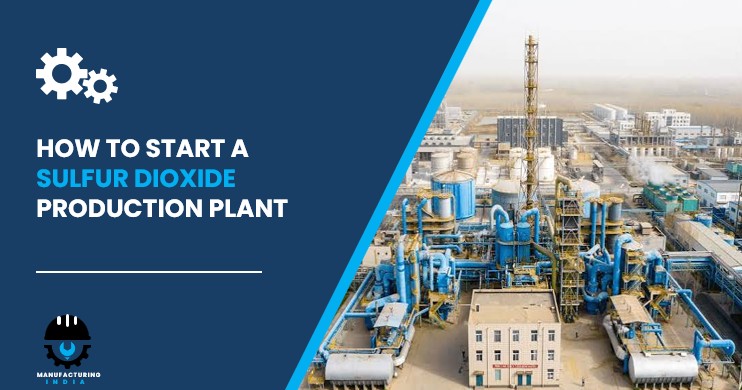
Building costs cover the main processing facility including the sulfur melting and storage section, combustion furnace house, waste heat boiler area, catalytic converter section, absorption tower and gas scrubbing infrastructure, liquid sulfur dioxide storage tank farm, automated packaging and dispatch infrastructure, quality control laboratory, administrative block, and utility infrastructure including boiler house, power backup, cooling water systems, gas leak detection and safety systems, and effluent treatment plant. Construction must comply with applicable factory act requirements, hazardous and toxic gas handling norms, process safety and explosion-proofing standards, and environmental infrastructure guidelines.
Machinery and Equipment
Machinery represents the single largest CapEx component. Key equipment required for a sulfur dioxide production plant includes:
- Sulfur Melting and Handling Systems: Sulfur melters, filtration units, and storage tanks to convert solid elemental sulfur into clean, molten feedstock for combustion
- Combustion Furnace: High-temperature combustion furnaces where molten sulfur is burned with dried air to generate sulfur dioxide gas, designed for stable, high-efficiency conversion
- Waste Heat Boiler: Heat recovery systems that capture combustion heat to generate process steam, improving overall plant energy efficiency
- Catalytic Converters: Vanadium pentoxide-based catalytic conversion systems used where partial conversion to sulfur trioxide or integration with downstream sulfuric acid production is required
- Sulfur Dioxide Condensers: Condensing and cooling systems for converting gaseous sulfur dioxide into liquefied product for storage and transport
- Absorption Towers: Gas absorption systems for purifying and concentrating sulfur dioxide gas streams prior to liquefaction or downstream use
- Drying Units: Air drying systems to remove moisture from combustion air, preventing corrosion and ensuring consistent gas quality
- Gas Scrubbing Systems: Emission control and scrubbing infrastructure to manage off-gases and ensure compliance with air quality and environmental regulations
- Storage Tanks for Liquid Sulfur Dioxide: Pressurised, corrosion-resistant storage tanks designed to applicable safety codes for handling liquefied toxic gas
- Gas Leak Detection and Safety Systems: Continuous monitoring systems, flameproof electrical and instrumentation equipment, and emergency response infrastructure designed to applicable process safety standards for toxic gas handling
- Quality Control Laboratory Equipment: Equipment for gas purity, concentration, and impurity testing to verify compliance with product specifications and food-grade or industrial-grade quality standards
- Automated Packaging and Dispatch Lines: Cylinder filling, capping, labelling, and bulk tanker loading facilities for liquid sulfur dioxide dispatch
Other Capital Costs
These include pre-operative expenses, commissioning charges, import duties on specialised combustion, conversion, and gas handling equipment, staff training and competency development in hazardous gas handling, initial raw material and consumable inventory for production commissioning, regulatory compliance setup, and process safety and environmental management system establishment costs.
Request a Sample Report for In-Depth Market Insights: https://www.imarcgroup.com/sulfur-dioxide-manufacturing-plant-project-report/requestsample
2. Operational Expenditure (OpEx)
Raw materials, principally elemental sulfur and process air (oxygen), constitute the dominant operating cost, typically representing 45-55% of total OpEx. Utility costs, driven primarily by steam generation, electricity consumption of combustion, conversion, and absorption equipment, and gas compression and cooling operations, account for 12-16% of OpEx. Transportation, packaging, salaries and wages, depreciation, taxes, and other overhead costs constitute the remainder of the operating cost base.
3. Plant Capacity
The proposed sulfur dioxide production facility is designed with an annual production capacity of 50,000 MT, enabling economies of scale while maintaining operational flexibility. This capacity supports supply to sulfuric acid manufacturers, fertilizer producers, food and beverage processors, pulp and paper companies, water treatment operators, and mining and metallurgy customers across domestic and export channels.
4. Profit Margins and Financial Projections
The project demonstrates healthy profitability potential under normal operating conditions. Financial projections encompass capital investment, operating costs, capacity utilisation ramp-up schedule, product mix between gaseous and liquefied sulfur dioxide, and forward demand outlook underpinned by expanding sulfuric acid and chemical manufacturing capacity. A comprehensive feasibility analysis includes sensitivity analysis, Net Present Value (NPV), Internal Rate of Return (IRR), and Payback Period calculations. Gross profit margins for sulfur dioxide production typically range from 22-30%, supported by stable industrial demand and value-added downstream applications. Net profit margins of 12-18% are achievable with disciplined cost management, optimal capacity utilisation, and efficient gas recovery systems.
Why Set Up a Sulfur Dioxide Production Plant?
Essential Industrial Chemical Intermediate
Sulfur dioxide is a critical raw material used in the production of sulfuric acid, sulfites, and other sulfur-based chemicals, while also serving important roles in metal processing, pulp and paper manufacturing, water treatment, food preservation, and chemical synthesis, making it a foundational industrial chemical with broad downstream demand.
Moderate but Justifiable Entry Barriers
Although production technology is well established, stringent emission controls, process safety requirements, environmental compliance standards, and specialised gas handling infrastructure create meaningful barriers that favour experienced and technically proficient manufacturers, supporting healthier industry margins for compliant entrants.
Megatrend Alignment with Sulfuric Acid Demand
Growing demand for sulfuric acid across fertilizers, battery materials, mining, and chemical processing industries is supporting sustained consumption of sulfur dioxide. Expansion in industrial manufacturing and resource processing activities continues to strengthen long-term market fundamentals for sulfur dioxide producers.
Policy and Industrial Development Push
Government initiatives promoting domestic chemical manufacturing, fertilizer self-sufficiency, industrial modernisation, environmental infrastructure, and strategic mineral processing indirectly support sulfur dioxide demand across multiple downstream industries, creating a favourable policy backdrop for new manufacturing capacity.
Localisation and Dependability in Supply Chains
Chemical producers increasingly seek reliable regional suppliers to ensure uninterrupted feedstock availability, reduce transportation risks associated with gas handling, and improve supply chain resilience, creating opportunities for manufacturers with efficient production systems and strong regulatory compliance capabilities.
Manufacturing Process Overview
The sulfur dioxide production operation transforms elemental sulfur and process air into purified gaseous or liquefied sulfur dioxide through a sequence of melting, combustion, conversion, absorption, and packaging operations. The key process stages are:
- Sulfur Melting and Handling: Solid elemental sulfur is melted and filtered to remove impurities, producing clean molten sulfur feedstock suitable for combustion. Feedstock quality is verified to ensure consistent downstream conversion efficiency.
- Combustion: Molten sulfur is burned with dried process air in a high-temperature combustion furnace, producing sulfur dioxide gas. Combustion conditions are closely controlled to maximise conversion efficiency and gas purity.
- Waste Heat Recovery: Hot combustion gases pass through a waste heat boiler, recovering thermal energy to generate process steam used elsewhere in the plant, improving overall energy efficiency.
- Catalytic Conversion (where applicable): For integrated operations supplying sulfuric acid production, a portion of the sulfur dioxide gas stream may undergo vanadium pentoxide-based catalytic conversion to sulfur trioxide.
- Cooling and Condensation: Purified sulfur dioxide gas is cooled and condensed using dedicated condensing systems to produce liquid sulfur dioxide for storage and transport.
- Absorption and Gas Purification: Absorption towers purify and concentrate the sulfur dioxide gas stream, removing residual impurities and moisture prior to liquefaction or direct gaseous dispatch.
- Drying: Drying units remove residual moisture from process air and gas streams, preventing corrosion of downstream equipment and ensuring consistent product quality.
- Gas Scrubbing and Emission Control: Off-gases and process vents pass through scrubbing systems to manage emissions and ensure compliance with applicable air quality and environmental regulations.
- Storage: Purified liquid sulfur dioxide is stored in pressurised, corrosion-resistant storage tanks designed to applicable safety codes for toxic and hazardous gas handling.
- Quality Control: Gas purity, concentration, and impurity levels are tested against product specifications to verify compliance with food-grade or industrial-grade quality standards prior to dispatch.
- Packaging and Dispatch: Liquid sulfur dioxide is filled into cylinders or loaded into bulk tankers through automated filling and dispatch systems for delivery to end-use customers.
Major Applications
- Sulfuric Acid Production: Primary feedstock for manufacturing sulfuric acid used in fertilizers, chemicals, petroleum refining, and mineral processing
- Food and Beverage Industry: Used as a preservative, antioxidant, and antimicrobial agent in wine making, dried fruit processing, and other food processing applications
- Pulp and Paper Industry: Applied in wood pulping, bleaching processes, and chemical recovery operations
- Water Treatment: Utilised for dechlorination, pH adjustment, and removal of excess oxidising agents in municipal and industrial water systems
- Mining and Metallurgy: Used in metal extraction and ore processing applications, including as a reducing agent in select metallurgical processes
- Refrigeration: Serves as a precursor in the production of certain refrigerant compounds
Sulfur Dioxide Industry Outlook 2026
The sulfur dioxide industry outlook remains steady, supported by its use in sulfuric acid production, pulp and paper processing, food preservation, water treatment, and chemical synthesis. Growth is expected to be driven by expanding chemical manufacturing, rising demand for sulfur-based derivatives, and continued use in controlled food and beverage applications. According to FICCI, the Indian food and beverage packaged industry is expected to grow from USD 33.7 Billion in 2023 to USD 46.3 Billion in 2028. Producers are increasingly investing in cleaner handling systems, gas recovery, scrubbing technologies, and safer storage practices to comply with regulatory standards. Going forward, demand is likely to grow moderately, with stronger opportunities in chemicals, water treatment, and industrial processing, while sustainability and compliance will shape market competitiveness.
Leading Sulfur Dioxide Producers
Leading producers in the global sulfur dioxide industry include several multinational companies with extensive production capacities and diverse application portfolios. Key players include ESSECO Srl, Grillo-Werke AG, PVS Chemicals Inc., Ercros, Union Sulphur Company, and Manufacturas Quimicas Juan Messina SA, serving end-use sectors including chemical manufacturing, food preservation, pulp and paper, water treatment, mining and metallurgy, and refrigeration.
Latest Industry Developments
May 2026: Ecovyst Inc. announced that it had signed a definitive agreement to acquire the Calabrian sulfur dioxide and related sulfur derivatives business from INEOS Enterprises for a purchase price of USD 190 Million, subject to certain customary adjustments. Following closing, the acquisition is expected to expand Ecovyst’s existing product and service offering through further expansion into the sulfur dioxide, sodium bisulfite, sodium thiosulfate, and sodium metabisulfite product groups.
Licenses and Regulatory Requirements
Establishing a sulfur dioxide production unit requires a range of approvals and certifications, which may vary by country and jurisdiction, including:
- Business registration and company incorporation under applicable company law
- Factory License under applicable state Factories Act provisions for manufacturing operations
- Consent to Establish (CTE) and Consent to Operate (CTO) from the Pollution Control Board for manufacturing operations involving toxic gas generation and emissions
- Hazardous and Process Chemicals (Manufacturing, Storage and Import) Rules compliance for facilities producing, storing, and handling sulfur dioxide gas
- Explosive and gas storage licenses from the Petroleum and Explosives Safety Organisation (PESO) for pressurised gas storage
- Air and Water Pollution Control clearances for emission and effluent management
- ISO 9001:2015 Quality Management System Certification for quality management infrastructure compliance
- ISO 45001 Occupational Health and Safety Management System Certification for manufacturing worker safety in hazardous gas handling areas
- ISO 14001 Environmental Management System Certification for environmental compliance infrastructure
- Weights and Measures (Legal Metrology) registration for packaged product labelling and net quantity declaration
- Export-Import Code (IEC) for international market access
- Trademark and Brand Registration for proprietary branded product launch
Key Challenges to Consider
Toxic Gas Handling and Process Safety
Sulfur dioxide is a toxic, corrosive gas that introduces significant occupational health, fire, and environmental hazards that must be managed through continuous gas leak detection, flameproof equipment, emergency response systems, and rigorous safety protocols compliant with hazardous chemical handling regulations. Any lapse in containment or scrubbing efficiency increases regulatory and safety exposure, making continuous investment in safety system maintenance and audit compliance a non-negotiable operational requirement.
Raw Material Price Volatility
Elemental sulfur, which accounts for 45-55% of total operating costs, is subject to global commodity price cycles driven by crude oil and natural gas processing volumes, as sulfur is largely recovered as a by-product of these industries. Price volatility in elemental sulfur can materially affect operating margins, making long-term supply contracts and diversified sourcing arrangements important risk mitigation measures.
Emission Control and Environmental Compliance
Stringent and evolving emission control standards for sulfur dioxide and related off-gases require continuous investment in scrubbing technology, monitoring systems, and compliance infrastructure. Regulatory non-compliance can result in production curtailment, penalties, and reputational risk, requiring producers to maintain proactive environmental management systems.
Downstream Demand Concentration
A meaningful share of sulfur dioxide demand is linked to sulfuric acid production, which is in turn tied to fertilizer and mining sector cycles. Demand concentration in a limited number of downstream industries can expose producers to sector-specific demand fluctuations, making diversification across food preservation, water treatment, and pulp and paper applications an important strategy for revenue stability.
Capital Expenditure (CapEx) and Operational Expenditure (OpEx) Analysis
Capital Investment (CapEx): Machinery costs account for the largest portion of the total capital expenditure, covering combustion, conversion, absorption, condensation, and gas handling safety systems. The cost of land and site development, including charges for land registration, boundary development, and other related expenses, forms a substantial part of the overall investment. This allocation ensures a solid foundation for safe and efficient plant operations.
Operating Expenditure (OpEx): In the first year of operations, the operating cost for the sulfur dioxide production plant is projected to be significant, covering raw materials, utilities, depreciation, taxes, packaging, transportation, and repairs and maintenance. By the fifth year, the total operational cost is expected to increase substantially due to factors such as inflation, market fluctuations, and potential rises in the cost of elemental sulfur. Additional factors, including supply chain disruptions, rising downstream demand, and shifts in the global economy, are expected to contribute to this increase.
Report Coverage
The comprehensive feasibility report covers detailed process flow including unit operations, mass balance, and raw material requirements; land, location and site development including selection criteria and environmental impact; plant layout and machinery requirements including suppliers; raw material and packaging requirements, details, and costs; transportation, utility, energy, water, and human resource requirements and costs; project economics covering capital costs, techno-economic parameters, income and expenditure projections, product pricing and margins, taxation, and depreciation; and financial analysis covering liquidity, profitability, payback period, NPV, IRR, profit and loss account, and sensitivity analysis. The report also covers market trends, segmentation, regional breakup, price trends, competitive landscape, regulatory landscape, strategic recommendations, and a case study of a successful venture.
Frequently Asked Questions (FAQs)
1. How much does it cost to set up a sulfur dioxide production plant?
The total investment depends on plant capacity (the proposed facility is designed at 50,000 MT per annum), the production technology adopted (sulfur combustion, catalytic conversion, and absorption systems), automation level, facility specification, location, and target market certifications. Costs cover land, civil construction (combustion furnace house, absorption and condensation section, storage tank farm, quality laboratory, utilities), machinery (melters, furnaces, converters, condensers, absorption towers, gas scrubbing and safety systems), regulatory compliance, working capital, and process safety infrastructure. A comprehensive feasibility study from IMARC Group provides detailed, capacity-specific cost estimates covering all CapEx and OpEx components.
2. Is sulfur dioxide production a profitable business in 2026?
Yes. Sustained demand from sulfuric acid manufacturers, the food and beverage preservation industry, pulp and paper processors, and water treatment operators combined with gross margins of 22-30% and net profit margins of 12-18% make sulfur dioxide production financially attractive. Integration with downstream sulfuric acid production and diversified end-use applications offer meaningful margin enhancement opportunities and revenue stability.
3. What machinery and equipment are required for a sulfur dioxide production plant?
Key equipment includes sulfur melting and handling systems, combustion furnaces, waste heat boilers, vanadium pentoxide-based catalytic converters, sulfur dioxide condensers, absorption towers, drying units, gas scrubbing systems, pressurised storage tanks for liquid sulfur dioxide, gas leak detection and safety systems, quality control laboratory equipment, and automated cylinder filling and bulk dispatch lines.
4. What licenses and approvals are required?
Required approvals include company registration, Factory License, Consent to Establish and Consent to Operate from the Pollution Control Board, Hazardous and Process Chemicals Rules compliance, PESO licensing for pressurised gas storage, air and water pollution control clearances, and ISO 9001, ISO 45001, and ISO 14001 management system certifications. Process safety and environmental compliance approvals are mandatory legal prerequisites for manufacturing and storing sulfur dioxide gas in India.
5. How long does it take to commission a sulfur dioxide production plant?
Typically, 12-24 months from project initiation to commercial production launch, depending on project scale, facility construction timeline, equipment procurement lead times for combustion and gas handling systems, regulatory approvals, and process safety and environmental certification timelines, which should be initiated early in the project to avoid delays to commercial launch.
6. What are the key raw materials for sulfur dioxide production?
The primary raw materials are elemental sulfur and process air (oxygen). Elemental sulfur is largely sourced as a by-product of crude oil and natural gas processing, making long-term supply contracts with reliable suppliers important for price stability. Other inputs include packaging materials such as cylinders and bulk tankers for finished product dispatch.
7. What is the break-even period for a sulfur dioxide production plant?
The break-even period generally depends on capacity utilisation ramp-up trajectory, the product mix between gaseous and liquefied sulfur dioxide, raw material supply consistency, and offtake arrangements with downstream sulfuric acid, food preservation, and water treatment customers. Securing long-term elemental sulfur supply agreements and stable offtake arrangements significantly improves revenue predictability and supports faster break-even achievement.
8. What are the main forms of sulfur dioxide and their applications?
Sulfur dioxide is supplied in gaseous and liquefied forms. Liquid sulfur dioxide is used for transport and storage convenience and is widely applied in food preservation, water treatment, and chemical synthesis, while gaseous sulfur dioxide is typically used in integrated operations feeding directly into sulfuric acid production via catalytic conversion.
9. What government incentives are available for sulfur dioxide producers?
Processors may benefit from chemical sector incentive schemes, state-level industrial investment incentives and capital subsidies for chemical manufacturing units, infrastructure support under industrial corridor and chemical park schemes, and export promotion benefits. Government initiatives promoting domestic fertilizer self-sufficiency and chemical manufacturing also indirectly support sulfur dioxide and downstream sulfuric acid producers.
10. How does sulfur dioxide production compare to other industrial gas manufacturing in terms of setup?
Compared to other industrial gas manufacturing such as carbon dioxide or chlorine production, sulfur dioxide production benefits from well-established combustion and conversion technology and a relatively concentrated raw material source in elemental sulfur. However, it requires similarly stringent toxic gas handling, containment, and emission control infrastructure, allowing processors with experience in hazardous chemical manufacturing to adapt existing technical capabilities to sulfur dioxide production with targeted investment in combustion and gas safety systems.
Key Takeaways for Investors
The sulfur dioxide production industry represents a structurally resilient and financially attractive investment opportunity positioned at the intersection of expanding chemical manufacturing, rising sulfuric acid demand across fertilizers and battery materials, and steady food preservation and water treatment consumption. Stable demand from chemical manufacturing, food and beverage, pulp and paper, and water treatment channels provides resilience against single-segment demand volatility, while integration potential with downstream sulfuric acid production offers meaningful margin enhancement beyond standalone sulfur dioxide sales. Well-established sulfur combustion and catalytic conversion technology provides a proven manufacturing pathway, while moderate but justifiable entry barriers from stringent process safety and emission control requirements favour experienced and technically proficient manufacturers and support healthier industry margins. The scalable nature of the value chain from standalone gas production to fully integrated sulfuric acid operations allows investors to phase capital deployment according to risk appetite and target market positioning, while continued investment and consolidation activity among established global producers reflects strong confidence in the long-term growth and profitability of the category.
About the Author