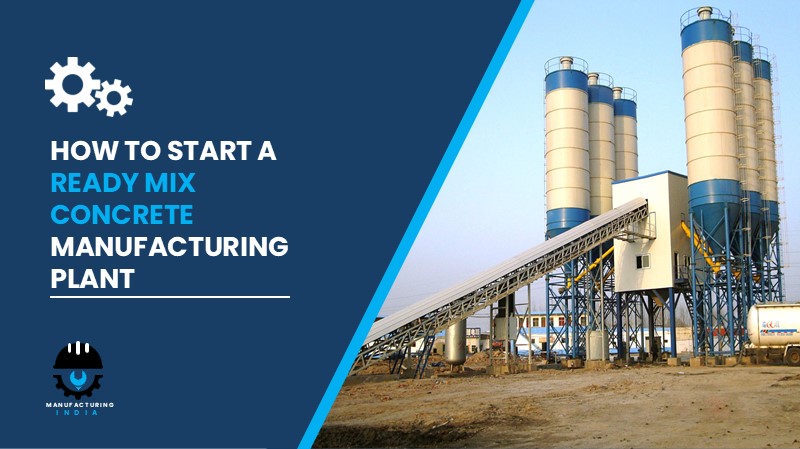
Setting up a ready mix concrete manufacturing plant in India presents a compelling investment case driven by large-scale infrastructure development, rapid urbanisation, rising residential and commercial construction activities, and the growing adoption of time-efficient and quality-controlled construction materials. Ready mix concrete (RMC) – an intricate, highly engineered construction material produced by mixing cement, aggregates, water, and additives at a centralised concrete factory – has become an indispensable input for modern construction practices across residential buildings, commercial complexes, infrastructure projects, industrial plants, and precast concrete applications. As India accelerates its metro rail expansion, urban housing development, and smart city infrastructure corridors, the demand for durable, high-quality, and consistently specified concrete is growing at a pace that strongly favours centralised RMC production over traditional site-mixed concrete.
India’s structural advantages make this investment strategically compelling. As per the Union Government Economic Survey 2024-25, during late 2024 and early 2025, India’s metro and rapid transit networks spanned 1,010 km across 23 cities, with nearly 980 km under construction. This rapid urban transport expansion is boosting demand for ready mix concrete, as large-scale infrastructure projects increasingly rely on durable, high-quality construction materials. Ready mix concrete is gaining preference from both government and private sectors due to its quality assurance, speedy construction timeline, and reduced environmental impact. The Government of India’s Make in India initiative, the country’s trend toward building taller structures, developing smart cities, and constructing major infrastructure corridors are simultaneously creating continuous demand for concrete that meets stringent specifications. The global ready mix concrete market was valued at USD 1,084.58 billion in 2025 and is expected to reach USD 2,278.92 billion by 2034 at a CAGR of 8.6% from 2026 to 2034 according to IMARC Group estimates – positioning a domestic ready mix concrete manufacturing plant in India to serve one of the largest and fastest-growing construction material categories in the world.
India’s 1,010 km metro and rapid transit network with nearly 980 km under construction per the Union Government Economic Survey 2024-25, the global RMC market growing from USD 1,084.58 billion in 2025 to USD 2,278.92 billion by 2034, and the structural shift toward quality-controlled construction materials make a ready mix concrete manufacturing plant a financially sound and infrastructure-aligned investment. With gross margins of 15–25% and net margins of 5–10% across a capacity of 200,000–500,000 cubic metres annually, the project delivers consistent returns anchored by India’s long-term urbanisation and infrastructure growth agenda.
What is Ready Mix Concrete?
Ready mix concrete is an intricate, highly engineered construction material that comes from the mixing of cement, aggregates, water, and additives at a centralised concrete factory. The ingredients are mixed to meet specific criteria, and quality is transported to the construction sites through transit mixer trucks, which also guarantee the same quality and workability throughout transit. In contrast to site-mixed concrete, ready mix concrete minimises material wastage, reduces labour dependency, and improves the efficiency of the construction process.
The product finds extensive application in various areas, such as residential buildings, commercial complexes, infrastructure projects, industrial plants, and precast concrete applications. Different grades and formulations are available, including standard concrete, high-strength concrete, self-compacting concrete, and fibre-reinforced concrete – each engineered to meet specific structural, workability, and durability requirements. The controlled environment during production gives rise to excellent durability, strength, and conformity with construction standards, making ready mix concrete an indispensable part of modern construction practices.
The primary production method is aggregate batching and weighing, cement dosing, admixture addition, controlled mixing, quality testing, and dispatch through transit mixers – a precision-controlled, centralised manufacturing process. End-use industries served include residential construction, commercial real estate, infrastructure development, industrial construction, and the precast concrete manufacturing industry.
Cost of Setting Up a Ready Mix Concrete Manufacturing Plant in India
The cost of establishing this facility depends on capacity, technology selection, plant location, degree of automation, and regulatory compliance requirements.
1. Capital Expenditure (CapEx)
Total capital investment for a ready mix concrete manufacturing plant in India covers land acquisition, site preparation, civil construction, machinery, and pre-operative expenses. The cost of land and site development – including charges for land registration, boundary development, and other related expenses – forms a substantial part of the overall investment. This allocation ensures a solid foundation for safe and efficient plant operations. Investors can reduce land acquisition costs by locating the unit in an industrial estate, construction materials cluster, or Special Economic Zone (SEZ), which also provide shared utility infrastructure and potential state-level fiscal incentives aligned with India’s infrastructure and construction materials manufacturing agenda.
Civil works and construction cover the main batching plant, cement storage silo, aggregate storage yard, a quality control laboratory, a transit mixer parking and maintenance area, and an administrative block. Given that RMC plants must minimise distribution costs through proximity to active construction sites, civil infrastructure planning must also account for site selection criteria centred on transportation access and target market proximity.
Machinery costs account for the largest portion of total capital expenditure. Essential equipment includes batching plants, cement silos, aggregate bins, conveyors, mixers, control systems, and transit mixers. All machinery must be high-quality and corrosion-resistant, tailored for ready mix concrete production, and must comply with industry standards for safety, efficiency, and reliability. Other capital costs include the effluent treatment plant (ETP), advanced process monitoring systems, pre-operative expenses, trial production costs, and commissioning charges.
Request a Sample Report for In-Depth Market Insights: https://www.imarcgroup.com/ready-mix-concrete-manufacturing-plant-project-report/requestsample
2. Operational Expenditure (OpEx)
The operating cost structure of a ready mix concrete manufacturing plant is primarily driven by raw material consumption, particularly cement, which accounts for approximately 70–80% of total operating expenses (OpEx). Sand and aggregates are the secondary raw material inputs. Securing long-term supply agreements with reliable domestic cement, sand, and aggregate producers is essential to mitigate price volatility and ensure consistent production quality. Minimising transportation costs by selecting nearby suppliers is essential, and sustainability and supply chain risks must be assessed, with long-term contracts negotiated to stabilise pricing and ensure a steady supply.
Utility costs – comprising electricity for batching plants, conveyors, mixers, and control systems, as well as water – account for 5–10% of total OpEx. Other ongoing operating costs include transportation, packaging, salaries and wages, depreciation, taxes, equipment repairs and maintenance, and other miscellaneous expenses.
In the first year of operations, the operating cost for the ready mix concrete manufacturing plant is projected to be significant, covering raw materials, utilities, depreciation, taxes, packing, transportation, and repairs and maintenance. By the fifth year, the total operational cost is expected to increase substantially due to factors such as inflation, market fluctuations, and potential rises in the cost of key materials. Additional factors, including supply chain disruptions, rising consumer demand, and shifts in the global economy, are expected to contribute to this increase.
3. Plant Capacity
The proposed manufacturing facility is designed with an annual production capacity ranging between 200,000 and 500,000 cubic metres, enabling economies of scale while maintaining operational flexibility. Capacity can be customised per investor requirements based on target residential, commercial, infrastructure, or precast market segments, available capital, and degree of automation. Profitability improves materially with higher capacity utilisation, making domestic supply agreements with construction contractors, infrastructure project developers, and precast component manufacturers a commercial priority from the commissioning stage. Plants can be set up in places where there is high demand to cut down on the cost of transportation and increase profits – a key operational insight given the perishable, time-sensitive nature of fresh concrete delivery.
4. Profit Margins and Financial Projections
The project demonstrates healthy profitability potential under normal operating conditions. Gross profit margins typically range between 15–25%, supported by stable demand and value-added applications. Net profit margins range between 5–10%. A comprehensive financial model covering NPV (net present value), IRR (internal rate of return), payback period, liquidity analysis, uncertainty analysis, sensitivity analysis, and a full five-year profit and loss account provides investors with a rigorous analytical framework for assessing financial viability and long-term sustainability across different capacity and pricing scenarios.
Why Set Up a Ready Mix Concrete Plant in India?
Growing Infrastructure Investments Driving Continuous Demand. The demand for ready mix concrete is being continually boosted by large-scale public and private infrastructure spending, which is the main driver for the market. As per the Union Government Economic Survey 2024-25, India’s metro and rapid transit networks spanned 1,010 km across 23 cities during late 2024 and early 2025, with nearly 980 km under construction – a scale of urban transport infrastructure build-out that creates sustained and government-backed procurement demand for domestically produced RMC.
Superior Quality and Consistency Favouring Centralised Production. Quality control and adherence to construction standards are made very strict by the centralised production method. As large-scale infrastructure projects increasingly rely on durable, high-quality construction materials, ready mix concrete is gaining preference from both government and private sectors due to its quality assurance, speedy construction timeline, and reduced environmental impact relative to traditional site-mixed concrete.
Time and Labour Efficiency Accelerating Construction Timelines. Ready mix concrete reduces on-site mixing time, labour dependency, and construction delays – a commercial advantage that is increasingly valued in India’s labour-constrained and timeline-sensitive construction sector, particularly for large infrastructure and high-rise commercial projects where schedule compression directly impacts project economics.
Environmental and Cost Benefits Supporting Sustainability Goals. The amount of waste generated from the use of materials is reduced, and the resources consumed are improved through the optimised batching process. Sustainability actions are increasingly affecting the industry, with the use of supplementary cementitious materials and recycled aggregates becoming more prevalent – creating opportunities for Indian RMC producers to differentiate through environmentally conscious production practices that align with green building certification requirements.
Scalable and Location-Flexible Operations Supporting Market Expansion. Plants can be set up in places where there is high demand to cut down on the cost of transportation and increase profits. This location-flexible operating model allows domestic investors to establish RMC capacity in direct proximity to India’s expanding metro corridors, smart city developments, and high-density urban construction zones – minimising the logistics constraints inherent to fresh concrete’s limited workability window.
Active Global Industry Developments Confirming Sector Consolidation Momentum. In June 2025, Premix Concrete SA, a privately owned ready-mix concrete (RMX) and aggregate business in South Australia, agreed to sell its operations, including quarries and sand assets, to Australian building materials company Adbri Pty Ltd – a deal marking notable consolidation in the local ready mix concrete sector and strengthening Adbri’s footprint in the RMC market. In April 2025, Heidelberg Materials expanded its footprint in Melbourne and Geelong by acquiring Midway Concrete, a family-owned Australian ready-mixed concrete business – adding four concrete plants to Heidelberg’s operations, strengthening its market position and product portfolio while emphasising sustainable ready mix concrete solutions for growing construction and infrastructure demand in the region. These developments confirm that the global RMC industry is actively consolidating and investing in expanded production capacity to meet rising construction demand.
Manufacturing Process – Step by Step
The ready mix concrete manufacturing process uses aggregate batching and weighing, cement dosing, admixture addition, controlled mixing, quality testing, and dispatch through transit mixers as the primary production method. Each stage is precision-controlled to ensure consistent strength, workability, and compliance with the construction standards required by residential, commercial, infrastructure, and precast customers.
- Raw Material Receipt and Inspection: Cement, sand, and aggregates are received at the facility and subjected to incoming quality checks for grade specification, moisture content, and particle size distribution before entering the production line.
- Aggregate Batching and Weighing: Coarse and fine aggregates are precisely weighed and batched from aggregate bins according to the target mix design specification, ensuring the correct proportion of materials for the required concrete grade.
- Cement Dosing: Cement is metered from cement silos in the precise quantity required for the target mix design, with accurate dosing critical to achieving the specified compressive strength and durability characteristics of the finished concrete.
- Admixture Addition: Chemical admixtures – including plasticisers, retarders, accelerators, or air-entraining agents as required by the specific mix design – are added in controlled quantities to achieve the target workability, setting time, and performance characteristics for standard, high-strength, self-compacting, or fibre-reinforced concrete formulations.
- Controlled Mixing: Batched aggregates, cement, water, and admixtures are combined in mixers under controlled mixing time and intensity to produce a homogeneous, workable concrete mix meeting the specified slump and consistency requirements.
- Conveying and Loading: Mixed concrete is transferred via conveyors to the loading point, where it is discharged directly into transit mixer trucks for transportation to the construction site.
- Quality Testing: Concrete samples are tested for slump, air content, and other fresh concrete properties at the point of loading, with cube samples retained for subsequent compressive strength testing to verify compliance with the specified concrete grade.
- Transportation via Transit Mixers: Loaded transit mixers continuously rotate the concrete drum during transportation to maintain workability and prevent segregation, ensuring the same quality and workability is delivered to the construction site as was achieved at the batching plant.
- Dispatch and Delivery: Concrete is dispatched to end-use customers across residential construction, commercial real estate, infrastructure development, industrial construction, and the precast concrete manufacturing industry, with delivery scheduling coordinated to match the limited workability window of fresh concrete.
Key Applications
The ready mix concrete manufacturing plant serves a diverse and commercially significant range of end-use sectors across India’s construction and infrastructure economy.
- Residential Construction: The use of ready mix concrete in residential buildings and flats not only provides continuous strength but also shortens the construction period and helps to minimise the amount of material wasted – a key benefit for India’s large-scale affordable and mid-segment housing development pipeline.
- Commercial and Institutional Buildings: RMC supports high-volume concrete requirements with consistent quality for offices, malls, hospitals, and educational facilities – applications where uniform structural performance across large floor plates is a non-negotiable specification requirement.
- Infrastructure Development: Durability and consistent performance make ready mix concrete the first choice for the construction of roads, bridges, flyovers, metro rail, and airports – directly aligned with India’s expanding metro and rapid transit network construction confirmed by the Economic Survey 2024-25.
- Precast Concrete Manufacturing: RMC provides precise formulations essential for producing standardised precast components such as beams, slabs, and panels – a growing segment as Indian construction increasingly adopts prefabricated and modular building techniques to accelerate project timelines.
- Structural Concrete Works: Foundations, pavements, bridges, high-rise buildings, and industrial floors all rely on specification-grade ready mix concrete where consistent strength development and quality control are essential for structural safety and longevity.
- High-Strength and Specialty Concrete Applications: Self-compacting concrete and fibre-reinforced concrete formulations serve specialised structural applications requiring enhanced workability, crack resistance, or load-bearing performance beyond standard concrete grades.
Leading Manufacturers
The global ready mix concrete industry is served by several established multinational manufacturers with extensive production capacities and diverse application portfolios. Key players operating in this market include:
- Buzzi SpA
- Barney & Dickenson, Inc.
- ACC Limited
- Vicat S.A.
- R.W. Sidley, Inc.
All of these manufacturers serve end-use sectors including infrastructure, residential construction, commercial real estate, and industrial projects – the same markets that a domestic Indian ready mix concrete manufacturing plant can target, with ACC Limited already representing a major established player in India’s own construction materials industry.
Timeline to Start the Plant
Investors should plan for a structured pre-production and commissioning phase covering the following key stages:
- Feasibility study and project report preparation
- Land acquisition and site development
- Regulatory approvals and environmental clearances
- Factory licence and fire safety compliance
- Machinery procurement and installation
- Raw material supplier agreements and supply chain setup
- Trial production and quality testing
- Commercial production launch
Licences and Regulatory Requirements
Starting a ready mix concrete manufacturing unit in India requires several approvals:
- Business registration (Proprietorship, LLP, or Private Limited Company)
- Factory Licence under the Factories Act
- Environmental Clearance from the State Pollution Control Board
- GST Registration
- Fire Safety NOC
- Hazardous material compliance for storage and handling of chemical admixtures
- Effluent Treatment Plant (ETP) operational clearance
- Occupational Health and Safety compliance
Key Challenges to Consider
High Capital Requirements. Establishing a fully equipped ready mix concrete manufacturing plant – with batching plants, cement silos, aggregate bins, conveyors, mixers, control systems, and a fleet of transit mixers – at the 200,000–500,000 cubic metre annual capacity range requires significant upfront capital investment. Access to MSME credit-linked subsidy schemes, construction materials cluster infrastructure support, and state government investment promotion grants can help bridge funding requirements.
Raw Material Price Volatility. Cement – accounting for 70–80% of total OpEx – is subject to domestic cement industry pricing cycles, energy cost fluctuations linked to cement kiln operations, and regional supply-demand imbalances. Sand and aggregate prices are subject to local mining regulation and transportation cost variability. Long-term procurement contracts with reliable cement, sand, and aggregate suppliers and a diversified sourcing strategy are essential risk mitigation measures for protecting the plant’s 15–25% gross margin profile.
Regulatory Compliance. RMC manufacturing facilities must comply with factory safety norms, environmental compliance for dust and wastewater management, and hazardous material handling regulations for chemical admixtures including plasticisers and accelerators. Advanced monitoring systems must be installed to detect process deviations, and effluent treatment systems are necessary to minimise environmental impact and ensure compliance with emission standards.
Time-Sensitive Logistics and Limited Workability Window. Fresh concrete has a limited workability window that requires precise coordination between production scheduling, transit mixer dispatch, and construction site readiness. Site selection must offer easy access to target markets to minimise distribution costs and transportation time – making location strategy and fleet management critical operational disciplines for maintaining product quality upon delivery.
Competition from Established Players. Established global and Indian manufacturers – including Buzzi SpA, ACC Limited, Vicat S.A., and R.W. Sidley Inc. – hold strong market positions across organised construction and infrastructure procurement channels. New entrants must compete through strategic plant location near high-demand construction zones, competitive pricing, reliable delivery scheduling, and consistent quality certification that builds trust with large contractors and infrastructure developers.
Skilled Manpower. Operating batching plants, mixers, control systems, and transit mixer fleets while maintaining quality control documentation for mix design compliance requires trained plant operators, quality control technicians, and logistics coordinators. Recruiting, training, and retaining qualified production and quality staff is a recurring operational challenge in India’s construction materials manufacturing sector.
Frequently Asked Questions
1. How much does it cost to set up a ready mix concrete manufacturing plant in India?
Total setup cost depends on plant capacity, location, machinery selection, and automation level. Key cost components include land and site development, civil construction, machinery (batching plants, cement silos, aggregate bins, conveyors, mixers, control systems, transit mixers), and pre-operative expenses. A detailed feasibility study is recommended to generate accurate project-specific cost estimates.
2. Is ready mix concrete manufacturing profitable in India in 2026?
Yes. The project delivers healthy financial performance, with gross margins of 15–25% and net profit margins of 5–10% under normal operating conditions. The global ready mix concrete market was valued at USD 1,084.58 billion in 2025 and is projected to reach USD 2,278.92 billion by 2034 at a CAGR of 8.6% according to IMARC Group, with India’s metro rail expansion and infrastructure investment confirmed by the Economic Survey 2024-25 providing strong domestic demand growth.
3. What machinery is required for a ready mix concrete manufacturing plant in India?
Essential equipment includes batching plants, cement silos, aggregate bins, conveyors, mixers, control systems, and transit mixers.
4. What licences and approvals are required to start a ready mix concrete manufacturing plant in India?
Required approvals include business registration, Factory Licence, Environmental Clearance from the State Pollution Control Board, GST Registration, Fire Safety NOC, hazardous material compliance for chemical admixture handling, ETP operational clearance, and Occupational Health and Safety compliance.
5. What raw materials are needed for ready mix concrete manufacturing?
The primary raw materials are cement, sand, and aggregates. Cement is the dominant cost driver, accounting for 70–80% of total operating expenses, and must be sourced from suppliers meeting the grade specification requirements for the target concrete formulation.
6. What are the environmental compliance requirements for a ready mix concrete manufacturing plant in India?
The facility must obtain Environmental Clearance from the State Pollution Control Board, operate an approved ETP, and install advanced monitoring systems to detect deviations in the manufacturing process. Effluent treatment systems are necessary to minimise environmental impact and ensure compliance with emission standards applicable to construction materials manufacturing operations.
7. What is the best location to set up a ready mix concrete manufacturing plant in India?
The location must offer easy access to key raw materials such as cement, sand, and aggregates, while proximity to target markets minimises distribution costs given the limited workability window of fresh concrete. The site must have robust infrastructure including reliable transportation, utilities, and waste management systems. Locations near expanding metro corridors, smart city projects, and high-density urban construction zones in cities such as Mumbai, Delhi NCR, Bengaluru, and Hyderabad offer strong demand proximity.
8. What is the break-even period for this type of plant in India?
The break-even period depends on plant capacity, total capital investment, product selling price, and capacity utilisation rate. A comprehensive financial analysis covering NPV, IRR, payback period, and uncertainty and sensitivity analysis is the most reliable method for generating project-specific break-even timelines.
9. What government incentives are available for manufacturers in India?
Ready mix concrete manufacturers in India can access MSME credit-linked capital subsidy schemes, state government investment promotion subsidies in construction materials and industrial estate clusters, and infrastructure-linked procurement opportunities arising from government metro rail, highway, and smart city development programmes. Governments may also offer capital subsidies, tax exemptions, reduced utility tariffs, and interest subsidies under national or regional industrial policies to promote construction materials manufacturing.
Key Takeaways for Investors
A ready mix concrete manufacturing plant in India offers a well-grounded investment opportunity anchored by growing demand across residential construction, commercial real estate, infrastructure development, industrial construction, and the precast concrete manufacturing industry – all of which are expanding at scale as India accelerates its urbanisation and infrastructure investment programmes. The project is financially viable across the 200,000 to 500,000 cubic metre annual capacity range, with gross margins of 15–25% and net margins of 5–10% providing a consistent return framework for investors at multiple capital scales. According to IMARC Group estimates, the global ready mix concrete market is set to grow from USD 1,084.58 billion in 2025 to USD 2,278.92 billion by 2034 at a CAGR of 8.6%, and India’s own metro and rapid transit network – spanning 1,010 km across 23 cities with nearly 980 km under construction as per the Union Government Economic Survey 2024-25 – confirms the scale of domestic infrastructure demand that directly supports new RMC manufacturing capacity. With global industry consolidation accelerating through transactions such as Adbri’s acquisition of Premix Concrete SA in June 2025 and Heidelberg Materials’ acquisition of Midway Concrete in April 2025, the long-term demand sustainability for domestically produced ready mix concrete in India is structurally sound across all investment planning horizons.
About the Author