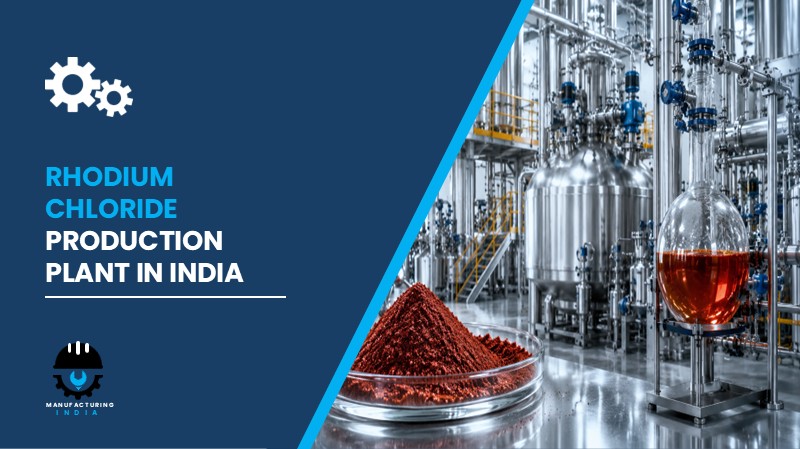
Rhodium Chloride Production Plant in India
Setting up a rhodium chloride production plant in India presents a compelling investment case of exceptional technical prestige and commercial selectivity — one where India’s rapidly expanding pharmaceutical manufacturing sector, growing specialty chemicals industry, deepening research infrastructure, and the global demand for high-performance precious metal catalysts across fine chemical synthesis, hydrogenation, and carbonylation processes are creating sustained and structurally growing demand for one of the most valuable and technically indispensable inorganic precious metal compounds in the industrial chemistry market. Rhodium chloride (RhCl₃) — the dark red or brown crystalline solid inorganic compound that serves as a crucial precious metal catalyst precursor across the chemical, pharmaceutical, electronics, petrochemical, and automotive industries — commands extraordinary commercial value precisely because rhodium is among the rarest metals on Earth, and because the compound’s catalytic and chemical properties are essentially irreplaceable in the high-value synthetic processes that modern pharmaceutical and specialty chemical manufacturing depends upon. As India’s pharmaceutical sector targets USD 130 Billion by 2030, its specialty chemicals base deepens, and its research infrastructure expands, the domestic case for rhodium chloride production capacity represents one of the most technically sophisticated and commercially premium specialty inorganic chemistry investments available to Indian manufacturers.
India’s pharmaceutical market growth directly validates the commercial environment for rhodium chloride producers targeting catalytic chemistry applications. IBEF indicates that the Indian pharmaceutical market is slated to grow 7–9% in FY26, fuelled by robust domestic demand, new product innovation, and expansion into Europe. Every pharmaceutical process that employs homogeneous rhodium catalysis — hydrogenation of pharmaceutical intermediates, asymmetric synthesis of chiral drug molecules, hydroformylation for aldehyde and alcohol precursor production — requires rhodium chloride or its derivatives as the catalyst precursor, creating a direct and growing demand linkage between India’s pharmaceutical manufacturing expansion and the consumption of rhodium chloride by domestic catalyst producers and synthesis chemistry operations. The Asia-Pacific regional context is equally compelling — IMARC Group confirms that Asia-Pacific is the largest regional rhodium chloride market, accounting for about 40% of global share, a dominance reflecting the concentration of pharmaceutical, fine chemical, and electronics manufacturing across the region that India is an increasingly significant participant in.
Investing in a rhodium chloride production plant in India today aligns India’s pharmaceutical market growing 7–9% in FY26, Asia-Pacific’s dominant 40% global market share, and the global demand for precious metal catalyst precursors in fine chemical synthesis with high but justifiable entry barriers that create technically defensible competitive positioning. With gross profit margins of 18–26% and net profit margins of 9–15% at an annual production capacity of 50 MT, the unit economics are commercially sound for a high-value precious metal compound, and the investment’s positioning at the interface of India’s pharmaceutical and specialty chemicals growth trajectories supports long-term strategic value.
What is Rhodium Chloride?
Rhodium chloride, typically known as rhodium(III) chloride (RhCl₃), is an inorganic compound that appears as a dark red or brown crystalline solid. It is highly versatile and serves as a crucial precious metal catalyst in the chemical, pharmaceutical, and electronic industries. It is primarily utilised as a precursor to synthesise other rhodium complexes, driving important reactions like hydrogenation, alkene isomerisation, and the commercial production of acetic acid.
Rhodium chloride’s extraordinary commercial value derives from rhodium’s position as one of the rarest and most expensive platinum group metals globally — a metal whose limited natural supply is concentrated in South African and Russian platinum mines, whose recovery as a by-product of platinum mining is subject to geological scarcity, and whose catalytic properties in homogeneous and heterogeneous catalyst systems are essentially irreplaceable for the selective organic transformations that modern pharmaceutical and specialty chemical manufacturing requires. As a precursor for synthesising other rhodium complexes including Wilkinson’s catalyst, the Crabtree catalyst, and specialised phosphine-rhodium hydroformylation catalysts, rhodium chloride sits at the gateway to the entire organorhodium chemistry landscape. Its role in the commercial production of acetic acid via the Monsanto and Cativa processes — two of the world’s largest-scale chemical processes — further cements its industrial importance well beyond laboratory and pharmaceutical synthesis applications.
The primary production process covers dissolution of rhodium metal in hydrochloric acid under chlorination, followed by purification, concentration, crystallisation, drying, and packaging. End-use industries served include chemical manufacturing, pharmaceuticals, electronics, petrochemicals, automotive, and research laboratories. Applications span catalyst precursor for fine chemical synthesis, pharmaceutical intermediates, hydroformylation and hydrogenation reactions, electroplating solutions, and research and laboratory applications.
Cost of Setting Up a Rhodium Chloride Production Plant in India
The cost of establishing a rhodium chloride production plant in India depends on production capacity, rhodium metal sourcing and precious metal management infrastructure, product grade mix across technical-grade, reagent-grade, and electronic-grade rhodium chloride, process technology for the dissolution, purification, and crystallisation stages, geographic location — particularly proximity to precious metal refining operations and pharmaceutical customer clusters — degree of automation, and the stringent quality compliance requirements applicable to rhodium chloride supplied to catalyst manufacturers, pharmaceutical companies, and electronics producers.
1. Capital Expenditure (CapEx)
Land and Site Development forms a foundational component of total capital investment, covering land acquisition charges, site registration, boundary development, and site utilities. The location must offer easy access to key raw materials such as rhodium metal/sponge, hydrochloric acid, and chlorine gas. Proximity to target markets will help minimise distribution costs. The site must have robust infrastructure, including reliable transportation, utilities, and waste management systems. Compliance with local zoning laws and environmental regulations must also be ensured. Precious metal processing facilities require particularly stringent security infrastructure — given rhodium’s extremely high unit value — making access control, precious metal vault storage, CCTV surveillance, and inventory reconciliation systems capital requirements that go substantially beyond conventional specialty chemical plant standards.
Plant Layout Optimisation is critical for a rhodium chloride production facility integrating precious metal dissolution, hydrochloric acid handling, chlorine gas management, purification operations, and crystallisation in a safely and securely managed workflow. The layout should be optimised to enhance workflow efficiency, safety, and minimise material handling. Separate areas for raw material storage for rhodium metal/sponge in secure vault facilities, hydrochloric acid and chlorine gas handling with appropriate containment, the dissolution and chlorination reaction zone, purification and filtration operations, concentration and crystallisation, drying, quality control laboratory, and finished goods secure storage and dispatch must be designated. Space for future expansion should be incorporated to accommodate business growth.
Machinery and Equipment represent the largest single component of total CapEx for a rhodium chloride production plant. Essential equipment includes:
- Chlorination reactors
- Corrosion-resistant reaction vessels
- Chlorine gas handling systems
- Storage tanks
- Filtration units
- Evaporators
- Crystallisers
- Drying systems
- Fume scrubbers
- Packaging machines
Other Capital Costs include effluent treatment systems to minimise environmental impact and ensure compliance with emission standards for hydrochloric acid-containing and rhodium-bearing process effluents, precious metal recovery systems for rhodium from all process waste streams — a critical economic imperative given rhodium’s extraordinary unit value — advanced monitoring systems to detect leaks or deviations in the process, pre-operative expenses, quality certification costs, commissioning charges, and import duties on specialised corrosion-resistant reaction vessel systems not available domestically.
Request a Sample Report for In-Depth Market Insights: https://www.imarcgroup.com/rhodium-chloride-manufacturing-plant-project-report/requestsample
2. Operational Expenditure (OpEx)
Raw Material Cost is the overwhelmingly dominant operational expense, accounting for approximately 70–80% of total OpEx. The primary raw materials are rhodium metal/sponge, hydrochloric acid, and chlorine gas. Rhodium metal — as the precious metal feedstock consumed in stoichiometric quantities and converted to rhodium chloride through dissolution and chlorination — drives the vast majority of raw material cost. Rhodium is among the most expensive metals traded globally, with prices historically ranging from several thousand to over USD 20,000 per troy ounce depending on supply-demand conditions in the platinum group metals market. The cost of rhodium metal feedstock makes this the highest-cost per unit raw material input of any product category in this investment guide series, requiring sophisticated precious metal inventory management, value-at-risk assessment, and procurement hedging strategies that go substantially beyond conventional chemical raw material management. Hydrochloric acid and chlorine gas are the reagents for the dissolution and chlorination reaction, widely available domestically. Long-term contracts with reliable suppliers will help mitigate price volatility and ensure a consistent supply of materials.
Utility Cost is the second-largest OpEx component, representing approximately 5–9% of total operating expenses — a low utility proportion reflecting the relatively moderate energy requirements of rhodium metal dissolution, concentration, and crystallisation operations at the small-scale 50 MT annual capacity of a rhodium chloride facility. Electricity for reaction vessels, filtration, evaporators, drying systems, and facility security constitutes the primary utility requirement.
Other Operating Costs include transportation and distribution to catalyst manufacturers, pharmaceutical API producers, acetic acid production facilities, electronics component manufacturers, research institutions, and specialty chemical producers, specialised precious-metal-grade packaging materials for rhodium chloride, salaries and wages for precious metal processing chemists and quality control analysts, routine machinery maintenance, comprehensive precious metal accounting and inventory management costs, depreciation on production equipment, and applicable taxes. By the fifth year, the total operational cost is expected to increase substantially due to factors such as inflation, market fluctuations, and potential rises in the cost of key materials. Additional factors, including supply chain disruptions, rising consumer demand, and shifts in the global economy, are expected to contribute to this increase.
3. Plant Capacity
The proposed production facility for rhodium chloride is designed with an annual production capacity of 50 MT, reflecting the precious metal nature of this product — where the extraordinary unit value of rhodium means that even 50 MT of rhodium chloride annual output represents a commercially significant production volume with high absolute revenue even at modest physical tonnage. Plant capacity can be customised per investor requirements and phased in line with secured catalyst manufacturer and pharmaceutical customer qualification approvals. Profitability improves with higher capacity utilisation and effective precious metal inventory turn management, making secured supply agreements with established catalyst producers, acetic acid manufacturers, and pharmaceutical companies a strategic commercial foundation from the investment’s earliest operational stages.
4. Profit Margins and Financial Projections
The financial projections for a rhodium chloride production plant demonstrate commercially sound profitability potential under normal operating conditions. Gross profit margins typically range between 18–26%, supported by stable demand and value-added applications across chemical manufacturing, pharmaceuticals, electronics, petrochemicals, and research laboratory sectors. Net profit margins are projected at 9–15%, reflecting the extraordinary raw material cost concentration in rhodium metal that limits absolute margin percentages while still generating very substantial absolute profit values given the high unit selling prices of rhodium chloride products. A comprehensive financial analysis covering NPV, IRR, payback period, and five-year projections is essential before committing capital.
Why Set Up a Rhodium Chloride Production Plant in India?
Critical Precious Metal Catalyst Intermediate for India’s Pharmaceutical Growth. Rhodium chloride is a high-value rhodium compound widely used as a precursor for homogeneous catalysts, precious metal catalysts, specialty chemical synthesis, electroplating solutions, and research applications, positioning it as a strategic material for the fine chemicals, pharmaceutical, and petrochemical industries. India’s pharmaceutical market is slated to grow 7–9% in FY26, fuelled by robust domestic demand, new product innovation, and expansion into Europe — a growth trajectory that directly expands the consumption of rhodium-based catalyst systems for pharmaceutical intermediate synthesis across India’s established generic API manufacturing base.
High but Justifiable Entry Barriers Creating Defensible Competitive Positioning. Production requires access to precious metal feedstocks, advanced refining and purification technologies, stringent quality control, and expertise in handling high-value materials. These technical and capital-intensive requirements create significant entry barriers that favour established manufacturers with specialised capabilities. Once established with customer qualifications, technical reputation, and precious metal sourcing relationships, a rhodium chloride producer benefits from switching costs and supply security preferences that create enduring commercial positioning difficult for new competitors to displace.
Alignment with High-Value Chemical Trends and Industrial Catalysis Growth. Growing demand for catalytic processes in pharmaceuticals, specialty chemicals, petrochemicals, and advanced materials is driving sustained demand for rhodium chloride, as industries increasingly rely on high-performance catalysts to improve process efficiency and product quality. Homogeneous rhodium catalysis enables the selective chemical transformations — asymmetric hydrogenation, regioselective hydroformylation, controlled carbonylation — that modern pharmaceutical and specialty chemical synthesis increasingly demands, creating structural growth in rhodium catalyst consumption independent of overall production volume expansion.
Asia-Pacific’s Dominant 40% Market Share Confirming Regional Investment Rationale. Asia-Pacific is the largest regional rhodium chloride market, accounting for about 40% of global share, driven by the concentration of pharmaceutical, fine chemical, electronics, and petrochemical manufacturing across the region. India’s rapidly growing position within this dominant regional market — supported by its expanding pharmaceutical manufacturing base, specialty chemical sector, and research infrastructure — creates a domestically accessible and regionally exportable commercial opportunity that a well-positioned Indian rhodium chloride producer can capture with supply chain proximity advantages over import alternatives.
Policy and Industrial Development Support for Specialty Chemical Manufacturing. Expanding investments in specialty chemicals, pharmaceutical manufacturing, research infrastructure, and domestic value-added chemical production are indirectly supporting demand for catalyst precursors such as rhodium chloride, particularly in regions promoting advanced manufacturing capabilities. India’s Make in India initiative, PLI scheme for pharmaceuticals, and specialty chemicals development programmes collectively create a favourable policy environment for high-value inorganic chemistry investments targeting pharmaceutical and specialty chemical market segments.
Supply Chain Localisation and Secure Precious Metal Sourcing Creating Opportunity. Chemical manufacturers and catalyst producers increasingly prefer reliable regional suppliers capable of ensuring consistent product purity, secure precious metal sourcing, shorter lead times, and efficient metal recovery and recycling, creating opportunities for producers with robust refining expertise and integrated supply chain management. An India-based rhodium chloride producer with established precious metal sourcing relationships, comprehensive recovery systems, and certified quality management can serve domestic pharmaceutical and catalyst customers with the supply chain reliability and technical support that import alternatives cannot match.
Production Process — Step by Step
The rhodium chloride production process uses dissolution of rhodium metal in hydrochloric acid under chlorination, followed by purification, concentration, crystallisation, drying, and packaging as the primary production method. Each stage requires precisely controlled reaction conditions, purification parameters, and quality verification to produce rhodium chloride of the target purity, crystal form, and trace impurity profile required by catalyst manufacturer, pharmaceutical, and electronics customers.
- Rhodium Metal/Sponge Receipt and Preparation: Rhodium metal sponge or powder is received from certified precious metal suppliers, weighed and assayed for rhodium content, and transferred to secure precious metal vault storage pending the dissolution schedule. All rhodium inventory is tracked continuously by lot and weight throughout the production process.
- Dissolution in Hydrochloric Acid Under Chlorination: Rhodium metal sponge is charged into corrosion-resistant reaction vessels containing concentrated hydrochloric acid, with chlorine gas introduced through chlorine gas handling systems under controlled conditions. The combination of hydrochloric acid and chlorine gas enables efficient dissolution of rhodium metal — which resists dissolution in hydrochloric acid alone — into a rhodium chloride solution through the chlorination of dissolved rhodium species.
- Primary Filtration: The crude rhodium chloride solution is processed through filtration units to remove undissolved rhodium metal particles, insoluble residues, and particulate impurities, with the filter cake returned to the dissolution process to recover all rhodium values.
- Purification: Filtered rhodium chloride solution undergoes selective purification steps to remove co-dissolved impurity metals — platinum, palladium, iridium, and base metals — through controlled precipitation, solvent extraction, or ion exchange procedures, producing a purified rhodium chloride solution suitable for concentration and crystallisation.
- Evaporation and Concentration: Purified rhodium chloride solution is processed through evaporators under controlled temperature and vacuum conditions to concentrate the solution to the level required for efficient crystallisation of the target rhodium chloride hydrate form.
- Crystallisation: Concentrated rhodium chloride solution is processed through crystallisers under controlled cooling and evaporation conditions to produce rhodium chloride crystals of the specified hydration state, morphology, and purity required for technical-grade, reagent-grade, or electronic-grade product specifications.
- Drying: Crystallised rhodium chloride is processed through drying systems at controlled temperature to achieve the target hydration state and moisture content while maintaining crystal integrity and preventing premature decomposition.
- Fume Scrubbing: Throughout the dissolution, chlorination, and evaporation stages, fume scrubbers capture hydrochloric acid vapour, chlorine gas, and other volatile emissions from the process, protecting worker health, the environment, and surrounding equipment from corrosive gas exposure.
- Quality Testing: Finished rhodium chloride undergoes comprehensive quality testing covering rhodium assay by ICP-OES, trace platinum group metal impurities, base metal content, moisture content, crystal appearance, and solution pH, verifying compliance with catalyst, pharmaceutical, or electronic-grade customer specifications before packaging.
- Packaging and Dispatch: Specification-compliant rhodium chloride is packaged in precisely weighed, certified quantities using packaging machines with full precious metal lot traceability documentation, then dispatched to catalyst manufacturers, pharmaceutical API producers, acetic acid production facilities, electronics component manufacturers, research laboratories, and specialty chemical companies.
Key Applications
Rhodium chloride produced in India serves technically demanding and commercially high-value applications across chemical synthesis, pharmaceutical, and electronics sectors:
- Catalysis: Used as a precursor for homogeneous and heterogeneous catalysts for hydrogenation, hydroformylation, carbonylation, and fine chemical synthesis processes — the primary and highest-value application driving global rhodium chloride consumption.
- Chemical Manufacturing: Serves in the production of pharmaceuticals, agrochemicals, specialty chemicals, and high-value organic intermediates where rhodium-catalysed reactions provide selectivity and efficiency advantages over non-precious metal alternatives.
- Electronics: Applied in electroplating of electronic components, conductive coatings, and fabrication of precision electrical contacts where rhodium’s exceptional hardness, corrosion resistance, and electrical conductivity make it technically irreplaceable.
- Research and Laboratory: Used in preparation of organorhodium complexes, analytical reagents, and catalysts for academic and industrial research across India’s expanding university, CSIR, and industrial R&D laboratory infrastructure.
Leading Producers
The global rhodium chloride industry is served by a group of large precious metal refining and specialty chemistry companies with extensive production capabilities and integrated platinum group metals sourcing and refining operations. Key players in the global market include:
- Johnson Matthey Plc
- BASF SE
- Heraeus Group
- Umicore N.V.
- Tanaka Holdings Co., Ltd.
- Lonmin Plc
Timeline to Start the Plant
Establishing a rhodium chloride production plant in India involves a structured multi-phase development sequence. Investors should plan for the following phases:
- Feasibility study and project report preparation
- Land acquisition and site development
- Regulatory approvals and environmental clearances
- Factory licence and fire safety compliance
- Machinery procurement and installation
- Raw material supplier agreements and supply chain setup
- Trial production and quality testing
- Commercial production launch
Licences and Regulatory Requirements
Starting a rhodium chloride production unit in India requires several approvals spanning business registration, precious metal handling compliance, chemical safety, environmental, and pharmaceutical supply chain compliance domains:
- Business registration (Proprietorship, LLP, or Pvt Ltd)
- Factory Licence under the Factories Act
- Environmental Clearance from the State Pollution Control Board
- GST Registration
- Fire Safety NOC
- Hazardous/Chemical compliance under the Manufacture, Storage and Import of Hazardous Chemical (MSIHC) Rules applicable to hydrochloric acid and chlorine gas handling
- Effluent treatment systems operational clearance to minimise environmental impact and ensure compliance with emission standards for acid and precious metal-bearing effluents
- Precious metal trade and import compliance under applicable customs and import regulations for rhodium metal feedstock
- Occupational Health and Safety compliance including chlorine and hydrochloric acid exposure monitoring, fume scrubbing maintenance, and precious metal security protocols
Key Challenges to Consider
Rhodium Metal Price Volatility — The Most Volatile Raw Material in This Series. Rhodium metal is among the most price-volatile commodities traded globally — with prices ranging from below USD 1,000/troy oz to over USD 20,000/troy oz within a single decade, driven by automotive catalyst demand cycles, South African mining production, and speculative positioning. At 70–80% of OpEx, rhodium metal feedstock cost volatility can swing facility economics dramatically within a single year, requiring sophisticated precious metal procurement risk management including forward purchasing, tolling arrangements with customers, and rhodium price pass-through clauses in all supply contracts.
Precious Metal Security and Inventory Management. Rhodium’s extraordinary unit value — making even small quantities of metal worth substantial sums — requires comprehensive physical security infrastructure including access-controlled vault storage, CCTV monitoring, GPS-tracked logistics for precious metal movements, segregated handling procedures, and daily inventory reconciliation. The security requirements for a rhodium chloride facility go substantially beyond those of any conventional chemical manufacturing plant of comparable size.
Rhodium Supply Chain Concentration and Sourcing Challenges. Primary rhodium production is highly geographically concentrated in South Africa, which produces approximately 80% of global supply as a by-product of platinum mining. This concentration creates supply chain risk from mining disruptions, labour actions, and South African economic conditions. Establishing reliable rhodium metal sourcing through certified precious metal refiners, tolling arrangements with catalyst industry customers, and secondary rhodium recovery from spent catalyst material are all important supply chain diversification strategies.
Comprehensive Precious Metal Recovery from All Waste Streams. At rhodium’s unit value, even trace losses of rhodium in process effluents, filter cakes, equipment residues, or evaporator scale represent significant economic losses that must be systematically recovered. Installing and operating comprehensive precious metal recovery systems for every waste stream — including spent acids, wash waters, and equipment cleaning effluents — is a non-negotiable economic and environmental imperative that adds both capital cost and ongoing operational management obligation.
Customer Qualification for Pharmaceutical and Catalyst Applications. Supplying rhodium chloride to pharmaceutical catalyst manufacturers and fine chemical producers requires passage through material qualification processes verifying precious metal purity, trace impurity profiles, and batch-to-batch consistency — qualification cycles that may extend 6–12 months before commercial supply agreements are confirmed with the high-value industrial chemistry customers that constitute the primary market.
Competition from Established Precious Metal Refining Giants. The competitive landscape is led by large, vertically integrated precious metal refining companies including Johnson Matthey, Heraeus, Umicore, and Tanaka Holdings — each with integrated platinum group metals sourcing from mining companies, multi-decade customer relationships with major catalyst and pharmaceutical producers, and comprehensive precious metal recovery and recycling capabilities. New producers must differentiate through technical quality, supply reliability, competitive pricing, and the supply chain responsiveness and technical support that proximity to India’s growing pharmaceutical and chemical markets provides.
Frequently Asked Questions
1. How much does it cost to set up a rhodium chloride production plant in India?
The total capital investment depends on plant capacity, technology, precious metal security infrastructure, and location. Equipment costs — for chlorination reactors, corrosion-resistant reaction vessels, chlorine gas handling systems, storage tanks, filtration units, evaporators, crystallisers, drying systems, fume scrubbers, and packaging machines — represent a significant portion of capital expenditure, with precious metal vault storage, security systems, and comprehensive recovery infrastructure adding substantially to total capital requirements. A detailed project report with full CapEx and OpEx breakdowns is available on request.
2. Is rhodium chloride production profitable in India in 2026?
Yes. The project demonstrates gross profit margins of 18–26% and net profit margins of 9–15% under normal operating conditions — commercially sound returns that, given rhodium chloride’s extraordinary unit selling prices, generate very substantial absolute profit values even at modest percentage margins. India’s pharmaceutical market growing 7–9% in FY26, Asia-Pacific’s dominant 40% global market share, and the structural growth of homogeneous catalysis in pharmaceutical synthesis collectively confirm the commercial opportunity.
3. What machinery is required for a rhodium chloride production plant in India?
Key machinery includes chlorination reactors, corrosion-resistant reaction vessels, chlorine gas handling systems, storage tanks, filtration units, evaporators, crystallisers, drying systems, fume scrubbers, and packaging machines. All process contact equipment must be fabricated from materials resistant to concentrated hydrochloric acid and chlorine — typically glass-lined, PTFE-lined, or titanium construction throughout.
4. What licences and approvals are required to start a rhodium chloride production plant in India?
Required approvals include business registration, a Factory Licence under the Factories Act, Environmental Clearance from the State Pollution Control Board, GST registration, a Fire Safety NOC, MSIHC Rules compliance for hydrochloric acid and chlorine gas handling, effluent treatment systems clearance for precious metal-bearing acid effluents, precious metal import compliance, and Occupational Health and Safety compliance including chlorine and HCl exposure monitoring.
5. What raw materials are needed for rhodium chloride production?
The primary raw materials are rhodium metal/sponge, hydrochloric acid, and chlorine gas. Rhodium metal accounts for approximately 70–80% of total operating expenses — the highest-value raw material concentration in this investment guide series — making rhodium procurement strategy, precious metal sourcing relationships, inventory management, and price risk management the absolute highest-priority commercial and operational considerations for this investment.
6. What are the environmental compliance requirements for a rhodium chloride production plant in India?
The unit must obtain Environmental Clearance from the State Pollution Control Board, operate effluent treatment systems to minimise environmental impact and ensure compliance with emission standards for hydrochloric acid-containing and rhodium-bearing process effluents, install fume scrubbers for chlorine and HCl emissions throughout dissolution and concentration operations, implement comprehensive precious metal recovery from all waste streams, and maintain continuous process monitoring.
7. What is the best location to set up a rhodium chloride production plant in India?
Optimal locations offer proximity to precious metal refining operations or certified precious metal traders for rhodium sourcing, established specialty chemical infrastructure, reliable utilities, and access to pharmaceutical API manufacturing and catalyst producer customer clusters. Specialty chemical and pharmaceutical manufacturing industrial estates in Gujarat, Maharashtra, and Tamil Nadu with established precious metal handling infrastructure are among the most strategically relevant options.
8. What is the break-even period for this type of plant in India?
The break-even period depends on plant capacity, precious metal pricing cycles, customer qualification timelines, capacity utilisation rate, and demand conditions across pharmaceutical, catalyst, and electronics customer segments. A detailed financial analysis including payback period, NPV, and IRR projections is included in the full project report, available via the sample request link.
9. What government incentives are available for manufacturers in India?
The Make in India initiative, PLI scheme for pharmaceuticals supporting downstream rhodium catalyst demand, specialty chemicals manufacturing incentives, and state-level industrial promotion policies in Gujarat, Maharashtra, and Tamil Nadu provide financial and regulatory support for rhodium chloride production investments. Export promotion benefits under specialty precious metal chemicals categories may also be applicable.
Key Takeaways for Investors
A rhodium chloride production plant in India represents a commercially sophisticated and technically premium investment in one of the world’s most valuable and industrially indispensable precious metal compounds — positioned at the interface of India’s rapidly expanding pharmaceutical manufacturing sector, growing specialty chemicals industry, and deepening research infrastructure. The project demonstrates commercial viability at an annual production capacity of 50 MT, with gross profit margins of 18–26% and net profit margins of 9–15% generating substantial absolute financial returns given rhodium chloride’s extraordinary unit selling prices — making this one of the highest-revenue per tonne manufacturing investments available in India’s specialty chemicals sector. The high but justifiable entry barriers — precious metal sourcing expertise, hydrochloric acid and chlorine gas handling capability, comprehensive recovery system management, and pharmaceutical-grade quality management — create defensible competitive positioning for producers who invest in these capabilities comprehensively from the outset. With India’s pharmaceutical market growing 7–9% in FY26 creating direct domestic institutional demand for rhodium catalysts, Asia-Pacific accounting for 40% of the global rhodium chloride market confirming the regional commercial opportunity, and the structural growth of homogeneous catalysis in fine chemical and pharmaceutical synthesis driving long-term consumption growth, demand sustainability for India-based rhodium chloride production is commercially compelling, pharmaceutical-growth-anchored, and strategically distinctive across the full investment horizon.
About the Author