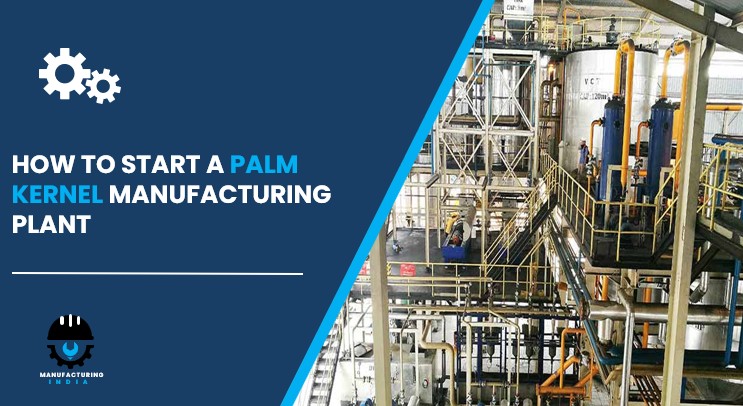
Setting up a palm kernel manufacturing plant in India represents a highly attractive investment proposition underpinned by robust and structurally growing demand from the edible oil industry, the cosmetics and personal care sector, the animal feed industry, and the oleochemical and biofuel industries. As global consumption of vegetable oils and protein-rich animal feed continues to expand, and as manufacturers of soaps, detergents, surfactants, and confectionery fats increasingly seek stable, cost-effective lauric oils, palm kernel available as crude oil, refined oil, and defatted cake occupies an increasingly important position across food processing, industrial, and agricultural value chains. This growth trajectory, combined with abundant raw material availability across major oil palm-growing regions and strong dual-product revenue potential from both oil and cake, creates a highly favourable manufacturing environment for new entrants with efficient cracking, extraction, and refining systems.
What is Palm Kernel?
Palm kernel is the edible seed found inside the shell of the oil palm fruit, recovered as a co-product after crude palm oil has been extracted from the surrounding fruit mesocarp. The kernel is rich in oil, most notably lauric acid, and is processed to yield palm kernel oil along with a solid residue known as palm kernel cake or palm kernel meal. Palm kernel oil is valued for its oxidative stability, long shelf life, and semi-solid texture at room temperature, properties that make it well suited to confectionery fats, margarine, soap manufacturing, and cosmetic formulations, while the cake is prized as a high-protein ingredient in animal feed rations.
Palm kernel processing involves cracking the nut to separate the shell from the kernel, drying the recovered kernels, and then extracting oil through mechanical pressing, solvent extraction, or a combination of both. The resulting products crude palm kernel oil, refined palm kernel oil, and defatted or expeller-pressed kernel cake each serve distinct downstream industries, from edible oil refining and confectionery manufacturing to oleochemical production and livestock nutrition.
Cost of Setting Up a Palm Kernel Manufacturing Plant
The total capital investment required to establish a palm kernel manufacturing plant is shaped by several key parameters: annual production capacity (typically ranging from 50,000 to 150,000 MT per annum), the processing route adopted (mechanical expeller pressing versus solvent extraction, with or without an integrated refinery), the level of automation across cracking, drying, extraction, and refining sections, facility specification, raw material sourcing strategy, and applicable regulatory and food safety compliance requirements. Below is a structured breakdown of the major cost components.
1. Capital Expenditure (CapEx)
Total capital investment in a palm kernel manufacturing plant covers the following major heads:
Land and Site Development
This encompasses land acquisition or lease, site preparation, boundary development, and utilities connectivity. Site selection should prioritise proximity to palm oil mills and kernel aggregation points to ensure a steady, low-transport-cost supply of palm kernels. Access to reliable power and steam generation infrastructure for drying and extraction processes, strong road and port logistics for inbound kernels and outbound finished oil and cake, availability of process water of suitable quality, and a trained workforce for plant operations and quality control are critical site selection criteria. Compliance with industrial zoning regulations, food safety manufacturing standards, fire and explosion safety norms applicable to solvent extraction operations where used, and effluent and emission compliance frameworks must be assessed from project initiation.
Civil Works and Construction
Building costs cover the main processing facility including the kernel reception and cleaning section, nut cracking and shell separation house, drying section, expeller or solvent extraction house, filtration and refining section, cake handling and storage area, automated packaging and dispatch infrastructure, quality control laboratory, administrative block, and utility infrastructure including boiler house, power backup, cooling water systems, and effluent treatment plant. Construction must comply with applicable factory act requirements, food safety manufacturing standards, fire and explosion-proofing norms where solvent handling is involved, and food safety infrastructure guidelines.
Machinery and Equipment
Machinery represents the single largest CapEx component. Key equipment required for a palm kernel manufacturing plant includes:
- Kernel Reception and Cleaning Systems: Kernel intake hoppers, screening and cleaning equipment, and conveying systems to remove foreign matter and shell fragments from incoming palm kernels prior to processing
- Nut Cracking and Shell Separation Units: Ripple mills or centrifugal crackers to break open the palm nut shell, followed by pneumatic or hydro-cyclone separation systems to segregate kernels from shell and fibre
- Kernel Drying Systems: Rotary or fluidised-bed dryers to reduce kernel moisture content to levels suitable for safe storage and efficient oil extraction, preventing mould growth and free fatty acid build-up
- Oil Extraction Systems: Screw-pressing expellers for mechanical extraction and/or solvent extraction plants using food-grade hexane for high-efficiency oil recovery from dried kernels
- Solvent Recovery and Safety Systems: Desolventiser equipment for removing residual solvent from extracted cake and recovering solvent vapours for recycling, applicable to solvent-based extraction routes
- Crude Oil Filtration and Storage: Plate and frame filters, settling tanks, and crude oil storage tanks for holding extracted crude palm kernel oil prior to refining
- Refining Section: Continuous or batch degumming, alkali neutralisation, vacuum bleaching, and steam distillation deodorisation systems to convert crude oil into refined, bleached, and deodorised palm kernel oil
- Boiler and Steam Generation: Steam boilers to supply process steam for drying, extraction, desolventisation, and refining operations
- Cake Handling and Pelletising Systems: Cake cooling, screening, and pelletising equipment along with storage silos for palm kernel cake destined for animal feed customers
- Automated Packaging Lines: Filling, capping, labelling, and cartoning lines for retail pouches, bottles, jerry cans, and bulk drums, along with bulk loading facilities for tanker and bagged cake dispatch
- Quality Control Laboratory Equipment: Equipment for free fatty acid, moisture, colour, iodine value, and other analytical tests to verify compliance with food safety and quality standards
- Material Handling and Warehousing: Conveyors, bucket elevators, storage silos for kernels and cake, and finished goods warehousing with FIFO stock management
Other Capital Costs
These include pre-operative expenses, commissioning charges, import duties on specialised extraction and refining equipment, staff training and competency development, initial raw material and consumable inventory for production commissioning, regulatory compliance setup including food safety licensing, quality certification for edible oils, sustainability certification such as RSPO membership where targeting certified supply chains, and ISO 22000 / HACCP food safety management system establishment costs.
Request a Sample Report for In-Depth Market Insights: https://www.imarcgroup.com/palm-kernel-manufacturing-plant-project-report/requestsample
2. Operational Expenditure (OpEx)
Raw materials principally palm kernels procured from palm oil mills and kernel aggregators, along with food-grade hexane where solvent extraction is used, constitute the dominant operating cost, typically representing 75-85% of total OpEx. Utility costs, driven primarily by drying, steam generation, electricity consumption of extraction and refining equipment, account for 10-15% of OpEx. Labour, maintenance, quality control, packaging, transportation, depreciation, taxes, and overhead costs constitute the remainder of the operating cost base.
3. Plant Capacity
The proposed palm kernel manufacturing facility is designed with an annual production capacity ranging between 50,000-150,000 MT, enabling economies of scale while maintaining operational flexibility. This capacity range supports a diversified product portfolio of crude palm kernel oil, refined palm kernel oil, and palm kernel cake, serving domestic edible oil, cosmetics, animal feed, and oleochemical markets, as well as export channels.
4. Profit Margins and Financial Projections
The project demonstrates healthy profitability potential under normal operating conditions. Financial projections encompass capital investment, operating costs, capacity utilisation ramp-up schedule, product mix between crude oil, refined oil, and cake, and forward demand outlook underpinned by rising demand for lauric oils and animal feed. A comprehensive feasibility analysis includes sensitivity analysis, Net Present Value (NPV), Internal Rate of Return (IRR), and Payback Period calculations. Gross profit margins for palm kernel manufacturing typically range from 25-35%, supported by stable demand and value-added applications. Net profit margins of 12-18% are achievable with disciplined cost management, optimal capacity utilisation, and effective by-product monetisation.
Why Set Up a Palm Kernel Manufacturing Plant?
Rising Demand for Lauric Oils Across Food and Non-Food Applications
Increasing industrial demand for palm kernel oil in confectionery fats, margarine, bakery shortening, soaps, and cosmetic formulations is driving sustained demand growth, supported by the oil’s favourable lauric acid content, oxidative stability, and cost-competitiveness relative to other lauric oils such as coconut oil. As food processors and personal care manufacturers increasingly seek stable, functional fats, palm kernel oil is well positioned to capture growing volumes across both edible and non-edible applications.
Strong By-Product Utilisation and Dual Revenue Streams
Palm kernel processing generates two marketable outputs from a single raw material stream: palm kernel oil for food, cosmetic, and oleochemical use, and palm kernel cake, a high-protein by-product widely used in animal feed formulations. Effective monetisation of both outputs materially enhances overall project economics, improving blended margins beyond what oil sales alone would generate and providing additional revenue diversification for processors.
Expanding Animal Feed Industry Demand for Palm Kernel Cake
Growth in global livestock, poultry, and aquaculture production is driving consistent demand for cost-effective, protein-rich feed ingredients such as palm kernel cake. Its favourable nutritional profile and competitive pricing relative to alternative protein meals make it an attractive component of compound feed formulations, positioning integrated palm kernel processors to benefit from steady offtake in feed-producing regions.
Diversified Industrial and Oleochemical Applications
Palm kernel oil serves as a key feedstock for oleochemical manufacturing, including surfactants, fatty alcohols, soaps, and detergents, and is increasingly used in biodiesel production as renewable fuel mandates expand across major economies. This diversified demand base across food, personal care, industrial, and energy sectors provides resilience against single-segment demand volatility for processors.
Abundant Raw Material Availability in Palm-Producing Regions
Indonesia and Malaysia together account for the large majority of global oil palm cultivation and processing capacity, generating substantial and consistent volumes of palm kernels as a co-product of palm oil milling, with Nigeria, Thailand, and Colombia representing additional and growing production bases. This geographic concentration of raw material supply allows processors to establish plants in close proximity to palm oil mills, minimising transportation costs and ensuring consistent kernel availability throughout the crushing season.
Scalable and Integrated Processing Operations
The palm kernel value chain spanning cracking, drying, extraction, and refining allows processors to begin operations at a moderate scale focused on crude oil and cake production, and expand into integrated refining as volumes and capital availability grow. This phased investment approach allows new entrants to manage capital deployment while building operational expertise, with subsequent integration of refining capacity improving margin capture by enabling sale of higher-value refined oil rather than crude oil to third-party refiners.
Favourable Sustainability and Trade Environment
Growing buyer preference for certified sustainable palm products, alongside continued cross-border cooperation on palm-based supply chains and expanding applications in oleochemicals and renewable fuels, is supporting a favourable long-term investment environment for palm kernel processors that adopt recognised sustainability certification frameworks and maintain transparent, traceable sourcing practices.
Manufacturing Process Overview
The palm kernel manufacturing operation transforms raw palm kernels recovered from palm oil milling into crude oil, refined edible oil, and animal feed cake through a sequence of cracking, drying, extraction, refining, and packaging operations. The key process stages are:
- Raw Material Reception and Cleaning: Palm kernels received from palm oil mills and aggregators are screened and cleaned to remove shell fragments, fibre, and foreign matter prior to processing.
- Nut Cracking and Shell Separation: Where whole nuts are received rather than pre-separated kernels, ripple mills or centrifugal crackers break the shell, and pneumatic or hydro-cyclone systems separate the lighter kernel fraction from shell and fibre.
- Kernel Drying: Cleaned kernels are dried using rotary or fluidised-bed dryers to reduce moisture content to safe storage levels, preventing mould growth and preserving oil quality ahead of extraction.
- Oil Extraction: Dried kernels undergo mechanical expeller pressing and/or solvent extraction using food-grade hexane to maximise oil recovery from the kernel matrix.
- Desolventisation and Cake Recovery: Where solvent extraction is used, extracted cake passes through a desolventiser to remove residual hexane, which is recovered and recycled within the solvent recovery system, while the resulting palm kernel cake is cooled, screened, and stored for sale.
- Crude Oil Filtration: Extracted crude palm kernel oil is filtered to remove fine particulate matter and settled solids before transfer to crude oil storage tanks pending refining.
- Degumming and Neutralisation: Crude oil is degummed to remove phospholipids and treated with alkali to neutralise free fatty acids, forming soapstock that is separated and removed, yielding neutralised oil with reduced acidity.
- Bleaching: Neutralised oil is treated under vacuum with bleaching earth and activated carbon to adsorb colour pigments, residual soaps, and trace metals, producing a lighter-coloured, purer oil.
- Deodorisation: Bleached oil undergoes steam distillation under high vacuum and temperature to remove volatile odour and flavour compounds, resulting in bland, oxidatively stable refined palm kernel oil suitable for retail and food processing applications.
- Quality Control: Refined oil and cake are tested for free fatty acid content, moisture, colour, iodine value, protein content, and other parameters to verify compliance with applicable food safety and feed quality standards before release for packaging.
- Packaging and Dispatch: Refined palm kernel oil is packed in retail pouches, PET bottles, tins, and jerry cans for household and institutional sale, or dispatched in bulk tankers and drums to food processing and oleochemical customers, while palm kernel cake is separately bagged or pelletised and dispatched to animal feed manufacturers.
Key Applications of Palm Kernel
- Edible Oil Industry: Palm kernel oil is processed into cooking oils, margarine, and bakery fats, valued for its stability and its use as a cocoa butter substitute in confectionery coatings.
- Cosmetics and Personal Care Industry: Palm kernel oil is widely used in soaps, creams, and skincare formulations due to its emollient and moisturising properties.
- Animal Feed Industry: Palm kernel cake is utilised as a high-protein feed ingredient for cattle, poultry, and aquaculture, supporting cost-effective livestock nutrition.
- Industrial Oleochemicals: Palm kernel oil is used in the production of surfactants, fatty alcohols, detergents, and specialty industrial chemicals.
- Biofuel and Renewable Energy: Palm kernel oil is increasingly used as a feedstock for biodiesel production, supporting renewable energy mandates in several producing and consuming countries.
Global Palm Kernel Market Outlook
The palm kernel market benefits from multiple structural demand drivers:
- Rising industrial demand for palm kernel oil across food processing, confectionery, and personal care applications leveraging its stability and cost-competitiveness among lauric oils
- Expanding global livestock, poultry, and aquaculture sectors creating sustained demand for palm kernel cake as a cost-effective, high-protein feed ingredient
- Growth in oleochemical manufacturing, including surfactants, fatty alcohols, and detergents, that rely on palm kernel oil as a key feedstock
- Increasing use of palm kernel oil in biodiesel production, supported by renewable fuel mandates in major producing and consuming economies
- Continued concentration of production capacity in Indonesia and Malaysia, supported by extensive plantation infrastructure and integrated palm oil milling operations
- Growing buyer preference for sustainably certified palm-based products, encouraging processors to adopt traceable sourcing and recognised certification frameworks
- Expanding food processing and packaged food industries in emerging economies, increasing consumption of palm kernel-derived ingredients
Leading manufacturers in the global palm kernel industry include Astra Agro Lestari, Cargill Incorporated, Golden Agri Resources Ltd, IOI Corporation Berhad, United Palm Oil Industry Public, and Wilmar International Ltd, serving end-use sectors including edible oils, animal feed manufacturing, oleochemicals, food processing, and personal care industries.
Licenses and Regulatory Requirements
Establishing a palm kernel manufacturing unit requires a range of approvals and certifications, which may vary by country and jurisdiction, including:
- Business registration and company incorporation under applicable company law
- Factory License under applicable state Factories Act provisions for manufacturing operations
- Food safety authority license for manufacturing and sale of edible palm kernel oil products
- Quality standards certification for refined palm kernel oil under applicable edible oil quality standards
- RSPO (Roundtable on Sustainable Palm Oil) certification or equivalent sustainability certification for buyers requiring certified supply chains
- Compliance under hazardous chemicals handling regulations for facilities using and storing food-grade hexane in solvent extraction operations
- Explosive and petroleum storage licenses for solvent storage, where applicable
- Pollution Control Board clearances Consent to Establish (CTE) and Consent to Operate (CTO) for manufacturing operations involving effluent generation
- ISO 22000 / HACCP Food Safety Management System Certification for food safety infrastructure compliance
- ISO 9001:2015 Quality Management System Certification for quality management infrastructure compliance
- Weights and Measures (Legal Metrology) registration for packaged commodity labelling and net quantity declaration
- Export-Import Code (IEC) for international market access
- Trademark and Brand Registration for proprietary branded product launch
- Occupational Health and Safety management compliance (ISO 45001 / Factories Act provisions) for manufacturing worker safety, particularly in solvent handling areas
Key Challenges to Consider
Raw Material Price Volatility and Feedstock Availability
Palm kernels, which account for 75-85% of total operating costs, are subject to price volatility linked to global palm oil production cycles, weather conditions in producing regions, and seasonal milling patterns. Inconsistent kernel supply or price spikes can materially affect processing margins, making long-term supply arrangements with palm oil mills and aggregators a critical operational priority.
By-Product Market Dependence
A meaningful share of project economics depends on the realisable value of palm kernel cake for animal feed. Demand fluctuations in feed markets, competition from alternative protein meals, and regional trade policy shifts can materially affect blended project profitability, making diversified cake offtake arrangements an important risk mitigation measure.
Competition from Alternative Lauric and Vegetable Oils
Palm kernel oil competes directly with coconut oil and other lauric oils, as well as broader vegetable oil substitutes, in many of its end-use applications. Periods of favourable pricing for substitute oils can compress demand and margins for palm kernel oil, requiring processors to manage cost structures and product positioning to maintain competitiveness through commodity price cycles.
Sustainability and Certification Compliance
Growing buyer and regulatory scrutiny of palm-based supply chains, including deforestation-linked sourcing requirements in key export markets, is increasing the importance of sustainability certification such as RSPO membership. Maintaining certified, traceable sourcing requires ongoing investment in supply chain documentation and audit readiness, and any lapse can restrict market access in certification-sensitive regions.
Solvent Handling and Process Safety
Solvent extraction operations using food-grade hexane introduce fire, explosion, and occupational health hazards that must be managed through flameproof equipment, vapour recovery systems, and rigorous safety protocols compliant with hazardous chemical handling regulations. Continuous investment in solvent recovery system maintenance and safety audit compliance is a non-negotiable operational requirement for processors using solvent-based extraction.
Frequently Asked Questions (FAQs)
1. How much does it cost to set up a palm kernel manufacturing plant?
The total investment depends on plant capacity (50,000-150,000 MT per annum), the processing route adopted (mechanical expeller pressing, solvent extraction, or an integrated refinery), automation level, facility specification, location, and target market certifications. Costs cover land, civil construction (cracking and drying section, extraction or solvent plant, refinery, cake handling area, quality laboratory, utilities), machinery (crackers, dryers, extraction systems, refining equipment, packaging lines), quality and sustainability certifications, working capital, and regulatory compliance. A comprehensive feasibility study from IMARC Group provides detailed, capacity-specific cost estimates covering all CapEx and OpEx components.
2. Is palm kernel manufacturing a profitable business in 2026?
Yes. Sustained demand from the edible oil, cosmetics, animal feed, and oleochemical industries, combined with gross margins of 25-35% and net profit margins of 12-18%, make palm kernel manufacturing financially attractive. Effective recovery and monetisation of by-products such as palm kernel cake offers meaningful margin enhancement opportunities above what oil sales alone would generate.
3. What machinery and equipment are required for a palm kernel manufacturing plant?
Key equipment includes kernel reception and cleaning systems, nut cracking and shell separation units, kernel dryers, mechanical expellers and/or solvent extraction units using food-grade hexane, desolventisers with solvent recovery systems, crude oil filtration and storage tanks, refining systems for degumming, neutralisation, bleaching, and deodorisation, steam boilers, cake handling and pelletising systems, quality control laboratory equipment, and automated packaging lines for retail and bulk dispatch.
4. What licenses and approvals are required?
Required approvals include company registration, Factory License, food safety licensing for edible oil manufacturing, quality standards certification for refined oil, RSPO or equivalent sustainability certification where targeting certified supply chains, compliance under hazardous chemicals handling rules for hexane storage where applicable, Pollution Control Board clearances, and ISO 22000/HACCP food safety management system certification.
5. How long does it take to commission a palm kernel manufacturing plant?
Typically, 12-24 months from project initiation to commercial production launch, depending on project scale, facility construction timeline, equipment procurement lead times for extraction and refining systems, regulatory approvals, and food safety and sustainability certification timelines, which should be initiated early in the project to avoid delays to commercial launch.
6. What are the key raw materials for palm kernel manufacturing?
The primary raw material is palm kernel sourced from palm oil mills and kernel aggregators. Other key inputs include food-grade hexane for solvent extraction where used, bleaching earth and activated carbon for refining, and packaging materials including retail pouches, bottles, jerry cans, and bulk drums or bags for finished oil and cake.
7. What is the break-even period for a palm kernel manufacturing plant?
The break-even period generally depends on capacity utilisation ramp-up trajectory, the product mix between crude oil, refined oil, and cake, raw material supply consistency, and by-product offtake arrangements. Securing long-term kernel supply agreements with palm oil mills and stable offtake arrangements for refined oil and palm kernel cake significantly improves revenue predictability and supports faster break-even achievement.
8. What are the main forms of palm kernel products and their applications?
The three principal outputs are crude palm kernel oil (intended for further refining), refined palm kernel oil (degummed, neutralised, bleached, and deodorised for retail, food processing, and cosmetic use), and palm kernel cake (a high-protein by-product used in animal feed). Refined oil serves household retail, food processing, cosmetics, and oleochemical applications, while crude oil is typically sold to third-party refiners.
9. What government incentives are available for palm kernel processors?
Processors may benefit from agro-processing sector incentive schemes, state-level industrial investment incentives and capital subsidies, infrastructure support under food and industrial park schemes, and export promotion benefits for palm kernel oil and cake exports. Evolving trade and sustainability policy on palm-based products also affects the economics of certified export channels.
10. How does palm kernel manufacturing compare to other edible oil processing in terms of setup?
Compared to oilseed-based edible oil processing such as soybean or sunflower oil, palm kernel manufacturing benefits from a geographically concentrated, integrated raw material source tied to palm oil milling clusters, along with a valuable co-product stream in the form of kernel cake. The solvent extraction and refining technology employed is broadly similar to other oilseed processing, allowing processors with experience in edible oil refining to adapt existing technical capabilities to palm kernel processing with targeted investment in cracking and drying infrastructure.
Key Takeaways for Investors
The palm kernel manufacturing industry represents a structurally resilient and financially attractive investment opportunity positioned at the intersection of rising global demand for lauric oils, expanding animal feed and oleochemical sectors, and growing sustainability-driven certification requirements. Stable demand from edible oil, cosmetics, animal feed, and industrial channels provides resilience against single-segment demand volatility, while strong dual-product value chains for palm kernel oil and cake offer meaningful margin enhancement beyond oil sales alone. Indonesia and Malaysia’s position as leading oil palm-producing nations provides geographically concentrated, cost-competitive access to feedstock through proximity to palm oil milling clusters, while evolving certification and trade frameworks for sustainably sourced palm products improve the economics of integrated processing operations targeting certification-sensitive export markets. The scalable nature of the value chain from extraction-only operations to fully integrated refineries allows investors to phase capital deployment according to risk appetite and target market positioning, while continued investment by established edible oil and oleochemical players in expanding palm kernel processing capacity reflects strong confidence in the long-term growth and profitability of the category.
About the Author