Setting up a crepe bandage manufacturing plant in India represents a highly attractive investment proposition underpinned by robust and structurally growing demand from hospitals, clinics, sports medicine centers, and home healthcare providers. As surgical procedures rise, sports participation expands, and household awareness of first aid and injury management grows, crepe bandages available in cotton, polyester, and blended fabric formats occupy an increasingly important position across clinical, retail, and institutional wound care channels. This growth trajectory, combined with the essential, recurring-consumption nature of the product and a well-established global supply base, creates a highly favourable manufacturing environment for new entrants with efficient weaving, finishing, and quality systems.
What is Crepe Bandage?
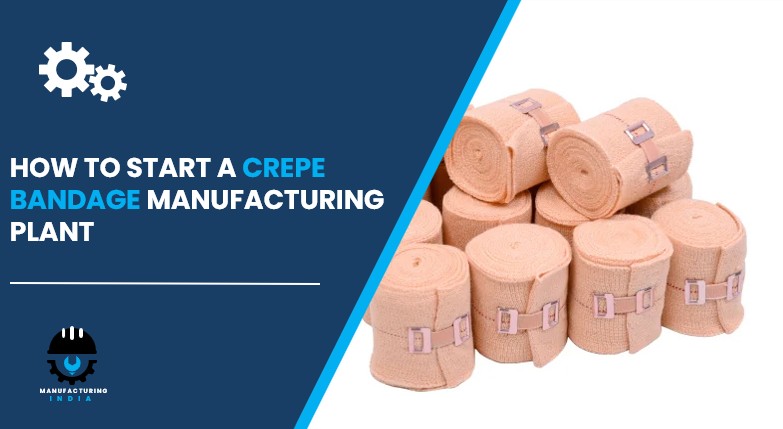
Crepe bandages are flexible, lightweight medical compression bandages that provide support and stability while delivering controlled pressure to injured muscles, joints, and ligaments. The material consists of cotton, polyester, or blended fabrics woven into a crinkled (crepe) pattern that allows it to stretch and conform freely to the body. Crepe bandages are reusable, skin-friendly, and breathable, delivering firm yet comfortable compression while maintaining healthy blood circulation.
Crepe bandages are manufactured in multiple width and length options, enabling users to select the appropriate size for specific body parts and medical requirements. Beyond general first aid, the product is used extensively in post-surgical recovery, orthopedic condition management, sprain and strain treatment, and swelling reduction, establishing crepe bandages as a vital component of hospital wound care supplies, sports medicine kits, and household first-aid stocks.
The global crepe bandage market was valued at approximately USD 2.10 Billion in 2025 and is expected to reach USD 3.02 Billion by 2034, exhibiting a CAGR of 4.1% from 2026 to 2034, supported by rising surgical volumes, growing sports participation, and expanding home healthcare adoption.
Cost of Setting Up a Crepe Bandage Manufacturing Plant
The total capital investment required to establish a crepe bandage manufacturing plant is shaped by several key parameters: annual production capacity (typically ranging from 50 to 200 million units per annum), the degree of automation across weaving, finishing, and packaging sections, facility specification, raw material sourcing strategy, and applicable regulatory and medical device compliance requirements. Below is a structured breakdown of the major cost components.
1. Capital Expenditure (CapEx)
Total capital investment in a crepe bandage manufacturing plant covers the following major heads:
Land and Site Development
This encompasses land acquisition or lease, site preparation, boundary development, and utilities connectivity. Site selection should prioritise proximity to textile and yarn supply hubs to ensure a steady, low-transport-cost supply of cotton and polyester fabric. Access to reliable power infrastructure for weaving and finishing operations, strong road and rail logistics for inbound fabric and outbound finished bandages, availability of process water for washing and bleaching, and a trained textile workforce are critical site selection criteria. Compliance with industrial zoning regulations, medical device manufacturing standards, and effluent and emission compliance frameworks must be assessed from project initiation.
Civil Works and Construction
Building costs cover the main processing facility including the yarn preparation and cleaning section, weaving house, finishing and calendering area, cutting and rolling section, sterilization and quality control laboratory, automated packaging and dispatch infrastructure, administrative block, and utility infrastructure including power backup, water treatment, and effluent treatment plant. Construction must comply with applicable factory act requirements, medical device manufacturing standards, and infrastructure guidelines for hygienic product handling.
Machinery and Equipment
Machinery represents the single largest CapEx component. Key equipment required for a crepe bandage manufacturing plant includes:
- Yarn Preparation and Cleaning Systems: Fibre preparation, washing, scouring, and bleaching units to condition raw cotton and polyester yarn prior to weaving
- Weaving Machinery: Power looms or specialised elastic weaving machines, including shuttleless looms, that weave blended cotton and synthetic fibres to achieve the characteristic crinkled texture and required elasticity; this is typically the single largest investment cost component
- Elastic Integration Systems: Equipment for incorporating elastic yarns into the weave structure to deliver controlled, consistent compression across the finished bandage
- Finishing and Calendering Machines: Industrial calendering equipment to enhance surface texture, uniformity, and stretch recovery of the woven fabric
- Cutting and Slitting Tables: Large-scale cutting and slitting equipment to convert woven fabric rolls into long strips of specific widths matching finished product specifications
- Rolling and Wrapping Machines: Automated rolling equipment for tightly coiling cut bandage strips into finished roll form, along with wrapping units for individual unit packaging
- Sterilization Units: Equipment for sterilizing finished bandages intended for surgical and clinical use, ensuring compliance with medical device hygiene standards
- Quality Control Laboratory Equipment: Equipment for tensile strength, elasticity, compression, colourfastness, and other analytical tests to verify compliance with medical device quality standards
- Automated Packaging Lines: Wrapping, labelling, and cartoning lines for individual and bulk retail packs, along with bulk packing facilities for institutional and hospital-channel dispatch
- Material Handling and Warehousing: Conveyors, storage racks for raw yarn and fabric, and finished goods warehousing with FIFO stock management
Other Capital Costs
These include pre-operative expenses, commissioning charges, import duties on specialised weaving and finishing equipment, staff training and competency development, initial raw material and consumable inventory for production commissioning, regulatory compliance setup including medical device manufacturing licensing, and ISO 13485 quality management system establishment costs.
Request a Sample Report for In-Depth Market Insights: https://www.imarcgroup.com/crepe-bandage-manufacturing-plant-project-report/requestsample
2. Operational Expenditure (OpEx)
Raw materials principally cotton and polyester fabric constitute the dominant operating cost, typically representing 55–65% of total OpEx. Utility costs, driven primarily by electricity consumption of weaving, finishing, and sterilization equipment, account for 10–15% of OpEx. Labour, maintenance, quality control, packaging, transportation, depreciation, taxes, and overhead costs constitute the remainder of the operating cost base.
3. Plant Capacity
The proposed crepe bandage manufacturing facility is designed with an annual production capacity ranging between 50–200 million units, enabling economies of scale while maintaining operational flexibility. This capacity range supports a diversified product portfolio across bandage widths and lengths, serving hospitals and clinics, sports medicine centers, home healthcare channels, and export markets.
4. Profit Margins and Financial Projections
The project demonstrates healthy profitability potential under normal operating conditions. Financial projections encompass capital investment, operating costs, capacity utilisation ramp-up schedule, product mix across bandage sizes, and forward demand outlook underpinned by rising surgical volumes and healthcare infrastructure growth. A comprehensive feasibility analysis includes sensitivity analysis, Net Present Value (NPV), Internal Rate of Return (IRR), and Payback Period calculations. Gross profit margins for crepe bandage manufacturing typically range from 45–55%, supported by stable demand and value-added applications. Net profit margins of 22–32% are achievable with disciplined cost management, optimal capacity utilisation, and effective distribution channel management.
Why Set Up a Crepe Bandage Manufacturing Plant?
Essential Healthcare Consumable with Recurring Demand
Crepe bandages function as fundamental medical necessities which hospitals, clinics, sports centers, and homes require throughout the entire year. This recurring, non-discretionary consumption pattern provides manufacturers with a resilient demand base that is largely insulated from broader economic cycles, supporting stable capacity utilisation and predictable revenue generation.
Growing Healthcare Infrastructure
Worldwide market demand continues to increase due to expanding hospital networks, growing surgical procedure volumes, and rising public knowledge about injury treatment and wound care. Emerging economies in the Asia-Pacific region in particular are experiencing increased healthcare demand as they expand their healthcare infrastructure, creating substantial incremental demand for essential wound care and compression products.
Rising Sports Participation
The increasing number of people engaging in both professional and recreational sports activities creates growing demand for compression products and products that support injury recovery. Sprains, strains, and ligament injuries associated with athletic activity represent a core, structurally growing application segment for crepe bandage manufacturers.
Growing Prevalence of Chronic Musculoskeletal Conditions
According to the WHO, approximately 18 million people worldwide were living with rheumatoid arthritis in 2019. The rising incidence of arthritis and other chronic musculoskeletal conditions, combined with an aging global population requiring ongoing joint and muscle support, is expected to sustain long-term demand for crepe bandages across clinical and home-care settings.
Government Healthcare Initiatives
Healthcare expenditure growth, together with primary healthcare center expansion and public health programs, supports the crepe bandage market. Government investment in hospital development and primary healthcare facility construction, particularly across India and China, is expected to drive higher usage of medical disposable products including crepe bandages.
Consolidating and Export-Oriented Global Supply Base
The global medical supplies industry is witnessing increased consolidation as companies pursue strategic acquisitions to expand their international footprint and product portfolios. Manufacturers achieving international quality certifications are well positioned to access regulated export markets including the United States, European Union, and Middle East, broadening the addressable market beyond domestic demand.
Manufacturing Process Overview
The crepe bandage manufacturing operation transforms raw cotton and polyester yarn into finished, rolled compression bandages through a sequence of weaving, finishing, cutting, sterilization, and packaging operations. The key process stages are:
- Raw Material Reception and Cleaning: Cotton and polyester yarn received from suppliers is inspected and cleaned through washing, scouring, and bleaching to remove impurities and prepare the fibre for weaving.
- Yarn Preparation: Prepared yarn, including elastic yarn where required, is wound and set up on looms in the configuration needed to achieve the target crepe texture and elasticity of the finished bandage.
- Weaving: Power looms or specialised elastic weaving machines weave the cotton and polyester yarns, together with integrated elastic yarn, into the characteristic crinkled crepe pattern that enables the fabric to stretch and conform to the body.
- Finishing and Calendering: Woven fabric passes through calendering equipment to enhance surface texture, improve uniformity, and set the stretch-recovery characteristics required for consistent compression performance.
- Cutting and Slitting: Finished fabric rolls are cut and slit into long strips of the specific widths corresponding to the finished bandage sizes being produced.
- Rolling and Wrapping: Cut strips are tightly rolled into the finished bandage form and individually wrapped, either manually or through automated rolling and wrapping machines.
- Sterilization: Bandages intended for surgical and clinical use undergo sterilization to meet medical device hygiene requirements before release for packaging.
- Quality Control: Finished bandages are tested for tensile strength, elasticity, compression performance, and colourfastness to verify compliance with applicable medical device quality standards before release.
- Packaging and Dispatch: Finished crepe bandages are packed in individual retail packs, multi-packs, or bulk institutional cartons and dispatched to hospitals, pharmacies, retail distributors, and export customers.
Key Applications of Crepe Bandage
The crepe bandage market serves several major end-use segments across clinical, sports, and home healthcare channels:
- Hospitals and Clinics: used in post-surgical compression, fracture support, and general injury management across inpatient and outpatient settings.
- Sports Medicine: utilised in treatment of sprains, ligament injuries, and muscle strain among both professional and recreational athletes.
- Home Healthcare: employed in first-aid use, chronic pain support, and elderly care management within household settings.
- Retail Pharmacies and E-commerce: sold as over-the-counter first-aid and wound care products, supported by growing consumer preference for home healthcare and online purchasing channels.
Global Crepe Bandage Market Outlook
The global crepe bandage market was valued at approximately USD 2.10 Billion in 2025. According to IMARC Group estimates, the market is expected to reach USD 3.02 Billion by 2034, exhibiting a CAGR of 4.1% from 2026 to 2034. The crepe bandage market benefits from multiple structural demand drivers:
- Rising incidence of sports injuries and growing participation in professional and recreational sports activities worldwide
- Increasing surgical procedure volumes globally, driving sustained demand for post-operative compression and wound care products
- Growing prevalence of chronic musculoskeletal conditions, including arthritis, among an aging global population
- Expanding hospital networks and primary healthcare infrastructure, particularly across emerging Asia-Pacific economies
- Rising consumer awareness of first-aid and preventive healthcare practices, supporting household stocking of compression bandages
- Growing preference for home healthcare and e-commerce-driven retail pharmacy channels, broadening product accessibility
- Continued consolidation among global medical supplies companies pursuing strategic acquisitions to expand international footprint and product portfolios
- Technological advancements in bandage materials, including hypoallergenic and moisture-wicking fabric innovations, enhancing user experience
Major players in the global crepe bandage industry include 3M, Cardinal Health, Avcor Health Care, Tetra Medical Supply Corp, Paul Hartmann, Covidien, Kerma Medical Products, DeRoyal Industries, BSN Medical, and Zhende Medical, serving end-use sectors including hospitals, clinics, sports medicine centers, and home healthcare providers.
Latest Industry Developments
- October 2025: Lords Mark Industries Ltd. obtained US FDA registration for its surgical consumables, hygiene products, and orthopedic supports, including cotton crepe bandages. The approval confirms adherence to international quality and safety standards, enabling access to regulated markets such as the US, EU, and Middle East, while strengthening India’s position in global healthcare manufacturing and exports.
Licenses and Regulatory Requirements
Establishing a crepe bandage manufacturing unit requires a range of approvals and certifications, which may vary by country and jurisdiction, including:
- Business registration and company incorporation under applicable company law
- Factory License under applicable state Factories Act provisions for manufacturing operations
- Medical device manufacturing license from the applicable national drug and medical device regulatory authority
- ISO 13485 Medical Devices Quality Management System Certification
- CE marking or equivalent regional conformity certification for export to regulated markets such as the European Union
- US FDA registration for access to the United States medical device market, where applicable
- BIS (Bureau of Indian Standards) certification for textile and medical bandage products, where applicable
- Pollution Control Board Clearances Consent to Establish (CTE) and Consent to Operate (CTO) for manufacturing operations
- ISO 9001:2015 Quality Management System Certification for quality management infrastructure compliance
- Weights and Measures (Legal Metrology) registration for packaged commodity labelling and net quantity declaration
- Export-Import Code (IEC) for international market access
- Trademark and Brand Registration for proprietary branded product launch
- Occupational Health and Safety management compliance (ISO 45001 / Factories Act provisions) for manufacturing worker safety
Key Challenges to Consider
Raw Material Price Volatility
Cotton and polyester fabric, which account for 55–65% of total operating costs, are subject to global commodity price cycles, cotton crop output variability, and synthetic fibre feedstock pricing. Periods of raw material price volatility can compress margins, requiring processors to manage procurement strategy and cost structures to maintain profitability through commodity price cycles.
Commoditisation and Price Competition
Crepe bandages are widely perceived as a commodity product with relatively low differentiation, which can lead to intense price competition among manufacturers, squeezing profit margins and potentially inhibiting investment in product innovation. Building brand recognition and quality reputation is an important strategy for mitigating margin pressure in a competitive market.
Regulatory and Quality Certification Compliance
Maintaining medical device manufacturing licensing, ISO 13485 certification, and applicable regional conformity certifications requires ongoing investment in quality laboratory infrastructure, process monitoring, and surveillance audit preparedness. Producing bandages that consistently meet tensile strength, elasticity, and sterility specifications across all production batches requires disciplined process control, as any compliance lapse can disrupt market access and damage brand reputation.
Competitive Global Supply Base
The global crepe bandage industry includes a combination of large multinational medical device companies and specialised medical textile manufacturers across multiple geographies, creating a competitive landscape for new entrants. Securing stable institutional offtake arrangements with hospitals, distributors, and export customers is an important strategy for building a defensible market position.
E-commerce and Distribution Channel Evolution
The rapid digitisation of retail and the proliferation of e-commerce platforms and online pharmacies present both an opportunity and a challenge for crepe bandage manufacturers, requiring investment in direct-to-consumer packaging, branding, and digital distribution capabilities alongside traditional institutional and wholesale distribution channels.
Frequently Asked Questions (FAQs)
1. How much does it cost to set up a crepe bandage manufacturing plant?
The total investment depends on plant capacity (50–200 million units per annum), automation level, facility specification, location, and target market certifications. Costs cover land, civil construction (weaving section, finishing area, cutting and rolling section, sterilization and quality laboratory, utilities), machinery (weaving machines, elastic integration systems, calendering equipment, cutting and rolling machines, sterilization units, packaging lines), quality certifications, working capital, and regulatory compliance. A comprehensive feasibility study from IMARC Group provides detailed, capacity-specific cost estimates covering all CapEx and OpEx components.
2. Is crepe bandage manufacturing a profitable business in 2026?
Yes. Sustained demand from hospitals, sports medicine centers, and home healthcare channels, combined with gross margins of 45–55% and net profit margins of 22–32%, make crepe bandage manufacturing financially attractive. The essential, recurring-consumption nature of the product provides resilience against broader economic cycles.
3. What machinery and equipment are required for a crepe bandage manufacturing plant?
Key equipment includes yarn preparation and cleaning systems, power looms or specialised elastic weaving machines, elastic integration systems, calendering and finishing machines, cutting and slitting tables, rolling and wrapping machines, sterilization units, quality control laboratory equipment, and automated packaging lines for retail and bulk dispatch.
4. What licenses and approvals are required?
Required approvals include company registration, Factory License, medical device manufacturing license from the applicable regulatory authority, ISO 13485 certification, CE marking or equivalent for export markets, US FDA registration where applicable, Pollution Control Board clearances, and ISO 9001:2015 quality management system certification.
5. How long does it take to commission a crepe bandage manufacturing plant?
Typically, 8–14 months from project initiation to commercial production launch, depending on project scale, facility construction timeline, equipment procurement lead times for weaving and finishing systems, and regulatory approvals and certification timelines, which should be initiated early in the project to avoid delays to commercial launch.
6. What are the key raw materials for crepe bandage manufacturing?
The primary raw materials are cotton yarn, polyester yarn, and elastic yarn, which together determine the fabric’s stretch and compression characteristics. Other key inputs include bleaching and finishing chemicals, and packaging materials including individual wrappers, cartons, and bulk institutional packaging.
7. What is the break-even period for a crepe bandage manufacturing plant?
The break-even period generally depends on capacity utilisation ramp-up trajectory, the product mix across bandage sizes, raw material price stability, and distribution channel arrangements. Securing long-term supply agreements for cotton and polyester fabric and stable offtake arrangements with hospitals, distributors, and export customers significantly improves revenue predictability and supports faster break-even achievement.
8. What are the main forms of crepe bandage and their applications?
Crepe bandages are manufactured in multiple width and length options and in cotton, polyester, and blended fabric variants. Standard variants serve general first-aid and hospital use, while premium hypoallergenic and moisture-wicking variants are increasingly used in sports medicine and sensitive-skin clinical applications.
9. What government incentives are available for crepe bandage manufacturers?
Processors may benefit from textile and medical device manufacturing sector incentive schemes, state-level industrial investment incentives and capital subsidies, infrastructure support under textile and medical device parks, and export promotion benefits for medical textile exports.
10. How does crepe bandage manufacturing compare to other medical textile processing in terms of setup?
Compared to other medical textile products, crepe bandage manufacturing benefits from relatively accessible weaving and finishing technology and a well-established global raw material supply chain for cotton and polyester yarn, but requires disciplined quality control and sterilization infrastructure to meet medical device compliance standards. Processors with experience in textile weaving can adapt existing technical capabilities to crepe bandage manufacturing with targeted investment in elastic integration and sterilization infrastructure.
Key Takeaways for Investors
The crepe bandage manufacturing industry represents a structurally resilient and financially attractive investment opportunity positioned at the intersection of essential, recurring healthcare consumption, expanding surgical and sports medicine demand, and the growing home healthcare movement. Stable demand from hospitals, clinics, sports medicine centers, and home healthcare channels provides resilience against single-segment demand volatility, while healthy gross margins of 45–55% and net margins of 22–32% offer attractive project economics relative to the moderate capital intensity of weaving-based manufacturing. The essential, non-discretionary nature of the product provides structural resilience against broader economic cycles, while the growing prevalence of chronic musculoskeletal conditions and an aging global population provide durable long-term demand tailwinds. The relatively accessible weaving and finishing technology base allows investors to enter the category with moderate capital deployment while achieving international quality certifications that unlock access to regulated export markets, reflecting strong long-term confidence in the growth and profitability of the category.
About the Author