A frozen food manufacturing plant setup in India presents a compelling investment case for entrepreneurs targeting the food & beverage, retail, hospitality, catering, and institutional foodservice sectors. Frozen food is preserved by rapidly lowering the temperature of edible products below freezing point, which inhibits microbial growth and enzymatic activity while retaining most of the original nutrients, texture, and flavour of the item. As urban lifestyles and dual-income households drive demand for ready-to-cook and ready-to-eat meals, frozen vegetables, fruits, seafood, poultry, bakery items, and desserts are becoming central to how India’s food industry serves households, foodservice operators, and modern retail chains.
India’s growing urbanisation, expanding cold chain infrastructure, and the Make in India initiative are strengthening the case for domestic frozen food production. States with strong food processing ecosystems and cold storage networks offer investors access to raw material supply, organised retail distribution, and export-oriented infrastructure, allowing production capacity within India to serve both domestic demand and international markets efficiently.
This is an investment opportunity anchored in rising convenience-food consumption, expanding cold chain and organised retail infrastructure, and a broad base of end-use demand across food & beverage, retail, hospitality, catering, and institutional foodservice. With supportive policy momentum and a large addressable market, a well-planned frozen food plant can achieve viable margins and a reasonable break-even period, though exact figures depend on scale, technology, and location.
What is Frozen Food?
Frozen food refers to edible products preserved by rapidly lowering their temperature to below freezing point, typically -18°C or lower, to inhibit microbial growth and enzymatic activity. The category spans vegetables, fruits, seafood, poultry, meats, ready-to-eat meals, bakery items, and desserts. Composition remains largely unchanged during freezing, so most original nutrients, texture, and flavour are retained. Freezing is regarded as one of the safest and most efficient methods of food preservation, used in both industrial and domestic contexts.
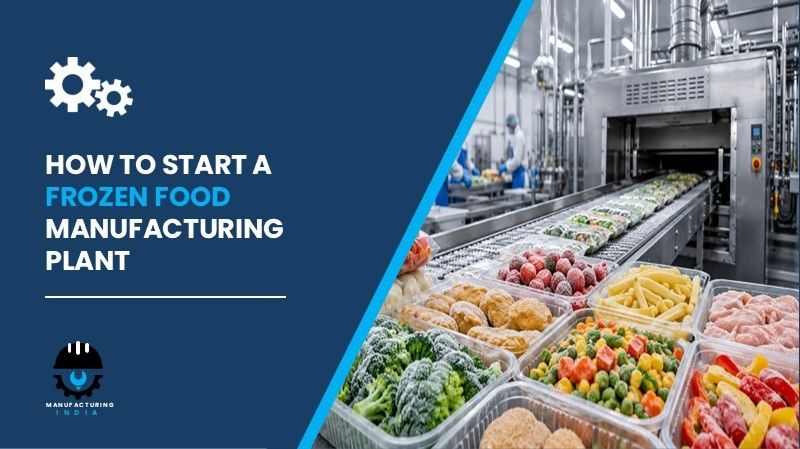
A frozen food manufacturing plant is a specialised facility designed for large-scale production and preservation of perishable food products under sub-zero conditions. The primary processes used are blanching, Individual Quick Freezing, blast freezing, and cryogenic freezing. The facility typically includes cold rooms, spiral freezers, packaging lines, glazing units, and quality testing laboratories, along with separate zones for raw material handling, processing, packaging, and frozen storage to meet food safety standards such as HACCP, ISO 22000, and FSSAI. End-use industries served include food & beverage, retail, hospitality, catering, and institutional foodservice.
Cost of Setting Up a Frozen Food Manufacturing Plant in India
The cost of setting up this facility in India depends on plant capacity, technology, automation level, location, and regulatory compliance requirements.
1. Capital Expenditure (CapEx)
Capital investment for the facility covers land acquisition, site preparation, and necessary infrastructure, and can be planned around industrial estates or SEZ options that offer developed utilities and simplified regulatory clearances. Civil works involve constructing production sheds, cold rooms, laboratories, storage areas, and administrative blocks designed for sub-zero and hygienic operating conditions.
Machinery costs represent the largest portion of total capital expenditure for a frozen food manufacturing plant, and key machinery required includes:
- Industrial blanchers
- Spiral freezers
- Nitrogen (IQF) tunnels
- Automated packaging lines
- Cold storage systems
- Conveyors
- Vacuum sealers
- Glazing units
- Quality testing laboratory equipment
Other capital costs include charges for land registration and boundary development, effluent treatment systems, pre-operative expenses, and commissioning costs, all of which form a substantial part of the overall investment needed for safe and efficient plant operations.
Request a Sample Report for In-Depth Market Insights: https://www.imarcgroup.com/frozen-food-manufacturing-plant-project-report/requestsample
2. Operational Expenditure (OpEx)
Raw material costs form a major share of operating expenses for this facility, covering fresh produce, seafood, meats, dairy products, and packaging materials. Investors are advised to secure reliable suppliers and negotiate long-term contracts to stabilise pricing and mitigate raw material price volatility.
Utility costs, including electricity, water, and steam, are a significant recurring expense given continuous refrigeration and freezing loads. Other operating costs include transportation, packaging, salaries and wages, depreciation, taxes, and repairs and maintenance.
In the first year of operations, the operating cost for the unit is projected to be significant, and by the fifth year, total operational costs are expected to increase substantially due to inflation, market fluctuations, potential rises in the cost of key materials, supply chain disruptions, and rising consumer demand.
3. Plant Capacity
Plant capacity for a frozen food manufacturing plant can be customized based on investor requirements, market demand, and available capital. Profitability generally improves with higher capacity utilisation, as fixed costs such as machinery, cold storage, and administrative overheads are spread across greater production volumes.
4. Profit Margins and Financial Projections
Financial planning for a frozen food manufacturing plant includes income projections, expenditure projections, gross and net profit margins, payback period, net present value (NPV), and internal rate of return (IRR), assessed across a multi-year projection horizon. Since detailed CapEx line items and margin percentages are customized to plant capacity, technology, and location, investors are encouraged to request a detailed feasibility report for project-specific figures.
Why Set Up a Frozen Food Plant in India?
Growing Demand for Convenience Foods: Rising urban lifestyles and dual-income households are driving global and domestic demand for ready-to-cook and ready-to-eat frozen foods. Consumers increasingly seek convenience without compromising nutrition, supporting sustained consumption of frozen snacks, vegetables, and ready meals.
Expansion of Cold Chain and Retail Infrastructure: Advancements in cold chain logistics and organised retail networks are strengthening frozen food distribution. India is witnessing significant cold storage investments supported by government schemes and private sector participation.
Policy and Regulatory Tailwinds: India’s Make in India initiative supports domestic food processing capacity, encouraging investors to establish local production rather than rely on imports, while easing the path for organised, export-oriented manufacturing units.
Cost-Competitive Production: India offers a combination of competitive land, labour, and supply chain costs relative to many global markets, along with proximity to large-scale agricultural, dairy, seafood, and poultry raw material sources.
Active Industry Investment: In June 2025, Conagra Brands launched over 50 new frozen food items, including single-serve meals, family-size dishes, plant-based and gluten-free options, and vegetable sides, reflecting sustained global product innovation in the category. In February 2025, ITC announced the acquisition of 100% of Prasuma, a frozen and ready-to-cook foods company, signalling active domestic investment interest in the frozen food segment.
Local Supply Chain Preference: Retail chains, foodservice operators, and institutional buyers increasingly prefer sourcing frozen food from domestic producers, favouring locally established production units over imports.
Frozen Food Manufacturing Process – Step by Step
The frozen food manufacturing process uses blanching, IQF (Individual Quick Freezing), blast freezing, and cryogenic freezing as the primary production methods. This frozen food manufacturing process moves raw ingredients through a controlled sequence designed to lock in quality at sub-zero temperatures.
- Raw Material Receiving: Fresh produce, seafood, meats, and dairy products are received and inspected for quality before entering the process line.
- Cleaning and Sorting: Raw ingredients are cleaned and sorted to remove impurities and separate items by size and quality grade.
- Blanching or Pre-Cooking: Select items undergo blanching or pre-cooking to preserve colour, texture, and nutritional value ahead of freezing.
- Rapid Freezing: Products pass through nitrogen tunnels, spiral freezers, or blast freezers to achieve rapid sub-zero freezing, using cryogenic methods where required.
- Glazing: Certain products, such as seafood, pass through glazing units to form a protective ice layer that preserves quality during storage.
- Quality Testing: Products are tested in on-site laboratories to verify safety, texture, and compliance with quality standards.
- Packaging: Finished products are packaged using automated packaging lines and vacuum sealers in temperature-controlled environments.
- Cold Storage and Dispatch: Packaged products are moved into cold storage systems and dispatched to food & beverage, retail, hospitality, catering, and institutional foodservice buyers.
Key Applications
Frozen food produced at these plants serves a broad set of end-use industries built around convenience, shelf-life, and consistent quality.
- Ready Meals: Used by foodservice operators and retail consumers seeking convenient, heat-and-serve meal solutions.
- Frozen Vegetables & Fruits: Supplied to households, foodservice, and institutional kitchens as a nutrient-retentive alternative to fresh produce.
- Frozen Seafood: Distributed to retail and hospitality channels requiring extended shelf life without compromising quality.
- Poultry: Used across retail, catering, and institutional foodservice for consistent, ready-to-cook protein supply.
- Bakery Goods: Supplied to retail bakeries and foodservice outlets for extended shelf-life bakery items.
- Snacks: Distributed to retail and catering channels as convenient, freezer-stable snack products.
Leading Manufacturers
Leading manufacturers in the global frozen food market operate advanced production and distribution facilities serving food & beverage, retail, hospitality, catering, and institutional foodservice sectors.
- Nestlé S.A.
- Tyson Foods, Inc.
- Nomad Foods Ltd.
- Conagra Brands, Inc.
- McCain Foods Limited
- General Mills, Inc.
Timeline to Start the Plant
- Feasibility study and project report preparation
- Land acquisition and site development
- Regulatory approvals and environmental clearances
- Factory licence and fire safety compliance
- Machinery procurement and installation
- Raw material supplier agreements and supply chain setup
- Trial production and quality testing
- Commercial production launch
Licences and Regulatory Requirements
Starting a frozen food manufacturing unit in India requires several approvals:
- Business registration (Proprietorship, LLP, or Pvt Ltd)
- Factory Licence under the Factories Act
- Environmental Clearance from State Pollution Control Board
- GST Registration
- Fire Safety NOC
- FSSAI food safety licence and HACCP/ISO 22000 compliance
- Effluent Treatment Plant (ETP) operational clearance
- Occupational Health and Safety compliance
Key Challenges to Consider
High Capital Requirements: Machinery such as spiral freezers, nitrogen tunnels, and cold storage systems requires substantial upfront investment when establishing a frozen food manufacturing plant, making capital planning central to project viability.
Raw Material Price Volatility: Fresh produce, seafood, meats, and dairy products are subject to price fluctuations, requiring long-term supplier contracts to stabilise input costs.
Regulatory Compliance: Meeting HACCP, ISO 22000, and FSSAI standards, alongside environmental and factory licensing requirements, demands sustained compliance investment.
Technology and Innovation Pressure: Continuous innovation in freezing methods, such as cryogenic and Individual Quick Freezing technology, is needed to maintain product quality and energy efficiency as the category evolves.
Competition: Global players such as Nestlé, Tyson Foods, Nomad Foods, Conagra Brands, McCain Foods, and General Mills operate large-scale facilities, creating a competitive landscape for new entrants.
Skilled Manpower: Operating advanced automation systems for temperature, humidity, and hygiene monitoring requires trained technical and quality-assurance personnel.
Frequently Asked Questions
1. How much does it cost to set up a frozen food manufacturing plant in India?
Cost depends on plant capacity, technology, automation level, and location, covering land, civil works, machinery, and other capital costs; a detailed feasibility report provides project-specific figures.
2. Is frozen food manufacturing profitable in India in 2026?
Profitability depends on capacity utilisation, raw material sourcing efficiency, and market positioning, with margins assessed through gross and net profit analysis over a multi-year projection horizon.
3. What machinery is required for a frozen food plant in India?
Key machinery includes industrial blanchers, spiral freezers, nitrogen (IQF) tunnels, automated packaging lines, cold storage systems, conveyors, vacuum sealers, and glazing units.
4. What licences and approvals are required to start a frozen food plant in India?
Requirements include business registration, a Factory Licence, Environmental Clearance, GST Registration, Fire Safety NOC, FSSAI licensing, ETP clearance, and Occupational Health and Safety compliance.
5. What raw materials are needed for frozen food manufacturing?
Primary raw materials include fresh produce, seafood, meats, dairy products, and packaging materials.
6. What are the environmental compliance requirements for a frozen food plant in India?
Plants require Environmental Clearance from the State Pollution Control Board, an operational Effluent Treatment Plant, and adherence to emission and waste-management standards.
7. What is the best location to set up a frozen food plant in India?
Sites should offer easy access to raw materials such as fresh produce, seafood, meats, and dairy products, proximity to target markets, robust transportation and utility infrastructure, and compliance with local zoning regulations.
8. What is the break-even period for this type of plant in India?
Break-even timing depends on capacity, capital structure, and utilisation rate, and is assessed as part of a detailed payback period and financial analysis.
9. What government incentives are available for manufacturers in India?
India’s Make in India initiative and related food processing support schemes encourage domestic production capacity, though investors should confirm scheme-specific eligibility for their plant.
Key Takeaways for Investors
A well-planned frozen food manufacturing plant addresses sustained demand across food & beverage, retail, hospitality, catering, and institutional foodservice, supported by rising convenience-food consumption and expanding cold chain infrastructure. Financial viability is achievable across a range of plant capacities, with profitability improving as capacity utilisation increases and fixed costs are spread across larger production volumes. Global demand trends, including a projected 1.3% annual rise in global food demand and active investment moves such as ITC’s acquisition of Prasuma and Conagra’s expanded product launches, point to continued category growth. With India’s cold chain and organised retail infrastructure expanding, demand for domestically produced frozen food is well positioned for long-term sustainability.
About the Author