Setting up an aluminum shots manufacturing plant in India represents an attractive investment proposition underpinned by robust and structurally growing demand from the steel, foundry, metallurgical, chemical, and surface treatment industries. As global crude steel output continues to expand, aluminum recycling activity intensifies, and industrial metal processing operations scale up, aluminum shots used as deoxidizing agents, alloying additives, abrasive blasting media, and reducing agents in metallurgical processes occupy an increasingly important position across steelmaking, foundry, and surface preparation applications. This growth trajectory, combined with the high purity, lightweight nature, and excellent oxidation resistance of aluminum shots, creates a highly favourable manufacturing environment for new entrants with efficient melting, atomization, and quality control systems.
What are Aluminum Shots?
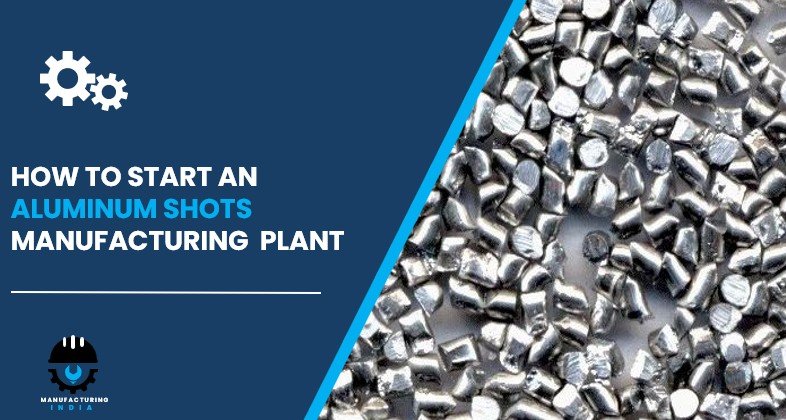
Aluminum shots are small spherical or granular particles manufactured from high-purity aluminum through atomization or shot-forming processes. They are designed to provide uniform particle size, high chemical purity, and excellent metallurgical performance. Aluminum shots are primarily used as deoxidizers in steel production, alloying additives in metal casting, abrasive blasting media, and reducing agents in various industrial applications.
Commercial production involves aluminum melting, refining, atomization or shot formation, cooling, screening, sizing, drying, quality inspection, and packaging. Owing to their excellent reactivity, corrosion resistance, and consistent particle size distribution, aluminum shots are extensively used across steel manufacturing, foundries, metal processing, chemical production, and surface finishing industries. According to industry estimates, Asia-Pacific holds the largest share of the global aluminum shots market, accounting for approximately 48.3% of overall demand, supported by the region’s large steel manufacturing base and expanding foundry operations.
Cost of Setting Up an Aluminum Shots Manufacturing Plant
The total capital investment required to establish an aluminum shots manufacturing plant is shaped by several key parameters: annual production capacity (typically ranging from 5,000 to 15,000 MT per annum), the level of automation across melting, atomization, and classification sections, facility specification, raw material sourcing strategy, and applicable regulatory and safety compliance requirements. Below is a structured breakdown of the major cost components.
1. Capital Expenditure (CapEx)
Total capital investment in an aluminum shots manufacturing plant covers the following major heads:
Land and Site Development
This encompasses land acquisition or lease, site preparation, boundary development, and utilities connectivity. Site selection should prioritise proximity to sources of commercial-grade aluminium and to target end-use industries such as steel mills and foundries, to ensure a steady, low-transport-cost supply of raw material and efficient dispatch of finished shots. Access to reliable power, argon gas supply, and process water, strong road and rail logistics, availability of a trained workforce for plant operations and quality control, and compliance with industrial zoning regulations, factory safety norms, and fire and explosion safety norms applicable to reactive aluminium dust handling must be assessed from project initiation.
Civil Works and Construction
Building costs cover the main processing facility including the melting and holding furnace bay, atomization and shot-formation section, cooling and screening area, drying and classification section, packaging and dispatch infrastructure, quality control laboratory, administrative block, and utility infrastructure including power backup, argon gas storage, dust collection and extraction systems, and effluent management. Construction must comply with applicable factory act requirements, fire and explosion-proofing norms for reactive metal dust handling, and industrial safety guidelines.
Machinery and Equipment
Machinery represents the single largest CapEx component. Key equipment required for an aluminum shots manufacturing plant includes:
- Aluminum Melting Furnaces: Induction or reverberatory furnaces for melting commercial-grade aluminium feedstock to the required process temperature
- Holding Furnaces: Equipment for maintaining molten aluminium at stable temperature and composition prior to atomization or shot formation
- Metal Refining Systems: Fluxing and degassing equipment, often using argon, to remove impurities and dissolved gases from molten aluminium prior to shot formation
- Atomization or Shot-Making Units: Water or gas atomization systems, or shot-forming units, that convert molten aluminium into uniform spherical or granular particles
- Cooling Chambers: Controlled cooling systems that solidify atomized aluminium droplets into finished shots while preserving particle integrity
- Vibrating Screens and Grading Systems: Multi-deck screening and classification equipment for separating aluminum shots into required particle size fractions
- Drying Units: Equipment for removing residual surface moisture from screened shots prior to packaging
- Dust Collection Systems: Bag filters, cyclone separators, and explosion-proof extraction systems designed to safely capture and manage combustible aluminium fines generated during processing
- Material Conveying Equipment and Storage Silos: Conveyors, bucket elevators, and silos for intermediate storage and movement of shots between process stages
- Laboratory Testing Instruments: Equipment for particle size analysis, chemical composition testing, and purity verification to confirm compliance with customer and industry specifications
- Automated Weighing and Packaging Machines: Filling, weighing, bagging, and palletising lines for retail bags, bulk bags, and drums
- Computerized Process Control Systems: Instrumentation and control systems for monitoring furnace temperature, atomization parameters, and production throughput
Other Capital Costs
These include pre-operative expenses, commissioning charges, import duties on specialised melting and atomization equipment, staff training and competency development, initial raw material and consumable inventory for production commissioning, and regulatory compliance setup including factory licensing, explosive and hazardous material storage licensing for argon and combustible aluminium dust, and ISO 9001 quality management system establishment costs.
Request a Sample Report for In-Depth Market Insights: https://www.imarcgroup.com/aluminum-shots-manufacturing-plant-project-report/requestsample
2. Operational Expenditure (OpEx)
Raw materials principally commercial-grade aluminium, along with argon and graphite crucibles constitute the dominant operating cost, typically representing 68–75% of total OpEx. Utility costs, driven primarily by electricity consumption for melting furnaces, argon gas supply, and dust extraction systems, account for 14–18% of OpEx. Labour, maintenance, quality control, packaging, transportation, depreciation, taxes, and overhead costs constitute the remainder of the operating cost base.
3. Plant Capacity
The proposed aluminum shots manufacturing facility is designed with an annual production capacity ranging between 5,000–15,000 MT, enabling economies of scale while maintaining operational flexibility. This capacity range supports a diversified product portfolio of graded aluminum shots serving steel deoxidation, foundry alloying, abrasive blasting, thermal spray, and powder metallurgy applications across domestic and export channels.
4. Profit Margins and Financial Projections
The project demonstrates healthy profitability potential under normal operating conditions. Financial projections encompass capital investment, operating costs, capacity utilisation ramp-up schedule, product mix across particle size grades, and forward demand outlook underpinned by rising steel production and foundry activity. A comprehensive feasibility analysis includes sensitivity analysis, Net Present Value (NPV), Internal Rate of Return (IRR), and Payback Period calculations. Gross profit margins for aluminum shots manufacturing typically range from 26–34%, supported by stable industrial demand and value-added grading. Net profit margins of 9–15% are achievable with disciplined cost management, optimal capacity utilisation, and efficient raw material procurement.
Why Set Up an Aluminum Shots Manufacturing Plant?
Growing Steel Production
Rising global steel manufacturing is increasing demand for high-quality deoxidizing materials such as aluminum shots. According to the World Steel Association, global crude steel production reached approximately 1.89 billion tonnes in 2024, highlighting the continued strength of the steel industry, one of the largest consumers of aluminum shots for deoxidation and alloying applications.
Expansion of the Foundry Industry
Growing production of cast components for automotive, machinery, and industrial equipment is supporting aluminum shot consumption. Foundries use aluminum shots as alloying materials in aluminum and ferrous casting operations to improve casting quality, refine grain structure, and enhance metallurgical performance, positioning aluminum shots favourably within the expanding metal casting value chain.
Increasing Metal Recycling
Expansion of aluminum recycling and secondary metal processing is creating sustained demand for high-purity aluminum products, including aluminum shots manufactured from commercial-grade and recycled aluminium feedstock, supporting improved raw material economics and circular-economy positioning for processors.
Rising Surface Treatment Applications
Growing use of abrasive blasting in manufacturing, shipbuilding, automotive, and infrastructure sectors is driving market growth. Aluminum shots are applied as blasting media for cleaning, deburring, descaling, and preparing metal surfaces prior to coating, painting, or welding operations, supporting steady industrial demand across surface preparation applications.
Industrial Infrastructure Development
Continuous investments in manufacturing, construction, and heavy engineering industries are supporting long-term demand for aluminum shots. Expanding steel and foundry capacity in major manufacturing economies, particularly across Asia-Pacific, is reinforcing structural demand for deoxidizing and alloying materials.
Scalable and Diversified Applications
Aluminum shots serve a wide range of end uses spanning steel deoxidation, foundry alloying, abrasive blasting, thermal spray feedstock, chemical reducing agents, and powder metallurgy. This application diversity allows processors to serve multiple industrial segments simultaneously, reducing dependence on any single end-use sector and supporting more resilient revenue streams.
Favourable Raw Material Availability
Aluminum shots are manufactured primarily from commercial-grade aluminium, a widely available industrial feedstock supported by extensive global primary and secondary (recycled) aluminium production capacity. This broad-based raw material availability reduces feedstock concentration risk relative to more geographically constrained industrial inputs, supporting flexible plant siting decisions.
Manufacturing Process Overview
The aluminum shots manufacturing operation transforms commercial-grade aluminium into uniform, high-purity metallic shots through a sequence of melting, refining, atomization, and finishing operations. The key process stages are:
- Raw Material Reception and Inspection: Commercial-grade aluminium ingots or scrap feedstock is received, inspected, and verified for composition and quality prior to charging into the melting furnace.
- Melting: Aluminium feedstock is charged into induction or reverberatory melting furnaces and heated to the required molten process temperature.
- Refining: Molten aluminium is treated with fluxing agents and degassed, often using argon, to remove dissolved gases, oxides, and impurities, improving the purity and metallurgical quality of the melt.
- Atomization or Shot Formation: Refined molten aluminium is converted into small spherical or granular particles through water or gas atomization, or through shot-forming techniques, producing uniform-sized shots as the molten metal solidifies.
- Cooling: Freshly formed aluminum shots pass through controlled cooling chambers that solidify the particles fully while preserving their spherical shape and surface characteristics.
- Screening and Grading: Cooled shots are passed through vibrating screens and classification systems to separate the product into required particle size fractions for different end-use applications.
- Drying: Screened shots are dried to remove residual surface moisture, ensuring product stability during storage and preventing oxidation during transport.
- Quality Inspection: Finished aluminum shots are tested for particle size distribution, chemical purity, and surface characteristics to verify compliance with customer and industry specifications before release for packaging.
- Packaging and Dispatch: Graded aluminum shots are packed in retail bags, bulk bags, or drums for dispatch to steel mills, foundries, abrasive blasting operators, and other industrial customers.
Key Applications of Aluminum Shots
The aluminum shots market serves several major end-use segments across steel, foundry, surface treatment, and chemical sectors:
- Steel Manufacturing: Aluminum shots are extensively used as deoxidizing agents during steelmaking to remove dissolved oxygen, improve steel cleanliness, and enhance mechanical properties of the finished steel.
- Foundries and Metal Casting: Widely utilised as alloying materials in aluminum and ferrous foundries to improve casting quality, refine grain structure, and enhance metallurgical performance of cast components.
- Surface Preparation: Applied as blasting media for cleaning, deburring, descaling, and preparing metal surfaces prior to coating, painting, or welding operations across manufacturing and shipbuilding industries.
- Chemical Industry: Used as reducing agents and raw materials in the manufacture of specialty chemicals, pigments, and metallurgical compounds requiring high-purity aluminum.
- Powder Metallurgy and Thermal Spraying: Increasingly employed in powder metallurgy and thermal spray coating applications to improve wear resistance, corrosion protection, and component durability.
Global Aluminum Shots Market Outlook
The aluminum shots industry is expected to witness sustained growth through the forecast period, supported by increasing steel production, expanding foundry operations, and rising demand for high-performance metallurgical additives. Manufacturers are investing in advanced atomization technologies, energy-efficient melting systems, and improved particle classification processes to produce high-purity aluminum shots with consistent size distribution and superior performance. The market benefits from multiple structural demand drivers:
- Rising global crude steel production, which reached approximately 1.89 billion tonnes in 2024 according to the World Steel Association, sustaining demand for aluminum shots as a deoxidizing and alloying agent
- Continued expansion of foundry and metal casting capacity for automotive, machinery, and industrial equipment manufacturing, particularly across Asia-Pacific, which accounts for approximately 48.3% of global aluminum shots demand
- Growing adoption of abrasive blasting media in manufacturing, shipbuilding, automotive, and infrastructure applications requiring consistent surface preparation quality
- Expanding aluminum recycling and secondary metal processing activity, improving raw material availability and supporting circular-economy positioning for aluminum shot processors
- Increasing adoption of powder metallurgy and thermal spray coating technologies in industrial and automotive applications, broadening the addressable application base for aluminum shots
- Continued industrial infrastructure investment across major manufacturing economies, supporting long-term demand for high-purity metallurgical additives
Major players in the global aluminum shots industry include Transmet, American Elements, Phoolchand Bhagatsingh, and Kuhmichel, serving end-use sectors including steel, foundry, metallurgy, automotive, aerospace, chemicals, and surface treatment.
Latest Industry Developments
- 2030 Target: India has set a target of expanding its crude steel production capacity to approximately 300 million tonnes by 2030, with new electric arc furnace capacity coming online across the country, a development expected to materially increase domestic demand for aluminum-based deoxidizing and alloying agents.
- May 2026: Emirates Global Aluminium announced plans to build a USD 4 billion aluminium smelter at the Port of Inola in Oklahoma, with an annual capacity of approximately 600,000 tonnes, reflecting continued large-scale investment confidence in expanding global primary aluminium supply that underpins feedstock availability for downstream aluminum shot processors.
Licenses and Regulatory Requirements
Establishing an aluminum shots manufacturing unit requires a range of approvals and certifications, which may vary by country and jurisdiction, including:
- Business registration and company incorporation under applicable company law
- Factory License under applicable state Factories Act provisions for manufacturing operations
- Explosive and hazardous material storage licenses for argon gas and combustible aluminium dust from the applicable explosives and petroleum safety authority
- Pollution Control Board Clearances Consent to Establish (CTE) and Consent to Operate (CTO) for manufacturing operations involving melting furnace emissions and dust generation
- BIS (Bureau of Indian Standards) certification, where applicable, for aluminum products meeting defined purity and quality specifications
- ISO 9001:2015 Quality Management System Certification for quality management infrastructure compliance
- Weights and Measures (Legal Metrology) registration for packaged commodity labelling and net quantity declaration
- Export-Import Code (IEC) for international market access
- Trademark and Brand Registration for proprietary branded product launch
- Occupational Health and Safety management compliance (ISO 45001 / Factories Act provisions) for manufacturing worker safety, particularly in furnace and dust-handling areas
Key Challenges to Consider
Raw Material Price Volatility
Commercial-grade aluminium, which accounts for 68–75% of total operating costs, is subject to global commodity price cycles linked to primary aluminium production, energy costs, and international trade dynamics. Periods of elevated aluminium prices can compress processor margins, requiring effective procurement strategies and, where feasible, pass-through pricing arrangements with customers.
Combustible Dust and Process Safety
Aluminium in fine particulate form is highly reactive and combustible, introducing fire and explosion hazards during atomization, screening, and dust collection operations. These risks must be managed through explosion-proof equipment, effective dust extraction and containment systems, and rigorous safety protocols compliant with hazardous material handling regulations. Any lapse in dust management increases both safety exposure and regulatory risk.
Energy Intensity of Melting Operations
Aluminum shots manufacturing is an energy-intensive process due to the high temperatures required for melting and holding molten aluminium. Rising electricity costs can materially affect operating economics, making energy-efficient furnace technology and optimised production scheduling important levers for cost control.
Quality Consistency Across Particle Grades
Producing aluminum shots that consistently meet particle size distribution, purity, and surface quality specifications across all production batches requires disciplined process control at the atomization, cooling, and screening stages. Any quality inconsistency can affect customer acceptance, particularly among steel mills and foundries with tightly specified deoxidizer and alloying material requirements.
Competition from Alternative Deoxidizing and Alloying Materials
Aluminum shots compete with alternative deoxidizing and alloying agents, including other aluminum forms such as granules, wire, and notch bar, as well as silicon and manganese-based deoxidizers. Processors must maintain competitive pricing and consistent product quality to sustain market position against these substitute materials.
Regional Demand Concentration
A significant share of global aluminum shots demand is concentrated in Asia-Pacific, reflecting the region’s large steel and foundry manufacturing base. Processors targeting other regions must carefully evaluate logistics, distribution, and customer qualification requirements to establish a competitive market position outside this core demand base.
Frequently Asked Questions (FAQs)
1. How much does it cost to set up an aluminum shots manufacturing plant?
The total investment depends on plant capacity (5,000–15,000 MT per annum), automation level, facility specification, location, and target market certifications. Costs cover land, civil construction (melting and holding furnace bay, atomization section, cooling and screening area, packaging infrastructure, utilities), machinery (melting furnaces, atomization or shot-making units, screening and grading systems, dust collection systems, packaging lines), quality certifications, working capital, and regulatory compliance. A comprehensive feasibility study from IMARC Group provides detailed, capacity-specific cost estimates covering all CapEx and OpEx components.
2. Are aluminum shots manufacturing a profitable business in 2026?
Yes. Sustained demand from the steel, foundry, and surface treatment industries, combined with gross margins of 26–34% and net profit margins of 9–15%, make aluminum shots manufacturing financially attractive. Diversified application across deoxidation, alloying, abrasive blasting, and powder metallurgy offers meaningful demand resilience above what any single end-use segment alone would generate.
3. What machinery and equipment are required for an aluminum shot manufacturing plant?
Key equipment includes aluminum melting furnaces, holding furnaces, metal refining systems, atomization or shot-making units, cooling chambers, vibrating screens and grading systems, drying units, dust collection systems, material conveying equipment, storage silos, laboratory testing instruments, and automated weighing and packaging machines.
4. What licenses and approvals are required?
Required approvals include company registration, Factory License, explosive and hazardous material storage licensing for argon and combustible aluminium dust, Pollution Control Board clearances, BIS certification where applicable, and ISO 9001 quality management system certification. Explosive and hazardous material licensing is a mandatory legal prerequisite given the combustible nature of fine aluminium particulates generated during processing.
5. How long does it take to commission an aluminum shots manufacturing plant?
Typically, 12–18 months from project initiation to commercial production launch, depending on project scale, facility construction timeline, equipment procurement lead times for melting and atomization systems, and regulatory approval and licensing timelines, which should be initiated early in the project to avoid delays to commercial launch.
6. What are the key raw materials for aluminum shots manufacturing?
The primary raw material is commercial-grade aluminium, typically sourced as ingots or scrap feedstock. Other key inputs include argon gas for melt refining and atomization, graphite crucibles for melting operations, and packaging materials including bags, bulk bags, and drums for finished product dispatch.
7. What is the break-even period for an aluminum shots manufacturing plant?
The break-even period generally depends on capacity utilisation ramp-up trajectory, the product mix across particle size grades, raw material price stability, and offtake arrangements with steel mills and foundries. Securing long-term supply agreements with aluminium feedstock suppliers and stable offtake arrangements with industrial customers significantly improves revenue predictability and supports faster break-even achievement.
8. What are the main applications of aluminum shots?
Aluminum shots are primarily used as deoxidizing agents in steelmaking, alloying additives in foundry and metal casting operations, abrasive blasting media for surface preparation, reducing agents in chemical processing, and feedstock in powder metallurgy and thermal spray coating applications.
9. What government incentives are available for aluminum shots processors?
Processors may benefit from industrial sector incentive schemes, state-level industrial investment incentives and capital subsidies for metal processing units, infrastructure support under industrial park and manufacturing zone schemes, and export promotion benefits for aluminum-based industrial products.
10. How does aluminum shots manufacturing compare to other aluminum product manufacturing in terms of setup?
Compared to more capital-intensive aluminum product manufacturing such as extrusion or rolled products, aluminum shots manufacturing benefits from a relatively focused equipment set centred on melting and atomization technology, but requires dedicated investment in explosion-proof dust handling and safety infrastructure given the combustible nature of fine aluminium particulates. The atomization and shot-forming technology employed is broadly similar to other metal powder and granule manufacturing, allowing processors with experience in metal processing to adapt existing technical capabilities to aluminum shots with targeted investment in safety and classification infrastructure.
Key Takeaways for Investors
The aluminum shots manufacturing industry represents a structurally resilient and financially attractive investment opportunity positioned at the intersection of sustained global steel production, expanding foundry capacity, and rising demand for surface treatment and metallurgical additives. Stable demand from steel, foundry, chemical, and powder metallurgy channels provides resilience against single-segment demand volatility, while the broad-based availability of commercial-grade aluminium feedstock reduces raw material concentration risk relative to more geographically constrained industrial inputs. Asia-Pacific’s dominant position, accounting for approximately 48.3% of global demand, reflects the region’s large steel and foundry manufacturing base, while continued industrial infrastructure investment across major manufacturing economies supports long-term category growth. The relatively focused equipment set required for melting and atomization operations, combined with disciplined investment in explosion-proof safety and dust-handling infrastructure, allows investors to establish competitive operations while managing the process-specific risks inherent to reactive metal powder manufacturing.
About the Author