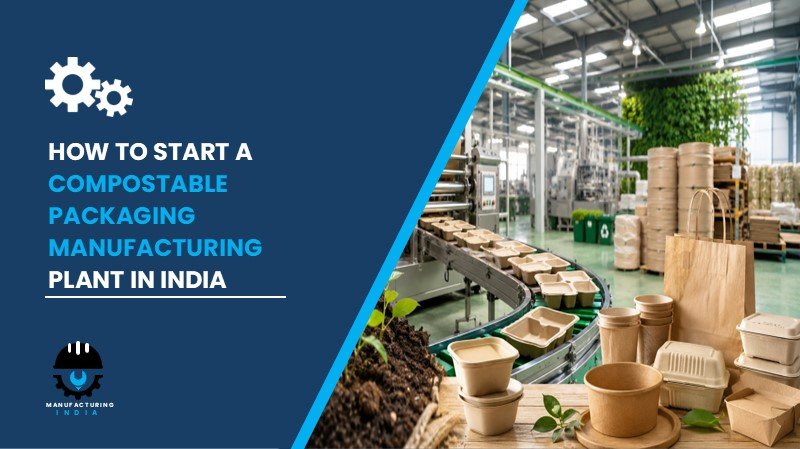
Setting up a compostable packaging manufacturing plant in India presents a compelling investment case for entrepreneurs seeking exposure to the sustainable packaging sector. Demand is driven by food service, food processing, FMCG, retail, e-commerce, agriculture, healthcare, personal care, and hospitality industries. Because it breaks down under specified composting conditions into carbon dioxide, water, biomass, and inorganic compounds without harmful residues, this production is critical to India’s plastic-waste reduction and sustainable packaging economy.
India’s growing food-delivery and takeaway consumption, rising restrictions on single-use plastics, and expanding retail and e-commerce sectors make the country a strategically sound base. According to the Government of India, the Extended Producer Responsibility framework sets a 100% EPR target for compostable plastic packaging from 2023-24 onward, requiring such waste to be managed through the prescribed end-of-life pathway. This regulatory push further supports this venture.
This investment case rests on strong policy support through India’s Extended Producer Responsibility (EPR) framework and its 100% compostable-plastics target, cost-competitive access to PLA, PBAT, starch, and colourants/additives feedstock, and consistent demand from food service, retail, and e-commerce sectors. With gross profit margins of 20-30% and net profit margins of 7-14%, the project demonstrates a viable path to break-even and long-term profitability across a range of plant capacities.
What is Compostable Packaging?
Compostable packaging refers to packaging materials designed to break down under specified composting conditions into carbon dioxide, water, biomass, and inorganic compounds without harmful residues. It can be made from PLA, PBAT, PHA, starch blends, cellulose, bagasse, and other certified compostable substrates, and produced as films, bags, trays, containers, cups, pouches, wraps, and molded products engineered for strength, flexibility, and moisture and grease resistance.
The compostable packaging manufacturing process relies on raw-material blending, compounding, extrusion, film or sheet formation, printing, lamination, cutting, sealing, thermoforming or molding, quality testing, and packaging as its core stages. The end products serve food service, food processing, FMCG, retail, e-commerce, agriculture, healthcare, personal care, and hospitality industries.
Cost of Setting Up a Compostable Packaging Manufacturing Plant in India
The total cost of setting up the facility depends on capacity, technology, location, automation level, and regulatory compliance.
1. Capital Expenditure (CapEx)
Capital investment covers land acquisition, site preparation, and infrastructure, and can be planned around an industrial estate or SEZ location. Civil works costs cover the processing shed, laboratory, storage areas, and administrative block. Machinery costs account for the largest portion of total capital expenditure for a compostable packaging manufacturing plant, and equipment must be corrosion-resistant and tailored for this operation.
Key machinery required includes:
- Raw-material mixers
- High-speed blenders
- Twin-screw extruders
- Compounding units
- Pelletizers
- Film-blowing machines
- Sheet-extrusion lines
- Thermoforming machines
- Injection-molding machines
- Printing machines
- Lamination machines
- Bag-making machines
- Pouch-making machines
- Cutting machines
- Sealing machines
- Die-cutting machines
- Punching machines
- Quality-testing equipment
- Packaging machines
Other capital costs include land registration, pre-operative expenses, and commissioning costs.
Request a Sample Report for In-Depth Market Insights: https://www.imarcgroup.com/compostable-packaging-manufacturing-plant-project-report/requestsample
2. Operational Expenditure (OpEx)
Raw material cost is the largest component of operating expenditure, with PLA, PBAT, starch, and colourants/additives together accounting for approximately 60-70% of OpEx. Long-term supplier contracts are recommended to mitigate price volatility.
Utility costs account for approximately 10-14% of OpEx. Other operating costs include transportation, packaging, salaries, maintenance, depreciation, and taxes, rising by the fifth year due to inflation.
3. Plant Capacity
The proposed unit is designed with an annual production capacity of 5,000-20,000 MT, enabling economies of scale while maintaining operational flexibility. Capacity can be customized per investor requirements, and profitability improves with higher capacity utilisation.
4. Profit Margins and Financial Projections
Financial projections cover capital investment, operating costs, capacity utilisation, pricing trends, and demand outlook, including NPV, IRR, and payback period. Gross profit margins typically range between 20-30%, while net margins range between 7-14%.
Why Set Up a Compostable Packaging Plant in India?
Plastic-Waste Reduction and Single-Use Restrictions. Growing concerns regarding persistent plastic waste, alongside regulatory measures targeting selected single-use plastic products, are encouraging businesses to consider compostable alternatives across multiple packaging categories.
Moderate but Justifiable Entry Barriers. A single facility can potentially produce multiple formats including bags, films, pouches, trays, cups, and containers, but consistent compostability certification and barrier performance create entry barriers that favour experienced, technologically equipped producers.
Megatrend Alignment. Brand owners increasingly seek packaging solutions with improved end-of-life characteristics, while expansion of takeaway, food delivery, and quick-service restaurants is increasing demand for functional disposable packaging.
Policy and Regulatory Push. According to the Government of India, the Extended Producer Responsibility framework sets a 100% EPR target for compostable plastic packaging from 2023-24 onward, requiring such waste to be managed through the prescribed end-of-life pathway, directly supporting demand.
Active Industry Investment. In April 2026, BASF expanded its ecovio® portfolio with new certified home-compostable grades for flexible packaging, designed for extrusion coating, film and sheet extrusion, and lamination, offering adjustable barriers against grease, liquids, oxygen, and moisture for food, personal care, healthcare, and pet food applications.
Growing Technology Adoption. Manufacturers can develop products using PLA, PBAT, PHA, and starch-based materials, and improved barrier properties and sealing performance are expanding the range of applications.
Manufacturing Process – Step by Step
The compostable packaging manufacturing process uses raw-material blending, compounding, extrusion, film or sheet formation, printing, lamination, cutting, sealing, thermoforming or molding, quality testing, and packaging as the primary production method.
- Blending and Compounding: PLA, PBAT, starch, and colourants/additives are blended and processed through twin-screw extruders and compounding units.
- Pelletizing: Compounded material is formed into pellets using pelletizers.
- Extrusion and Formation: Pellets are processed into films or sheets using film-blowing machines and sheet-extrusion lines.
- Printing and Lamination: Formed material is printed and laminated where required.
- Conversion: Printed material is converted into bags, pouches, or other formats using bag-making machines, pouch-making machines, cutting machines, sealing machines, and die-cutting machines.
- Thermoforming or Molding: Selected formats are shaped using thermoforming or injection-molding machines.
- Quality Testing and Packaging: Finished products undergo quality checks before being packaged for dispatch to end-use industries.
Key Applications
Compostable packaging serves a wide range of downstream industries.
- Food Service: Used for takeaway containers, cups, plates, cutlery packaging, and food-service items.
- Food Packaging: Used for pouches, films, trays, wraps, and other packaging formats for food products.
- Retail & FMCG: Applied in bags, wrappers, pouches, and other consumer-product packaging.
- E-commerce: Used for mailers, protective packaging, and selected flexible packaging applications.
Leading Manufacturers
Leading producers in the global compostable packaging industry include:
- TIPA Ltd
- Ultra-Green Sustainable Packaging
- Özsoy Plastik
- International Paper Company
- Mondi
Timeline to Start the Plant
- Feasibility study and project report preparation
- Land acquisition and site development
- Regulatory approvals and environmental clearances
- Factory licence and fire safety compliance
- Machinery procurement and installation
- Raw material supplier agreements and supply chain setup
- Trial production and quality testing
- Commercial production launch
Licences and Regulatory Requirements
Starting a compostable packaging manufacturing unit in India requires several approvals:
- Business registration (Proprietorship, LLP, or Pvt Ltd)
- Factory Licence under the Factories Act
- Environmental Clearance from State Pollution Control Board
- GST Registration
- Fire Safety NOC
- Effluent Treatment Plant (ETP) operational clearance
- Occupational Health and Safety compliance
Key Challenges to Consider
High Capital Requirements. Machinery costs, including extruders, film-blowing machines, and thermoforming machines, account for the largest share of capital expenditure.
Raw Material Price Volatility. PLA, PBAT, starch, and colourants/additives prices can fluctuate, and since raw materials account for 60-70% of OpEx, long-term supplier contracts are essential.
Regulatory Compliance. Safety protocols, effluent treatment, and emission standards must be maintained throughout operations.
Competition. Established players such as TIPA Ltd, Ultra-Green Sustainable Packaging, Özsoy Plastik, International Paper Company, and Mondi operate with extensive capacities, so new entrants must compete on quality and cost-effectiveness.
Skilled Manpower. The plant requires trained personnel across compounding, extrusion, and quality assurance functions.
Site Selection Constraints. The location must offer easy access to PLA, PBAT, and starch feedstock, proximity to target markets, and compliance with zoning regulations.
Frequently Asked Questions
1. How much does it cost to set up a compostable packaging manufacturing plant in India?
Cost depends on capacity, technology, location, automation, and regulatory compliance, covering land, civil works, machinery, and other capital costs.
2. Is compostable packaging manufacturing profitable in India in 2026?
Yes, the project shows healthy profitability, with gross profit margins of 20-30% and net profit margins of 7-14% under normal operating conditions.
3. What machinery is required for a compostable packaging plant in India?
Key machinery includes raw-material mixers, high-speed blenders, twin-screw extruders, compounding units, pelletizers, film-blowing machines, sheet-extrusion lines, thermoforming machines, injection-molding machines, printing machines, lamination machines, bag-making machines, pouch-making machines, cutting machines, sealing machines, die-cutting machines, punching machines, quality-testing equipment, and packaging machines.
4. What licences and approvals are required to start a compostable packaging plant in India?
Requirements include business registration, a Factory Licence, Environmental Clearance, GST Registration, Fire Safety NOC, ETP clearance, and Occupational Health and Safety compliance.
5. What raw materials are needed for compostable packaging manufacturing?
The primary raw materials are PLA, PBAT, starch, and colourants/additives, together accounting for approximately 60-70% of operating expenditure.
6. What are the environmental compliance requirements for a compostable packaging plant in India?
Facilities require Environmental Clearance from the State Pollution Control Board, an operational Effluent Treatment Plant, and advanced monitoring systems for emission compliance.
7. What is the best location to set up a compostable packaging plant in India?
The site should offer easy access to PLA, PBAT, starch, and colourants/additives, proximity to target markets, robust infrastructure, and compliance with zoning and environmental regulations.
8. What is the break-even period for this type of plant in India?
Break-even depends on capital investment, operating costs, and capacity utilisation, assessed through payback period, NPV, and IRR calculations.
9. What government incentives are available for manufacturers in India?
The Government of India’s Extended Producer Responsibility framework, which sets a 100% EPR target for plastic packaging made from compostable plastics from 2023-24 onward, supports compostable packaging manufacturers by mandating a prescribed end-of-life pathway for such packaging.
Key Takeaways for Investors
This investment offers a compelling opportunity backed by consistent demand from the food service, food processing, FMCG, retail, e-commerce, agriculture, healthcare, personal care, and hospitality sectors. Financial viability holds across capacities from 5,000 MT to 20,000 MT, with gross margins of 20-30% and net margins of 7-14%. The global compostable packaging market, valued at USD 80.00 Billion in 2025 and projected to reach USD 144.26 Billion by 2034 at a CAGR of 6.8%, alongside India’s 100% EPR target for compostable plastic packaging, reflects the scale of demand this investment can capture. As plastic-waste regulation and sustainable packaging demand expand, compostable packaging demand is set to remain sustainable for years to come.
About the Author