Setting up a dye production plant in India represents a highly attractive investment proposition underpinned by robust and structurally growing demand from the textile and apparel industry, the leather processing sector, the paper and packaging industry, and the plastics and polymer manufacturing sector. As global textile output expands, industrialisation deepens, and consumer awareness of durable, colourfast, and environmentally responsible colouring agents grows, dyes available across reactive, acid, basic, disperse, and vat categories occupy an increasingly important position across fabric dyeing, industrial colouring, product finishing, and specialty pigment formulation. This growth trajectory, combined with diversified end-use demand and rising interest in eco-friendly and low-toxicity chemistry, creates a highly favourable manufacturing environment for new entrants with efficient synthesis, purification, and quality systems.
What is Dye?
Dyes are coloured chemical substances used to impart permanent or semi-permanent colour to materials such as textiles, paper, leather, plastics, and coatings. They function by selectively absorbing and reflecting light, creating visible colouration through molecular interaction with the substrate, and are generally soluble in the application medium, allowing them to penetrate and bind effectively to fibres or surfaces. Dyes are classified into several categories, including reactive dyes, acid dyes, basic dyes, disperse dyes, and vat dyes, depending on their chemical structure and application method.
These colourants are widely used in the textile industry for fabric colouration and finishing processes, ensuring durability, brightness, and colourfastness. Modern dye formulations increasingly focus on improved environmental performance, reduced toxicity, and compliance with strict industrial safety and sustainability standards across global manufacturing sectors.
The global dye market was valued at approximately USD 32.60 Billion in 2025 and is expected to reach USD 50.14 Billion by 2034, exhibiting a CAGR of 4.9% from 2026 to 2034, supported by rising textile manufacturing output, expanding packaging inks, paints, and coatings applications, and growing adoption of high-performance and eco-friendly colouring agents.
Cost of Setting Up a Dye Production Plant
The total capital investment required to establish a dye production plant is shaped by several key parameters: annual production capacity (typically ranging from 1,000 to 5,000 MT per annum), the synthesis technology adopted (batch versus continuous chemical reaction and coupling systems), the level of automation across reaction, filtration, and drying sections, facility specification, raw material sourcing strategy, and applicable environmental and safety compliance requirements. Below is a structured breakdown of the major cost components.
1. Capital Expenditure (CapEx)
Total capital investment in a dye production plant covers the following major heads:
Land and Site Development
This encompasses land acquisition or lease, site preparation, boundary development, and utilities connectivity. Site selection should prioritise proximity to sources of chemical intermediates and solvents to ensure a steady, cost-effective raw material supply, along with proximity to target textile, leather, and packaging markets to minimise distribution costs. Access to reliable power and steam generation infrastructure for synthesis and drying operations, robust road and rail logistics for inbound chemicals and outbound finished dye, availability of process water of suitable quality, and a skilled workforce for plant operations and quality control are critical site selection criteria. Compliance with industrial zoning regulations, environmental clearance norms, fire and chemical safety requirements, and effluent and emission compliance frameworks must be assessed from project initiation.
Civil Works and Construction
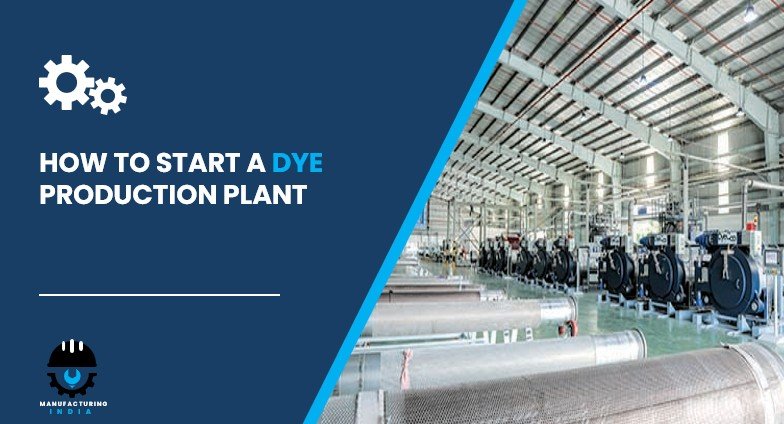
Building costs cover the main processing facility including the raw material reception and storage section, reaction and synthesis house, filtration and separation area, drying and milling section, standardisation and blending area, automated packaging and dispatch infrastructure, quality control laboratory, administrative block, and utility infrastructure including boiler house, power backup, cooling water systems, and effluent treatment plant. Construction must comply with applicable factory act requirements, fire and explosion-proofing norms for chemical handling areas, and environmental infrastructure guidelines.
Machinery and Equipment
Machinery represents the single largest CapEx component. Key equipment required for a dye production plant includes:
- Raw Material Reception and Storage Systems: Intake and storage tanks, drum handling systems, and conveying equipment for chemical intermediates, aromatic amines, phenols, acids, alkalis, coupling agents, and solvents, with segregated storage for hazardous and incompatible chemicals
- Reactors and Agitators: Corrosion-resistant, jacketed reaction vessels with precise temperature and pressure control for chemical synthesis and coupling reactions that form the core dye molecule
- Condensers and Heat Exchangers: Equipment to manage reaction exotherms, recover solvent vapours, and maintain process temperatures within tight tolerances throughout synthesis
- Filtration and Separation Units: Filter presses and centrifuges to separate crude dye solids from the reaction mother liquor and wash residual impurities from the filter cake
- Drying Systems: Spray dryers or tray dryers to reduce moisture content of the crude dye to target specifications while preserving colour strength and particle characteristics
- Grinding and Milling Machines: Equipment to achieve the target particle size distribution required for consistent colour strength, solubility, and application performance
- Standardisation and Blending Equipment: Blending systems to adjust dye strength, shade, and consistency across production batches to meet defined product specifications
- Effluent Treatment Plant and Safety Systems: Wastewater treatment infrastructure, vapour recovery units, and flameproof electrical and instrumentation systems designed to applicable safety standards given the hazardous nature of dye chemical operations
- Automated Packaging Lines: Filling, weighing, and bagging systems for powder, granule, and liquid dye formats, along with palletising and bulk loading facilities for dispatch
- Quality Control Laboratory Equipment: Equipment for colour strength, shade matching, purity, moisture, and other analytical tests to verify compliance with product specifications and industry standards
- Material Handling and Warehousing: Conveyors, bucket elevators, storage silos for raw materials and finished dye, and finished goods warehousing with batch traceability and stock management
Other Capital Costs
These include pre-operative expenses, commissioning charges, import duties on specialised reactors and filtration equipment, staff training and competency development, initial raw material and consumable inventory for production commissioning, regulatory compliance setup including environmental clearances and factory licensing, and ISO 9001 / ISO 14001 quality and environmental management system establishment costs.
Request a Sample Report for In-Depth Market Insights: https://www.imarcgroup.com/dye-manufacturing-plant-project-report/requestsample
2. Operational Expenditure (OpEx)
Raw materials principally chemical intermediates including aromatic amines, phenols, acids, alkalis, coupling agents, and solvents constitute the dominant operating cost, typically representing 60–70% of total OpEx. Utility costs, driven primarily by electricity, steam generation, and water consumption across reaction, filtration, and drying operations, account for 15–20% of OpEx. Labour, maintenance, quality control, packaging, transportation, depreciation, taxes, and overhead costs constitute the remainder of the operating cost base.
3. Plant Capacity
The proposed dye production facility is designed with an annual production capacity ranging between 1,000–5,000 MT, enabling economies of scale while maintaining operational flexibility. This capacity range supports a diversified product portfolio spanning reactive, acid, basic, disperse, and vat dye categories, serving the textile and apparel industry, the leather processing industry, the paper and packaging industry, and the plastics and polymer manufacturing sector across domestic and export channels.
4. Profit Margins and Financial Projections
The project demonstrates healthy profitability potential under normal operating conditions. Financial projections encompass capital investment, operating costs, capacity utilisation ramp-up schedule, product mix across dye categories, and forward demand outlook underpinned by textile sector expansion and diversified industrial application growth. A comprehensive feasibility analysis includes sensitivity analysis, Net Present Value (NPV), Internal Rate of Return (IRR), and Payback Period calculations. Gross profit margins for dye production typically range from 35–45%, supported by stable demand and value-added application segments. Net profit margins of 18–25% are achievable with disciplined cost management, optimal capacity utilisation, and effective raw material procurement.
Why Set Up a Dye Production Plant?
Strong and Diversified Textile Industry Demand
Expanding global apparel production and rising fast-fashion and technical textile consumption continue to drive steady demand for high-performance dyes across multiple fibre types. As textile manufacturers seek consistent colour strength, brightness, and fastness properties at scale, dye producers with reliable quality systems are well positioned to capture sustained volume growth from this core end-use segment.
Wide Industrial Application Base Across Sectors
Dyes are essential not only to textiles but also to leather processing, paper and packaging, and plastics and polymer manufacturing, ensuring diversified demand stability. This breadth of end-use application reduces dependence on any single industry cycle and provides dye producers with multiple channels through which to deploy production capacity and manage demand fluctuations.
Export-Oriented Growth Opportunities
Many developing economies rely on dye and downstream textile exports, strengthening global trade opportunities and manufacturing scalability. Producers with competitive cost structures and consistent quality are well placed to serve both domestic industrial demand and international offtake, supporting long-term capacity utilisation and revenue diversification.
Rising Demand for Eco-Friendly and Sustainable Dye Chemistry
Regulatory pressure on environmental safety and growing end-user preference for low-toxicity, biodegradable, and water-efficient dye solutions is creating new product opportunities. Producers investing in cleaner synthesis routes, improved effluent management, and natural or bio-based colourant research are positioned to capture premium demand as sustainability standards tighten across global manufacturing sectors.
Scalable Batch and Continuous Manufacturing Systems
The dye value chain spanning raw material preparation, chemical synthesis, filtration, drying, and standardisation allows processors to begin operations at a moderate scale using batch reaction systems and expand toward continuous processing as volumes grow. This phased investment approach allows new entrants to manage capital deployment while building technical expertise in complex organic synthesis operations.
Expanding Textile Sector Underpinning Structural Demand
According to IMARC Group data, the global textile market was valued at USD 1,104.0 Billion in 2025, reflecting strong industrial demand and expanding apparel consumption worldwide. This scale of downstream textile production drives sustained demand for efficient, stable, and cost-effective dye formulations, with emerging economies in the Asia-Pacific region playing a critical role in production expansion due to lower manufacturing costs and strong export orientation.
Manufacturing Process Overview
The dye production operation transforms chemical intermediates into standardised, market-ready dye products through a sequence of synthesis, separation, drying, and packaging operations. The key process stages are:
- Raw Material Reception and Preparation: Aromatic amines, phenols, acids, alkalis, coupling agents, and solvents received from suppliers are inspected, tested for purity, and prepared in the correct proportions for the chemical reaction stage, as raw material quality directly determines final dye purity and colour consistency.
- Chemical Synthesis and Coupling Reaction: Prepared raw materials undergo controlled chemical reactions, including diazotisation and coupling reactions for azo dyes or equivalent synthesis routes for other dye classes, within jacketed reactors under precisely controlled temperature, pH, and reaction time to form the target dye molecule.
- Filtration and Separation: The reaction mass is filtered using filter presses or centrifuges to separate crude dye solids from the mother liquor, with the filter cake washed to remove residual salts, unreacted raw materials, and by-products.
- Drying: The washed crude dye is dried using spray dryers or tray dryers to reduce moisture content to target specifications, with drying parameters carefully controlled to preserve colour strength and prevent thermal degradation.
- Grinding and Milling: Dried dye is ground and milled to achieve the target particle size distribution, which directly influences solubility, dispersibility, and application performance in downstream fabric dyeing and industrial colouring processes.
- Standardisation and Blending: Milled dye is blended and standardised against reference samples to achieve consistent colour strength and shade across production batches, with diluents or strengthening agents added as required to meet defined product specifications.
- Quality Control: Standardised dye is tested for colour strength, shade matching, purity, moisture content, and other parameters to verify compliance with product specifications and applicable industry quality standards before release for packaging.
- Packaging and Dispatch: Standardised dye is packed in bags, drums, or bulk containers appropriate to the powder, granule, or liquid product format, and dispatched to textile, leather, paper, and plastics industry customers through domestic and export channels.
Key Applications of Dye
The dye market serves several major end-use segments across textile, leather, packaging, and plastics sectors:
- Textiles and Apparel Industry: Dyes are extensively used for colouring fibres, yarns, and fabrics with high fastness and uniformity, ensuring durability, aesthetic appeal, and consistency across bulk textile production.
- Leather Industry: Applied in tanning and finishing processes to enhance colour depth and surface quality, improving product attractiveness and resistance to wear and environmental exposure.
- Paper and Packaging Industry: Used to provide colouration and branding effects in specialty papers and packaging materials, supporting visual differentiation and product marketing.
- Plastics and Polymers Industry: Integrated into polymer matrices for durable colouration in moulded and extruded plastic products, ensuring heat stability and long-lasting colour retention.
- Paints, Coatings, and Printing Inks: Used as colouring agents in industrial and decorative paints, protective coatings, and printing inks, where colour strength, light fastness, and chemical stability are key performance requirements.
Global Dye Market Outlook
The global dye market was valued at approximately USD 32.60 Billion in 2025. According to IMARC Group estimates, the market is expected to reach USD 50.14 Billion by 2034, exhibiting a CAGR of 4.9% from 2026 to 2034. The dye market benefits from multiple structural demand drivers:
- Expanding global textile and apparel production, with the textile market valued at USD 1,104.0 Billion in 2025, driving sustained industrial demand for efficient, cost-effective dye formulations
- Growth in fast fashion and technical textiles increasing consumption of high-performance dyes with improved colour strength and fastness properties
- Diversified demand from leather processing, paper and packaging, plastics and polymers, and printing inks and coatings sectors, reducing dependence on any single end-use industry
- Regulatory pressure on environmental safety encouraging manufacturers to develop eco-friendly and low-impact dye formulations, including natural and bio-based colourant research
- Strong export orientation from emerging Asia-Pacific economies benefiting from lower manufacturing costs and expanding production capacity
- Continued industrialisation and rising consumption of processed consumer goods across developing economies, supporting broad-based dye demand growth
Major players in the global dye production industry include BASF SE, DIC Corporation, Clariant AG, Lanxess AG, Tronox Holdings plc, and Kronos Worldwide Inc., alongside other established producers such as Archroma, Sudarshan Chemical Industries Limited, Atul Ltd., and Huntsman Corporation, serving end-use sectors including textiles and apparel, leather processing, paper and packaging, plastics, and inks and coatings industries.
Latest Industry Developments
- August 2025: A Cornell University research team focused on an algae-derived blue pigment as a replacement for synthetic food colourants, addressing demand for natural alternatives in the food industry. The study highlighted scalable extraction methods and improved stability of bio-based colourants, aiming to reduce reliance on petrochemical dyes and enhance food-safety applications across manufacturing sectors, signalling a broader shift toward sustainable colouring solutions across global systems.
- March 2025: A research study published in the Textile Research Journal highlighted growing interest in natural dyes as eco-friendly alternatives to synthetic dyes. Derived from renewable resources, these dyes were noted for their non-toxic and biodegradable properties, in contrast to synthetic dyes associated with pollution and health risks, with the study examining extraction methods, technological advancements, and challenges around scalability and colour consistency across textile, food, and cosmetic applications.
Licenses and Regulatory Requirements
Establishing a dye production unit requires a range of approvals and certifications, which may vary by country and jurisdiction, including:
- Business registration and company incorporation under applicable company law
- Factory License under applicable state Factories Act provisions for manufacturing operations
- Environmental Clearance, including Consent to Establish (CTE) and Consent to Operate (CTO) from the applicable Pollution Control Board, for manufacturing operations involving chemical synthesis and effluent generation
- Fire Safety Certification for facilities handling flammable solvents and reactive chemicals
- Compliance under applicable hazardous chemicals manufacture, storage, and handling regulations
- Effluent discharge and hazardous waste management authorisation for wastewater and solid waste generated during synthesis and filtration operations
- ISO 9001:2015 Quality Management System Certification for quality management infrastructure compliance
- ISO 14001 Environmental Management System Certification for environmental compliance infrastructure
- Weights and Measures (Legal Metrology) registration for packaged commodity labelling and net quantity declaration
- Export-Import Code (IEC) for international market access
- Trademark and Brand Registration for proprietary branded product launch
- Occupational Health and Safety management compliance (ISO 45001 / Factories Act provisions) for manufacturing worker safety, particularly in chemical handling and reaction areas
Key Challenges to Consider
Raw Material Price Volatility and Petrochemical Dependence
Chemical intermediates, which account for 60–70% of total operating costs, are largely derived from petrochemical feedstocks and are subject to global commodity price cycles. Price volatility in aromatic amines, phenols, and solvents can materially affect margins, making long-term supply arrangements and flexible formulation strategies important risk mitigation measures for processors.
Environmental Compliance and Effluent Management
Dye synthesis generates process effluent containing residual chemicals, salts, and coloured wastewater that must be treated to meet discharge standards. Maintaining effective effluent treatment infrastructure and pollution control compliance requires ongoing capital and operating investment, and any lapse can result in regulatory action and reputational risk.
Process Safety in Hazardous Chemical Handling
Reaction processes involving flammable solvents, corrosive acids and alkalis, and reactive intermediates introduce fire, explosion, and occupational health hazards that must be managed through corrosion-resistant equipment, flameproof electrical systems, and rigorous safety protocols compliant with hazardous chemical handling regulations.
Competition from Low-Cost Producers and Natural Dye Alternatives
Established low-cost producers in Asia-Pacific markets and emerging natural and bio-based dye alternatives create competitive pressure on pricing and market share. Processors must differentiate through consistent quality, technical service, and increasingly through sustainable and eco-friendly product offerings to maintain competitive positioning.
Regulatory Complexity Across Export Markets
Dye producers targeting export markets must navigate varying chemical registration, labelling, and restricted substance regulations across jurisdictions, including compliance with international frameworks governing hazardous and restricted dye chemistries used in textiles and consumer products.
Capital Intensity of Continuous Synthesis and Treatment Infrastructure
While batch synthesis can be established at relatively moderate capital investment, scaling toward continuous processing and comprehensive effluent treatment infrastructure represents a substantial incremental capital commitment. New entrants must carefully evaluate the phasing of investment between batch operations and fully integrated, higher-throughput continuous systems based on available capital and target markets.
Frequently Asked Questions (FAQs)
1. How much does it cost to set up a dye production plant?
The total investment depends on plant capacity (1,000–5,000 MT per annum), synthesis technology (batch or continuous), automation level, facility specification, location, and target market certifications. Costs cover land, civil construction (reaction house, filtration and drying section, standardisation area, storage tank farm, quality laboratory, utilities), machinery (reactors, filtration and separation units, dryers, grinding and blending equipment, packaging lines), quality certifications, working capital, and regulatory compliance. A comprehensive feasibility study from IMARC Group provides detailed, capacity-specific cost estimates covering all CapEx and OpEx components.
2. Is dye production a profitable business in 2026?
Yes. Sustained demand from the textile and apparel industry, the leather processing sector, and the paper, packaging, and plastics industries combined with gross margins of 35–45% and net profit margins of 18–25% make dye production financially attractive. Profitability generally improves with capacity expansion, higher capacity utilisation, and disciplined raw material cost management.
3. What machinery and equipment are required for a dye production plant?
Key equipment includes raw material reception and storage systems, corrosion-resistant reactors and agitators for chemical synthesis, condensers and heat exchangers, filtration and separation units such as filter presses and centrifuges, spray or tray dryers, grinding and milling machines, standardisation and blending equipment, effluent treatment and safety systems, quality control laboratory equipment, and automated packaging lines for bags, drums, and bulk dispatch.
4. What licenses and approvals are required?
Required approvals include company registration, Factory License, environmental clearances (Consent to Establish and Consent to Operate from the applicable pollution control board), fire safety certification, hazardous chemicals handling compliance, effluent discharge authorisation, and ISO 9001 / ISO 14001 quality and environmental management system certification. Environmental clearance is a mandatory prerequisite for manufacturing and operating a dye production facility given its hazardous chemical processes.
5. How long does it take to commission a dye production plant?
Typically, 12–36 months from project initiation to commercial production launch, depending on project scale, facility construction timeline, equipment procurement lead times for reactors and treatment systems, environmental clearances, and regulatory approval timelines, which should be initiated early in the project to avoid delays to commercial launch.
6. What are the key raw materials for dye production?
The primary raw materials are chemical intermediates including aromatic amines, phenols, acids, alkalis, coupling agents, and solvents, which undergo complex organic synthesis reactions to produce various classes of dyes including azo, vat, reactive, and disperse dyes. Other key inputs include packaging materials such as bags, drums, and bulk containers for finished product.
7. What is the break-even period for a dye production plant?
The break-even period typically ranges from 3 to 6 years, depending on production scale, raw material pricing, and market demand. High margins in specialty and technical dyes may shorten the payback period, while efficient waste management and consistent product quality further enhance profitability and support faster break-even achievement.
8. What are the main categories of dye and their applications?
The principal categories are reactive dyes, acid dyes, basic dyes, disperse dyes, and vat dyes, classified by their chemical structure and application method. These serve fabric dyeing across natural and synthetic fibres, leather tanning and finishing, paper and packaging colouration, and plastics and polymer colouration, with product selection driven by substrate type, required fastness properties, and end-use performance requirements.
9. What government incentives are available for dye producers?
Processors may benefit from chemical and manufacturing sector incentive schemes, state-level industrial investment incentives and capital subsidies, reduced utility tariffs, export promotion benefits, and interest subsidies offered under various national or regional industrial policies to promote manufacturing and export competitiveness.
10. How does dye production compare to other specialty chemical processing in terms of setup?
Compared to other specialty chemical manufacturing, dye production involves multi-step organic synthesis with stringent colour strength, shade consistency, and purity requirements, alongside significant effluent treatment needs due to the hazardous and coloured nature of process waste. The reaction and separation technology employed is broadly similar to other fine and speciality chemical processing, allowing processors with relevant synthesis experience to adapt existing technical capabilities to dye production with targeted investment in standardisation and treatment infrastructure.
Key Takeaways for Investors
The dye production industry represents a structurally resilient and financially attractive investment opportunity positioned at the intersection of expanding global textile manufacturing, diversified industrial demand, and growing emphasis on sustainable chemistry. Stable demand from textiles and apparel, leather processing, paper and packaging, and plastics and polymers channels provides resilience against single-segment demand volatility, while rising interest in eco-friendly and low-toxicity dye formulations offers meaningful long-term product development opportunities. Strong export orientation from emerging Asia-Pacific economies provides cost-competitive access to global textile and industrial markets, while the scalable nature of the value chain from batch synthesis to fully continuous, integrated operations allows investors to phase capital deployment according to risk appetite and target market positioning. Continued innovation in eco-friendly and bio-based colourant chemistry, alongside sustained industrialisation and rising consumption of processed consumer goods across developing economies, reflects strong confidence in the long-term growth and profitability of the category.
About the Author