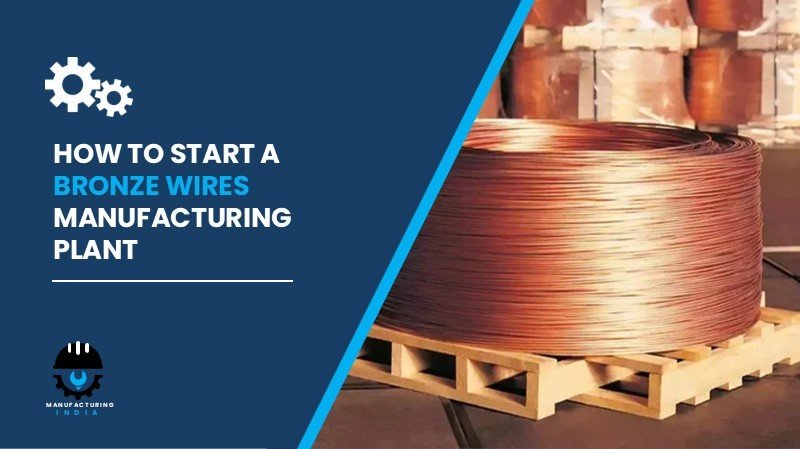
A bronze wires manufacturing plant setup in India presents a compelling investment case for entrepreneurs eyeing the electrical and electronics, construction, automotive, marine, telecommunications, industrial machinery, and renewable energy sectors. Bronze wires, valued for their electrical conductivity, corrosion resistance, and high tensile strength, are increasingly critical inputs for connectors, springs, control cables, marine fittings, industrial fasteners, and flexible electrical components.
India’s rapid urbanisation, expanding industrial base, and the Make in India initiative are creating strong tailwinds for domestic conductive-metal production, with manufacturing hubs across states such as Gujarat and Maharashtra well positioned to serve this demand. Rising investment in renewable energy infrastructure, electric vehicles, industrial automation, and smart grid projects is pushing domestic buyers toward reliable local sources of conductive materials, making this a strategically sound production base.
This investment combines policy support under Make in India, cost-competitive labour and land, and steady demand from electrical, automotive, marine, and renewable energy sectors. With gross margins in the 14-22% range and net margins of 5-10%, the venture offers a realistic path to break-even viability across a range of plant capacities.
What is Bronze Wires?
Bronze wires are specialized commodities known for their thermal and electrical conductivity properties. These alloys, primarily composed of copper and tin, boast anti-corrosive and high tensile strength characteristics, making them suitable for diverse applications. They are easily bendable yet maintain their form, a quality crucial for crafting intricate designs. Each bronze wire is widely used in musical instruments for its tonal qualities, and in electrical applications for conductivity and reliability. They are also essential in manufacturing springs, precision instruments, and decorative items due to their superior fatigue strength.
The bronze wires manufacturing process relies on alloying and melting of copper and tin, casting into billets, wire rod rolling, and wire drawing and annealing. The resulting wires serve end-use industries including electrical and electronics, construction, automotive, marine, telecommunications, industrial machinery, and renewable energy.
Cost of Setting Up a Bronze Wires Manufacturing Plant in India
The cost of setting up this facility depends on capacity, technology, location, automation levels, and regulatory compliance requirements.
1. Capital Expenditure (CapEx)
Land and site development form a foundational component of the investment, with promoters able to evaluate SEZs or established industrial estates for ready infrastructure and streamlined approvals. Civil works and construction costs cover the manufacturing shed, quality control laboratory, storage areas, and the administrative block.
Key machinery required includes:
- Induction melting furnaces
- Alloying and mixing units
- Casting machines
- Billet heating furnaces
- Wire rod rolling mills
- Wire drawing machines
- Annealing furnaces
- Straightening and cutting machines
- Surface finishing units
- Coiling and packaging machines
Machinery costs typically represent the largest share of total capital expenditure for a bronze wires manufacturing plant, with production scale and automation level determining the final outlay. Other capital costs cover effluent treatment plant installation, pre-operative expenses, commissioning, and import duties on imported equipment.
Request a Sample Report for In-Depth Market Insights: https://www.imarcgroup.com/bronze-wires-manufacturing-plant-project-report/requestsample
2. Operational Expenditure (OpEx)
Raw material cost dominates the operating cost structure, with copper and tin together accounting for approximately 72-80% of total OpEx. Investors should prioritize long-term supplier contracts to secure consistent quality and stable pricing over spot purchases. Utility costs, covering electricity, water, and steam for melting, casting, and drawing, account for approximately 10-14% of OpEx.
Other operating costs include transportation, packaging, salaries, maintenance, depreciation, and taxes. Operating costs are projected to be significant in year one, and by year five, total operational cost is expected to rise substantially due to inflation and potential increases in raw material prices.
3. Plant Capacity
The proposed facility is designed with an annual production capacity ranging between 3,000-10,000 MT, enabling economies of scale while maintaining operational flexibility. Capacity can be customized to individual investor requirements, and profitability generally improves as capacity utilisation increases.
4. Profit Margins and Financial Projections
Financial projections are built on capital investment, operating costs, capacity utilisation, pricing trends, and demand outlook, and include payback period, net present value (NPV), and internal rate of return (IRR). The project demonstrates healthy profitability under normal operating conditions, with gross margins typically ranging between 14-22% and net margins between 5-10%, supported by stable demand and value-added applications.
Why Set Up a Bronze Wires Plant in India?
Durability and Strength Demand: Bronze wires serve industries requiring materials that endure high stress without losing structural integrity, making them a preferred input for springs, fasteners, and precision components.
Corrosion Resistance for Marine and Outdoor Use: Resistance to oxidation makes bronze wires well suited for outdoor and marine applications, where exposure to the elements would degrade less resilient materials.
Expanding Electronics and Renewable Energy Demand: The ongoing expansion of renewable energy infrastructure, electric vehicles, industrial automation, and smart grid projects is supporting demand for reliable conductive materials. As per the Ministry of New and Renewable Energy, India added a record 44.5 GW of renewable energy capacity in 2025.
Cost-Competitive Manufacturing: India’s land, labour, and supply chain costs remain competitive relative to several other geographies, supporting favourable unit economics for a bronze wires manufacturing plant.
Active Industry Investment: Manufacturers globally are focusing on improving production efficiency, developing superior alloy compositions, and adopting sustainable practices through recycled copper-based materials.
Local Supply Chain Preference: Automotive, electrical, and industrial machinery companies increasingly prefer sourcing conductive wire components locally over imports.
Manufacturing Process – Step by Step
The bronze wires manufacturing process uses alloying and melting of copper and tin as the primary production method, followed by casting, rolling, and drawing operations.
- Alloying and Melting: Copper and tin are melted and alloyed in induction melting furnaces to achieve the required composition.
- Mixing: The molten alloy is processed through alloying and mixing units for homogeneity.
- Casting into Billets: The alloy is cast into billets using casting machines.
- Billet Heating: Billets are reheated in billet heating furnaces to the temperature required for rolling.
- Wire Rod Rolling: Heated billets pass through wire rod rolling mills, reducing them into wire rod form.
- Wire Drawing: The wire rod is drawn to the required gauge using wire drawing machines.
- Annealing: Drawn wires pass through annealing furnaces to relieve stress and restore ductility.
- Straightening and Cutting: Finished wires are straightened and cut to length.
- Surface Finishing: Wires pass through surface finishing units for the required surface quality.
- Coiling and Packaging: Finished wires are coiled and packaged before dispatch to electrical, automotive, marine, and industrial end-use industries.
Key Applications
Bronze wires serve a diverse set of industries owing to their conductivity, strength, and corrosion resistance.
- Electrical Industry: Used for connectors and contacts due to excellent conductivity and resistance to corrosion.
- Automotive Sector: Utilized for intricate components like springs and washers, enhancing durability under stress.
- Musical Instrument Crafting: Preferred for stringed instruments for superior sound quality and wear resistance.
- Art and Design: Favored for sculptures and decorative pieces for their aesthetic appeal and flexibility.
Leading Manufacturers
Several multinational companies compete in the global bronze wires manufacturing plant industry, backed by extensive manufacturing capacities and diverse application portfolios. Key players include:
- Diehl Metall
- Furukawa Electric
- CK San-Etsu
- Wieland
These companies serve end-use sectors such as electrical and electronics, construction, automotive, marine, telecommunications, industrial machinery, and renewable energy.
Timeline to Start the Plant
- Feasibility study and project report preparation
- Land acquisition and site development
- Regulatory approvals and environmental clearances
- Factory licence and fire safety compliance
- Machinery procurement and installation
- Raw material supplier agreements and supply chain setup
- Trial production and quality testing
- Commercial production launch
Licences and Regulatory Requirements
Starting this unit in India requires several approvals:
- Business registration (Proprietorship, LLP, or Pvt Ltd)
- Factory Licence under the Factories Act
- Environmental Clearance from State Pollution Control Board
- GST Registration
- Fire Safety NOC
- Effluent Treatment Plant (ETP) operational clearance
- Occupational Health and Safety compliance
Key Challenges to Consider
Investors evaluating a bronze wires manufacturing plant should weigh the following challenges before committing capital.
High Capital Requirements: Machinery costs, including furnaces, rolling mills, and drawing machines, represent a substantial share of the total investment.
Raw Material Price Volatility: Copper and tin prices can fluctuate, and since these raw materials account for 72-80% of OpEx, price movements directly affect profitability.
Regulatory Compliance: Meeting environmental clearance, effluent treatment, and factory licensing requirements demands ongoing coordination with authorities.
Site Selection Constraints: Facilities need proximity to copper and tin supply sources and compliance with local zoning and environmental regulations.
Competition: Established global players such as Diehl Metall, Furukawa Electric, CK San-Etsu, and Wieland set a high bar on quality and pricing.
Skilled Manpower: Operating furnaces, rolling mills, and drawing machines requires trained technical staff, which can be a challenge in some locations.
Frequently Asked Questions
1. How much does it cost to set up a bronze wires manufacturing plant in India?
Total cost depends on capacity, technology, automation, and location, covering land, civil works, machinery, and other capital costs.
2. Is bronze wires manufacturing profitable in India in 2026?
Yes, the project shows healthy profitability potential, with gross margins of 14-22% and net margins of 5-10% under normal operating conditions.
3. What machinery is required for a bronze wires plant in India?
Key machinery includes induction melting furnaces, alloying and mixing units, casting machines, billet heating furnaces, wire rod rolling mills, wire drawing machines, annealing furnaces, straightening and cutting machines, surface finishing units, and coiling and packaging machines.
4. What licences and approvals are required to start a bronze wires plant in India?
Requirements include business registration, a Factory Licence, Environmental Clearance, GST Registration, Fire Safety NOC, ETP operational clearance, and Occupational Health and Safety compliance.
5. What raw materials are needed for bronze wires manufacturing?
The primary raw materials are copper and tin, together accounting for 72-80% of operating expenditure.
6. What are the environmental compliance requirements for a bronze wires plant in India?
Plants require Environmental Clearance from the State Pollution Control Board and an operational Effluent Treatment Plant (ETP) for discharge and emissions.
7. What is the best location to set up a bronze wires plant in India?
Suitable locations offer proximity to copper and tin supply sources, access to target markets, robust infrastructure, and compliance with local zoning laws.
8. What is the break-even period for this type of plant in India?
The break-even period depends on capacity utilisation, pricing, and cost structure, assessed through payback period and NPV analysis in the project’s financial projections.
9. What government incentives are available for manufacturers in India?
Manufacturers can benefit from the Make in India initiative and the broader push for renewable energy and industrial infrastructure, supporting demand for domestically produced conductive materials.
Key Takeaways for Investors
This investment taps into steady demand from electrical and electronics, automotive, marine, telecommunications, industrial machinery, and renewable energy sectors. The project shows financial viability across the 3,000-10,000 MT capacity range, with gross margins of 14-22% and net margins of 5-10% supporting a realistic case. Continued expansion of renewable energy infrastructure, including a record 44.5 GW of capacity added in 2025 per the Ministry of New and Renewable Energy, points to sustained long-term demand for bronze wires production capacity in India.
About the Author