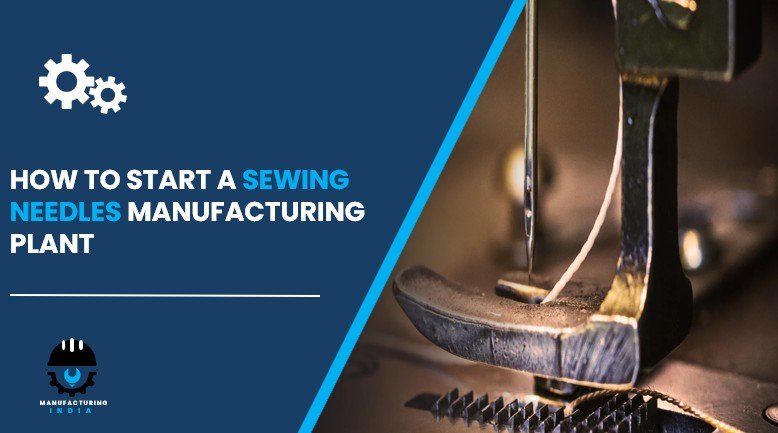
Setting up a sewing needles manufacturing plant in India represents a highly attractive investment proposition underpinned by robust and structurally growing demand from the apparel and garment manufacturing industry, textile processing units, the leather goods industry, the upholstery and furnishing sector, and the household sewing and craft segment. As global apparel production expands, industrial stitching lines proliferate, and interest in home sewing, quilting, and embroidery continues to rise, sewing needles used across hand sewing, embroidery, quilting, leather stitching, and industrial machine applications occupy an increasingly essential position across household retail, industrial textile, and technical textile channels. This growth trajectory, combined with the product’s inherently repeat-purchase nature and strong scope for standardised, export-oriented manufacturing, creates a highly favourable environment for new entrants with efficient precision-manufacturing and quality systems.
What are Sewing Needles?
Sewing needles are thin metal instruments with pointed ends used to stitch fabrics, leather, and flexible materials by hand or through machine sewing. Manufacturers produce needles from high-carbon steel and stainless steel, which undergo a sequence of precision processes including wire drawing, cutting, heading, grinding, heat treatment, polishing, and surface coating to develop the strength, flexibility, and corrosion resistance required for reliable stitching performance. Each needle comprises three functional components: a sharp tip that penetrates fabric, a smooth shaft that reduces friction as the needle passes through material, and an eye that holds and guides the thread.
Sewers can choose from a wide variety of needle types, including hand sewing needles, embroidery needles, quilting needles, darning needles, and industrial machine needles, each engineered with specific dimensions, eye shapes, and point shapes to match application needs. Achieving consistent hardness, precise finishing, and standardised size dimensions is essential to maintaining stitching efficiency, preventing thread breakage, and enhancing the durability of products used across home and industrial sewing environments.
Cost of Setting Up a Sewing Needles Manufacturing Plant
The total capital investment required to establish a sewing needles manufacturing plant is shaped by several key parameters: annual production capacity (typically ranging from 100 Million to 1 Billion units per annum), the range of needle types manufactured (hand sewing, embroidery, quilting, darning, and industrial machine needles), the level of automation across drawing, forming, heat treatment, and plating sections, facility specification, raw material sourcing strategy, and applicable regulatory and quality compliance requirements. Below is a structured breakdown of the major cost components.
1. Capital Expenditure (CapEx)
Total capital investment in a sewing needles manufacturing plant covers the following major heads:
Land and Site Development This encompasses land acquisition or lease, site preparation, boundary development, and utilities connectivity. Site selection should prioritise proximity to steel wire suppliers, grinding wheel and consumable vendors, and heat treatment service providers to ensure a steady, low-transport-cost supply of key inputs. Access to reliable power for precision cold-forming, grinding, and electroplating operations, strong road and rail logistics for inbound raw material and outbound finished goods, availability of process water of suitable quality for plating and finishing operations, and a trained workforce for precision manufacturing and quality control are critical site selection criteria. Compliance with industrial zoning regulations, factory safety norms, effluent discharge standards applicable to electroplating operations, and hazardous chemical storage requirements for plating solutions must be assessed from project initiation.
Civil Works and Construction Building costs cover the main processing facility including the wire drawing and straightening section, cutting and pointing house, eye formation or groove machining area, heat treatment and hardening furnace section, polishing and electroplating unit, inspection and automated packaging infrastructure, quality control laboratory, administrative block, and utility infrastructure including power backup, compressed air systems, effluent treatment plant for plating rinse water, and chemical storage areas. Construction must comply with applicable factory act requirements, fire and electrical safety norms, effluent treatment standards for electroplating discharge, and workplace safety guidelines for precision metalworking operations.
Machinery and Equipment
Machinery represents the single largest CapEx component. Key equipment required for a sewing needles manufacturing plant includes:
- Wire Drawing and Straightening Machines: Equipment that draws high-carbon steel or stainless steel wire down to precise gauge dimensions and straightens it to the dimensional accuracy required for downstream forming operations
- Cutting and Pointing Machines: High-speed machines that cut drawn wire to length and form the initial sharp point at the needle tip through precision grinding or pressing operations
- Eye Forming or Groove Machining Units: Cold-heading and punching equipment that flattens, shapes, and punches the needle eye, together with roll-stamping equipment that introduces the thread groove along the needle shaft
- Heat Treatment Furnaces: Hardening and tempering furnaces, often with oil-quenching baths, that develop the hardness, strength, and flexibility characteristics required for reliable stitching performance without brittleness
- Polishing Drums and Finishing Equipment: Barrel polishing and buffing equipment that removes burrs and rough edges left from forming and heat treatment, producing a smooth surface finish ahead of plating
- Electroplating Units: Nickel and/or chrome electroplating lines, typically using rotating plating barrels with controlled current supply, that deposit a corrosion-resistant, low-friction surface coating onto the finished needle
- Cleaning and Degreasing Systems: Solvent or aqueous cleaning units that remove processing residues and impurities from needles prior to plating, ensuring coating adhesion and finish quality
- Inspection and Automated Sorting Systems: Dimensional, hardness, and visual inspection systems, including automated optical sorting equipment, to verify size, straightness, eye quality, and surface finish against specification
- Effluent Treatment Plant: Treatment systems for plating rinse water and process effluent to remove heavy metals and other contaminants prior to discharge, in compliance with applicable environmental standards
- Automated Packaging Lines: Counting, card-mounting, blister-packing, and cartoning lines for retail packs, along with bulk packaging equipment for industrial and export dispatch
- Quality Control Laboratory Equipment: Equipment for hardness testing, dimensional gauging, coating thickness measurement, and surface finish verification to confirm compliance with quality and customer specifications
- Material Handling and Warehousing: Conveyors, bins, and racking systems for raw wire, work-in-progress, and finished goods storage with organised stock management
Other Capital Costs These include pre-operative expenses, commissioning charges, import duties on specialised forming, heat treatment, and plating equipment, staff training and competency development, initial raw material and consumable inventory for production commissioning, regulatory compliance setup, and ISO 9001 quality management system establishment costs.
Request a Sample Report for In-Depth Market Insights: https://www.imarcgroup.com/sewing-needles-manufacturing-plant-project-report/requestsample
2. Operational Expenditure (OpEx)
Raw materials principally steel wire (high-carbon and stainless steel), along with grinding wheels, plating chemicals, and other consumables constitute the dominant operating cost, typically representing 60-70% of total OpEx. Utility costs, driven primarily by electricity consumption of drawing, forming, heat treatment, and electroplating equipment, account for 15-20% of OpEx. Labour, maintenance, quality control, packaging, transportation, depreciation, taxes, and overhead costs constitute the remainder of the operating cost base.
3. Plant Capacity
The proposed sewing needles manufacturing facility is designed with an annual production capacity ranging between 100 Million-1 Billion units, enabling economies of scale while maintaining operational flexibility. This capacity range supports a diversified product portfolio spanning hand sewing needles, embroidery needles, quilting needles, darning needles, and industrial machine needles, serving domestic textile and craft markets, apparel manufacturing customers, and export channels.
4. Profit Margins and Financial Projections
The project demonstrates healthy profitability potential under normal operating conditions. Financial projections encompass capital investment, operating costs, capacity utilisation ramp-up schedule, product mix across needle types, and forward demand outlook underpinned by rising apparel production and sustained home sewing and craft activity. A comprehensive feasibility analysis includes sensitivity analysis, Net Present Value (NPV), Internal Rate of Return (IRR), and Payback Period calculations. Gross profit margins for sewing needles manufacturing typically range from 35-45%, supported by stable demand, value-added specialty needle applications, and efficient raw material utilisation. Net profit margins of 18-25% are achievable with disciplined cost management, optimal capacity utilisation, and effective product-mix management.
Why Set Up a Sewing Needles Manufacturing Plant?
Expanding Global Apparel Production
The global clothes manufacturing industry continues to expand steadily, creating a permanent and growing requirement for top-grade sewing needles used in high-speed industrial stitching lines. Rising garment exports from emerging manufacturing hubs and the continued growth of fast-fashion retailers are driving sustained industrial demand for precision machine needles that deliver durable performance and prevent thread breakage on high-throughput production lines.
Growth in Home Sewing and Craft Activities
The rising popularity of DIY sewing, quilting, embroidery, and repair activities has produced consistently higher retail needle sales across domestic markets. Small businesses built around crafting and customisation, alongside a broader resurgence of home sewing culture, continue to support steady volume growth in the household and craft needle segment.
Repeat-Purchase Product Economics
Sewing needles function as a disposable, repeat-purchase product, as needles wear, dull, or break with regular use and require periodic replacement. This structural characteristic supports recurring demand and provides manufacturers with a more predictable, resilient revenue base compared to categories dependent on discretionary one-time purchases.
Technological Advancements in Textiles
The textile industry’s continued development of new technical textiles and specialty fabrics is opening possibilities for tailored, application-specific needle designs, including coated and specially hardened needles suited to demanding technical and medical textile applications. This trend supports premiumisation and margin enhancement for manufacturers with strong product development capability.
Scalable and Export-Oriented Operations
The sewing needles manufacturing process, built around standardised forming, heat treatment, and plating operations, allows manufacturers to establish operations at a moderate scale and expand capacity as volumes grow. This scalable, standardised manufacturing model supports export-oriented business development, allowing new entrants to build a track record in domestic markets before extending into international textile export channels.
Urbanisation and Rising Disposable Incomes
Approximately 45% of the world’s 8.2 billion people resided in urban areas in 2025, according to the United Nations World Urbanization Prospects 2025 report by UN DESA. Rising urban lifestyles, increasing participation in home sewing and craft communities, and growing disposable incomes among urban consumers are supporting higher consumption of both industrial and retail sewing needles, providing a structural demand tailwind for manufacturers with strong retail and industrial distribution.
Favourable Policy Environment for Textile Manufacturing
Government initiatives supporting textile sector growth, such as India’s stated ambition to triple textile exports to INR 9 lakh crore by 2030 with a strong focus on innovation-driven segments including technical textiles, illustrate the evolving and increasingly supportive policy environment for upstream and ancillary textile manufacturing, including sewing needle production. This strategic push is expected to accelerate manufacturing activity and directly boost demand for precision tools such as sewing needles across apparel, industrial fabric, and advanced textile applications.
Manufacturing Process Overview
The sewing needles manufacturing operation transforms raw steel wire into precision-finished, plated needles through a sequence of forming, heat treatment, finishing, and packaging operations. The key process stages are:
- Raw Material Reception and Cleaning: High-carbon steel or stainless steel wire received from suppliers is inspected for gauge accuracy, surface quality, and material certification prior to being released into production.
- Wire Drawing and Straightening: Wire is drawn down to the precise gauge required for the target needle size and straightened to the dimensional accuracy necessary for consistent downstream forming.
- Cutting and Pointing: Straightened wire is cut to length and the needle tip is formed through precision grinding or pressing to create the sharp point that penetrates fabric cleanly.
- Eye Formation and Groove Machining: The needle eye is formed through cold-heading and precision punching, while roll-stamping introduces the thread groove along the shaft, together enabling smooth thread guidance and reduced friction during stitching.
- Heat Treatment and Hardening: Formed needles undergo controlled heating followed by oil quenching and tempering, developing the hardness, strength, and flexibility required for durable stitching performance without excessive brittleness.
- Cleaning and Degreasing: Hardened needles are thoroughly cleaned to remove processing residues, oils, and impurities, ensuring proper adhesion and finish quality during subsequent plating.
- Polishing: Needles are polished in rotating barrel or buffing equipment to remove burrs and rough edges left from forming and heat treatment, producing a smooth surface ahead of plating.
- Nickel or Chrome Plating: Polished needles undergo electroplating, typically in rotating plating barrels under controlled current, to deposit a bright, corrosion-resistant, low-friction nickel or chromium surface coating.
- Final Straightening: Heat treatment and plating can introduce minor deformation, so needles undergo a final precision straightening step to ensure they are completely straight for accurate stitch formation.
- Quality Inspection and Sorting: Finished needles are tested for hardness, dimensional accuracy, eye quality, straightness, and coating thickness, with automated optical sorting systems used to identify and remove non-conforming units.
- Marking and Packaging: Needles are marked or labelled for size and type identification and packed in retail cards, blister packs, or bulk cartons for industrial and household distribution, with export-oriented consignments packaged to customer specification.
Key Applications of Sewing Needles
The sewing needles market serves several major end-use segments across apparel, textile, leather, and household sectors:
- Apparel and Garment Manufacturing Industry: Needles used on high-speed industrial stitching lines require precise stitching and durable performance to prevent thread breakage and sustain operational efficiency across large-scale garment production.
- Textile Processing Units: Needles enable efficient stitching of woven and knitted fabrics across different thickness levels, maintaining consistent penetration performance throughout continuous production runs.
- Leather Goods Industry: Specialised heavy-duty needles support the stitching of tough leather materials used in footwear, bags, and accessories, delivering the strength and finish required for premium goods.
- Upholstery and Furnishing Sector: Needles designed for heavier, multi-layer fabrics support upholstery stitching and soft-furnishing production requiring strength and reliable thread control.
- Household and Craft Segment: Hand sewing, embroidery, quilting, and repair applications rely on needles designed for easy handling, sharp penetration, and reliable thread guidance across a wide variety of fabric types.
Global Sewing Needles Market Outlook
The global sewing needles market was valued at approximately USD 1.3-1.4 Billion in 2025 and is projected to reach approximately USD 2.0 Billion by 2033, exhibiting a CAGR of around 4.7% during the forecast period, supported by sustained growth in both industrial textile production and consumer-level sewing activity. The sewing needles market benefits from multiple structural demand drivers:
- Continued expansion of global apparel and garment manufacturing, with rising garment exports from emerging manufacturing hubs sustaining industrial demand for precision machine needles
- A sustained resurgence in home sewing, quilting, embroidery, and craft-based small businesses supporting steady retail needle demand
- Continued urbanisation, with approximately 45% of the world’s population residing in urban areas as of 2025, supporting higher consumption of both branded retail and industrial sewing products
- Growth in technical textiles and specialty fabrics, creating demand for tailored, application-specific and coated needle designs
- The inherently repeat-purchase, consumable nature of sewing needles, supporting recurring demand independent of broader discretionary spending cycles
- Government initiatives supporting textile sector growth and exports in major manufacturing economies, indirectly boosting demand for precision manufacturing inputs such as sewing needles
- Ongoing investment by established players in product innovation, including coated and sensor-enabled needle technologies for high-speed and technical textile applications
According to available industry estimates, the Asia-Pacific region holds the largest share of the global sewing needles market, accounting for approximately 44.6% of overall demand, reflecting the region’s dominant position in global apparel and textile manufacturing. Major players in the global sewing needles industry include SCHMETZ, John James Needles, PONY Needles, DMC, and Bohin, serving end-use sectors including the apparel and garment manufacturing industry, textile processing units, the leather goods industry, the upholstery and furnishing sector, and the household sewing and craft segment.
Latest Industry Developments
- December 2025: Groz-Beckert presented a range of textile manufacturing innovations at ShanghaiTex 2025, highlighting developments across knitting, weaving, nonwoven, and tufting technologies. Newly introduced needle series addressed specialised uses and high-speed, heat-intensive operations, while an embroidery system update was noted for delivering smoother thread flow and more consistent stitch quality under demanding production conditions.
- April 2025: Researchers at the Technical University of Liberec, Czech Republic, published a study examining how coating materials influence heat generation in sewing needles during high-speed operations. The findings indicated that nickel, chromium, and titanium nitride coatings affect thermal performance differently, with combined coating and air-cooling approaches improving durability, stitch quality, and efficiency, particularly for technical and medical textile applications.
Licenses and Regulatory Requirements
Establishing a sewing needles manufacturing unit requires a range of approvals and certifications, which may vary by country and jurisdiction, including:
Key Challenges to Consider
Raw Material Price Volatility
Steel wire, which accounts for 60-70% of total operating costs, is subject to global steel price cycles driven by input commodity costs, energy prices, and trade policy. Fluctuations in steel wire pricing can materially affect production costs and margins, making long-term supply arrangements with reliable wire suppliers and disciplined procurement strategy critical operational priorities.
Precision Manufacturing and Quality Consistency
Sewing needles require tight dimensional tolerances across gauge, eye shape, point sharpness, and straightness, as even minor deviations can cause thread breakage, skipped stitches, or fabric damage in end-use applications. Maintaining consistent hardness, coating thickness, and surface finish across high-volume production runs requires disciplined process control, calibrated tooling, and rigorous inline and final inspection systems.
Effluent and Environmental Compliance in Plating Operations
Electroplating operations generate chemical effluent containing heavy metals such as nickel and chromium that must be treated before discharge, in compliance with applicable pollution control regulations. Any lapse in effluent treatment system performance creates regulatory exposure, potential production disruption, and environmental risk, making continuous investment in effluent treatment infrastructure and compliance monitoring a non-negotiable operational requirement.
Competitive Intensity from Established Global Players
The global sewing needles industry is led by established multinational manufacturers with strong brand recognition, extensive distribution networks, and long-standing OEM relationships with sewing machine manufacturers. New entrants must differentiate through cost competitiveness, quality consistency, or specialised product offerings to secure retail shelf space and industrial supply contracts against these incumbents.
Dependence on Apparel and Textile Sector Cycles
Industrial needle demand is closely tied to the performance of the global apparel and textile manufacturing sector, which is subject to cyclical demand fluctuations, shifts in sourcing geography, and changes in fashion consumption patterns. Diversifying across industrial, household, and specialty needle segments helps mitigate exposure to downturns in any single end-use channel.
Capital Intensity of Precision Tooling
While basic needle forming can be established at moderate capital investment, achieving the tight tolerances and surface finish required for premium industrial and export-grade needles requires precision tooling, calibrated forming dies, and advanced inspection systems that represent a substantial incremental capital commitment. New entrants must carefully evaluate the phasing of investment between commodity-grade production and premium, export-oriented capability based on available capital and target markets.
Frequently Asked Questions (FAQs)
1. How much does it cost to set up a sewing needles manufacturing plant?
The total investment depends on plant capacity (100 Million-1 Billion units per annum), the range of needle types manufactured, automation level, facility specification, location, and target market certifications. Costs cover land, civil construction (forming section, heat treatment area, plating unit, quality laboratory, utilities), machinery (wire drawing machines, cutting and pointing machines, eye forming units, heat treatment furnaces, polishing drums, electroplating units, inspection systems, packaging lines), quality certifications, working capital, and regulatory compliance. A comprehensive feasibility study from IMARC Group provides detailed, capacity-specific cost estimates covering all CapEx and OpEx components.
2. Is sewing needles manufacturing a profitable business in 2026?
Yes. Sustained demand from apparel and garment manufacturers, textile processing units, and the household sewing and craft segment combined with gross margins of 35-45% and net profit margins of 18-25% make sewing needles manufacturing financially attractive. The product’s repeat-purchase, consumable nature offers manufacturers a more predictable and resilient revenue base than many discretionary product categories.
3. What machinery and equipment are required for a sewing needles manufacturing plant?
Key equipment includes wire drawing and straightening machines, cutting and pointing machines, eye formation or groove machining units, heat treatment furnaces, cleaning and degreasing systems, polishing drums, nickel or chrome electroplating units, effluent treatment systems, inspection and automated sorting systems, and automated packaging lines for retail and bulk dispatch.
4. What licenses and approvals are required?
Required approvals include company registration, Factory License, MSME/Udyam registration, Pollution Control Board clearances (particularly for electroplating effluent), hazardous chemical storage compliance for plating chemicals, ISO 9001:2015 quality management system certification, and BIS certification where applicable. Pollution Control Board consent is a particularly important compliance requirement given the effluent generated by electroplating operations.
5. How long does it take to commission a sewing needles manufacturing plant?
Typically, 9-18 months from project initiation to commercial production launch, depending on project scale, facility construction timeline, equipment procurement lead times for forming, heat treatment, and plating systems, and regulatory approval timelines, which should be initiated early in the project to avoid delays to commercial launch.
6. What are the key raw materials for sewing needles manufacturing?
The primary raw material is high-carbon steel or stainless steel wire of the appropriate gauge. Other key inputs include grinding wheels and consumables for pointing and finishing operations, nickel or chromium plating chemicals, cleaning and degreasing agents, and packaging materials including retail cards, blister packs, and bulk cartons for finished needles.
7. What is the break-even period for a sewing needles manufacturing plant?
The break-even period generally depends on capacity utilisation ramp-up trajectory, the product mix between commodity and specialty or coated needle types, raw material price stability, and the strength of distribution and OEM offtake arrangements. Securing long-term steel wire supply agreements and stable offtake arrangements with apparel manufacturers, distributors, or retail chains significantly improves revenue predictability and supports faster break-even achievement.
8. What are the main types of sewing needles and their applications?
The principal types include hand sewing needles (general household stitching and repair), embroidery needles (decorative thread work with larger eyes), quilting needles (short, strong needles for multi-layer fabric), darning needles (long needles with large eyes for repair work), and industrial machine needles (precision needles engineered for high-speed stitching on industrial and domestic sewing machines). Industrial machine needles serve apparel and textile manufacturing, while hand, embroidery, quilting, and darning needles primarily serve the household and craft segment.
9. What government incentives are available for sewing needles manufacturers?
Manufacturers may benefit from textile sector incentive schemes, MSME-focused capital and interest subsidy programmes, state-level industrial investment incentives, and export promotion benefits under applicable foreign trade policy. Government initiatives aimed at expanding textile manufacturing and exports also indirectly support demand for precision manufacturing inputs such as sewing needles.
10. How does sewing needles manufacturing compare to other precision metal component manufacturing in terms of setup?
Compared to other precision metal component manufacturing, sewing needles production benefits from relatively standardised, well-established process technology built around wire drawing, cold forming, heat treatment, and electroplating. However, it requires tight dimensional tolerances and rigorous quality control given the small size of the finished product, along with dedicated attention to effluent treatment given the electroplating step, making quality systems and environmental compliance infrastructure particularly important investment priorities relative to some other metal component categories.
Key Takeaways for Investors
The sewing needles manufacturing industry represents a structurally resilient and financially attractive investment opportunity positioned at the intersection of expanding global apparel production, sustained growth in home sewing and craft activity, and continued development of technical textiles. Stable demand from apparel manufacturing, textile processing, leather goods, upholstery, and household retail channels provides resilience against single-segment demand volatility, while the product’s inherently repeat-purchase, consumable nature offers a predictable recurring revenue base. Asia-Pacific’s dominant position in global apparel and textile manufacturing provides geographically concentrated access to the largest end-use markets, while continued urbanisation and rising participation in craft and DIY sewing activity support sustained retail demand. The scalable, standardised nature of the manufacturing process from wire drawing through forming, heat treatment, and plating allows investors to phase capital deployment according to risk appetite and target market positioning, while supportive government initiatives around textile sector growth and exports reflect a favourable long-term policy backdrop for the category.
About the Author