Adult Diaper Manufacturing Plant Setup in India
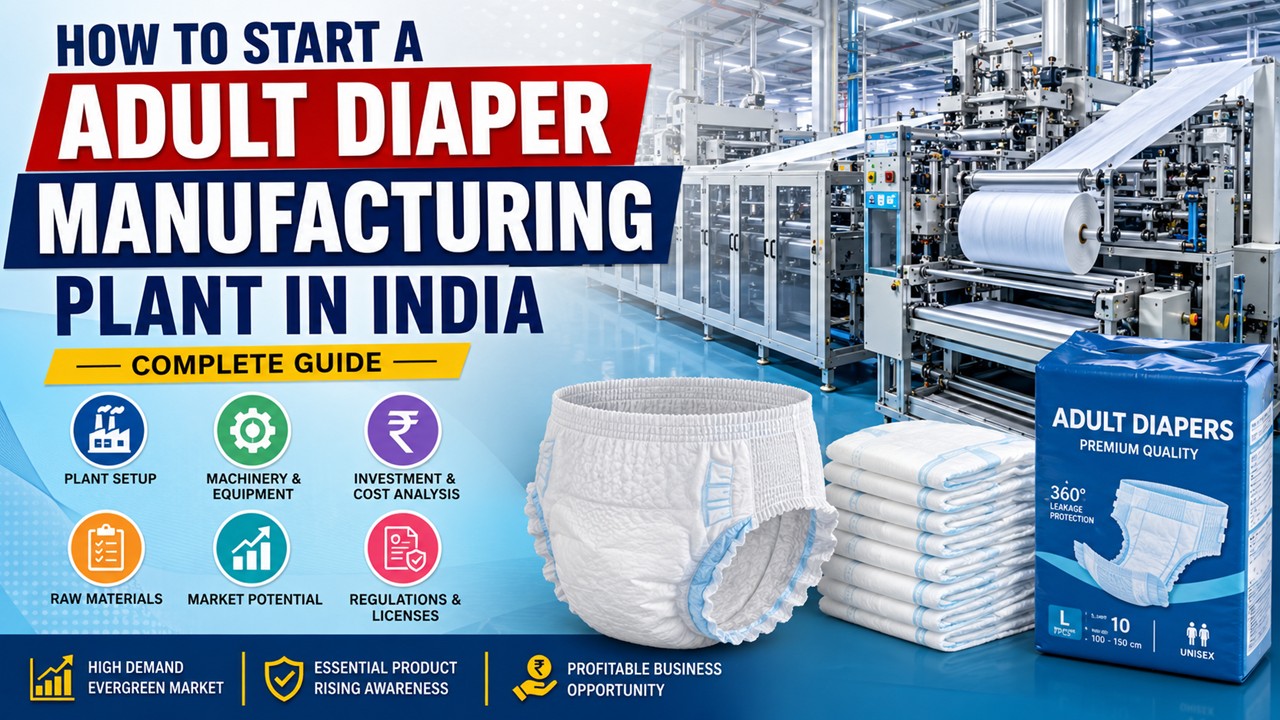
Setting up an adult diaper manufacturing plant in India presents a compelling investment case, driven by the growing aging population, the rising incidence of incontinence and chronic diseases, and the growing awareness of personal hygiene. The expansion of healthcare and caregiving institutions, coupled with consumers’ preference for practical, disposable hygiene products, is fueling demand across the country. Adult diapers are indispensable in hospitals, nursing homes, caregiving, and for individual household usage due to their constant quality and convenience. As India’s healthcare infrastructure expands and the elderly population grows, the need for reliable incontinence management solutions is becoming increasingly critical to the nation’s public health and hygiene ecosystem.
India’s demographic shifts, rising urbanization, and the government’s “Make in India” initiative provide strong tailwinds for domestic manufacturing of hygiene products. Key manufacturing states such as Gujarat, Maharashtra, and Tamil Nadu offer robust industrial infrastructure and skilled labor pools suitable for setting up an adult diaper production facility. Furthermore, the increasing penetration of e-commerce and retail channels, coupled with rising disposable incomes, makes India a strategically sound location for establishing an adult diaper manufacturing plant. With a large and growing consumer base, cost-competitive labor, and improving logistics networks, India is well-positioned to become a manufacturing hub for adult diapers, catering to both domestic demand and export opportunities.
India’s adult diaper market presents a strong investment opportunity, bolstered by an aging population, rising healthcare awareness, and policy support like Make in India. With gross margins ranging between 35-45% and net margins of 15-20%, investors can achieve healthy profitability and a viable break-even timeline, supported by stable demand across healthcare and home care segments.
What is an Adult Diaper?
An adult diaper is an absorbent garment designed to manage urine or faecal incontinence. These products include layers of absorbent materials, soft fibres, moisture-wicking textiles, and fastening elements to provide comfort, leak prevention, and skin protection. Adult diapers are designed for both men and women and are available in a variety of styles, including disposable, reusable, pull-up, and tape-on versions. They reduce the chance of skin irritation and leakage while ensuring consistent absorption and hygiene and may be used in both home and hospital-grade care environments. There are many different varieties available, including those for standard, overnight, extra-absorbent, environmentally friendly, and incontinence-specific needs. The production process involves raw material procurement, core absorbent formation, layering and lamination, cutting and shaping, fastening and sealing, and packaging and labelling. Adult diapers serve diverse end-use industries, including healthcare and nursing facilities, home care and personal hygiene, e-commerce and retail, and institutional caregiving centres.
Cost of Setting Up an Adult Diaper Manufacturing Plant in India
The total cost of setting up an adult diaper manufacturing plant in India depends on several critical factors, including plant capacity, technology, location, automation levels, and regulatory compliance requirements.
1. Capital Expenditure (CapEx)
The total capital investment required for establishing an adult diaper manufacturing plant covers land acquisition, site preparation, and necessary infrastructure. Machinery costs account for the largest portion of total capital expenditure. Land and site development costs, including charges for land registration, boundary development, and other related expenses, form a substantial part of the overall investment. Investors may consider locating the plant in Special Economic Zones (SEZs) or industrial estates to benefit from infrastructure incentives and streamlined regulatory processes.
Key machinery required includes:
- Raw material handling systems
- Fluff pulp processing units
- Core formation machines
- Laminating and sealing machines
- Cutting and shaping systems
- Fastening and elastic application units
- Packaging and sealing machines
- Quality inspection systems
Other capital costs include civil works (production shed, quality control lab, raw material and finished goods storage, administrative block), effluent treatment plant (ETP), and pre-operative and commissioning expenses.
Request a Sample Report for In-Depth Market Insights: https://www.imarcgroup.com/adult-diaper-manufacturing-plant-project-report/requestsample
2. Operational Expenditure (OpEx)
The operating cost structure of an adult diaper manufacturing plant is primarily driven by raw material consumption, particularly nonwovens, which accounts for approximately 60-70% of total operating expenses (OpEx). Utilities represent about 10-15% of OpEx. Raw materials, including nonwovens and superabsorbent polymers (SAP), are a major part of operating costs. Implementing long-term contracts with reliable suppliers helps mitigate price volatility and ensure a consistent supply of materials. Other OpEx components include salaries and wages, packing costs, transportation costs, repairs and maintenance, depreciation, and taxes. By the fifth year, the total operational cost is expected to increase substantially due to factors such as inflation, market fluctuations, and potential rises in the cost of key materials.
3. Plant Capacity
The proposed manufacturing facility is designed with an annual production capacity ranging between 200 – 500 million pieces, enabling economies of scale while maintaining operational flexibility. Plant capacity can be customized per investor requirements. Profitability improves significantly with higher capacity utilisation.
4. Profit Margins and Financial Projections
The project demonstrates healthy profitability potential under normal operating conditions. Gross profit margins typically range between 35-45%, supported by stable demand and value-added applications. Net profit margins are projected at 15-20%. Financial analysis includes comprehensive projections of net present value (NPV), internal rate of return (IRR), payback period, income projections, expenditure projections, and profit and loss accounts.
Why Set Up an Adult Diaper Plant in India?
Rising Demand for Personal Hygiene Products
Aging populations and awareness about incontinence problems have created an increasing demand for the use of adult diapers in institutional and home care settings. The growing geriatric population and rise in cases of incontinence are key drivers of market growth.
Product Innovations and Customization
Adult diapers are offered in different sizes, levels of absorbency, friendliness to skin, and designed for different genders. Innovations such as ultra-thin, eco-friendly, and odor-free models are boosting demand further.
Growing Home Care Segment
As consumers increasingly turn to home care options, the demand for easy and effective hygiene products will also increase. Families managing the daily care of ageing relatives seek efficient and safe hygiene solutions.
Better Comfort and Skin Safety
Inventions concerning breathable fabrics, wetness indicators, and hypoallergenic fabric technology are developed to improve skin safety and comfort. These innovations enhance user experience and drive product adoption.
Scalability and Economies of Scale Production
The manufacturing process includes various automation processes such as lamination, cutting, and sealing, which may be scaled in manufacturing for moderate capital outlays. This scalability allows investors to start with a manageable capacity and expand as demand grows.
Active Industry Investment
In September 2025, Tulips introduced adult diaper pants in India with Boman Irani as the face of its campaign, offering unisex pull-up diapers with aloe vera–coated inner sheets for comfort, leak protection up to 10 hours, odour lock technology, and tear-away side panels. This development reflects growing market activity and investment in the Indian adult diaper sector.
Manufacturing Process – Step by Step
The adult diaper manufacturing process uses raw material procurement, core absorbent formation, layering and lamination, cutting and shaping, fastening and sealing, and packaging and labelling as the primary production method.
- Raw Material Procurement: Reliable suppliers must be secured for raw materials like core ingredients including nonwovens and SAP to ensure consistent production quality.
- Core Absorbent Formation: Fluff pulp and superabsorbent polymers are processed to form the absorbent core that provides the diaper’s liquid retention capacity.
- Layering and Lamination: The core is layered with soft fibres, moisture-wicking textiles, and other components, then laminated to create a unified structure.
- Cutting and Shaping: The laminated material is cut into specific shapes and sizes to fit different body types and product variants.
- Fastening and Sealing: Fastening elements, elastic bands, and sealing components are applied to ensure a secure fit and leak prevention.
- Packaging and Labelling: Finished adult diapers are packaged and labelled for distribution to healthcare facilities, nursing homes, retail stores, and e-commerce platforms.
Key Applications
Adult diapers serve a diverse range of end-use sectors and applications:
- Healthcare Facilities: Adult diapers help hospitals and clinics provide solutions that are hygienic and comfortable for patients who have mobility issues or problems with incontinence.
- Nursing Homes: Care homes use adult diapers to help keep their residents dignified and manage personal hygiene effectively.
- Home Care: Adult diapers assist families in managing the daily care of ageing relatives with efficiency and safety.
- Rehabilitation Centres: Adult diapers are kept for patients who undergo surgery or may not have good movement, helping them move comfortably and hygienically.
- Community Care Services: Adult diapers ensure that in-home caregivers are able to provide consistent, reliable hygiene care for the elderly or disabled.
Leading Manufacturers
Leading manufacturers in the global adult diaper industry include several multinational companies with extensive production capacities and diverse application portfolios.
- Unicharm Corporation
- Kimberly-Clark Corporation
- Attends Healthcare Products, Inc.
- Paul Hartmann AG
These key players serve end-use sectors such as healthcare and nursing facilities, home care and personal hygiene, e-commerce and retail, and institutional caregiving centres.
Timeline to Start the Plant
- Feasibility study and project report preparation
- Land acquisition and site development
- Regulatory approvals and environmental clearances
- Factory licence and fire safety compliance
- Machinery procurement and installation
- Raw material supplier agreements and supply chain setup
- Trial production and quality testing
- Commercial production launch
Licences and Regulatory Requirements
Starting an adult diaper manufacturing unit in India requires several approvals:
- Business registration (Proprietorship, LLP, or Pvt Ltd)
- Factory Licence under the Factories Act
- Environmental Clearance from State Pollution Control Board
- GST Registration
- Fire Safety NOC
- Effluent Treatment Plant (ETP) operational clearance
- Occupational Health and Safety compliance
Key Challenges to Consider
- High Capital Requirements: Machinery and infrastructure investments represent significant upfront costs. Equipment costs for raw material handling systems, core formation machines, laminating and sealing machines, and quality inspection systems represent a significant portion of capital expenditure.
- Raw Material Price Volatility: Fluctuations in prices of nonwovens and SAP directly impact margins. Raw materials account for 60-70% of operating expenses.
- Regulatory Compliance: Navigating environmental clearances, factory licences, and pollution control board regulations requires careful planning.
- Competition: The market includes established global players such as Unicharm Corporation, Kimberly-Clark Corporation, Attends Healthcare Products, Inc., and Paul Hartmann AG.
- Skilled Manpower: Access to skilled machine operators, quality control personnel, and production managers is essential for maintaining consistent product quality.
- Supply Chain Disruptions: Additional factors, including supply chain disruptions, rising consumer demand, and shifts in the global economy, are expected to contribute to cost increases.
Frequently Asked Questions
- How much does it cost to set up an adult diaper manufacturing plant in India?
The total capital investment depends on plant capacity, technology, and location, covering land acquisition, site preparation, infrastructure, and machinery costs. - Is adult diaper manufacturing profitable in India in 2026?
Yes, gross profit margins typically range between 35-45%, with net profit margins of 15-20%, indicating healthy profitability potential. - What machinery is required for an adult diaper plant in India?
Essential equipment includes raw material handling systems, fluff pulp processing units, core formation machines, laminating and sealing machines, cutting and shaping systems, fastening and elastic application units, packaging and sealing machines, and quality inspection systems. - What licences and approvals are required to start an adult diaper plant in India?
Required approvals include business registration, Factory Licence under the Factories Act, Environmental Clearance from State Pollution Control Board, GST Registration, Fire Safety NOC, and ETP operational clearance. - What raw materials are needed for adult diaper manufacturing?
Raw materials required include core ingredients such as nonwovens and superabsorbent polymers (SAP). - What are the environmental compliance requirements for an adult diaper plant in India?
Facilities must implement effluent treatment systems, obtain environmental clearance from the State Pollution Control Board, and comply with emission standards. - What is the best location to set up an adult diaper plant in India?
Ideal locations offer easy access to key raw materials such as nonwovens and SAP, proximity to target markets to minimize distribution costs, and robust infrastructure including reliable transportation, utilities, and waste management systems. - What is the break-even period for this type of plant in India?
Financial projections including break-even analysis are provided in detailed feasibility reports, with timelines varying based on capacity, utilization rates, and operating efficiencies. - What government incentives are available for manufacturers in India?
Investors benefit from the “Make in India” initiative and state-level industrial policies that encourage domestic manufacturing of hygiene products.
Key Takeaways for Investors
Setting up an adult diaper manufacturing plant in India offers a compelling investment opportunity, driven by strong demand from healthcare facilities, nursing homes, home care, rehabilitation centres, and community care services. The project demonstrates healthy financial viability across various plant capacities, with gross profit margins ranging between 35-45% and net margins of 15-20%. The global adult diaper market size was valued at USD 21.94 Billion in 2025 and is expected to reach USD 36.97 Billion by 2034, exhibiting a CAGR of 6% from 2026 to 2034. With the global population aged 65 and older projected to reach 2.2 Billion by the late 2070s, the long-term demand outlook for adult diapers remains exceptionally strong, making now an opportune time for investors to enter this dynamic and growing market.
How IMARC Can Help?
IMARC Group is a global management consulting firm that helps the world’s most ambitious changemakers to create a lasting impact. The company provide a comprehensive suite of market entry and expansion services. IMARC offerings include thorough market assessment, feasibility studies, company incorporation assistance, factory setup support, regulatory approvals and licensing navigation, branding, marketing and sales strategies, competitive landscape and benchmarking analyses, pricing and cost research, and procurement research.
Services:
- Plant Setup
- Factory Audit Services
- Regulatory Approvals, and Licensing
- Company Incorporation
- Incubation Services
- Recruitment Services
- Marketing and Sales
Contact Us:
IMARC Group
Email: sales@imarcgroup.com
Tel No:(D) +91 120 433 0800
About the Author