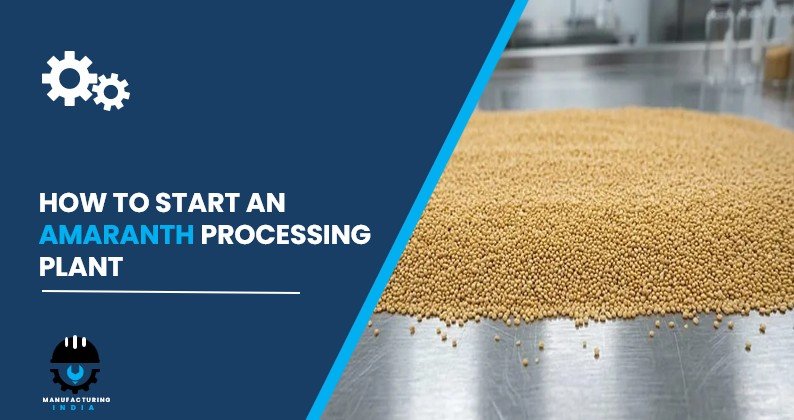
Setting up an amaranth processing plant in India represents a highly attractive investment proposition underpinned by robust and structurally growing demand from health-conscious consumers, the expanding gluten-free and plant-based food industry, the bakery, snacks, and breakfast cereal sector, and the nutraceutical and baby food industries. As urbanisation accelerates, disposable incomes rise, and consumer awareness of nutrient-dense, complete-protein pseudocereals grows, amaranth available in whole seed, flour, popped, and value-added forms occupies an increasingly important position across household retail, food processing, and health food applications. This growth trajectory, combined with the crop’s resilience in dry conditions and poor soils and its strong alignment with global nutri-cereal and sustainable agriculture policy support, creates a highly favourable manufacturing environment for new entrants with efficient cleaning, dehulling, milling, and sifting systems.
What is Amaranth?
Amaranth is a highly nutritious, ancient pseudocereal from the Amaranthus genus, cultivated for over 8,000 years and originally a staple crop for Aztec, Maya, and Incan civilisations. It is not a true cereal grain but a seed, offering a gluten-free, complete protein source rich in all nine essential amino acids, particularly lysine, which is often deficient in other grains. Amaranth is a nutrient powerhouse packed with iron, magnesium, fibre, and heart-healthy squalene oil. It is highly versatile: the tiny seeds can be popped, cooked into porridge, or ground into flour, while its leaves are consumed as a nutrient-dense leafy vegetable. Known for its resilience, it thrives in dry conditions and poor soils, making it a sustainable, climate-smart superfood with immense nutritional value.
Amaranth is processed and sold in several principal forms whole seed, popped or puffed grain, flour, and bran depending on the cleaning, dehulling, and milling route adopted. Beyond household cooking, amaranth is used extensively in bakery and snack manufacturing, breakfast cereal formulation, health food and gluten-free product lines, baby and weaning food, and animal feed applications.
The global amaranth market was valued at approximately USD 11.5 Billion in 2025 and is expected to reach USD 26.1 Billion by 2034, exhibiting a CAGR of 9.48% from 2026 to 2034, supported by rising health awareness, expanding demand for gluten-free and plant-based ingredients, and growing use of amaranth across functional food formats.
Cost of Setting Up an Amaranth Processing Plant
The total capital investment required to establish an amaranth processing plant is shaped by several key parameters: annual production capacity (typically ranging from 500 to 2,000 tons per annum), the level of automation across cleaning, dehulling, milling, and sifting sections, facility specification, raw material sourcing strategy, and applicable regulatory and food safety compliance requirements. Below is a structured breakdown of the major cost components.
1. Capital Expenditure (CapEx)
Total capital investment in an amaranth processing plant covers the following major heads:
Land and Site Development
This encompasses land acquisition or lease, site preparation, boundary development, and utilities connectivity. Site selection should prioritise proximity to amaranth cultivation clusters to ensure a steady, low-transport-cost supply of raw seed. Access to reliable power, strong road logistics for inbound raw material and outbound finished product, availability of process water of suitable quality, and a trained workforce for plant operations and quality control are critical site selection criteria. Compliance with industrial zoning regulations, food safety manufacturing standards, and effluent and emission compliance frameworks must be assessed from project initiation.
Civil Works and Construction
Building costs cover the main processing facility including the raw material reception and cleaning section, dehulling house, milling and sifting area, roasting or popping section, automated packaging and dispatch infrastructure, quality control laboratory, administrative block, and utility infrastructure including power backup, storage silos, and effluent treatment plant. Construction must comply with applicable factory act requirements, food safety manufacturing standards, and food-grade infrastructure guidelines.
Machinery and Equipment
Machinery represents the single largest CapEx component. Key equipment required for an amaranth processing plant includes:
- Raw Material Reception and Cleaning Systems: Grain intake hoppers, screening and cleaning equipment, and conveying systems to remove foreign matter and impurities from incoming amaranth seed prior to processing
- Dehulling Equipment: Dehulling machines to remove the outer husk from amaranth seed while preserving the nutrient-dense kernel ahead of milling or popping
- Milling Systems: Grinding mills to reduce cleaned and dehulled amaranth into flour or meal for bakery, snack, and cereal applications
- Sifting and Separation Equipment: Sifting and grading units to refine flour quality and separate particle sizes for different end-use product specifications
- Roasting and Puffing Units: Roasting or puffing machines to produce popped amaranth for snack, cereal, and confectionery applications, along with associated flavour development systems
- Oil Extraction and Refining Systems (where applicable): Oil expellers, solvent extractors, refining units, bleaching towers, and deodorisation systems where the facility is configured to also produce amaranth oil as a value-added by-product from the seed germ
- Quality Control Laboratory Equipment: Equipment for protein, fibre, moisture, and microbiological testing to verify compliance with food safety and quality standards
- Automated Packaging Systems: Automated weighing, sealing, and packaging machines for amaranth flour, popped grain, and value-added products, along with bulk loading facilities for wholesale dispatch
- Material Handling and Warehousing: Conveyors, bucket elevators, storage silos for raw seed and processed product, and finished goods warehousing with FIFO stock management
Other Capital Costs
These include pre-operative expenses, commissioning charges, import duties on specialised processing equipment, staff training and competency development, initial raw material and consumable inventory for production commissioning, and regulatory compliance setup including food safety licensing and quality management system establishment costs.
Request a Sample Report for In-Depth Market Insights: https://www.imarcgroup.com/amaranth-processing-plant-project-report/requestsample
2. Operational Expenditure (OpEx)
Raw materials principally amaranth seed procured from growers or aggregators, along with packaging consumables constitute the dominant operating cost, typically representing 65–75% of total OpEx. Utility costs, driven primarily by electricity consumption of cleaning, milling, and roasting equipment, account for 10–15% of OpEx. Labour, maintenance, quality control, packaging, transportation, depreciation, taxes, and overhead costs constitute the remainder of the operating cost base.
3. Plant Capacity
The proposed amaranth processing facility is designed with an annual production capacity ranging between 500–2,000 tons, enabling economies of scale while maintaining operational flexibility. This capacity range supports a diversified product portfolio of amaranth flour, popped and puffed grain, whole cleaned seed, and value-added by-products, serving bakery and snacks, breakfast cereal, health food, baby food, gluten-free product, and animal feed customers.
4. Profit Margins and Financial Projections
The project demonstrates healthy profitability potential under normal operating conditions. Financial projections encompass capital investment, operating costs, capacity utilisation ramp-up schedule, product mix between whole seed, flour, and value-added formats, and forward demand outlook underpinned by rising health-conscious consumption. A comprehensive feasibility analysis includes sensitivity analysis, Net Present Value (NPV), Internal Rate of Return (IRR), and Payback Period calculations. Gross profit margins for amaranth processing typically range from 30–40%, supported by stable demand and value-added applications. Net profit margins of 15–22% are achievable with disciplined cost management, optimal capacity utilisation, and effective product-mix monetisation.
Why Set Up an Amaranth Processing Plant?
Rising Health Awareness and Demand for Functional Grains
Increasing consumer focus on plant-based protein, gluten-free diets, and balanced nutrition is driving sustained demand for amaranth, which is widely recognised as a complete protein source rich in essential amino acids, iron, magnesium, and fibre. As health-conscious consumers increasingly seek out ancient grains perceived to offer functional health benefits, amaranth is transitioning from a niche specialty product toward a mainstream ingredient in cereals, flour blends, and snacks, supporting steady volume growth across retail and health food channels.
Moderate but Defensible Entry Barriers
Although farming amaranth is relatively simple, processing cleaning, grading, popping, milling, and maintaining food-grade quality standards requires specialised equipment and strict hygiene practices. Consistent sourcing, moisture control, packaging standards, and food safety certifications create entry hurdles that favour organised producers focused on quality and reliability.
Alignment with Global Food and Health Megatrends
Demand for gluten-free grains, plant proteins, ancient grains, and nutrient-dense foods is expanding rapidly worldwide. Amaranth fits squarely within these megatrends, benefiting from growth in health foods, sports nutrition, vegan products, and premium packaged foods.
Favourable Policy Environment for Nutri-Cereals and Sustainable Agriculture
Government initiatives promoting nutri-cereals, millet-based nutrition, sustainable farming, and food processing are indirectly supporting amaranth cultivation and value-added processing. Programmes encouraging agro-processing, exports, and rural value chains further strengthen the sector’s long-term potential.
Localisation and Supply Chain Opportunities
Food brands, exporters, and ingredient companies increasingly prefer reliable domestic processors who can ensure traceability, consistent quality, and timely supply. Establishing local processing and manufacturing capabilities allows producers to capture value across the supply chain from sourcing and processing to branded or bulk ingredient sales.
Urbanisation and Rising Disposable Incomes
As per the Plant Based Products Council, 71% of Americans in 2025 said they were familiar with plant-based products, reflecting a multi-year increase and signalling that plant-based ingredients have firmly entered the mainstream. Rising urban lifestyles, increasing reliance on packaged and convenient foods, and growing disposable incomes among urban consumers are supporting higher consumption of nutrient-dense grains such as amaranth in city-based households and health food channels.
Climate Resilience Supporting Raw Material Security
Amaranth’s adaptability to diverse climates makes it especially attractive for cultivation in regions facing water scarcity and soil degradation, supporting sustainable agriculture goals. This climate resilience provides processors with a comparatively stable and diversified raw material base relative to more water- and input-intensive cereal crops, an increasingly important structural advantage as growing regions adapt to shifting weather patterns.
Manufacturing Process Overview
The amaranth processing operation transforms raw seed sourced from cultivation into cleaned grain, flour, popped product, and value-added by-products through a sequence of cleaning, dehulling, milling, sifting, and packaging operations. The key process stages are:
- Raw Material Reception and Cleaning: Harvested amaranth seed received from growers or aggregators is screened and cleaned to remove foreign matter, chaff, and oversized particles. Raw material quality parameters including moisture content and protein level are verified on receipt.
- Dehulling: Cleaned seed is dehulled to remove the outer husk, separating the nutrient-dense kernel used for flour, popping, and whole-seed products from the bran fraction.
- Roasting and Puffing: A portion of dehulled seed is roasted or puffed under controlled heat to develop the characteristic popped-amaranth texture and flavour used in snacks, cereals, and confectionery applications.
- Grinding and Milling: Dehulled seed intended for flour is ground using grinding mills to produce amaranth flour or meal of the required particle specification.
- Sieving and Refinement: Milled flour passes through sifting units to refine quality, remove coarse particles, and achieve the target particle-size distribution for bakery, cereal, and baby food applications.
- Oil Recovery (where applicable): Where the facility is configured for oil recovery, amaranth germ is processed through oil expellers and, where applicable, solvent extraction, refining, bleaching, and deodorisation systems to produce amaranth oil for cosmetic and nutraceutical applications.
- Quality Control: Flour, popped grain, whole seed, and by-products are tested for protein content, moisture, particle size, and microbiological parameters to verify compliance with applicable food safety and quality standards before release for packaging.
- Packaging and Dispatch: Amaranth flour, popped grain, and whole seed are packed using automated weighing, sealing, and packaging systems for retail and institutional sale, or dispatched in bulk to food processing customers and bulk buyers.
Key Applications of Amaranth
The amaranth market serves several major end-use segments across food processing, health food, and specialty ingredient sectors:
- Bakery and Snacks: Amaranth flour and popped grain are widely utilised in bakery products, extruded snacks, and fortified baked goods due to their protein-rich, gluten-free profile.
- Breakfast Cereals: Amaranth is incorporated into breakfast cereals and porridge blends, valued for its complete amino acid profile and nutrient density.
- Health Foods and Gluten-Free Products: The gluten-free, complete-protein composition of amaranth supports its use in health-oriented flour blends, protein-rich formulations, and functional food products targeted at health-conscious consumers.
- Baby Food: Amaranth flour and porridge formats are used in nutritious weaning foods and baby food products owing to their high digestibility and nutrient content.
- Animal Feed: Amaranth bran and processing by-products are utilised as a nutrient-dense ingredient in animal feed formulations.
Global Amaranth Market Outlook
The global amaranth market was valued at approximately USD 11.5 Billion in 2025. According to IMARC Group estimates, the market is expected to reach USD 26.1 Billion by 2034, exhibiting a CAGR of 9.48% from 2026 to 2034. The amaranth market benefits from multiple structural demand drivers:
- Rising health awareness and growing consumer preference for gluten-free, plant-based, complete-protein grains across urban populations globally
- Continued urbanisation and rising disposable incomes supporting higher consumption of packaged, nutrient-dense foods in city-based households and health food channels
- Expanding bakery, snacks, and breakfast cereal sectors creating sustained industrial demand for gluten-free, protein-rich ingredients
- Innovation in seed varieties and processing technologies, improving yields and broadening product formats from flours and snacks to cereals and plant-based protein blends
- Growing use of amaranth leaf and seed in emerging plant-protein applications, including vertical-farming-based protein sourcing initiatives
- Amaranth’s resilience in dry conditions and poor soils, supporting sustainable agriculture goals and providing processors with a climate-resilient raw material base
- Government policy support for nutri-cereals, sustainable farming, and agro-processing, strengthening the long-term investment case for value-added amaranth processing
- Continued interest from established food and ingredient companies in expanding amaranth-based product portfolios, reflecting confidence in long-term category growth
Leading processors in the global amaranth industry include Kilaru Naturals Private Limited, Organic Products India, Flavex Naturextrakte GmbH, Nu-World Foods, and Bob’s Red Mill Natural Foods, serving end-use sectors including bakery and snacks, breakfast cereals, health foods, baby food, gluten-free products, and animal feed.
Latest Industry Developments
- November 2025: India’s Department of Biotechnology published details of a 64K SNP genotyping chip developed specifically for grain amaranth, enabling faster identification of traits associated with yield, nutrition, and climate resilience. This breeding infrastructure is expected to improve processor access to more standardised and commercially suitable amaranth cultivars over time.
- Recent development: UK vertical farming and research company Vertical Future began participating in a two-year, Innovate UK-funded project to develop “VIP Leaf,” a new plant protein derived from amaranth leaf grown in vertical farming facilities, aimed at reducing UK reliance on imported plant proteins such as soy and pea and illustrating growing investment interest in amaranth-derived protein value chains.
Licenses and Regulatory Requirements
Establishing an amaranth processing unit requires a range of approvals and certifications, which may vary by country and jurisdiction, including:
- Business registration and company incorporation under applicable company law
- Factory License under applicable state Factories Act provisions for manufacturing operations
- Food safety authority license for manufacturing and sale of food-grade amaranth products (e.g. FSSAI License in India)
- Relevant national standards certification for processed grain and flour products, where applicable
- Environmental clearances and Pollution Control Board consents (Consent to Establish and Consent to Operate) for manufacturing operations
- ISO 22000 / HACCP Food Safety Management System Certification for food safety infrastructure compliance
- ISO 9001:2015 Quality Management System Certification for quality management infrastructure compliance
- Weights and Measures (Legal Metrology) registration for packaged commodity labelling and net quantity declaration
- Export-Import Code (IEC) or equivalent for international market access
- Trademark and Brand Registration for proprietary branded product launch
- Occupational Health and Safety management compliance (ISO 45001 / Factories Act provisions) for manufacturing worker safety
- Fire safety certification applicable to the processing facility
Key Challenges to Consider
Raw Material Supply Consistency
Amaranth seed, which accounts for 65–75% of total operating costs, is sourced from a still-fragmented grower base in many regions, and its availability, quality, and moisture content can vary significantly depending on farming practices, seasonality, and post-harvest handling. Inconsistent raw material supply can materially affect processing yield and product quality. Securing long-term supply arrangements with growers or aggregators, and investing in reliable cleaning and storage capacity, are critical operational priorities.
Consumer Familiarity and Market Development
Despite growing health consciousness, amaranth remains unfamiliar to many consumers in developed markets, and its distinctive nutty flavour and slightly bitter aftertaste can deter consumers accustomed to milder cereal grains. Processors must invest in consumer education, product formulation, and taste optimisation to support market penetration alongside processing capacity.
Edible Grain and Flour Price Competition
Amaranth product pricing and demand are influenced by the relative pricing of substitute gluten-free and ancient grains such as quinoa, millets, and buckwheat, which are subject to their own commodity price cycles and supply dynamics. Periods of low-priced substitute grain availability can compress amaranth demand and pricing, requiring processors to manage cost structures and product differentiation to maintain margins through commodity price cycles.
Quality Certification and Food Safety Compliance Maintenance
Maintaining food safety licensing and food safety management system certifications requires ongoing investment in quality laboratory infrastructure, process monitoring, and surveillance audit preparedness. Producing flour and popped grain that consistently meet protein, moisture, and microbiological specifications across all production batches requires disciplined process control and incoming raw material quality management, as any food safety compliance lapse can disrupt market access and damage brand reputation.
Capital Intensity of Integrated Processing and Value-Added Lines
While basic cleaning and milling operations can be established at relatively moderate capital investment, integrated processing including dehulling, roasting/puffing, and optional oil recovery represents a substantial incremental capital commitment. New entrants must carefully evaluate the phasing of investment between basic flour and whole-seed operations versus fully integrated operations capturing higher value-added product margins, based on available capital, target markets, and long-term strategic positioning.
Frequently Asked Questions (FAQs)
1. How much does it cost to set up an amaranth processing plant?
The total investment depends on plant capacity (500–2,000 tons per annum), automation level, facility specification, location, and target market certifications. Costs cover land, civil construction (cleaning and dehulling section, milling and sifting area, storage silos, quality laboratory, utilities), machinery (cleaners, dehullers, mills, roasting and puffing units, packaging lines), quality certifications, working capital, and regulatory compliance. A comprehensive feasibility study from IMARC Group provides detailed, capacity-specific cost estimates covering all CapEx and OpEx components.
2. Is amaranth processing a profitable business in 2026?
Profitability depends on several factors including market demand, processing efficiency, pricing strategy, raw material cost management, and operational scale, but with gross margins of 30–40% and net profit margins of 15–22%, amaranth processing is financially attractive under normal operating conditions. Profit margins usually improve with capacity expansion and increased capacity utilisation rates.
3. What machinery and equipment are required for an amaranth processing plant?
Key equipment includes raw material reception and cleaning systems, dehulling machines, grinding mills, sifting and separation units, roasting or puffing machines, quality control laboratory equipment, and automated packaging lines for retail and bulk dispatch. Facilities producing amaranth oil as a value-added by-product additionally require oil expellers, solvent extractors, refining units, bleaching towers, and deodorisation systems.
4. What licenses and approvals are required?
Required approvals include company registration, Factory License, a food safety authority license for manufacturing and sale of food-grade products (such as an FSSAI License in India), environmental and Pollution Control Board clearances, and ISO 22000/HACCP food safety management system certification. A valid food safety license is a mandatory legal prerequisite for manufacturing and selling amaranth food products.
5. How long does it take to commission an amaranth processing plant?
Typically, 12–24 months from project initiation to commercial production launch, depending on project scale, site development, machinery installation, environmental clearances, safety measures, and trial runs, which should be initiated early in the project to avoid delays to commercial launch.
6. What are the key raw materials for amaranth processing?
The primary raw material is harvested amaranth seed sourced from growers or aggregators. For products other than whole seed, such as specific powders or products made from amaranth leaves, raw materials can also include amaranth bran (a by-product of oil production) or amaranth leaves themselves. Other key inputs include packaging materials such as pouches, bags, and bulk sacks for finished product and by-products.
7. What is the break-even period for an amaranth processing plant?
Break-even in an amaranth processing business typically ranges from 3 to 6 years, depending on scale, regulatory compliance costs, raw material pricing, and market demand. Securing long-term supply agreements with growers and stable offtake arrangements for flour and value-added products significantly improves revenue predictability and can help accelerate returns, particularly where export opportunities are available.
8. What are the main forms of amaranth and their applications?
The main processed forms are whole cleaned seed, amaranth flour (used in bakery, cereal, and baby food applications), popped or puffed grain (used in snacks and confectionery), and amaranth bran and oil as value-added by-products. Flour and popped grain serve household retail, food processing, and health food applications, while whole seed and bran are also used in animal feed and, where processed further, cosmetic and nutraceutical applications.
9. What government incentives are available for amaranth processors?
Governments may offer incentives such as capital subsidies, tax exemptions, reduced utility tariffs, export benefits, or interest subsidies to promote manufacturing under various national or regional industrial policies, particularly those supporting nutri-cereals, millet-based nutrition, and sustainable agro-processing.
10. How does amaranth processing compare to other grain processing in terms of setup?
Compared to conventional cereal processing such as wheat or rice milling, amaranth processing benefits from the crop’s climate resilience and suitability for cultivation in water-scarce and marginal soils, but requires specialised small-seed cleaning, dehulling, and sifting equipment given the seed’s tiny size. The core unit operations cleaning, dehulling, milling, and sifting are broadly similar in principle to other grain processing, allowing processors with experience in cereal or pseudocereal milling to adapt existing technical capabilities to amaranth with targeted investment in fine-seed handling equipment.
Key Takeaways for Investors
The amaranth processing industry represents a structurally resilient and financially attractive investment opportunity positioned at the intersection of rising global health consciousness, expanding gluten-free and plant-based food demand, and the ancient grain revival. Stable demand from bakery and snacks, breakfast cereals, health foods, baby food, and animal feed channels provides resilience against single-segment demand volatility, while amaranth’s climate resilience and suitability for cultivation in water-scarce and marginal soils supports a sustainable, geographically diversifiable raw material base. Favourable and increasingly supportive policy environments for nutri-cereals and sustainable agriculture strengthen the long-term investment case for integrated processing operations. The scalable nature of the value chain from basic cleaning and milling operations to fully integrated processing with roasting, puffing, and oil recovery capacity allows investors to phase capital deployment according to risk appetite and target market positioning, while continued innovation in seed varieties, breeding infrastructure, and processing technology reflects strong confidence in the long-term growth and profitability of the category.
About the Author