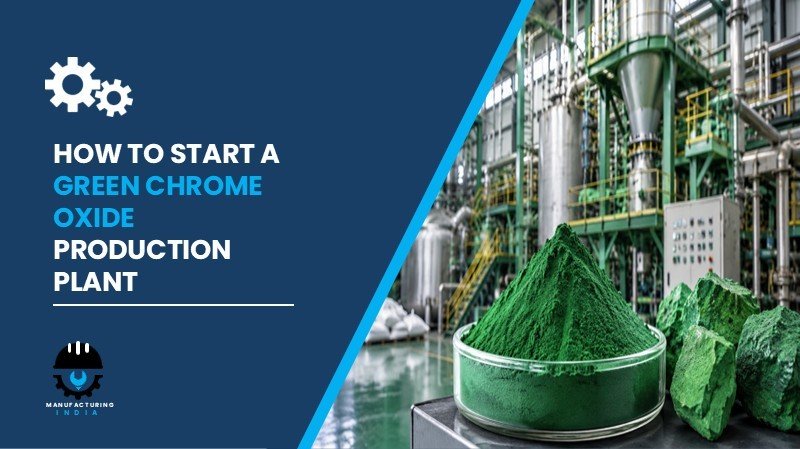
A green chrome oxide production plant setup in India presents a compelling investment case for entrepreneurs entering the specialty pigments space. The product is a critical raw material for refractories, paints & coatings, ceramics, construction materials, abrasives, metallurgy, glass, and specialty chemicals – sectors forming the backbone of India’s industrial economy. As demand grows for durable, weather-resistant, heat-stable pigments, this compound has become an essential input for producers seeking alternatives to less stable coloring materials.
India’s rapid urbanisation, expanding infrastructure pipeline, and the Make in India initiative are creating strong tailwinds for domestic pigment production. States with established chemical ecosystems, such as Gujarat and Maharashtra, offer access to raw material supply chains, skilled labour, and export-ready ports, positioning India as a strategically sound base for this facility.
This investment case is underpinned by policy support, cost-competitive economics, steady demand from construction, coatings, and abrasives sectors, healthy gross margins of 22-30%, and a viable break-even path for well-planned facilities.
What is Green Chrome Oxide?
Green chrome oxide, also known as chromium (III) oxide, is an inorganic compound noted for its striking green crystalline solid form. It is widely recognized as a pigment for its deep green color, offering excellent lightfastness and weather resistance. Besides pigmentation, it serves as an abrasive for cutting and grinding tools, and its thermal stability and chemical resistance make it valuable in producing heat-resistant coatings.
The primary route used is reduction and calcination of sodium dichromate (Na₂Cr₂O₇), followed by washing, filtration, drying, milling, and grading to produce the finished pigment. It serves end-use industries including refractories, paints & coatings, ceramics, construction materials, abrasives, metallurgy, glass, and specialty chemicals.
Cost of Setting Up a Green Chrome Oxide Production Plant in India
The overall cost of a green chrome oxide production plant depends on capacity, technology, location, automation level, and regulatory compliance requirements.
1. Capital Expenditure (CapEx)
Capital investment is allocated across land, civil works, machinery, and other pre-operative costs. Land and Site Development covers registration, boundary development, and related charges – investors can evaluate industrial estates or SEZs for streamlined approvals. Civil Works and Construction covers the processing shed, quality lab, storage, and admin block.
Machinery represents the largest share of total capital expenditure. Key machinery required includes:
- Sodium dichromate handling and dissolution units
- Reduction reactors
- Calcination furnaces or rotary kilns
- Cooling systems
- Washing tanks
- Filtration units
- Drying ovens
- Grinding and milling machines
- Classification systems
- Dust collection units
- Packaging machines
Other Capital Costs cover ETP installation, pre-operative expenses, commissioning, and applicable import duties. Exact figures for each category are gated behind IMARC’s detailed CapEx breakdown.
Request a Sample Report for In-Depth Market Insights: https://www.imarcgroup.com/green-chrome-oxide-manufacturing-plant-project-report/requestsample
2. Operational Expenditure (OpEx)
Raw Material Cost is the largest component of operating expenses, with sodium dichromate (Na₂Cr₂O₇) accounting for approximately 50-58% of total OpEx. Investors are advised to secure long-term supplier contracts to mitigate price volatility.
Utility Cost, covering electricity, water, and steam for reduction, calcination, and drying, accounts for approximately 18-24% of operating expenses. Other Operating Costs include transportation, packaging, salaries, depreciation, taxes, and repairs and maintenance.
By the fifth year, total operational cost is expected to rise substantially due to inflation, market fluctuations, and potential increases in the cost of key materials, along with supply chain disruptions and shifts in the global economy.
3. Plant Capacity
The proposed facility is designed with an annual capacity ranging between 5,000-20,000 MT, enabling economies of scale while maintaining flexibility. Capacity for a green chrome oxide production plant can be customized to investor requirements, and profitability generally improves with higher capacity utilisation.
4. Profit Margins and Financial Projections
The project demonstrates healthy profitability potential under normal operating conditions. Gross profit margins typically range between 22-30%, while net profit margins range between 7-13%. Detailed financial planning includes income projections, expenditure projections, payback period, net present value (NPV), and internal rate of return (IRR).
Why Set Up a Green Chrome Oxide Plant in India?
Crucial Industrial Pigment: Green chrome oxide is a highly stable material widely used in paints and coatings, ceramics, refractories, and abrasives, positioning it as essential for industries requiring thermal stability and durable coloration.
Megatrend Alignment: Growth in construction, infrastructure development, and industrial coatings is supporting steady demand. India’s residential construction sector expanded at 6.8% during FY2024-25 and is projected to reach USD 350 Billion by 2030.
Policy and Regulatory Tailwinds: Government investment in infrastructure, smart cities, transportation networks, and domestic manufacturing indirectly supports demand for paints, coatings, ceramics, and refractories.
Cost-Competitive Production: Moderate but justifiable entry barriers exist, since the green chrome oxide production process requires controlled chemical handling, calcination, and stringent purity and color-consistency standards. This favours experienced producers with efficient technologies.
Active Regional Market Position: APAC is currently the largest regional market for the product, accounting for about 45.8% of global share – a demand base an India-based unit is well positioned to serve.
Local Supply Chain Preference: Paint, ceramic, and refractory manufacturers increasingly value dependable domestic suppliers to reduce import dependence and shorten lead times, creating opportunities for regional producers with strong environmental compliance.
Production Process – Step by Step
The green chrome oxide production process uses reduction and calcination of sodium dichromate as the primary method.
- Sodium Dichromate Handling and Dissolution: Raw sodium dichromate (Na₂Cr₂O₇) is handled and dissolved to prepare it for the reduction stage.
- Reduction: The dissolved feedstock is processed in reduction reactors to convert it into the intermediate chromium compound.
- Calcination: The reduced material undergoes calcination in furnaces or rotary kilns to form the finished pigment.
- Cooling: Cooling systems bring the calcined material down to a safe handling temperature.
- Washing: The cooled material passes through washing tanks to remove residual impurities.
- Filtration: Filtration units separate the solid product from process liquids.
- Drying: Drying ovens remove residual moisture from the filtered product.
- Grinding and Milling: Grinding and milling machines reduce the dried material to the required particle size.
- Classification: Classification systems grade the milled product by particle size for consistent quality.
- Dust Collection: Dust collection units capture fine particulates generated during grinding and classification.
- Packaging: Packaging machines prepare the finished green chrome oxide for dispatch to refractories, paints & coatings, ceramics, construction materials, abrasives, metallurgy, glass, and specialty chemicals end-users.
Key Applications
A green chrome oxide production plant serves industries where thermal stability, chemical resistance, and durable coloration are required.
- Pigments Industry: Used widely as a pigment for its stable, vibrant green color, suited for outdoor applications.
- Coatings Industry: Applied in heat-resistant coatings, offering corrosion resistance at high temperatures.
- Ceramics Manufacturing: Essential for producing vibrant, high-temperature stable glazes.
- Abrasives Production: A hard, durable material for cutting, grinding, and polishing applications.
Leading Manufacturers
Leading producers in the global market include multinational companies with extensive production capacities. Key players include:
- LANXESS
- Elementis
- Vishnu Chemicals
Timeline to Start the Plant
- Feasibility study and project report preparation
- Land acquisition and site development
- Regulatory approvals and environmental clearances
- Factory licence and fire safety compliance
- Machinery procurement and installation
- Raw material supplier agreements and supply chain setup
- Trial production and quality testing
- Commercial production launch
Licences and Regulatory Requirements
Starting a production unit in India requires several approvals:
- Business registration (Proprietorship, LLP, or Pvt Ltd)
- Factory Licence under the Factories Act
- Environmental Clearance from State Pollution Control Board
- GST Registration
- Fire Safety NOC
- Hazardous/Chemical compliance (given the use of sodium dichromate as a raw material)
- Effluent Treatment Plant (ETP) operational clearance
- Occupational Health and Safety compliance
Key Challenges to Consider
High Capital Requirements: Machinery for reduction, calcination, and classification is a significant share of total capital expenditure, requiring careful financial planning before commissioning.
Raw Material Price Volatility: Sodium dichromate, the core input at 50-58% of OpEx, is subject to price swings, making long-term supplier contracts important for cost stability.
Regulatory Compliance: Environmental clearances and hazardous chemical handling requirements demand sustained compliance investment.
Technology and Process Expertise: Precise particle-size management and strict purity standards require experienced technical teams.
Competition: Established players such as LANXESS, Elementis, and Vishnu Chemicals hold strong global positions, requiring new entrants to differentiate on quality and cost.
Skilled Manpower: Operating reduction reactors and calcination furnaces requires trained personnel familiar with safety protocols.
Frequently Asked Questions
1. How much does it cost to set up a green chrome oxide production plant in India?
Cost depends on capacity, technology, location, and automation level, split across land, civil works, machinery, and other capital costs, plus first-year operating expenditure.
2. Is green chrome oxide production profitable in India in 2026?
Yes – the project shows healthy profitability, with gross margins of 22-30% and net margins of 7-13% under normal operating conditions.
3. What machinery is required for a green chrome oxide plant in India?
Key machinery includes sodium dichromate handling and dissolution units, reduction reactors, calcination furnaces or rotary kilns, cooling systems, washing tanks, filtration units, drying ovens, grinding and milling machines, classification systems, dust collection units, and packaging machines.
4. What licences and approvals are required to start a green chrome oxide plant in India?
Business registration, a Factory Licence, Environmental Clearance, GST Registration, Fire Safety NOC, hazardous chemical compliance, ETP operational clearance, and occupational health and safety compliance.
5. What raw materials are needed for green chrome oxide production?
The primary raw material is sodium dichromate (Na₂Cr₂O₇), accounting for approximately 50-58% of total operating expenses.
6. What are the environmental compliance requirements for a green chrome oxide plant in India?
Environmental Clearance from the State Pollution Control Board, an operational Effluent Treatment Plant, and adherence to hazardous chemical handling and emission standards.
7. What is the best location to set up a green chrome oxide plant in India?
Sites should offer easy access to sodium dichromate supply, proximity to target markets, and robust transportation, utility, and waste management infrastructure.
8. What is the break-even period for this type of plant in India?
Break-even timing depends on capacity utilisation, pricing trends, and cost structure; payback period and NPV analysis are covered in the full financial projections.
9. What government incentives are available for manufacturers in India?
Government investment in infrastructure, smart cities, transportation networks, and domestic manufacturing under Make in India indirectly supports demand and creates a favourable policy environment.
Key Takeaways for Investors
A green chrome oxide production plant represents a strong investment opportunity in India, driven by consistent demand from refractories, paints & coatings, ceramics, construction materials, abrasives, and specialty chemicals sectors. Financial viability holds across the proposed capacity range of 5,000-20,000 MT annually, supported by gross margins of 22-30% and net margins of 7-13%. With India’s residential construction sector projected to reach USD 350 Billion by 2030 and APAC already commanding about 45.8% of global market share, demand for this facility’s output is expected to remain sustainable well into the next decade.
About the Author