A brass strips manufacturing plant setup in India presents a compelling investment case, driven by demand from the automotive, electronics, electrical, and construction sectors. Brass strips, valued for high strength, corrosion resistance, and electrical conductivity, are essential inputs for connectors, terminals, automotive parts, plumbing fixtures, and precision instruments. As India’s electronics and automotive industries scale up, reliable domestic supply becomes increasingly important.
India’s growth story adds further weight. Rising electronics value addition, an expanding automotive base, and growing construction demand point toward sustained offtake. With Asia Pacific commanding the largest regional share of the global market at 44.2%, a facility in India is positioned to serve domestic and regional demand alike.
This investment is backed by gross margins of 20-30% and net margins of 10-15%, growing demand from automotive, electronics, and construction sectors, and a clear roadmap from feasibility study to commercial production. With raw materials accounting for the majority of operating costs, disciplined procurement is central to achieving healthy break-even outcomes for this type of plant.
What are Brass Strips?
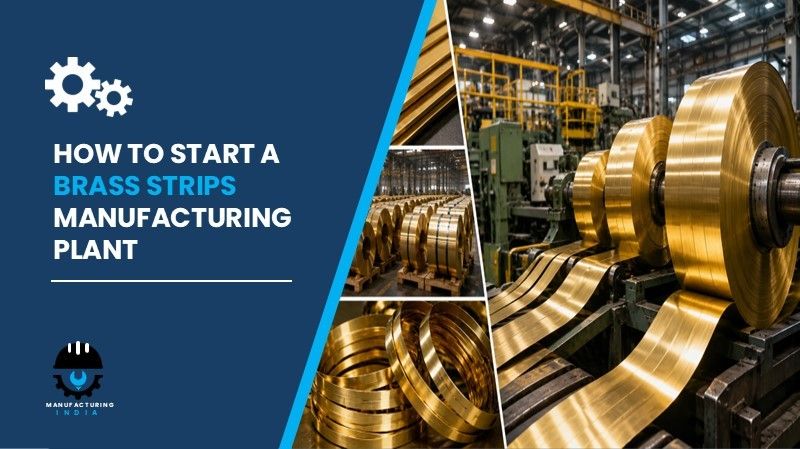
Brass strips are thin, flat metal strips made from an alloy of copper and zinc, offering high strength, corrosion resistance, and electrical conductivity. These strips are manufactured through rolling, annealing, and finishing into materials suitable for industrial applications. Output is used in connectors, terminals, automotive parts, and decorative items, and is also widely utilized in precision instruments and in plumbing, electronics, and construction due to durability and ease of fabrication.
The production process involves raw material sourcing, alloying and melting, rolling, annealing, surface finishing, and packaging, transforming copper, zinc, and lead into finished strips for dispatch to automotive, electronics, electrical, construction, and plumbing industries.
Cost of Setting Up a Brass Strips Manufacturing Plant in India
The cost of this facility depends on capacity, technology, location, automation, and regulatory compliance, with the brass strips manufacturing process itself shaping the machinery and utility requirements outlined below.
1. Capital Expenditure (CapEx)
Capital investment covers land acquisition, site preparation, and infrastructure, depending on capacity, technology, and location; investors may evaluate industrial estates or notified zones to streamline approvals. Land costs include registration and boundary development. Civil works cover production sheds, a quality lab, storage, and an administrative block.
Machinery costs account for the largest share of capital expenditure. Key machinery required includes:
- Rolling mills
- Annealing furnaces
- Cutting machines
- Surface treatment equipment
- Inspection equipment
Machinery must be corrosion-resistant and compliant with safety standards. Other capital costs include effluent treatment plant (ETP) installation, pre-operative expenses, and commissioning.
Request a Sample Report for In-Depth Market Insights: https://www.imarcgroup.com/brass-strips-manufacturing-plant-project-report/requestsample
2. Operational Expenditure (OpEx)
Raw material cost dominates operating expenditure, with copper, zinc, and lead accounting for approximately 80-85% of total OpEx. Long-term supplier contracts help mitigate price volatility, and nearby suppliers strengthen the cost structure.
Utility costs (electricity, water, steam) represent approximately 10-15% of OpEx, reflecting the energy-intensive nature of melting, rolling, and annealing. Other costs include transportation, packaging, salaries, depreciation, taxes, and maintenance.
By the fifth year, total operational cost is expected to rise due to inflation, market fluctuations, and supply chain disruptions. Investors should factor this trajectory into projections.
3. Plant Capacity
The proposed brass strips manufacturing plant carries an annual production capacity of 5,000-20,000 MT, enabling economies of scale while maintaining flexibility. This range can be customized to investor requirements and target markets. Profitability tends to improve with higher capacity utilisation, as fixed costs spread across greater volumes.
4. Profit Margins and Financial Projections
This type of plant demonstrates healthy profitability potential under normal operating conditions. Gross profit margins typically range between 20-30%, while net profit margins range between 10-15%, supported by stable demand and value-added applications. Projections are developed based on capital investment, operating costs, capacity utilization, pricing trends, and demand outlook, feeding into payback period, NPV, and IRR calculations.
Why Set Up a Brass Strips Plant in India?
Growing Demand in Electronics and Automotive Sectors: The growing need for electrical devices, alongside the rise of the automotive industry, is boosting demand for high-performance brass strips. A new facility is well-placed to capture demand from two of India’s fastest-evolving sectors.
Rising Electronics Value Addition: According to the India Brand Equity Foundation, value addition in electronics manufacturing increased from 30% to around 70%, with an Axis Capital report projecting it will reach 90% by FY27. This growth positively impacts demand for connectors, terminals, and other critical components.
Excellent Durability and Performance: Corrosion resistance, strength, and conductivity make the material a preferred choice for industries demanding long-lasting, high-performance products.
Versatile Applications Across Industries: Applications span automotive, construction, electronics, and plumbing, reducing dependence on any single end-use sector.
Rising Focus on Sustainability: High recyclability aligns with the growing industry need to protect the environment through sustainable manufacturing.
Active Industry Investment: In February 2026, Gravita India Ltd announced the acquisition of Rashtriya Metal Industries Limited (RMIL) for INR 800 crore, entering the copper alloys sector; RMIL serves the electrical, automotive, and engineering industries. In February 2025, JTL Industries received NCLT approval to commence production of up to 200 MT of copper and brass alloys per month at RCI’s facility in Himachal Pradesh, with an annual capacity of 15,000 MT, of which up to 6,000 MTPA is dedicated to value-added products.
Manufacturing Process – Step by Step
The brass strips manufacturing process uses raw material sourcing, alloying and melting, rolling, annealing, surface finishing, and packaging as the primary production stages.
- Raw Material Sourcing: Copper, zinc, and lead are procured from reliable suppliers under long-term contracts to ensure consistent quality and supply.
- Alloying and Melting: The raw materials are combined and melted to form the alloy base for subsequent processing.
- Rolling: The molten alloy passes through rolling mills to achieve the required thickness and dimensions.
- Annealing: Strips pass through annealing furnaces to relieve internal stresses and achieve the desired mechanical properties.
- Surface Finishing: Surface treatment equipment finishes the strips, improving appearance and corrosion resistance.
- Inspection and Quality Checks: Inspection equipment verifies output against quality assurance criteria and technical test requirements.
- Packaging and Dispatch: Finished strips are packaged and dispatched to automotive, electronics, electrical, construction, and plumbing industries.
Key Applications
- Automotive: Used to make connectors, terminals, and other parts requiring conductivity and durability.
- Electronics & Electrical: Used to make connectors, terminals, and parts requiring conductivity and resistance to oxidation, important in smartphones, computers, and electronic devices.
- Plumbing & Construction: Used to make plumbing fixtures such as faucets, valves, and pipe fittings, owing to durability and resistance to rust and high temperatures.
- Precision Instruments: Important in the manufacture of gauges, measuring devices, and other instruments requiring precise measurements.
Leading Manufacturers
The global industry is served by several multinational companies with extensive production capacities, serving automotive, electronics, electrical, construction, and plumbing sectors. Within India, recent activity from Gravita India Ltd (via its RMIL acquisition) and JTL Industries (via its Himachal Pradesh facility) reflects growing investment in brass strips manufacturing plant capacity for copper and brass alloys.
Timeline to Start the Plant
- Feasibility study and project report preparation
- Land acquisition and site development
- Regulatory approvals and environmental clearances
- Factory licence and fire safety compliance
- Machinery procurement and installation
- Raw material supplier agreements and supply chain setup
- Trial production and quality testing
- Commercial production launch
Licences and Regulatory Requirements
Starting this manufacturing unit in India requires several approvals:
- Business registration (Proprietorship, LLP, or Pvt Ltd)
- Factory Licence under the Factories Act
- Environmental Clearance from State Pollution Control Board
- GST Registration
- Fire Safety NOC
- Effluent Treatment Plant (ETP) operational clearance
- Occupational Health and Safety compliance
Key Challenges to Consider
High Capital Requirements: Machinery costs, including rolling mills and annealing furnaces, account for the largest share of capital expenditure, requiring significant upfront investment.
Raw Material Price Volatility: With copper, zinc, and lead making up 80-85% of operating costs, feedstock price fluctuations can materially affect profitability.
Regulatory Compliance: Securing environmental clearances, factory licences, and effluent treatment approvals requires careful coordination with authorities.
Competition from Established Players: With multinationals and domestic entrants such as Gravita India Ltd and JTL Industries expanding capacity, new entrants must differentiate on quality and cost efficiency.
Site Selection Complexity: The location must offer easy access to copper, zinc, and lead, alongside transportation, utilities, and waste management infrastructure.
Skilled Manpower: Operating rolling mills, annealing furnaces, and quality systems requires trained personnel.
Frequently Asked Questions
1. How much does it cost to set up a brass strips manufacturing plant in India?
Cost depends on capacity, technology, location, and automation level, spread across land and site development, civil works, machinery, and other capital costs including ETP installation. Detailed breakdowns are available in the full feasibility report.
2. Is brass strips manufacturing profitable in India in 2026?
Yes, this business shows healthy profitability potential, with gross margins of 20-30% and net margins of 10-15%, supported by stable demand from automotive, electronics, and construction sectors.
3. What machinery is required for a brass strips plant in India?
Key machinery includes rolling mills, annealing furnaces, cutting machines, surface treatment equipment, and inspection equipment, selected for corrosion resistance and safety compliance.
4. What licences and approvals are required to start a brass strips plant in India?
Required approvals include business registration, a Factory Licence under the Factories Act, Environmental Clearance from the State Pollution Control Board, GST registration, Fire Safety NOC, ETP clearance, and occupational health and safety compliance.
5. What raw materials are needed for brass strips manufacturing?
The primary raw materials are copper, zinc, and lead, which together account for approximately 80-85% of total operating expenditure, making supplier reliability essential.
6. What are the environmental compliance requirements for a brass strips plant in India?
Plants must secure Environmental Clearance from the State Pollution Control Board, install an effluent treatment system, and maintain monitoring systems to detect process deviations.
7. What is the best location to set up a brass strips plant in India?
The ideal location offers easy access to copper, zinc, and lead supplies, proximity to target markets, robust infrastructure, and compliance with zoning and environmental regulations.
8. What is the break-even period for this type of plant in India?
Break-even timing depends on capacity utilisation, raw material cost management, and pricing trends, assessed through payback period, NPV, and IRR analysis.
9. What government incentives are available for manufacturers in India?
The source report does not detail specific incentive schemes; however, regulatory approvals and compliance pathways relevant to setting up the facility are addressed within the feasibility study.
Key Takeaways for Investors
This opportunity is backed by sustained demand from automotive, electronics, electrical, construction, and plumbing industries. Financial viability holds across the capacity range of 5,000-20,000 MT annually, with gross margins of 20-30% and net margins of 10-15% supporting attractive returns. With Asia Pacific accounting for 44.2% of the global market and electronics value addition in India rising toward a projected 90% by FY27, demand drivers appear well-positioned for the years ahead, and the long-term outlook for this industry remains firmly anchored in industrial growth.
About the Author