Egg Tray Manufacturing Plant Setup in India
Setting up an egg tray manufacturing plant in India presents a compelling investment case, driven by the growing consumption of eggs worldwide, the expansion of poultry farming, rising demand for sustainable packaging solutions, and increasing regulatory pressure to reduce single-use plastics. Egg trays are critical to India’s economy as they ensure the safe transport of eggs from farms to markets, reducing breakage and waste across the poultry supply chain. With egg production reaching 149.11 billion annually in 2024–25, the demand for protective, sustainable egg tray solutions continues to strengthen. India’s status as one of the world’s largest egg producers creates a stable and expanding market for molded pulp packaging products.
India’s accelerated urbanization, growing retail chain networks, and the government’s “Make in India” initiative provide strong tailwinds for domestic manufacturing. Key manufacturing states such as Gujarat, Maharashtra, Tamil Nadu, and Uttar Pradesh offer established infrastructure and access to raw materials like wastepaper and water. The growing awareness of low-cost protein options has increased demand for poultry meat, while government authorities promote sustainable packaging methods, resulting in faster adoption of biodegradable molded pulp trays over plastic materials. With the expanding cold storage facilities and retail networks creating a need for standardized egg packaging, India offers a strategically sound environment for establishing an egg tray manufacturing facility.
India’s egg tray market presents strong investment potential, bolstered by policy support like Make in India, rapid urbanization, and a booming poultry sector. With gross margins typically ranging between 30-40% and net margins of 15-25%, investors can achieve healthy profitability and a viable break-even timeline.
What are Egg Trays?
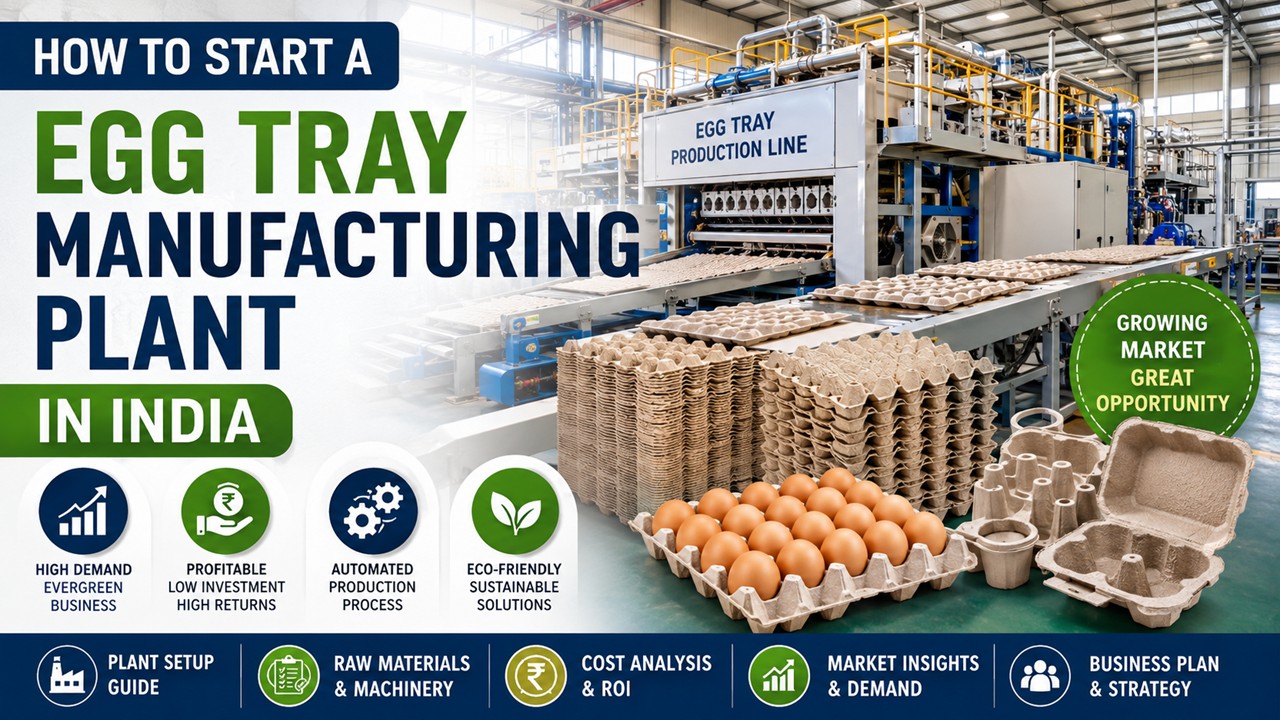
Egg trays are molded pulp packaging products specifically designed to hold, protect, and transport eggs safely across the supply chain. They are primarily manufactured from recycled paper, waste newspapers, cardboard, and other cellulose-based materials that are processed into pulp and formed into tray structures with multiple cavities. These cavities cushion individual eggs and minimize breakage during storage and transportation. Egg trays are lightweight, biodegradable, and recyclable, making them an environmentally responsible alternative to plastic packaging. Available in various configurations such as 6, 12, 24, or 30-egg capacities, these trays ensure structural stability, shock absorption, and efficient stacking for bulk handling. The egg tray manufacturing process uses wastepaper collection and sorting, pulping and slurry preparation, molding and forming, drying, trimming, and stacking as the primary production method. Key end-use industries served include poultry farms, egg processing and grading units, food retail chains, wholesale distributors, and agricultural cooperatives.
Cost of Setting Up an Egg Tray Manufacturing Plant in India
The total cost of setting up an egg tray manufacturing plant in India depends on several critical factors, including plant capacity, technology, location, automation levels, and regulatory compliance requirements.
1. Capital Expenditure (CapEx)
The total capital investment required for establishing an egg tray manufacturing plant covers land acquisition, site preparation, and necessary infrastructure. The location must offer easy access to key raw materials such as wastepaper, water, and molds, with proximity to target markets to help minimize distribution costs. The site must have robust infrastructure, including reliable transportation, utilities, and waste management systems. Machinery costs account for the largest portion of total capital expenditure. The cost of land and site development, including charges for land registration, boundary development, and other related expenses, forms a substantial part of the overall investment.
Key machinery required includes:
- Pulpers
- Pulp storage tanks
- Molding machines
- Vacuum pumps
- Air compressors
- Drying systems
- Trimming presses
- Stacking units
Other capital costs include civil works (production shed, quality control lab, raw material and finished goods storage, administrative block), effluent treatment systems, and pre-operative and commissioning expenses.
Request a Sample Report for In-Depth Market Insights: https://www.imarcgroup.com/egg-tray-manufacturing-plant-project-report/requestsample
2. Operational Expenditure (OpEx)
The operating cost structure of an egg tray manufacturing plant is primarily driven by raw material consumption, particularly wastepaper, which accounts for approximately 50-60% of total operating expenses (OpEx). Raw materials required include wastepaper, water, and molds. Implementing long-term contracts with reliable suppliers helps mitigate price volatility and ensure consistent supply of materials. Utilities (electricity, water, steam) account for 20-30% of OpEx. Other OpEx components include transportation costs, packaging costs, salaries and wages, repairs and maintenance, depreciation, and taxes. By the fifth year, the total operational cost is expected to increase substantially due to factors such as inflation, market fluctuations, and potential rises in the cost of key materials.
3. Plant Capacity
The proposed manufacturing facility is designed with an annual production capacity ranging between 50 – 200 million Trays, enabling economies of scale while maintaining operational flexibility. Plant capacity can be customized per investor requirements. Profitability improves significantly with higher capacity utilization.
4. Profit Margins and Financial Projections
The project demonstrates healthy profitability potential under normal operating conditions. Gross profit margins typically range between 30-40%, supported by stable demand and value-added applications. Net profit margins are projected at 15-25%. Financial analysis includes comprehensive projections of net present value (NPV), internal rate of return (IRR), payback period, income projections, expenditure projections, and profit and loss accounts.
Why Set Up an Egg Tray Plant in India?
Growing Global Egg Consumption: Rising protein intake and expansion of commercial poultry farming are steadily increasing the demand for reliable egg packaging solutions. India’s total egg production reached 149.11 billion annually in 2024–25, strengthening demand for protective, sustainable egg tray solutions to support storage, handling, and transportation across expanding poultry supply chains.
Eco-Friendly Packaging Demand: Molded pulp trays align with global sustainability goals and regulations aimed at reducing plastic waste. The growing retail chain network, together with cold storage facilities, creates a need for egg packaging that meets standardized tests while offering complete protection.
Low Raw Material Cost: The use of recycled paper and waste cardboard ensures cost-effective production with strong circular economy benefits. Waste paper accounts for approximately 50-60% of operating expenses, making raw material costs relatively manageable.
Scalable Production Model: Automated pulp molding systems enable high-volume output with relatively moderate capital investment. The manufacturing facility can be designed with annual production capacity ranging between 50 – 200 million Trays.
Consistent Repeat Demand: Egg production is a continuous agricultural activity, ensuring stable and recurring demand for trays. Export-oriented poultry businesses need trays that combine strength with light weight for their international shipping needs.
Policy and Regulatory Tailwinds: Government authorities promote sustainable packaging methods, which result in faster adoption of biodegradable molded pulp trays over plastic materials. The “Make in India” initiative and state-level industrial policies encourage domestic manufacturing.
Active Industry Investment: In April 2025, Nippon Molding completed Site Acceptance Testing for its PulPac Modula machine from TechTribe, advancing plans to strengthen its Dry Molded Fiber portfolio in Japan. The company intends to leverage PulPac technology to scale egg tray and other fiber-based packaging solutions, promoting high-quality and responsible formats while supporting circular, resource-efficient packaging aligned with its sustainability goals.
Manufacturing Process – Step by Step
The egg tray manufacturing process uses wastepaper collection and sorting, pulping and slurry preparation, molding and forming, drying, trimming, and stacking as the primary production method.
- Waste Paper Collection and Sorting: Wastepaper, newspapers, and cardboard are collected and sorted to remove contaminants and ensure quality feedstock for pulp production.
- Pulping and Slurry Preparation: Sorted wastepaper is processed into pulp using pulpers, creating a slurry suitable for molding.
- Pulp Storage: The prepared pulp is stored in pulp storage tanks to maintain consistency and supply for the molding process.
- Molding and Forming: Pulp slurry is formed into tray structures using molding machines, with vacuum pumps and air compressors supporting the molding process.
- Drying: Formed trays are dried using drying systems to remove moisture and achieve structural stability.
- Trimming: Dried trays undergo trimming using trimming presses to achieve precise dimensions and remove excess material.
- Stacking: Finished trays are stacked using stacking units for efficient handling and storage.
- Quality Assurance: A comprehensive quality control system is established throughout production, with analytical instruments used to monitor product concentration, purity, and stability.
- Packaging and Dispatch: Finished egg trays are packaged and dispatched to end-use industries including poultry farms, egg processing and grading units, food retail chains, wholesale distributors, and agricultural cooperatives.
Key Applications
Egg trays serve a diverse range of industries and applications:
- Poultry Farms: Egg trays ensure safe collection, on-site storage, and bulk transportation of eggs while minimizing breakage and handling losses.
- Egg Processing and Grading Units: They facilitate efficient sorting, grading, and packaging operations with standardized cavity design and stackable configurations.
- Food Retail and Supermarkets: Egg trays support organized shelf display, consumer convenience, and enhanced product protection during retail handling.
- Export and Wholesale Distribution: The trays provide durable and lightweight packaging suitable for long-distance transportation and export shipments.
- Agricultural Cooperatives: Egg trays enable cooperatives to standardize packaging and streamline distribution to member farmers and markets.
Leading Manufacturers
Leading manufacturers in the global egg tray industry include several multinational companies with extensive production capacities and diverse application portfolios. Key players include:
- Huhtamaki Oyj
- Hartmann
- CDL Omni-Pac
- Pactiv LLC
- Tekni-Plex
These key players serve end-use sectors such as poultry farms, egg processing and grading units, food retail chains, wholesale distributors, and agricultural cooperatives.
Timeline to Start the Plant
- Feasibility study and project report preparation
- Land acquisition and site development
- Regulatory approvals and environmental clearances
- Factory licence and fire safety compliance
- Machinery procurement and installation
- Raw material supplier agreements and supply chain setup
- Trial production and quality testing
- Commercial production launch
Licences and Regulatory Requirements
Starting an egg tray manufacturing unit in India requires several approvals:
- Business registration (Proprietorship, LLP, or Pvt Ltd)
- Factory Licence under the Factories Act
- Environmental Clearance from State Pollution Control Board
- GST Registration
- Fire Safety NOC
- Effluent Treatment Plant (ETP) operational clearance
- Occupational Health and Safety compliance
Key Challenges to Consider
- High Capital Requirements: Machinery costs for pulpers, pulp storage tanks, molding machines, vacuum pumps, air compressors, drying systems, trimming presses, and stacking units represent a significant portion of capital expenditure.
- Raw Material Price Volatility: Fluctuations in prices of waste paper, water, and molds directly impact margins. Raw materials account for 50-60% of operating expenses.
- Regulatory Compliance: Navigating environmental clearances, factory licences, and pollution control board regulations requires careful planning. Effluent treatment systems are necessary to minimize environmental impact and ensure compliance with emission standards.
- Competition: The market includes established global players such as Huhtamaki Oyj, Hartmann, CDL Omni-Pac, Pactiv LLC, and Tekni-Plex.
- Skilled Manpower: Access to skilled workers for operating pulping, molding, drying, and trimming equipment is essential.
- Technology and Innovation Pressure: Continuous advancements in pulp molding technology require ongoing capital reinvestment to remain competitive. Recent developments include biodegradable composites using banana fiber and euphorbia resin as sustainable alternatives.
Frequently Asked Questions
- How much does it cost to set up an egg tray manufacturing plant in India?
The total capital investment depends on plant capacity, technology, and location, covering land acquisition, site preparation, infrastructure, and machinery costs. - Is egg tray manufacturing profitable in India in 2026?
Yes, gross profit margins typically range between 30-40%, with net profit margins of 15-25%, indicating healthy profitability potential. - What machinery is required for an egg tray plant in India?
Essential equipment includes pulpers, pulp storage tanks, molding machines, vacuum pumps, air compressors, drying systems, trimming presses, and stacking units. - What licences and approvals are required to start an egg tray plant in India?
Required approvals include business registration, Factory Licence under the Factories Act, Environmental Clearance from State Pollution Control Board, GST Registration, Fire Safety NOC, and ETP operational clearance. - What raw materials are needed for egg tray manufacturing?
Raw materials required include waste paper, water, and molds. - What are the environmental compliance requirements for an egg tray plant in India?
Facilities must implement effluent treatment systems, obtain environmental clearance from the State Pollution Control Board, and comply with emission standards. - What is the best location to set up an egg tray plant in India?
The location must offer easy access to key raw materials such as waste paper, water, and molds, with proximity to target markets to minimize distribution costs. - What is the break-even period for this type of plant in India?
Financial projections including break-even analysis are provided in detailed feasibility reports, with timelines varying based on capacity, utilization rates, and operating efficiencies. - What government incentives are available for manufacturers in India?
Investors benefit from the “Make in India” initiative, state-level industrial policies, and government promotion of sustainable packaging methods.
Key Takeaways for Investors
Setting up an egg tray manufacturing plant in India offers a compelling investment opportunity, driven by strong demand from poultry farms, egg processing and grading units, food retail chains, wholesale distributors, and agricultural cooperatives. The project demonstrates healthy financial viability across various plant capacities (50 – 200 million Trays annually), with gross profit margins ranging between 30-40% and net margins of 15-25%. The global egg tray market was valued at USD 3.26 Million in 2025 and is expected to reach USD 4.94 Million by 2034, exhibiting a CAGR of 4.7% from 2026 to 2034. With India’s egg production reaching 149.11 billion annually in 2024–25 and growing demand for sustainable packaging solutions, the egg tray industry is poised for continued expansion, making now an opportune time for investors to enter this dynamic market.
How IMARC Can Help?
IMARC Group provide a comprehensive suite of market entry and expansion services. IMARC offerings include thorough market assessment, feasibility studies, company incorporation assistance, factory setup support, regulatory approvals and licensing navigation, branding, marketing and sales strategies, competitive landscape and benchmarking analyses, pricing and cost research, and procurement research.
Contact Us:
IMARC Group
Email: sales@imarcgroup.com
Tel No:(D) +91 120 433 0800
About the Author