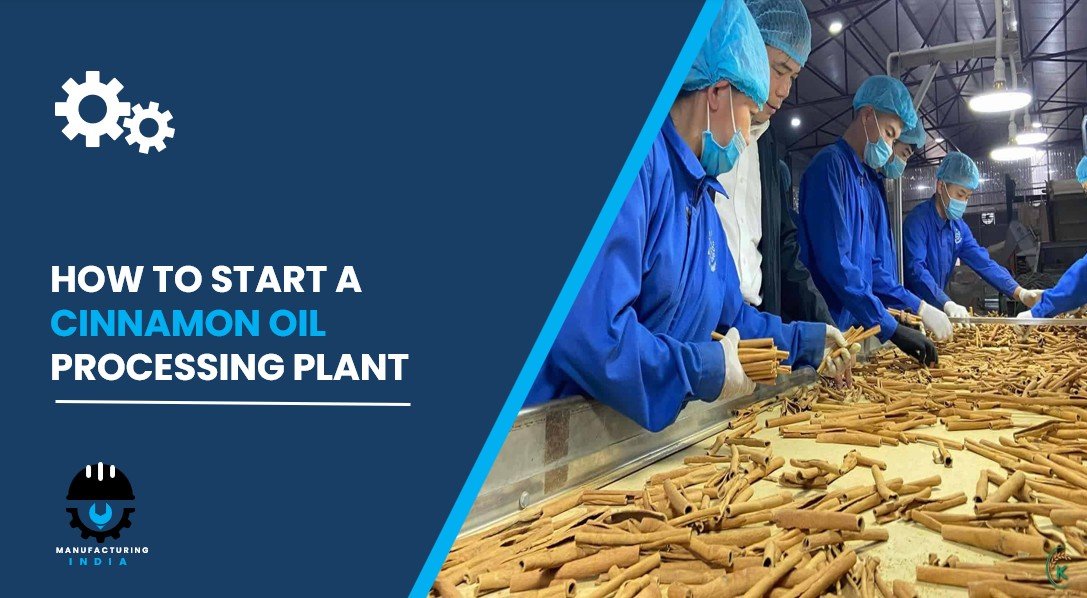
Setting up a cinnamon oil processing plant in India represents an attractive investment proposition underpinned by robust and structurally growing demand from the food and beverage industry, the pharmaceutical and nutraceutical sectors, the cosmetics and personal care industry, and the aromatherapy and wellness segment. As consumer preference shifts toward natural, plant-based, and clean-label ingredients, and as awareness of the antimicrobial, antioxidant, and anti-inflammatory properties of cinnamon-derived actives grows, cinnamon oil available in bark and leaf-derived forms occupies an increasingly important position across flavouring, fragrance, pharmaceutical, and functional wellness applications. This growth trajectory, combined with established cinnamon cultivation and processing ecosystems in key producing regions and steady advances in encapsulation and stabilisation technology, creates a favourable manufacturing environment for new entrants with efficient extraction and quality systems.
What is Cinnamon Oil?
Cinnamon oil is a concentrated, aromatic essential oil extracted from the bark or leaves of the Cinnamomum verum (and related Cinnamomum species) tree through steam distillation. It is prized for its warm, spicy aroma and its concentration of bioactive compounds, principally cinnamaldehyde together with eugenol, which impart notable antimicrobial, antioxidant, and anti-inflammatory characteristics. In wellness and aromatherapy applications the oil is commonly used to support circulation, ease discomfort, and reduce stress, while in food and beverage manufacturing it serves as a natural flavouring agent and in cosmetics and personal care it functions as a fragrance and functional ingredient.
Cinnamon oil is processed and sold principally in two forms, bark oil and leaf oil, depending on the plant part used and the extraction route adopted, with bark oil generally commanding a premium owing to its higher cinnamaldehyde concentration. Beyond its traditional culinary role, the oil is used extensively in pharmaceutical and nutraceutical formulations leveraging its antimicrobial and antioxidant profile, in cosmetic and personal care products for fragrance and functional benefit, and increasingly in natural food preservation and active packaging applications as manufacturers seek alternatives to synthetic preservatives. According to industry estimates, cinnamon oil accounts for approximately 12% of the broader cinnamon market by value.
Cost of Setting Up a Cinnamon Oil Processing Plant
The total capital investment required to establish a cinnamon oil processing plant is shaped by several key parameters: annual production capacity (typically ranging from 100 to 500 MT per annum), the plant part processed (bark versus leaf, or both), the level of automation across cleaning, drying, grinding, and distillation sections, facility specification, raw material sourcing strategy, and applicable regulatory and food/pharma safety compliance requirements. Below is a structured breakdown of the major cost components.
1. Capital Expenditure (CapEx)
Total capital investment in a cinnamon oil processing plant covers the following major heads:
Land and Site Development
This encompasses land acquisition or lease, site preparation, boundary development, and utilities connectivity. Site selection should prioritise proximity to cinnamon-growing and bark/leaf collection regions to ensure a steady, low-transport-cost supply of raw material, which is best processed while reasonably fresh to preserve volatile oil content. Access to reliable power and steam generation infrastructure for the drying and distillation processes, strong road logistics for inbound bark or leaf and outbound finished oil, availability of process water of suitable quality, and a trained workforce for plant operations and quality control are critical site selection criteria. Compliance with industrial zoning regulations, food and pharmaceutical safety manufacturing standards, boiler and pressure-vessel safety norms applicable to steam distillation operations, and effluent and emission compliance frameworks must be assessed from project initiation.
Civil Works and Construction
Building costs cover the main processing facility including the raw material reception and cleaning section, drying yard or drying units, grinding or chipping house, steam distillation battery, oil-water separation and filtration area, finished oil storage tank farm, automated packaging and dispatch infrastructure, quality control laboratory, administrative block, and utility infrastructure including the boiler house, power backup, cooling water systems, and effluent treatment plant. Construction must comply with applicable factory act requirements, food and pharmaceutical safety manufacturing standards, boiler safety norms for steam generation, and relevant food-grade infrastructure guidelines.
Machinery and Equipment
Machinery represents a significant CapEx component. Key equipment required for a cinnamon oil processing plant includes:
- Raw Material Cleaning Machines: Cleaning and sorting equipment to remove soil, foreign matter, and damaged material from incoming cinnamon bark or leaves prior to processing
- Drying Units: Sun-drying yards or mechanical drying systems to reduce moisture content in bark or leaves to levels suitable for storage and efficient distillation
- Grinders or Chippers: Size-reduction equipment that chips or grinds dried bark and leaves to increase surface area and improve oil recovery during steam distillation
- Steam Distillation Units: Distillation vessels, typically direct steam or hydro-distillation systems, that volatilise essential oil compounds from the prepared raw material for downstream recovery
- Boilers: Steam boilers to supply the process steam required for the distillation operation
- Condensers: Heat-exchange equipment that condenses the vapour mixture of steam and volatile oil compounds emerging from the distillation vessel
- Oil-Water Separators: Separation equipment, typically Florentine-type flasks or continuous separators, that split the condensed distillate into essential oil and aromatic water (hydrosol) fractions
- Filtration Systems: Filters to remove residual moisture and particulate matter from the separated crude oil, yielding clear, storage-stable cinnamon oil
- Storage Tanks: Food-grade, light-protected storage tanks for holding finished cinnamon oil prior to packaging and dispatch
- Packaging Machines: Filling, capping, and labelling equipment for retail bottles, drums, and bulk containers suited to essential oil handling
- Quality Control Laboratory Equipment: Equipment for testing cinnamaldehyde and eugenol content, specific gravity, refractive index, colour, and other analytical parameters to verify compliance with quality and purity standards
- Material Handling and Warehousing: Conveyors, bins, and finished goods warehousing with appropriate stock rotation for both raw material and finished oil
Other Capital Costs
These include pre-operative expenses, commissioning charges, import duties on specialised distillation and separation equipment, staff training and competency development, initial raw material and consumable inventory for production commissioning, and regulatory compliance setup including food safety licensing, spice-sector certification, quality management system establishment, and, where applicable, pharmaceutical or cosmetic-grade certification costs.
Request a Sample Report for In-Depth Market Insights: https://www.imarcgroup.com/cinnamon-oil-processing-plant-project-report/requestsample
2. Operational Expenditure (OpEx)
Raw materials principally cinnamon bark and/or leaves procured from growers, collectors, or spice traders constitute the dominant operating cost, typically representing 65–75% of total OpEx. Utility costs, driven primarily by steam generation for distillation and electricity consumption of drying, grinding, and separation equipment, account for 15–20% of OpEx. Transportation, packaging, labour, depreciation, taxes, and other overhead costs constitute the remainder of the operating cost base.
3. Plant Capacity
The proposed cinnamon oil processing facility is designed with an annual production capacity ranging between 100–500 MT, reflecting the low-volume, high-value nature of essential oil manufacturing relative to bulk edible oils. This capacity range supports a focused product portfolio of bark-derived and leaf-derived cinnamon oil, serving food and beverage manufacturers, pharmaceutical and nutraceutical formulators, cosmetics and personal care producers, and aromatherapy and household product channels.
4. Profit Margins and Financial Projections
The project demonstrates healthy profitability potential under normal operating conditions. Financial projections encompass capital investment, operating costs, capacity utilisation ramp-up schedule, product mix between bark and leaf oil, and forward demand outlook underpinned by rising natural-ingredient consumption across food, pharmaceutical, and cosmetic end markets. A comprehensive feasibility analysis includes sensitivity analysis, Net Present Value (NPV), Internal Rate of Return (IRR), and Payback Period calculations. Gross profit margins for cinnamon oil processing typically range from 40–50%, supported by stable demand and value-added applications. Net profit margins of 18–28% are achievable with disciplined cost management, optimal capacity utilisation, and consistent raw material sourcing.
Why Set Up a Cinnamon Oil Processing Plant?
Growing Natural Ingredient and Clean-Label Demand
Cinnamon oil is widely used as a natural ingredient across food and beverages, pharmaceuticals, cosmetics, personal care, and aromatherapy, positioning it as a valuable botanical extract for flavour, fragrance, and wellness applications. As consumers increasingly seek products free of synthetic additives, cinnamon oil’s positioning as a naturally derived, functionally active ingredient supports steady demand growth across these channels.
Moderate but Justifiable Entry Barriers
While cinnamon oil processing requires lower capital investment than many large-scale chemical or edible oil processing industries, consistent raw material quality, optimised extraction methods, oil purity standards, controlled processing conditions, and quality certifications create entry hurdles that favour experienced processors focused on batch-to-batch consistency, giving well-run new entrants a durable competitive position.
Alignment with Wellness and Natural Personal Care Megatrends
The growing consumer preference for natural flavours, botanical extracts, clean-label ingredients, and plant-based wellness products is driving demand for cinnamon oil. Continued expansion of natural personal care, functional foods, aromatherapy, and herbal product categories further supports the market opportunity for integrated processors.
Technological Advances Improving Stability and Application Potential
Ongoing developments in microencapsulation and controlled-delivery systems are improving the physicochemical stability of cinnamon oil, broadening its potential applications in functional foods, active packaging, and pharmaceutical formulations, and reducing historical limitations around volatility and oxidative degradation that previously constrained certain end uses.
Agricultural and Spice Processing Ecosystem Support
Availability of cinnamon bark and leaves through established cultivation regions, along with increasing investment in spice processing, value-added botanical products, and food ingredient manufacturing, supports the development of cinnamon oil processing facilities and strengthens opportunities for domestic value addition close to the source of raw material.
Localisation and Dependability in Supply Chains
Food, beverage, pharmaceutical, cosmetics, and personal care manufacturers increasingly favour reliable local suppliers to shorten lead times, ensure consistent oil quality, reduce sourcing risk, and maintain steady availability, creating opportunities for regional processors with efficient sourcing, extraction, and quality-control capabilities.
Diversified, Resilient Demand Base
Demand for cinnamon oil is spread across food and beverage flavouring, pharmaceutical and nutraceutical formulation, cosmetics and personal care, aromatherapy and wellness, and household and fragrance applications. This diversification provides a degree of resilience against demand softness in any single end-use segment, supporting steadier capacity utilisation for processors serving multiple channels.
Manufacturing Process Overview
The cinnamon oil processing operation transforms raw cinnamon bark or leaves into a purified essential oil through a sequence of cleaning, drying, size reduction, distillation, separation, and packaging operations. The key process stages are:
- Raw Material Reception and Cleaning: Cinnamon bark or leaves received from growers or traders are inspected, sorted, and cleaned to remove soil, foreign matter, and damaged material prior to processing.
- Drying: Raw material is dried, either through sun-drying or mechanical drying units, to reduce moisture content to levels suitable for storage stability and efficient downstream distillation.
- Grinding or Chipping: Dried bark and leaves are chipped or ground to increase surface area, which improves steam penetration and oil recovery during distillation.
- Steam Distillation: The prepared raw material is charged into distillation vessels where live steam or hydro-distillation volatilises the essential oil compounds, including cinnamaldehyde and eugenol, from the plant matrix.
- Condensation: The vapour mixture of steam and volatile oil compounds passes through condensers, converting it back into a liquid distillate.
- Oil-Water Separation: The condensed distillate is separated, typically using Florentine-type flasks or continuous separators, into crude essential oil and an aromatic water (hydrosol) by-product based on differences in density and miscibility.
- Filtration: Crude cinnamon oil is filtered to remove residual moisture and fine particulate matter, yielding a clear, storage-stable product.
- Quality Control: Finished oil is tested for cinnamaldehyde and eugenol content, specific gravity, refractive index, colour, and other parameters to verify compliance with applicable food, pharmaceutical, or cosmetic-grade quality standards before release for packaging.
- Packaging and Dispatch: Cinnamon oil is packed in retail bottles, drums, or bulk containers suited to essential oil handling and dispatched to food, pharmaceutical, cosmetic, and aromatherapy customers. The hydrosol by-product may be separately packed and sold into complementary wellness and fragrance applications.
Key Applications of Cinnamon Oil
The cinnamon oil market serves several major end-use segments across food, pharmaceutical, cosmetic, and wellness sectors:
- Food & Beverage Industry: Cinnamon oil is used as a flavouring agent in bakery products, confectionery, beverages, and spice blends, valued for its concentrated, consistent flavour profile relative to ground spice.
- Pharmaceuticals: The oil’s antimicrobial and digestive-supportive properties support its use in digestive formulations, antimicrobial preparations, and traditional medicinal products.
- Cosmetics & Personal Care: Cinnamon oil is incorporated into soaps, creams, lotions, and perfumes for its fragrance and functional skin-care benefits.
- Aromatherapy & Wellness: The oil is used in aromatherapy formulations to support relaxation, circulation, and general wellbeing, reflecting growing consumer interest in natural wellness products.
- Household & Fragrance Products: Cinnamon oil is used in air fresheners, candles, cleaning products, and other fragrance formulations.
- Nutraceuticals and Natural Preservation: Bioactive compounds in cinnamon oil support its emerging use in functional food formulations and as a natural preservative in food coatings and active packaging applications.
Global Cinnamon Oil Market Outlook
The global cinnamon oil industry is expected to witness steady growth, supported by increasing consumer preference for natural, plant-based, and clean-label ingredients across food and beverages, personal care, cosmetics, aromatherapy, and pharmaceutical applications. Cinnamon oil contains bioactive compounds such as cinnamaldehyde and eugenol, which provide antimicrobial and antioxidant properties and strengthen its potential as a natural preservative and functional ingredient. Rising demand for essential oils in aromatherapy, wellness products, fragrances, skincare formulations, and natural household products is further supporting industry expansion, with the global skincare market alone estimated at USD 115.65 Billion in 2024. In the food sector, cinnamon oil is gaining attention for applications in preservation, edible coatings, and active packaging, driven by efforts to reduce reliance on synthetic preservatives.
The cinnamon oil market benefits from multiple structural demand drivers:
- Rising consumer preference for natural, plant-based, and clean-label ingredients across food, personal care, and wellness categories globally
- Growing scientific and commercial interest in the antimicrobial and antioxidant properties of cinnamaldehyde and eugenol, supporting expanded functional food, nutraceutical, and pharmaceutical applications
- Advances in microencapsulation and controlled-delivery technology, improving the physicochemical stability of cinnamon oil and broadening its potential applications
- Expansion of natural personal care, aromatherapy, and herbal wellness product categories, particularly in urban and health-conscious consumer segments
- Growing interest in natural preservation, edible coatings, and active packaging as an alternative to synthetic preservatives in food manufacturing
- Continued investment in spice cultivation, collection, and processing infrastructure in established cinnamon-producing regions, improving raw material availability and consistency for oil processors
Leading processors in the global cinnamon oil industry include Cassia Co-op, Guangxi Jinggui, Guangxi Pengbo, Rongxian Ruifeng, and PT Mitra Ayu Adi Pratama, serving end-use sectors including food and beverages, pharmaceuticals, cosmetics and personal care, aromatherapy, nutraceuticals, and household products.
Latest Industry Developments
- July 2026: A research study published in Biocatalysis and Agricultural Biotechnology examined the acetylcholinesterase-inhibitory potential of Cinnamomum zeylanicum bark essential oil using an integrated in-silico approach, combining molecular docking, ADMET profiling, and molecular dynamics simulation. The oil was subsequently encapsulated in polymethyl methacrylate-based nanoparticles to improve its physicochemical stability, with the resulting formulation demonstrating strong anti-Alzheimer activity exceeding that of a standard reference drug and no observed ex vivo irritation, illustrating the continued innovation pipeline around cinnamon oil’s pharmaceutical potential.
Licenses and Regulatory Requirements
Establishing a cinnamon oil processing unit requires a range of approvals and certifications, which may vary by country and jurisdiction, including:
- Business registration and company incorporation under applicable company law
- Factory License under applicable state Factories Act provisions for manufacturing operations
- FSSAI (Food Safety and Standards Authority of India) License for manufacturing and sale of essential oil products intended for food use
- Spices Board of India registration and certification for cinnamon and cinnamon-derived processing and export activities, where applicable
- BIS (Bureau of Indian Standards) certification for essential oil quality parameters, where applicable
- Drug licensing and Good Manufacturing Practice (GMP) compliance where cinnamon oil is processed or supplied for pharmaceutical or nutraceutical use
- Cosmetic-grade quality compliance for oil supplied into cosmetics and personal care manufacturing
- Pollution Control Board Clearances Consent to Establish (CTE) and Consent to Operate (CTO) for manufacturing operations involving distillation and effluent generation
- Boiler License and periodic inspection compliance for steam generation equipment used in distillation
- ISO 22000 / HACCP Food Safety Management System Certification for food-grade production infrastructure
- ISO 9001:2015 Quality Management System Certification for quality management infrastructure compliance
- Weights and Measures (Legal Metrology) registration for packaged commodity labelling and net quantity declaration
- Export-Import Code (IEC) for international market access
- Trademark and Brand Registration for proprietary branded product launch
- Occupational Health and Safety management compliance (ISO 45001 / Factories Act provisions) for manufacturing worker safety
Key Challenges to Consider
Raw Material Supply Consistency and Bark/Leaf Quality
Cinnamon bark and leaves, which account for 65–75% of total operating costs, are agricultural products subject to seasonal harvesting cycles, and their availability, moisture content, and active-compound concentration can vary significantly depending on growing conditions, harvest timing, and post-harvest handling practices. Inconsistent raw material supply or delayed processing can materially affect oil yield and cinnamaldehyde content. Securing long-term supply arrangements with growers or collectors and investing in efficient drying capacity are critical operational priorities.
Extraction Efficiency and Yield Optimisation
Steam distillation yields of cinnamon oil from bark and leaves are relatively low, making distillation efficiency, steam quality, and residence time important levers for overall project economics. Sub-optimal distillation conditions directly reduce oil recovery per tonne of raw material processed, increasing the effective cost of production.
Price Volatility of Cinnamon Bark and Essential Oil
Cinnamon bark and leaf prices, along with finished cinnamon oil prices, are influenced by global spice trade dynamics, weather-related supply disruptions in producing regions, and demand fluctuations across food, pharmaceutical, and cosmetic end markets. Processors must manage cost structures and offtake arrangements to maintain margins through these commodity price cycles.
Quality Certification and Purity Standards Maintenance
Maintaining food safety licensing, and where applicable pharmaceutical or cosmetic-grade certification, requires ongoing investment in quality laboratory infrastructure, process monitoring, and surveillance audit preparedness. Producing oil that consistently meets cinnamaldehyde and eugenol content, purity, and adulteration-free specifications across all production batches requires disciplined process control, as any compliance lapse can disrupt market access and damage brand reputation.
Competition from Synthetic and Alternative Flavour and Fragrance Compounds
Cinnamon oil competes with synthetic cinnamaldehyde and other nature-identical flavour and fragrance compounds that can offer lower and more stable pricing. Processors must emphasise the natural, clean-label positioning and functional bioactivity of genuine cinnamon oil to maintain premium pricing against these lower-cost alternatives.
Capital and Technical Intensity of Distillation Infrastructure
While cinnamon oil processing requires lower capital investment than large-scale chemical or edible oil processing, efficient steam distillation, condensation, and separation infrastructure, along with reliable boiler capacity, represents a meaningful capital commitment relative to plant scale. New entrants must carefully evaluate equipment specification and automation level against target capacity and available capital.
Frequently Asked Questions (FAQs)
1. How much does it cost to set up a cinnamon oil processing plant?
The total investment depends on plant capacity (100–500 MT per annum), the plant part processed (bark, leaf, or both), automation level, facility specification, location, and target market certifications. Costs cover land, civil construction (cleaning and drying sections, distillation battery, storage tank farm, quality laboratory, utilities), machinery (cleaning machines, dryers, grinders, distillation units, boilers, condensers, separators, packaging lines), quality certifications, working capital, and regulatory compliance. A comprehensive feasibility study from IMARC Group provides detailed, capacity-specific cost estimates covering all CapEx and OpEx components.
2. Is cinnamon oil processing a profitable business in 2026?
Yes. Sustained demand from the food and beverage, pharmaceutical, cosmetics, and aromatherapy sectors, combined with gross margins of 40–50% and net profit margins of 18–28%, make cinnamon oil processing financially attractive. The relatively low-volume, high-value nature of essential oil manufacturing also allows processors to achieve meaningful profitability at moderate production scale.
3. What machinery and equipment are required for a cinnamon oil processing plant?
Key equipment includes raw material cleaning machines, drying units, grinders or chippers, steam distillation units, boilers, condensers, oil-water separators, filtration systems, storage tanks, quality control laboratory equipment, and packaging machines for retail and bulk dispatch.
4. What licenses and approvals are required?
Required approvals include company registration, Factory License, FSSAI License for food-grade essential oil manufacturing, Spices Board of India registration where applicable, Pollution Control Board clearances, Boiler License for steam generation equipment, and ISO 22000/HACCP food safety management system certification. Additional pharmaceutical or cosmetic-grade certifications may be required depending on target end markets.
5. How long does it take to commission a cinnamon oil processing plant?
Typically, 8–16 months from project initiation to commercial production launch, depending on project scale, facility construction timeline, equipment procurement lead times for distillation and separation systems, and regulatory approval and licensing timelines, which should be initiated early in the project to avoid delays to commercial launch.
6. What are the key raw materials for cinnamon oil processing?
The primary raw materials are cinnamon bark and/or leaves sourced from growers, collectors, or spice traders, which should be processed within a reasonable period after harvest to preserve volatile oil content. Other key inputs include packaging materials such as retail bottles, drums, and bulk containers suited to essential oil handling.
7. What is the break-even period for a cinnamon oil processing plant?
The break-even period generally depends on capacity utilisation ramp-up trajectory, the product mix between bark and leaf oil, raw material supply consistency, and offtake arrangements across food, pharmaceutical, and cosmetic customers. Securing long-term raw material supply agreements and stable offtake arrangements significantly improves revenue predictability and supports faster break-even achievement.
8. What are the main forms of cinnamon oil and their applications?
The two principal forms are bark oil, which carries a higher cinnamaldehyde concentration and commands a premium, and leaf oil, which is typically lower cost and used more widely in fragrance and household applications. Both forms serve food and beverage, pharmaceutical, cosmetic, and aromatherapy applications, with the specific end use often determining which form is preferred.
9. What government incentives are available for cinnamon oil processors?
Processors may benefit from spice sector development schemes, food processing sector incentive schemes, state-level industrial investment incentives and capital subsidies for agro-processing units, and export promotion benefits for essential oil and value-added spice product exports.
10. How does cinnamon oil processing compare to other essential oil processing in terms of setup?
Compared to other essential oil processing operations, cinnamon oil processing benefits from established cultivation and spice trade infrastructure in producing regions, but requires careful attention to raw material freshness and distillation efficiency given the relatively low oil yield from bark and leaves. The steam distillation technology employed is broadly similar to other essential oil processing, allowing processors with experience in essential oil extraction to adapt existing technical capabilities to cinnamon oil with targeted investment in drying and distillation infrastructure.
Key Takeaways for Investors
The cinnamon oil processing industry represents a structurally resilient and financially attractive investment opportunity positioned at the intersection of rising global demand for natural ingredients, expanding food, pharmaceutical, and cosmetic sectors, and the broader natural wellness movement. Diversified demand from food and beverage, pharmaceutical, cosmetics, aromatherapy, and household channels provides resilience against single-segment demand volatility, while healthy gross margins of 40–50% and net margins of 18–28% reflect the high-value nature of essential oil manufacturing relative to bulk commodity processing. Established cinnamon cultivation and spice-trade infrastructure in producing regions provides access to feedstock, while ongoing innovation in encapsulation and stabilisation technology continues to broaden the oil’s application potential across functional food, pharmaceutical, and active packaging use cases. The moderate capital intensity of the value chain, relative to large-scale chemical or edible oil processing, allows investors to enter at manageable scale while building operational expertise, positioning well-run processors to capture sustained long-term category growth.
About the Author