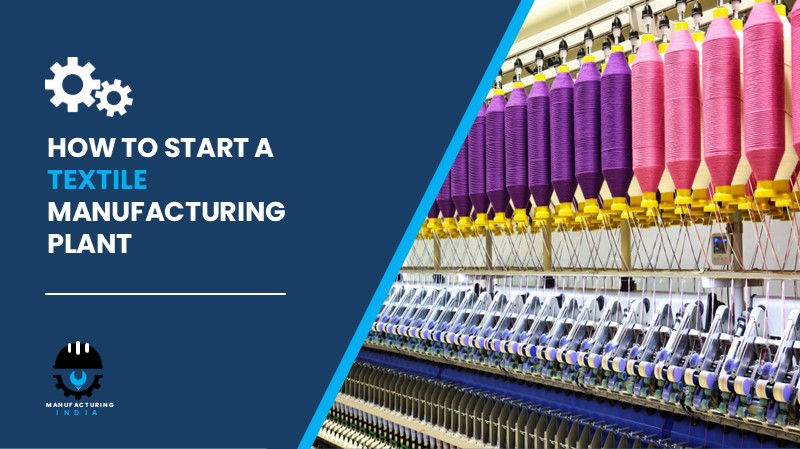
Setting up a textile manufacturing plant in India presents a compelling investment case rooted in the country’s position as one of the world’s largest textile producers and exporters, its vast and diverse fibre supply chain, an enormous and rapidly expanding domestic consumer market, and the growing global demand for Indian-made apparel, home furnishings, and technical textiles. Textiles – flexible materials produced by interlacing fibres through spinning, weaving, knitting, or bonding – are foundational to India’s economy, employing millions across the value chain from cotton farming and synthetic fibre production through spinning, weaving, dyeing, and garment manufacturing. According to IBEF, India is expected to become the third-largest consumer market globally by 2026, after the United States and China, making the domestic demand base for clothing, home textiles, and performance fabrics one of the fastest-growing in the world. Combined with the country’s established export relationships across the United States, Europe, and the Middle East, India’s textile manufacturing sector offers investors a uniquely positioned opportunity to serve both domestic consumption and international supply chains simultaneously.
India’s structural advantages make it the natural choice for establishing a textile manufacturing facility at scale. The country’s abundant cotton production – particularly in Maharashtra, Gujarat, Telangana, and Andhra Pradesh – provides cost-competitive natural fibre access, while the growing domestic synthetic fibre and polyester yarn industry in Gujarat and Tamil Nadu supports synthetic and blended fabric production. Government support through the Production-Linked Incentive (PLI) scheme for textiles, the Pradhan Mantri MITRA (Mega Integrated Textile Region and Apparel) parks initiative, and the Amended Technology Upgradation Fund Scheme (ATUFS) for machinery modernisation collectively provide financial and infrastructure support for investors at every scale. The rise of e-commerce and fast fashion business models globally, improvements in synthetic fibre strength and versatility, and the growing adoption of technical textiles in automotive, healthcare, and infrastructure sectors are all compounding the structural demand case for a well-positioned textile manufacturing plant in India today.
A textile manufacturing plant in India is backed by a global market valued at USD 1,104.00 billion in 2025 growing at 3.5% CAGR toward USD 1,508.10 billion by 2034, India’s position as an expected third-largest global consumer market by 2026, active domestic investment including Spectra’s June 2025 denim and bottoms manufacturing plant launch targeting 700,000 units per month, and gross profit margins of 25–35% with net margins of 12–20%. Across a production capacity of 20–100 million metres per annum, this investment delivers strong returns in one of the world’s largest and most strategically significant manufacturing categories.
What is Textile?
Textiles refer to flexible materials produced by interlacing fibres through processes such as spinning, weaving, knitting, or bonding. Fibres used in textile production may be natural – including cotton, wool, and silk – synthetic – including polyester, nylon, and acrylic – or blended combinations that leverage the complementary properties of both fibre types. Textile materials exhibit diverse properties including tensile strength, elasticity, breathability, moisture absorption, thermal insulation, and durability, depending on fibre composition and the finishing treatments applied during manufacturing.
Textiles are processed into fabrics for apparel, home décor, industrial applications, and technical uses across a broad range of end-use sectors. Modern textile manufacturing integrates advanced spinning technologies, dyeing processes, and finishing techniques to enhance performance characteristics such as wrinkle resistance, water repellency, flame retardancy, and antimicrobial protection – enabling manufacturers to produce both commodity and high-performance textile products from the same plant infrastructure. The primary production method involves fibre production or procurement, spinning, weaving or knitting, dyeing and printing, finishing treatments, cutting, and packaging. End-use industries served include apparel and fashion, home furnishings, technical textiles, automotive, healthcare, and industrial applications.
Cost of Setting Up a Textile Manufacturing Plant in India
The total investment required to establish a textile manufacturing plant in India depends on plant capacity, technology selection across the spinning, weaving, dyeing, and finishing stages, geographic location, level of automation, and compliance with environmental and labour regulations. Investors must plan comprehensively for both one-time capital expenditure and recurring operational costs when preparing a feasibility study or detailed project report (DPR).
1. Capital Expenditure (CapEx)
Land and Site Development constitutes a foundational and substantial investment. Costs for land registration, boundary development, internal road layout, drainage infrastructure, and site levelling vary based on whether the facility is located within a government-notified Pradhan Mantri MITRA textile park, a dedicated textile processing zone, a Special Economic Zone (SEZ), or on privately acquired industrial land. Textile manufacturing clusters in states such as Tamil Nadu, Maharashtra, Gujarat, and Rajasthan offer infrastructure-ready locations with proximity to fibre supply chains, yarn markets, and export logistics hubs.
Civil Works and Construction encompasses the main spinning or weaving production hall – which must accommodate large-footprint ring frames, rapier looms, or circular knitting machines – along with the dyeing and printing facility with wastewater management infrastructure, finishing treatment area, quality control laboratory, finished fabric warehouse, and administrative block. Dyeing and finishing facilities require specialised civil construction including chemical-resistant flooring, elevated effluent management infrastructure, and steam distribution systems – adding to civil construction costs relative to spinning or weaving-only operations.
Machinery and Equipment represent the single largest component of capital expenditure. Key machinery required includes:
- Spinning machines
- Weaving looms
- Knitting machines
- Dyeing and printing machines
- Finishing machines
Other Capital Costs include the effluent treatment plant (ETP) – mandatory for textile dyeing and finishing operations that generate significant volumes of coloured and chemical-laden wastewater – pre-operative expenses covering regulatory filings and feasibility study preparation, plant commissioning charges, utility connection fees for steam, electricity, and water, and import duties applicable to specialised high-speed weaving looms or automated dyeing machines sourced from international suppliers.
Request a Sample Report for In-Depth Market Insights: https://www.imarcgroup.com/textile-manufacturing-plant-project-report/requestsample
2. Operational Expenditure (OpEx)
Raw Material Cost is the dominant driver of operating expenditure, accounting for approximately 70–80% of total OpEx. The primary inputs are yarn – cotton or polyester depending on product focus – along with dyes and finishing chemicals. Cotton yarn prices are linked to domestic and international cotton commodity markets, which are subject to monsoon-driven seasonal fluctuation and global demand cycles. Polyester yarn prices follow petrochemical feedstock dynamics including PTA and MEG pricing. Investors are advised to establish long-term supply contracts with yarn spinners, dye manufacturers, and chemical suppliers to stabilise input costs and ensure production continuity across product cycles. Proximity to India’s major yarn trading centres – including Tirupur, Surat, Ludhiana, and Bhilwara – reduces procurement costs and lead times for key raw material inputs.
Utility Costs – covering electricity for spinning machines, weaving looms, dyeing vessels, and finishing calenders, along with steam for dyeing and heat-setting processes and large volumes of process water for dyeing and washing operations – account for approximately 10–15% of total OpEx. Dyeing and finishing operations are both the most energy-intensive and most water-intensive stages in the textile production chain, and investors in regions with competitive industrial electricity and water tariffs, access to renewable energy, and proximity to water sources are materially better positioned to manage this cost component.
Other Operating Costs include outbound transportation to garment manufacturers, home textile brands, technical textile buyers, automotive OEM tier suppliers, and export freight to international buyers; packaging materials for fabric rolls and bales; employee salaries and wages for spinners, loom operators, dyers, finishing technicians, and quality inspectors; equipment maintenance for high-speed machinery; quality assurance testing for BIS and export buyer specification compliance; depreciation on civil and machinery assets; and applicable taxes. By the fifth year of operations, total operational costs are expected to increase substantially due to inflation, market fluctuations, potential rises in yarn and chemical input prices, supply chain disruptions, and rising consumer demand driving volume pressures across global apparel and home furnishing supply chains.
3. Plant Capacity
The proposed textile manufacturing facility is designed with an annual production capacity ranging between 20 and 100 million metres, enabling significant economies of scale while maintaining operational flexibility across different fabric types, constructions, and end-use specifications. This capacity range is aligned with the requirements of branded garment manufacturers, home textile export houses, technical textile buyers, and retail supply chain partners in India’s growing domestic and international markets. Capacity can be customised based on investor requirements, raw material procurement network scale, and target market segment focus. In June 2025, Epic Group and Creative Group partnered to form Spectra in India – established with an initial investment of USD 15 million, targeting a denim and bottoms manufacturing plant with a planned capacity of 700,000 units per month – illustrating the scale and investment commitment that characterise credible new entrant textile manufacturing ventures in India. Profitability improves consistently with higher capacity utilisation, and textile plants support phased expansion through additional spinning frames or loom additions with contained incremental CapEx.
4. Profit Margins and Financial Projections
The textile manufacturing plant demonstrates healthy and stable profitability potential under normal operating conditions. Gross profit margins typically range between 25–35%, supported by stable multi-sector demand and the value-added, specification-differentiated nature of woven, knitted, dyed, and finished fabrics relative to undifferentiated commodity grey cloth. Net profit margins range between 12–20%, reflecting the raw material intensity and moderate utility costs of the integrated production model. A comprehensive financial analysis should include income projections, expenditure forecasts, gross and net margin tracking across Years 1 through 5, net present value (NPV), internal rate of return (IRR), payback period, and a full profit and loss account. Sensitivity analysis covering cotton yarn and polyester yarn price movements, and export volume variability, is particularly important for investment-grade financial planning.
Why Set Up a Textile Manufacturing Plant in India?
India’s Massive and Rapidly Expanding Consumer Market. With a population of over 1.4 billion, India has one of the largest and fastest-growing consumer markets globally. According to IBEF, India is expected to become the third-largest consumer market globally by 2026, after the United States and China. The increasing consumer base, combined with rapidly growing urbanisation and rising household incomes, is propelling demand for clothing, home textiles, and lifestyle fabrics at a pace that domestic production capacity must accelerate to match.
E-Commerce and Fast Fashion Models Expanding Production Volumes. The rise of e-commerce platforms and fast fashion business models is expanding textile production volumes by accelerating consumption cycles, increasing SKU complexity, and creating demand for shorter production runs of higher product variety. Indian textile manufacturers supplying both domestic fast fashion brands and international e-commerce platform supply chains benefit from this structural acceleration in fabric and garment procurement frequency.
Growing Technical Textile Segment Providing High-Margin Diversification. The growing use of technical textiles in the automobile, healthcare, construction, and manufacturing sectors is boosting demand for specialised fabrics with engineered performance properties – including geotextiles, protective clothing, filtration materials, automotive airbag and seat cover fabrics, and medical textiles with antimicrobial and sterilisable properties. This high-value, specification-driven segment provides textile manufacturers with margin-accretive revenue streams beyond commodity apparel and home furnishing fabric production.
Improvements in Synthetic Fibre Strength and Performance Driving Adoption. Improvements in the production of synthetic fibres and blends are improving their strength, moisture management, and functional performance, fuelling their adoption across sportswear, athleisure, and technical textile applications. Indian manufacturers investing in polyester and nylon blended fabric production are well-positioned to capture the growing domestic and export demand for performance fabric categories that are expanding faster than natural fibre segments.
Active Domestic and International Investment Validating Sector Confidence. In June 2025, Epic Group and Creative Group partnered to form Spectra in India, a new apparel manufacturing company established with an initial investment of USD 15 million, targeting a denim and bottoms manufacturing plant with a planned production capacity of 700,000 units per month one of the most significant new textile manufacturing commitments in India in 2025 and a direct signal of international investor confidence in the country’s textile manufacturing environment. In February 2026, Standard Textile Co., Inc. extended its distribution network in the Caribbean and Latin America through new partnerships with A Plus International and PH Interamericas, enhancing its presence in healthcare and hospitality textile products demonstrating the global expansion appetite among established textile manufacturers that creates export market opportunities for Indian producers.
Export-Oriented Growth Potential Through Established Trade Infrastructure. India’s established textile export infrastructure including well-developed logistics from major textile hubs in Tirupur, Surat, Bhilwara, Panipat, and Ludhiana, APEDA and Textile Export Promotion Council support, and long-standing buyer relationships with brands and retailers in the United States, Europe, and the Middle East provides new manufacturers with accessible pathways to international revenue from the outset of commercial operations.
Manufacturing Process – Step by Step
The textile manufacturing process uses fibre procurement, spinning, weaving or knitting, dyeing and printing, finishing treatments, cutting, and packaging as the primary production method. Below are the main stages involved in the textile manufacturing process flow:
- Fibre Procurement and Quality Testing: Cotton, polyester, wool, or other natural and synthetic fibres are sourced from domestic or international suppliers, tested for fibre length, strength, fineness, moisture content, and contamination levels, and cleared for spinning or direct yarn procurement in the case of yarn-forward manufacturing models.
- Spinning: Spinning machines convert raw fibre into yarn through opening, carding, combing (for finer counts), drawing, and ring spinning or open-end spinning operations. Yarn count, twist, and evenness are monitored throughout, as these parameters directly determine fabric quality and performance.
- Weaving or Knitting: Weaving looms interlace warp and weft yarn systems to produce woven fabrics in a range of constructions including plain, twill, and satin weaves for apparel, home furnishing, and technical applications. Knitting machines, including circular and flat bed variants, interloop yarn to produce knitted fabrics used in T-shirts, sportswear, and stretch garments. The choice between weaving and knitting determines fabric structure, drape, and end-use application suitability.
- Greige Fabric Inspection: The grey (undyed) fabric produced from weaving or knitting is inspected on inspection machines for weave defects, yarn faults, holes, and dimensional consistency before entering wet processing.
- Pre-Treatment – Scouring and Bleaching: Grey fabric is processed through scouring to remove sizing agents, natural waxes, and impurities, followed by bleaching to achieve a clean, uniform white base that accepts dye evenly and consistently across the fabric width.
- Dyeing and Printing: Dyeing and printing machines apply colour to the pre-treated fabric using reactive, disperse, vat, or acid dyes – depending on fibre content – achieving the specified shade depth, fastness ratings, and colour consistency required by the buyer. Printing processes including rotary screen, digital, and flat bed printing apply design patterns to fabric for fashion and home textile applications.
- Finishing Treatments: Finishing machines apply mechanical and chemical finishing processes – including calendering, sanforising, heat-setting, mercerising, water repellency treatment, anti-wrinkle finishing, flame retardancy application, and antimicrobial treatment – to impart the specified functional and aesthetic performance characteristics to the finished fabric.
- Quality Inspection and Testing: Fabric samples are tested for shade consistency, dimensional stability, tensile strength, colour fastness to washing and light, pilling resistance, shrinkage, and compliance with buyer and regulatory specifications before batch release and shipment preparation.
- Cutting and Preparation (for Garment Manufacturers): Where the textile plant includes garment manufacturing capability, finished fabric is cut into pattern pieces using automated spreading and cutting systems per garment specifications, ready for sewing and assembly.
- Packaging and Dispatch: Finished fabric is rolled onto cardboard tubes or A-frame beams, wrapped in protective polythene covering, and packed into bales or cartons with fabric identity cards showing construction, width, weight, and lot number before dispatch to garment manufacturers, home textile brands, technical textile buyers, automotive suppliers, and export buyers.
Key Applications
Textiles produced at this type of facility serve six primary end-use sectors with specific fabric construction, fibre content, and performance requirements for each:
- Apparel and Fashion Industry: Fabrics used in manufacturing shirts, trousers, dresses, sportswear, and outerwear for mass-market and premium fashion segments across domestic retail and international export markets.
- Home Furnishings Industry: Fabrics utilised in bed sheets, curtains, carpets, upholstery, and decorative textiles for residential and hospitality sectors — a major export category for Indian textile manufacturers.
- Technical Textile Industry: Specialised fabrics including geotextiles, protective clothing, filtration materials, and performance fabrics for infrastructure, defence, and industrial applications requiring engineered performance specifications.
- Automotive Industry: Fabrics used in seat covers, airbags, interior linings, and thermal and acoustic insulation materials, requiring specific strength, durability, and flame-retardancy specifications for OEM supply chain qualification.
- Healthcare Industry: Fabrics used in medical garments, surgical drapes, masks, bandages, and wound care products with antimicrobial, sterilisable, and barrier performance properties required for clinical and patient care applications.
- Industrial Sector: Fabrics used in conveyor belts, industrial filtration, reinforcement materials, and protective workwear applications across manufacturing, construction, and chemical processing industries.
Leading Textile Manufacturers
The global textile industry is served by several large-scale manufacturers with diversified product portfolios and strong multi-sector and multi-geographic market presence. Key players include:
- Hengli Petrochemical Co., Ltd.
- Shenzhou International Group Holdings Ltd.
- Toray Industries, Inc.
- Inditex
- Chargeurs SA
- Far Eastern New Century Corporation
Timeline to Start the Plant
Investors planning to establish a textile manufacturing plant in India should anticipate the following project development phases:
- Feasibility study and project report preparation
- Land acquisition and site development
- Regulatory approvals and environmental clearances
- Factory licence and fire safety compliance
- Machinery procurement and installation
- Raw material supplier agreements and supply chain setup
- Trial production and quality testing
- Commercial production launch
Licences and Regulatory Requirements
Starting a textile manufacturing unit in India requires several approvals:
- Business registration (Proprietorship, LLP, or Private Limited Company)
- Factory Licence under the Factories Act
- Environmental Clearance from the State Pollution Control Board – including EIA for dyeing and printing operations classified as Red or Orange category industries
- Consent to Establish and Consent to Operate from the State Pollution Control Board for textile wet processing facilities
- GST Registration
- Fire Safety NOC
- Effluent Treatment Plant (ETP) operational clearance – mandatory for all dyeing and finishing operations generating coloured and chemical-laden effluent
- Occupational Health and Safety compliance covering spinning, loom operations, and chemical handling in dyeing and finishing
- Bureau of Indian Standards (BIS) certification for technical textile products where mandatory under applicable IS specifications
- APEDA registration and export certification for textile and garment exporters targeting international markets
Key Challenges to Consider
Raw Material Price Volatility – Cotton and Polyester Yarn. Yarn – accounting for 70–80% of total OpEx – is subject to significant price volatility driven by cotton commodity cycles, monsoon-dependent harvest outcomes, and petrochemical feedstock dynamics for polyester. Securing long-term supply contracts with yarn spinners and maintaining strategic inventory buffers during price-advantageous procurement windows are essential risk management practices for textile manufacturers.
Environmental Compliance Intensity for Dyeing and Finishing. Textile dyeing and finishing operations generate large volumes of coloured, chemical-laden, and high-BOD effluent that require comprehensive effluent treatment before discharge. State Pollution Control Boards classify dyeing units as Red category industries, mandating zero liquid discharge (ZLD) systems in many states – adding significantly to both CapEx and ongoing OpEx for wet processing operations. Non-compliance carries severe regulatory penalties and operational shutdown risk.
Technology Modernisation and Automation Pressure. Automation in spinning, weaving, and finishing processes is advancing rapidly, improving efficiency, quality, and scalability – but requiring continuous capital reinvestment to maintain competitive productivity levels against both domestic competitors and international producers. Investors must budget for periodic technology upgrades from the outset to avoid capacity and quality competitiveness erosion over the plant’s operational life.
Competition from Established Domestic and Global Producers. The Indian textile market is served by large-scale integrated mills and specialised fabric processors in established clusters including Tirupur, Surat, Ichalkaranji, Bhilwara, and Panipat, alongside globally scaled manufacturers including Shenzhou International and Toray Industries. New entrants must differentiate through product specialisation – such as technical textiles, premium yarn-dyed fabrics, or sustainable natural fibre ranges – or through competitive pricing for export supply chain buyers.
Skilled Manpower for Integrated Textile Operations. Operating ring frames, rapier looms, circular knitting machines, jet dyeing vessels, and stenter finishing machines requires skilled technicians trained in textile engineering, dyeing chemistry, and quality management. Recruiting and retaining qualified textile production personnel is competitive in established cluster locations and challenging outside them, particularly as India’s textile sector simultaneously expands capacity across multiple states.
Export Market Compliance and Quality Certification. International buyers in the United States and Europe require compliance with OEKO-TEX, GOTS (Global Organic Textile Standard), and buyer-specific chemical restriction requirements including REACH compliance. Meeting these standards requires investment in chemical management systems, third-party certification, and rigorous supply chain traceability documentation – adding ongoing compliance overhead for export-focused manufacturers.
Frequently Asked Questions
1. How much does it cost to set up a textile manufacturing plant in India?
The total cost depends on plant capacity (20–100 million metres per annum), technology selection across spinning, weaving, dyeing, and finishing, location, and automation level. CapEx covers land, industrial civil construction including ETP infrastructure, and machinery including spinning machines, weaving looms, knitting machines, dyeing and printing machines, and finishing machines, along with pre-operative and regulatory costs.
2. Is textile manufacturing profitable in India in 2026?
Yes. With gross margins of 25–35% and net margins of 12–20%, supported by India’s rapidly expanding domestic consumer market, growing technical textile demand, active export market relationships, and a global market growing at 3.5% CAGR toward USD 1,508.10 billion by 2034, the investment presents a commercially sound and improving profitability case at appropriate production scale.
3. What machinery is required for a textile manufacturing plant in India?
Key equipment includes spinning machines, weaving looms, knitting machines, dyeing and printing machines, and finishing machines. Supporting systems include fabric inspection machines, ETP infrastructure for wet processing effluent, material handling conveyors, and testing laboratory equipment for quality compliance.
4. What licences and approvals are required to start a textile manufacturing plant in India?
Required approvals include business registration, Factory Licence, Environmental Clearance and Pollution Control Board Consent to Operate, GST Registration, Fire Safety NOC, ETP operational clearance, BIS certification for applicable technical textile specifications, Occupational Health and Safety compliance, and APEDA export registration for international market access.
5. What raw materials are needed for textile manufacturing?
The primary raw materials are yarn – cotton or polyester depending on product focus – along with dyes and finishing chemicals. Additional inputs include sizing agents, auxiliary chemicals for pre-treatment and finishing, packaging materials for fabric rolls and bales, and water as a process utility throughout dyeing and finishing operations.
6. What are the environmental compliance requirements for a textile manufacturing plant in India?
Dyeing and finishing operations require Environmental Clearance and Pollution Control Board consent, mandatory ETP for coloured effluent management – including ZLD requirements in many states – compliance with CPCB and state-level effluent discharge standards, and regular monitoring and reporting for BOD, COD, colour, and heavy metal parameters in process wastewater.
7. What is the best location to set up a textile manufacturing plant in India?
Established textile manufacturing clusters – including Tirupur and Coimbatore in Tamil Nadu for knitted fabrics, Surat in Gujarat for synthetic wovens, Bhilwara in Rajasthan for suiting fabrics, Panipat in Haryana for recycled textiles, and Ichalkaranji in Maharashtra for grey fabric – offer the best combination of yarn supply access, skilled labour availability, processing infrastructure, and export logistics connectivity.
8. What is the break-even period for this type of plant in India?
The break-even period depends on plant scale, product mix, capacity utilisation, and export vs. domestic revenue split. A full NPV and IRR analysis incorporating sensitivity testing for yarn price movements and fabric selling price variability is recommended for investment-grade financial planning.
9. What government incentives are available for textile manufacturers in India?
The PLI scheme for textiles provides performance-linked financial incentives for domestic fabric and garment manufacturers. The Pradhan Mantri MITRA textile parks initiative offers plug-and-play industrial infrastructure at preferential costs. ATUFS provides capital subsidy for machinery modernisation. APEDA export development support, state-level textile industrial incentives in Tamil Nadu, Gujarat, and Rajasthan, and TUFS interest reimbursement schemes all provide meaningful financial and infrastructure support for qualifying textile manufacturing investments.
Key Takeaways for Investors
A textile manufacturing plant in India represents one of the most commercially proven and strategically durable investment opportunities available in Indian manufacturing — backed by a global market valued at USD 1,104.00 billion in 2025 growing at 3.5% CAGR toward USD 1,508.10 billion by 2034, India’s projected emergence as the world’s third-largest consumer market by 2026, and a multi-sector demand base spanning apparel, home furnishings, technical textiles, automotive, healthcare, and industrial applications. Financial viability is demonstrated across a production capacity range of 20 to 100 million metres per annum, with gross margins of 25–35% and net margins of 12–20% achievable under competitive yarn procurement and efficient integrated production operations. Active domestic investment – including Spectra’s June 2025 launch targeting 700,000 units per month and Standard Textile’s February 2026 international distribution expansion – confirms the sustained commercial confidence that established global textile producers are placing in India’s manufacturing environment. With e-commerce and fast fashion expanding production volumes, technical textile demand providing premium margin diversification, and improvements in synthetic fibre performance broadening application opportunities, long-term demand sustainability for Indian textile manufacturing investors is comprehensively supported throughout the decade ahead.
About the Author