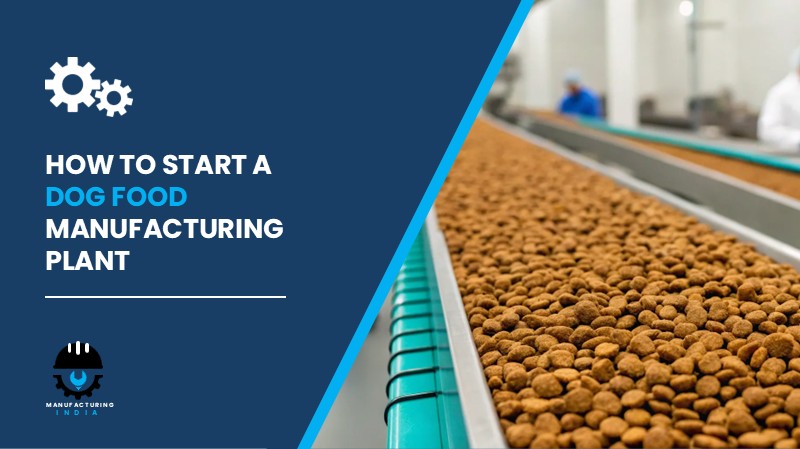
Setting up a dog food manufacturing plant in India presents a compelling investment case driven by rapidly rising pet ownership, increasing pet humanisation, growing awareness of pet nutrition, and a strong consumer shift toward premium, functional, and balanced pet diets. India’s expanding urban middle class is increasingly treating pets as family members, a behaviour pattern that is fueling consistent, recurring demand for commercially manufactured dog food across dry kibble, wet canned food, semi-moist products, freeze-dried meals, and functional treat categories. The pet food industry, veterinary and animal healthcare sector, pet specialty retail, and e-commerce pet product platforms collectively form a robust and diversified end-use base for any investor entering this space.
India offers a strategically sound environment for establishing this production. The country’s urbanisation trajectory, infrastructure development under flagship programmes such as Make in India, and the availability of cost-competitive land and labour in key manufacturing states such as Gujarat, Maharashtra, Uttar Pradesh, and Telangana create an ideal operating environment. Proximity to grain supply chains and meat processing clusters further reduces raw material procurement costs, while India’s growing organised pet retail network and booming e-commerce ecosystem ensure efficient product distribution at scale.
Setting up a dog food manufacturing plant in India combines strong policy support, cost-competitive operations, and surging demand from the pet food industry, veterinary nutrition, and specialty retail channels. With gross profit margins of 30–40% and net margins of 12–18%, this investment demonstrates healthy financial viability across a range of plant capacities, with break-even achievable under normal operating conditions.
What is Dog Food?
Dog food is made up of a whole range of nutritional products that are carefully formulated to suit the specific dietary needs of dogs, which may differ in age, breed, and level of physical activity. Dog foods generally consist of proteins, carbohydrates, and fats in the right proportions together with vitamins, minerals, and functional additives that promote digestion, disease resistance, and overall skin and coat health. Different varieties are available in multiple forms, including dry kibble, wet canned food, semi-moist products, freeze-dried meals, and functional treats. Specialised types such as grain-free, high-protein, breed-specific, weight-management, and therapeutic diets are seeing growing preference among health-conscious pet owners.
One of the defining benefits of industrial dog food manufacturing is that it guarantees nutritional composition consistency, long shelf life, food safety compliance, and scalability – attributes that make it well-suited for distribution through mass retail outlets as well as through veterinary and specialty channels. The manufacturing process involves raw material sourcing and inspection, grinding and mixing, extrusion or cooking, drying and cooling, coating and flavour enhancement, quality inspection, and packaging. The primary end-use industries served include the pet food industry, veterinary and animal healthcare sector, pet specialty retail, and e-commerce pet product platforms.
Cost of Setting Up a Dog Food Manufacturing Plant in India
The total investment required to establish a dog food manufacturing plant in India depends on several interrelated variables including plant capacity, technology selection, degree of automation, geographic location, and the scope of regulatory compliance.
1. Capital Expenditure (CapEx)
Capital expenditure for a dog food manufacturing facility is structured across land and site development, civil construction, machinery procurement, and other pre-operative costs.
Land and site development represents a substantial portion of total CapEx, encompassing land registration charges, boundary development, and site preparation. Investors may consider locating the unit within a Special Economic Zone (SEZ) or notified industrial estate to benefit from faster approvals, utility access, and potential fiscal incentives. Civil works expenditure covers the construction of the production shed, quality control laboratory, raw material and finished goods storage warehouses, and administrative block.
Machinery and equipment costs account for the largest single component of capital expenditure for this type of plant. Key machinery required includes:
- Grinders – for size reduction of raw material inputs including meat meals and grains
- Mixers – for uniform blending of proteins, carbohydrates, fats, vitamins, and minerals
- Extruders – the core processing unit for shaping and cooking the kibble or semi-moist product
- Dryers – for moisture removal to achieve target shelf-life specification
- Coaters – for application of flavour enhancers, fats, and palatability agents post-drying
- Conveyors – for material handling and inter-stage product transfer
- Automated packaging lines – for filling, sealing, and labelling finished dog food in retail-ready formats
Other capital costs include effluent treatment plant (ETP) construction, pre-operative expenses, commissioning charges, and import duties applicable to specialised extrusion or drying equipment.
Request a Sample Report for In-Depth Market Insights: https://www.imarcgroup.com/dog-food-manufacturing-plant-project-report/requestsample
2. Operational Expenditure (OpEx)
The operating cost structure of this investment is primarily driven by raw material consumption, particularly meat meals, which account for approximately 70–80% of total operating expenses. The principal raw materials required are meat meals and grains, and securing long-term contracts with reliable domestic suppliers is essential to manage price volatility and ensure production continuity.
Utility costs, covering electricity, water, and steam for the extrusion and drying processes, represent 10–15% of total OpEx. Additional operating costs include transportation and logistics for inbound raw materials and outbound finished goods, packaging materials, salaries and wages for production and quality control staff, routine maintenance and repairs, depreciation on plant and machinery, and applicable taxes. By the fifth year of operations, total operational costs are expected to increase substantially due to inflation, market fluctuations, potential rises in the cost of key materials, supply chain disruptions, and shifts in the broader economy.
3. Plant Capacity
The proposed manufacturing facility as referenced in the IMARC Group project report is designed with an annual production capacity ranging between 20,000 and 40,000 MT, enabling economies of scale while maintaining operational flexibility. This range can be customised based on investor requirements, phased expansion strategies, or target market size. Profitability improves meaningfully with higher capacity utilisation, as fixed costs are distributed across a larger volume base.
4. Profit Margins and Financial Projections
The dog food manufacturing plant demonstrates healthy profitability potential under normal operating conditions. Gross profit margins typically range between 30% and 40%, supported by stable recurring demand and value-added product applications. Net profit margins average 12–18% over the projection period. Comprehensive financial analysis including NPV, IRR, payback period, liquidity assessment, sensitivity analysis, and a full profit and loss account is covered in the detailed project report.
Why Set Up a Dog Food Plant in India?
Rising Pet Ownership and Humanisation: Pets are increasingly seen as family members across Indian households, which is directly increasing demand for high-quality, nutritionally complete food. This cultural shift creates strong and sustained end-consumer demand that underpins the commercial rationale for establishing production capacity in India.
Recurring Consumption Demand: The daily consumption pattern of dog food guarantees stable and repeat sales cycles, making this a resilient investment compared to discretionary product categories. This predictability of demand supports reliable revenue forecasting and steady cash flow generation.
Growth of Premium and Functional Diets: Consumers are progressively choosing natural, grain-free, high-protein, and functional formulations that address specific health conditions such as allergies, digestive sensitivity, obesity, and kidney health. These premium and therapeutic diet segments carry higher margins and are the fastest-growing sub-categories within the broader dog food market.
Expanding Organised Retail and E-Commerce Channels: The growth of organised pet specialty retail and subscription-based e-commerce platforms has significantly increased product accessibility across urban and semi-urban India, reducing distribution barriers for new manufacturers and improving market reach.
Active Industry Investment: The global dog food industry continues to attract significant investment and strategic activity. In September 2025, Pet Corner expanded its regional reach through the acquisition of Jungle Paws, an Abu Dhabi-based pet retailer, lifting its network to 20 operating stores. In August 2025, Dr. Marty Pets earned Dog Food Company of the Year honours at the 2025 Pet Innovation Awards, with recognition for its Nature’s Blend freeze-dried raw dog food and ProPower Plus supplements.
Scalable and Technology-Driven Production: The use of modern extrusion and processing technologies facilitates efficient large-scale operations with consistent product quality, making the manufacturing process both scalable and adaptable to evolving consumer preferences.
Manufacturing Process – Step by Step
The dog food manufacturing process uses extrusion or cooking as the primary production method, supported by a multi-step operation involving several unit operations, material handling stages, and embedded quality checks.
- Raw Material Sourcing and Inspection: Meat meals and grains are procured from vetted suppliers, inspected for nutritional profile, contamination levels, and moisture content before entering the production flow.
- Grinding: Raw material inputs are processed through grinders to achieve the required particle size for uniform blending and downstream extrusion.
- Mixing: Grinders feed into mixers where proteins, carbohydrates, fats, vitamins, minerals, and functional additives are combined in precise formulation ratios.
- Extrusion or Cooking: The blended mixture passes through extruders, which apply heat and pressure to cook the product, shape it into kibble or semi-moist forms, and achieve the required texture and density.
- Drying: Extruded product passes through dryers to remove excess moisture, ensuring target shelf-life stability and food safety compliance.
- Coating and Flavour Enhancement: Dried product is processed through coaters for application of palatability agents, fats, and flavour enhancers that improve taste and consumer acceptance.
- Quality Inspection: Finished product undergoes analytical testing for concentration, purity, nutritional completeness, and compliance with food safety standards before release.
- Packaging and Dispatch: Automated packaging lines fill, seal, and label the finished dog food for dispatch to pet retail, veterinary channels, e-commerce platforms, and export markets.
Key Applications
The dog food manufacturing plant serves a diverse range of end-use industries and consumption segments:
- Commercial Pet Food Industry: Various formulations are manufactured at scale for retail and branded pet food markets while maintaining consistent nutritional quality.
- Veterinary and Clinical Nutrition Segment: Therapeutic diets address medical conditions including allergies, obesity, digestive sensitivity, and kidney health.
- Pet Specialty Retail and E-Commerce: Pet shops and online platforms serve as the primary distribution channels for premium and tailored dog food products.
- Working and Performance Dog Nutrition: Specially crafted high-energy, high-protein diets are formulated for professional and athletic dogs.
Leading Manufacturers
The global dog food market is served by several multinational companies with extensive production capacities and diverse application portfolios. Key players include:
- General Mills Inc.
- Hill’s Pet Nutrition, Inc. (Colgate-Palmolive Company)
- Mars, Incorporated
- Nestlé Purina PetCare (Nestlé S.A.)
- Diamond Pet Foods (Schell & Kampeter, Inc.)
- The J.M. Smucker Company
Timeline to Start the Plant
- Feasibility study and project report preparation
- Land acquisition and site development
- Regulatory approvals and environmental clearances
- Factory licence and fire safety compliance
- Machinery procurement and installation
- Raw material supplier agreements and supply chain setup
- Trial production and quality testing
- Commercial production launch
Licences and Regulatory Requirements
Starting a dog food manufacturing unit in India requires several approvals:
- Business registration (Proprietorship, LLP, or Pvt Ltd)
- Factory Licence under the Factories Act
- Environmental Clearance from State Pollution Control Board
- GST Registration
- Fire Safety NOC
- Food Business Operator (FBO) Licence under FSSAI for manufactured pet food
- Effluent Treatment Plant (ETP) operational clearance
- Occupational Health and Safety compliance
Key Challenges to Consider
High Capital Requirements: Establishing a dog food manufacturing plant involves significant upfront investment in land, civil construction, and specialised processing machinery including extruders, dryers, and automated packaging lines, which can be a barrier for early-stage investors.
Raw Material Price Volatility: The primary raw materials – meat meals and grains – are subject to commodity price fluctuations driven by seasonal supply variations, global trade conditions, and feed industry competition, making input cost management a critical operational priority.
Regulatory Compliance: Obtaining and maintaining the full range of regulatory approvals including environmental clearances, factory licences, and food safety certifications requires sustained administrative effort and investment in compliance infrastructure.
Technology and Innovation Pressure: Consumer preference is shifting rapidly toward grain-free, high-protein, freeze-dried, and therapeutic diet formulations, requiring manufacturers to continuously invest in process capabilities and product development to remain competitive.
Competition from Global Players: The market is served by well-capitalised multinationals including Mars, Incorporated, Nestlé Purina PetCare, Hill’s Pet Nutrition, and General Mills, whose established brand equity and distribution networks represent a significant competitive challenge for new entrants.
Skilled Manpower: Recruiting and retaining qualified personnel for extrusion operation, quality control, and nutritional formulation is an ongoing challenge, particularly outside major industrial centres.
Frequently Asked Questions
- How much does it cost to set up a dog food manufacturing plant in India?
The total investment depends on capacity, technology, location, and automation level. The IMARC Group project report provides detailed CapEx and OpEx breakdowns for a facility with annual capacity of 20,000–40,000 MT.
- Is dog food manufacturing profitable in India in 2026?
Yes. The unit demonstrates gross profit margins of 30–40% and net profit margins of 12–18%, supported by stable recurring demand and value-added premium product segments.
- What machinery is required for a dog food plant in India?
Key machinery includes grinders, mixers, extruders, dryers, coaters, conveyors, and automated packaging lines.
- What licences and approvals are required to start a dog food plant in India?
Key requirements include business registration, Factory Licence, Environmental Clearance, GST Registration, Fire Safety NOC, FBO Licence under FSSAI, ETP clearance, and occupational health compliance.
- What raw materials are needed for dog food manufacturing?
The primary raw materials are meat meals and grains, which together account for 70–80% of total operating expenditure.
- What are the environmental compliance requirements for a dog food plant in India?
Manufacturers must obtain Environmental Clearance from the State Pollution Control Board and operate a functional Effluent Treatment Plant, along with maintaining emission standards throughout the production process.
- What is the best location to set up a dog food plant in India?
Locations offering proximity to meat processing and grain supply clusters, reliable utility infrastructure, and access to transportation networks are preferable. States such as Gujarat, Maharashtra, and Uttar Pradesh offer well-established industrial ecosystems.
- What is the break-even period for this type of plant in India?
The detailed financial projections in the IMARC Group project report cover payback period analysis based on realistic assumptions of capacity utilisation, pricing trends, and demand outlook.
- What government incentives are available for manufacturers in India?
Manufacturers may access incentives under the Make in India initiative, state industrial promotion policies, SEZ benefits, and sector-specific schemes depending on plant location and product category.
Key Takeaways for Investors
A dog food manufacturing plant in India presents a well-rounded investment opportunity driven by consistent demand from the commercial pet food industry, veterinary nutrition segment, pet specialty retail, and rapidly expanding e-commerce channels. The project demonstrates financial viability across a range of plant capacities, with gross margins of 30–40% and net margins of 12–18% achievable under normal operating conditions. The global dog food market was valued at USD 75.33 billion in 2025 and is projected to reach USD 105.29 billion by 2034, growing at a CAGR of 3.8% from 2026 to 2034, reflecting the structural and sustained nature of demand growth. With recurring consumption patterns, expanding organised retail infrastructure, and strong policy tailwinds under Make in India, the long-term demand outlook for this manufacturing segment in India remains compelling.
About the Author