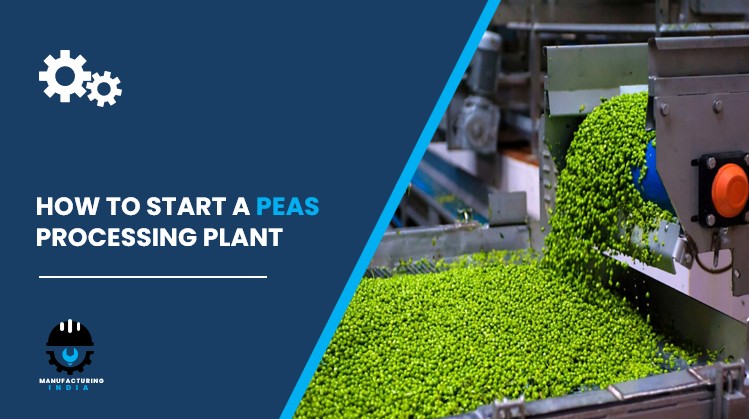
Setting up a peas processing plant in India presents a compelling investment case for entrepreneurs and agri-food businesses seeking to capitalise on the country’s rapidly expanding food processing sector. Domestic demand from the food processing industry, the foodservice and HoReCa sector, the ready-to-cook food segment, and the organized retail grocery sector continues to strengthen, driven by urbanisation, rising disposable incomes, and a pronounced shift towards convenient, nutritious food products. Processed peas spanning frozen, dried, split, and canned variants are core inputs for packaged meals, soups and sauces, frozen food products, and institutional catering, making this a highly versatile and resilient product category.
India’s structural advantages make it an exceptionally sound location for peas plant investment. The country’s vast agricultural base ensures a reliable supply of green peas, while industrialised states such as Gujarat, Maharashtra, Uttar Pradesh, and Punjab offer well-developed infrastructure, established cold-chain ecosystems, and proximity to consumption centres. The Government of India’s Make in India initiative, coupled with ongoing investment in cold chain logistics and food processing parks under the Pradhan Mantri Kisan Sampada Yojana, creates a policy environment that actively lowers entry barriers and improves unit economics. For investors evaluating agri-processing opportunities, India presents a combination of input cost advantages, scalable market access, and favourable regulatory support that few other markets can match.
India’s food processing sector, government-backed cold chain expansion, and growing urban demand for convenience foods converge to make a peas processing plant a financially viable and strategically sound investment. With gross profit margins of 30–40% and a scalable capacity model, the business demonstrates strong ROI across plant sizes, supported by stable demand from retail, foodservice, and industrial food manufacturing customers.
What are Peas?
Peas are small, spherical seeds derived from the legume Pisum sativum, cultivated for both human consumption and animal feed. They are a staple food rich in protein, dietary fibre, vitamins notably vitamin C, vitamin K, and several B vitamins and essential minerals such as iron, magnesium, and potassium. Naturally low in fat and calories, peas are a popular choice in vegetarian, vegan, and health-conscious diets. They also benefit agricultural systems through their nitrogen-fixing properties, which improve soil fertility.
Peas can be consumed fresh (green peas), dried, or processed into products such as split peas, pea flour, and pea protein. The primary production method is a multi-step processing procedure involving raw pea reception, cleaning and sorting, washing, blanching, cooling, freezing or drying, grading, quality inspection, and packaging. End-use industries served include the food processing industry, foodservice and HoReCa sector, ready-to-cook food segment, and retail grocery sector, with applications spanning household cooking, packaged meals, soups and sauces, frozen food products, institutional catering, and food manufacturing inputs.
Cost of Setting Up a Peas Processing Plant in India
The total investment required to establish a peas plant in India depends on a range of variables including production capacity, technology configuration, degree of automation, plant location, and the extent of regulatory compliance infrastructure in place.
1. Capital Expenditure (CapEx)
Land and site development constitutes a significant portion of the initial investment. Investors may consider locating the facility within a Special Economic Zone (SEZ) or an MIDC/GIDC-designated industrial estate to benefit from concessional land rates, pre-approved utilities, and streamlined regulatory clearances. Civil works encompassing the processing shed, quality control laboratory, cold storage chambers, raw material holding area, and administrative block represent another substantial capital outlay, and must be designed to meet food safety and FSSAI guidelines from the outset.
Key machinery required for a peas processing plant includes:
- Washing systems
- Blanchers
- Freezers or dryers
- Conveyors
- Graders
- Packaging machines
- Cold storage units
Additional capital costs include the effluent treatment plant (ETP), pre-operative and commissioning expenses, quality assurance instrumentation, and import duties where applicable for specialised freezing or packaging equipment.
Request a Sample Report for In-Depth Market Insights: https://www.imarcgroup.com/peas-processing-plant-project-report/requestsample
2. Operational Expenditure (OpEx)
The operating cost structure of a peas processing plant is primarily driven by raw material consumption. Green pea the core input accounts for approximately 60–70% of total operational expenditure of the peas plant. Securing multi-season supply contracts with farmers or aggregators in major pea-growing belts (Uttar Pradesh, Himachal Pradesh, Punjab) is essential to stabilise input costs and ensure uninterrupted production through seasonal fluctuations.
Utility costs covering electricity for blanching, freezing or drying, and cold storage operations, along with water and steam represent 15–20% of OpEx and are a critical factor in site selection. Other recurring operational costs include transportation and logistics, packaging materials (pouches, cartons, bulk bags), salaries and wages, routine maintenance and repairs, depreciation on fixed assets, and applicable state and central taxes. By the fifth year of operations, total OpEx is expected to increase meaningfully due to inflation, potential raw material price escalation, and rising consumer demand placing upward pressure on throughput requirements.
3. Plant Capacity
The proposed peas plant is designed with an annual production capacity ranging between 5,000–10,000 MT, enabling economies of scale while maintaining operational flexibility. Capacity can be customised based on investor requirements, phased investment timelines, and market access projections. As with most food processing operations, profitability improves materially with higher capacity utilisation, making efficient procurement planning, demand forecasting, and contract-based offtake agreements critical to operational success.
4. Profit Margins and Financial Projections
The peas plant demonstrates healthy profitability potential under normal operating conditions. Gross profit margins typically range between 30–40%, supported by stable demand across multiple application segments and the value-added nature of processed and frozen pea products. Net profit margins are projected in the range of 12–18%, reflecting a sound return after accounting for depreciation, finance costs, and tax obligations. Full financial projections for the peas processing plant covering NPV (Net Present Value), IRR (Internal Rate of Return), payback period, and sensitivity analysis are available in the detailed feasibility report. The break-even timeline and payback period are influenced by capacity utilisation rates, product pricing strategy, and the ratio of frozen versus dried output, which carries different margin profiles.
Why Set Up a Peas Processing Plant in India?
Rising Demand for Frozen and Processed Vegetables. Urban lifestyles across India’s Tier 1 and Tier 2 cities continue to drive demand for easy-to-use vegetable products with extended shelf lives. The expansion of organised retail, quick-service restaurants, and home-delivery meal kits is accelerating adoption of frozen peas as a standard pantry staple.
Nutritional Value and Plant-Based Diet Adoption. Peas are widely consumed due to their protein, fibre, and micronutrient content. Growing consumer awareness of healthy eating and balanced nutrition alongside rising demand for plant-based protein alternatives is expanding the addressable market for pea-derived products such as pea protein and pea flour.
Reduced Post-Harvest Losses and Multiple Product Variants. Processing extends shelf life and minimises wastage during peak harvest seasons a critical value proposition in India’s agriculture-heavy supply chain context. The ability to produce frozen, dried, split, and canned peas from the same raw material enables market diversification and revenue smoothing across seasonal cycles.
Policy and Regulatory Tailwinds. The Government of India’s Make in India initiative, along with dedicated food processing schemes, agri-export promotion policies, and investments in cold chain infrastructure, creates a supportive environment for establishing food processing units. FSSAI’s progressive regulatory framework also helps domestic processors align with export-grade quality standards.
Cost-Competitive Manufacturing Base. India offers significant cost advantages in land acquisition, construction, and labour relative to Western processing markets. A well-developed domestic supply chain for green peas in key growing states reduces input logistics costs, directly improving margins and supply security for any peas plant established in the country.
Active Industry Investment and Innovation. In October 2025, Ukraine’s TERRA became the country’s first producer of pea protein and starch, processing 25,000 tonnes of peas annually, signalling strong global capital interest in the pea processing value chain. In September 2025, Clemson University released USDA-certified organic winter dry pea varieties for high-yield, sustainable production pointing to continued upstream investment in raw material quality and availability that will benefit downstream processors globally.
Manufacturing Process Step by Step
The peas processing manufacturing process uses a multi-step unit operations flow as the primary production method, encompassing material handling, thermal treatment, and quality checks at each stage.
- Raw Pea Reception: Incoming green peas are received at the plant gate, weighed, and inspected for quality parameters including moisture content, colour, and absence of foreign matter.
- Cleaning and Sorting: Peas pass through cleaning systems to remove soil, stones, and plant debris. Optical or mechanical sorters segregate peas by size and remove defective units.
- Washing: Cleaned peas are passed through washing systems using potable water to remove surface contaminants, residual pesticides, and microbial load prior to thermal processing.
- Blanching: Peas are subjected to hot water or steam blanching using blanchers to inactivate enzymes (peroxidase, lipoxygenase) that cause quality degradation during frozen or dried storage.
- Cooling: Post-blanching, peas are rapidly cooled using chilled water or air blast cooling to arrest cooking and preserve texture, colour, and nutritional content.
- Freezing or Drying: Depending on the product variant, peas are processed through IQF (Individual Quick Freezing) freezers for frozen peas, or passed through dryers for dehydrated/split pea production.
- Grading: Processed peas are graded using graders based on size, density, and visual quality to meet product specification requirements across retail, institutional, and industrial buyers.
- Quality Inspection: Comprehensive quality assurance checks including microbiological testing, metal detection, and weight verification are conducted to ensure compliance with FSSAI and buyer specifications.
- Packaging and Dispatch: Approved peas are packaged in retail pouches, bulk bags, or institutional cartons using packaging machines and dispatched to end-use industries including food processors, HoReCa operators, and grocery retailers.
Key Applications
Processed peas serve a wide range of end-use industries and applications, underpinning the product’s commercial versatility and demand resilience.
- Food Processing Industry: Used as ingredients in frozen foods, ready meals, soups, and sauces by large-scale manufacturers.
- Foodservice and HoReCa Sector: Preferred by hotels, restaurants, and catering operators for consistency, reduced preparation time, and year-round availability.
- Ready-to-Cook and Convenience Food Segment: Included in packaged meal kits and frozen food offerings targeting working households and urban consumers.
- Household and Retail Consumption: Used for daily cooking due to ease of storage and preparation, distributed via organised retail and e-commerce channels.
- Institutional Catering: Schools, hospitals, and government catering programmes rely on processed peas for nutritional, large-batch meal preparation.
- Food Manufacturing Inputs: Pea flour and pea protein derived from processing are used as functional ingredients in bakery, snacks, and nutraceutical formulations.
Leading Manufacturers
The global peas processing industry features several multinational companies with extensive production capacities and diverse application portfolios serving food processing, HoReCa, and retail sectors worldwide. Key players include:
- Farbest Brands
- Roquette Freres Le Romarin
- Glanbia Plc.
- Nutri-Pea Limited
- Shadong Jianyuan Foods Co. Ltd.
- Burcon Nutrascience Corporation
- Axiom Foods Inc.
- A&B Ingredients
Timeline to Start the Plant
- Feasibility study and project report preparation
- Land acquisition and site development
- Regulatory approvals and environmental clearances
- Factory licence and fire safety compliance
- Machinery procurement and installation
- Raw material supplier agreements and supply chain setup
- Trial production and quality testing
- Commercial production launch
Licences and Regulatory Requirements
Starting a peas plant in India requires several regulatory approvals before commencing commercial production:
- Business registration (Proprietorship, LLP, or Pvt Ltd)
- Factory Licence under the Factories Act
- Environmental Clearance from State Pollution Control Board
- FSSAI (Food Safety and Standards Authority of India) licence
- GST Registration
- Fire Safety NOC
- Effluent Treatment Plant (ETP) operational clearance
- Occupational Health and Safety compliance
- Cold storage licence (where applicable under state food laws)
Key Challenges to Consider
High Capital Requirements. Establishing a peas plant in India involves significant upfront investment in land, civil construction, food-grade machinery such as washing systems, blanchers, freezers or dryers, conveyors, and graders, as well as cold storage and ETP infrastructure. Securing structured project financing or leveraging government-backed agri-processing schemes is advisable.
Raw Material Price Volatility. Green peas, which account for 60–70% of OpEx, are subject to seasonal price fluctuations, crop yield variability, and supply chain disruptions. Long-term procurement contracts and a diversified sourcing strategy are essential risk mitigation measures.
Regulatory Compliance. Operating a food processing facility in India requires compliance across multiple regulatory frameworks including FSSAI, state Pollution Control Board norms, factory safety standards, and export certification requirements. Non-compliance risks product recalls, licence cancellations, and reputational damage.
Technology and Innovation Pressure. The pea processing sector is experiencing continued investment in value-added products such as pea protein isolates and pea starch, as demonstrated by TERRA’s operations in Ukraine (October 2025). Processors focused solely on frozen or dried peas may face margin compression as the product mix evolves toward higher-value derivatives.
Competition. The global peas processing industry includes well-established multinationals such as Roquette Freres Le Romarin, Glanbia Plc., Farbest Brands, and Nutri-Pea Limited. Domestic entrants must differentiate on product quality, cold chain reliability, and customer service to compete effectively.
Skilled Manpower. Operating modern blanching, IQF freezing, and automated packaging lines requires trained technicians and food safety personnel. Ongoing investment in workforce training and retention is a recurring operational consideration.
Frequently Asked Questions
1. How much does it cost to set up a peas processing plant in India?
The total investment depends on plant capacity, technology configuration, location, and automation level. Key cost components include land and site development, civil works, machinery (washing systems, blanchers, freezers or dryers, conveyors, graders, packaging machines, cold storage units), ETP, and pre-operative expenses. A detailed CapEx breakdown is available in the IMARC feasibility report.
2. Is peas processing manufacturing profitable in India in 2025?
Yes. The facility demonstrates strong profitability potential with gross profit margins of 30–40% and net profit margins of 12–18% under normal operating conditions. Profitability improves with higher capacity utilisation and product mix optimisation toward value-added variants.
3. What machinery is required for a peas processing plant in India?
Key equipment includes washing systems, blanchers, freezers or dryers, conveyors, graders, packaging machines, and cold storage units. All machinery must comply with food safety and efficiency standards applicable to the Indian food processing sector.
4. What licences and approvals are required to start a peas processing plant in India?
Required approvals include business registration, Factory Licence under the Factories Act, FSSAI licence, Environmental Clearance from the State Pollution Control Board, GST registration, Fire Safety NOC, and ETP operational clearance.
5. What raw materials are needed for peas processing manufacturing?
The primary raw material is green pea, which accounts for approximately 60–70% of total operational expenditure. Securing reliable, multi-season procurement contracts with domestic suppliers is critical to cost stability and production continuity.
6. What are the environmental compliance requirements for a peas processing plant in India?
The facility requires an Effluent Treatment Plant (ETP) for processing wastewater, compliance with State Pollution Control Board discharge norms, solid waste management protocols, and adherence to FSSAI hygiene and food safety standards throughout the production process.
7. What is the best location to set up a peas processing plant in India?
Optimal locations for a peas plant include states with established pea cultivation (Uttar Pradesh, Punjab, Himachal Pradesh) or those with strong cold chain and food processing infrastructure (Gujarat, Maharashtra). Proximity to raw material sources reduces logistics costs and improves freshness of input material.
8. What is the break-even period for this type of plant in India?
The break-even timeline depends on capacity utilisation rates, product pricing strategy, and the output mix between frozen and dried variants. Full payback period projections, NPV, and IRR calculations are available in the detailed IMARC feasibility study.
9. What government incentives are available for manufacturers in India?
Investors may benefit from schemes under the Pradhan Mantri Kisan Sampada Yojana, PLI (Production Linked Incentive) schemes for food processing, APEDA export promotion programmes, and state-level industrial investment incentives including stamp duty exemptions and power tariff subsidies in food processing parks and SEZs.
Key Takeaways for Investors
A peas processing plant in India offers a strategically sound entry into one of the food sector’s most resilient categories, with stable demand from the food processing industry, foodservice and HoReCa operators, the ready-to-cook food segment, and organised retail grocery channels. The peas plant investment demonstrates financial viability across a range of production capacities, with gross profit margins of 30–40% and net margins of 12–18% providing meaningful returns under normal operating conditions. The global peas market valued at USD 17.45 Billion in 2025 and projected to reach USD 24.22 Billion by 2034 at a CAGR of 3.7% underscores the long-term demand sustainability of the category. With India’s cold chain infrastructure expanding, plant-based nutrition gaining mainstream traction, and the Make in India policy framework actively supporting agri-food processing investment, the demand outlook for Indian peas processors remains firmly positive for the foreseeable future.
About the Author