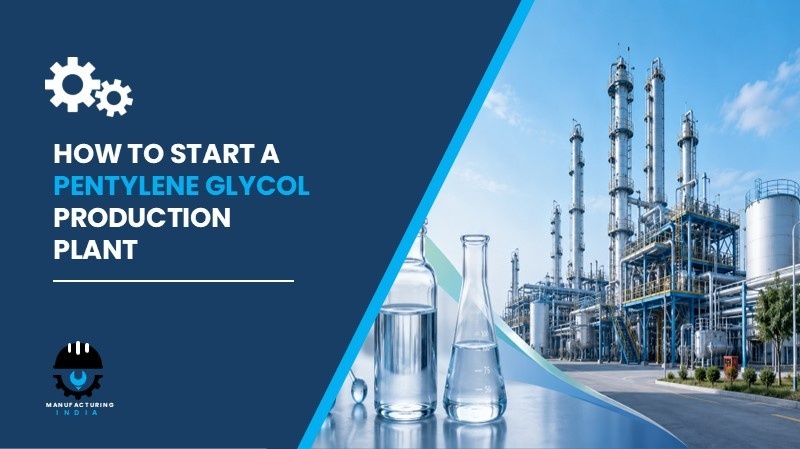
A pentylene glycol production plant setup in India presents a compelling investment case for entrepreneurs looking to tap into the fast-growing cosmetics, personal care, and pharmaceutical value chain. Demand for this multifunctional humectant is driven by rising awareness of skin health and hygiene, alongside a global shift toward paraben-free, mild preservative systems in skincare and haircare formulations. As formulators increasingly seek dependable, high-purity ingredient supply, pentylene glycol has become a critical input across the beauty and wellness sector.
India’s expanding urbanisation, growing middle-class spending on personal care, and the government’s “Make in India” push toward domestic specialty chemical manufacturing make the country a strategically sound base for this production. States such as Gujarat and Maharashtra offer established industrial estates, port connectivity, and skilled process engineering talent, supporting cost-competitive setup and long-term supply chain reliability.
A pentylene glycol production plant combines policy support under domestic manufacturing initiatives, competitive land and labour costs, and steady demand from the cosmetics and pharmaceutical sectors. With gross margins in the 35-45% range and net margins of 18-25%, the business case for this investment rests on strong break-even viability supported by consistent industry demand.
What is Pentylene Glycol?
Pentylene glycol is a versatile, clear, colorless liquid used extensively in skincare, haircare, and cosmetic products. Chemically classified as a 1,2-diol with a five-carbon chain, it functions as a high-performance humectant, attracting and retaining moisture for improved skin hydration and a soft, non-greasy texture. It is used as a sustainable alternative to parabens, acting as a broad-spectrum antimicrobial agent and solvent that strengthens preservative efficacy and stability. It can be derived from plant sources like sugarcane or corn, though a pentylene glycol production plant typically uses synthetic routes for industrial efficiency.
The production process relies on hydrogenation, distillation, and purification as the core unit operations. Pentylene glycol serves end-use industries including personal care, cosmetics, pharmaceuticals, industrial lubricants, textiles, and plastics, applied as a humectant, emollient, solvent, coupling agent, preservative booster, and anti-microbial additive.
Cost of Setting Up a Pentylene Glycol Production Plant in India
The cost of setting up this production plant depends on capacity, technology selection, location, automation level, and regulatory compliance requirements.
1. Capital Expenditure (CapEx)
Capital expenditure for a pentylene glycol production plant covers land and site development, civil works, machinery, and other one-time project costs. Land costs include registration and boundary development charges, and investors can evaluate notified industrial estates or SEZs to streamline approvals. Civil works covers the production shed, quality control lab, storage areas, and administrative block.
Machinery represents the largest single share of capital expenditure. Key machinery required includes:
- Fermentation tanks
- Distillation columns
- Hydrogenation reactors
- Purification units
- Solvent recovery systems
- Packaging machines
Other capital costs include the effluent treatment plant, pre-operative expenses, and commissioning costs.
Request a Sample Report for In-Depth Market Insights: https://www.imarcgroup.com/pentylene-glycol-manufacturing-plant-project-report/requestsample
2. Operational Expenditure (OpEx)
Operating costs are dominated by raw material consumption, particularly glutaric acid, which accounts for approximately 55-65% of total operating expenses. Long-term supplier contracts for glutaric acid help mitigate price volatility and ensure a steady supply for continuous production.
Utility costs, covering electricity, water, and steam, represent approximately 15-20% of OpEx. Other operating costs include transportation, packaging, salaries, maintenance, depreciation, and taxes. Total operational cost is expected to rise over the first five years due to inflation, market fluctuations, and raw material and supply chain volatility.
3. Plant Capacity
The proposed facility is designed with an annual capacity ranging between 5,000 and 15,000 tons, allowing operators to benefit from economies of scale while retaining flexibility. Capacity for a pentylene glycol production plant can be customized based on investor requirements, and profitability generally improves toward the upper end of this range.
4. Profit Margins and Financial Projections
Financial projections are built around capital investment, operating costs, capacity utilisation, pricing trends, and demand outlook, supported by analysis of net present value (NPV), internal rate of return (IRR), and payback period. The project demonstrates healthy profitability under normal operating conditions, with gross profit margins of 35-45% and net profit margins of 18-25%, supported by stable demand and value-added applications.
Why Set Up a Pentylene Glycol Plant in India?
Essential Functional Ingredient Across Multiple Industries: Pentylene glycol is widely used as a humectant, solvent, preservative booster, and skin-conditioning agent in cosmetics, personal care, pharmaceuticals, and specialty chemicals, positioning this production line within the fast-growing beauty and wellness value chain.
Megatrend Alignment with Clean Beauty: Global demand for premium skincare, clean beauty formulations, and multifunctional cosmetic ingredients is expanding rapidly. Pentylene glycol benefits from the shift toward paraben-free, mild preservative systems, while growth in personal care consumption across emerging markets further supports long-term demand.
Policy and Regulatory Tailwinds: Government initiatives supporting domestic specialty chemical manufacturing and value-added chemical exports, including production incentives and “Make in India” style programs, strengthen the business case by encouraging local manufacturing and reducing reliance on imports.
Cost-Competitive, Moderate Entry Barriers: Production requires specialized synthesis processes, high-purity standards, and cosmetic and pharmaceutical-grade compliance. While not as capital-intensive as advanced specialty chemicals, consistent purity and regulatory approvals create entry barriers favouring operators with strong quality systems and India’s competitive land and labour costs.
Active Industry Investment: In September 2025, Symrise announced a new production unit at its Granada, Spain facility dedicated to Hydrolite 5 green, a biobased pentylene glycol from its Cosmetic Ingredients division, aimed at shortening supply chains and fostering reliable global supply – reflecting the capacity expansion underway among global producers.
Local Supply Chain Preference: Cosmetic and pharmaceutical manufacturers increasingly prefer dependable regional suppliers to reduce lead times, ensure traceability, and manage raw material volatility. A local production base offers formulators supply security, quality assurance, and improved responsiveness, supported further by India’s pharmaceutical market, which IBEF projects to grow 7-9% in FY26 on robust domestic demand and product innovation.
Pentylene Glycol Production Process – Step by Step
The pentylene glycol production process uses hydrogenation, distillation, and purification as the primary methods, supported by defined unit operations and quality checks at each stage.
- Raw Material Intake: Glutaric acid and associated feedstocks are received, tested, and staged for processing.
- Hydrogenation: Hydrogenation reactors convert raw material inputs into the intermediate compound under controlled conditions.
- Distillation: Distillation columns separate and refine the reaction output to the required concentration.
- Purification: Purification units remove impurities to meet cosmetic and pharmaceutical-grade purity standards.
- Solvent Recovery: Solvent recovery systems reclaim process solvents for reuse, supporting cost control.
- Quality Assurance: Finished product undergoes technical tests to confirm compliance with formulation requirements.
- Packaging and Dispatch: Packaging machines prepare the finished product for dispatch to end-use industries.
Key Applications
Pentylene glycol serves several end-use industries where its humectant and solvent properties add formulation value.
- Cosmetics & Personal Care: Used as a humectant, solvent, and preservative booster in skincare, haircare, and makeup formulations.
- Pharmaceuticals: Used as a solvent and stabilizing agent in topical medicines, creams, and dermatological formulations.
- Food & Beverage: Used as a flavor carrier, moisture-retaining agent, and formulation aid in certain food-grade applications.
- Industrial & Chemical Processing: Used as an intermediate and solvent in specialty chemicals, coatings, and formulation systems.
Leading Manufacturers
The global pentylene glycol industry is served by several multinational companies with extensive capacities and diverse portfolios. Key players include:
- BASF SE
- Evonik Industries AG
- Lanxess AG
- Symrise AG
- Ashland Global Holdings Inc.
Timeline to Start the Plant
- Feasibility study and project report preparation
- Land acquisition and site development
- Regulatory approvals and environmental clearances
- Factory licence and fire safety compliance
- Machinery procurement and installation
- Raw material supplier agreements and supply chain setup
- Trial production and quality testing
- Commercial production launch
Licences and Regulatory Requirements
Starting a pentylene glycol production unit in India requires several approvals:
- Business registration (Proprietorship, LLP, or Pvt Ltd)
- Factory Licence under the Factories Act
- Environmental Clearance from State Pollution Control Board
- GST Registration
- Fire Safety NOC
- Hazardous/Chemical compliance for process chemicals and reactors
- Effluent Treatment Plant (ETP) operational clearance
- Occupational Health and Safety compliance
Key Challenges to Consider
High Capital Requirements: Machinery costs, including fermentation tanks, distillation columns, and hydrogenation reactors, account for the largest share of capital expenditure, requiring careful funding strategy.
Raw Material Price Volatility: Glutaric acid, which makes up 55-65% of operating costs, is subject to price fluctuations, making long-term supplier contracts essential.
Regulatory Compliance: Cosmetic and pharmaceutical-grade purity standards, environmental clearances, and hazardous chemical handling regulations require ongoing compliance management.
Technology and Purity Standards Pressure: Maintaining consistent purity, formulation compatibility, and global regulatory approvals demands continuous process control.
Competition from Established Players: Global producers such as BASF SE, Evonik Industries AG, Lanxess AG, Symrise AG, and Ashland Global Holdings Inc. have established capacities and diverse portfolios, requiring new entrants to differentiate on quality.
Skilled Manpower: Operating hydrogenation, distillation, and purification systems reliably requires trained process engineers, which can be a constraint in certain locations.
Frequently Asked Questions
1. How much does it cost to set up a pentylene glycol production plant in India?
Total capital expenditure depends on capacity, technology, and location, covering land, civil works, machinery, and other capital costs; detailed CapEx figures are available through a sample report request.
2. Is pentylene glycol production profitable in India in 2026?
Yes, the project demonstrates healthy profitability, with gross profit margins of 35-45% and net profit margins of 18-25% under normal operating conditions.
3. What machinery is required for a pentylene glycol plant in India?
Key machinery includes fermentation tanks, distillation columns, hydrogenation reactors, purification units, solvent recovery systems, and packaging machines.
4. What licences and approvals are required to start a pentylene glycol plant in India?
Requirements include business registration, a Factory Licence, Environmental Clearance, GST Registration, Fire Safety NOC, hazardous chemical compliance, ETP clearance, and occupational health and safety compliance.
5. What raw materials are needed for pentylene glycol production?
Glutaric acid is the primary raw material, accounting for approximately 55-65% of total operating expenses.
6. What are the environmental compliance requirements for a pentylene glycol plant in India?
Plants require Environmental Clearance from the State Pollution Control Board, an operational Effluent Treatment Plant, and ongoing emissions monitoring.
7. What is the best location to set up a pentylene glycol plant in India?
Locations offering easy access to raw materials like glutaric acid, proximity to target markets, robust infrastructure, and zoning compliance are best suited.
8. What is the break-even period for this type of plant in India?
Break-even depends on capacity utilisation, pricing, and cost structure, detailed through payback period and NPV analysis in the project’s financial projections.
9. What government incentives are available for manufacturers in India?
Initiatives supporting domestic specialty chemical manufacturing and value-added exports, including “Make in India” style production incentives, support this investment.
Key Takeaways for Investors
A pentylene glycol production plant offers a compelling opportunity anchored in strong demand from cosmetics, personal care, and pharmaceutical sectors. Financial viability holds across the 5,000-15,000 ton capacity range, with gross margins of 35-45% and net margins of 18-25% supporting a sound investment case. The global pentylene glycol market, valued at USD 300.00 Million in 2025, is projected to reach USD 445.83 Million by 2034 at a CAGR of 4.5%. With clean-beauty megatrend alignment and continued policy support, demand for this facility’s output is positioned to remain sustainable ahead.
About the Author