Polyethylene Bags Manufacturing Plant Setup in India
Setting up a polyethylene bags manufacturing plant in India presents a compelling investment case, driven by the expanding retail and e-commerce sectors, rising demand for flexible packaging, growth in food and industrial packaging applications, and increasing consumption of lightweight and cost-effective plastic materials. Polyethylene bags are critical to India’s economy as they serve as essential packaging solutions across retail, e-commerce, logistics, food and beverage, healthcare, and industrial sectors, ensuring safe storage, transportation, and handling of goods across the supply chain. The global polyethylene bags market, valued at USD 26.00 billion in 2025, is expected to reach USD 50.69 billion by 2034, exhibiting a CAGR of 7.7%.
India’s accelerated urbanization, changing lifestyles, and the government’s “Make in India” initiative provide strong tailwinds for domestic manufacturing. Key manufacturing states such as Gujarat, Maharashtra, Tamil Nadu, and Uttar Pradesh offer established infrastructure and access to raw materials like LDPE/LLDPE/HDPE granules and masterbatch. According to the India Brand Equity Foundation, India’s logistics market would reach 484.43 billion by 2029, growing at a CAGR of 8.8%, further boosting product consumption. With the rise in e-commerce platforms, urbanization, and increasing growth in developing countries, India offers a strategically sound environment for establishing a polyethylene bags manufacturing facility.
India’s polyethylene bags market presents strong investment potential, bolstered by policy support like Make in India, rapid urbanization, and booming retail and e-commerce sectors. With gross margins typically ranging between 20-30% and net margins of 8-15%, investors can achieve healthy profitability and a viable break-even timeline.
What are Polyethylene Bags?
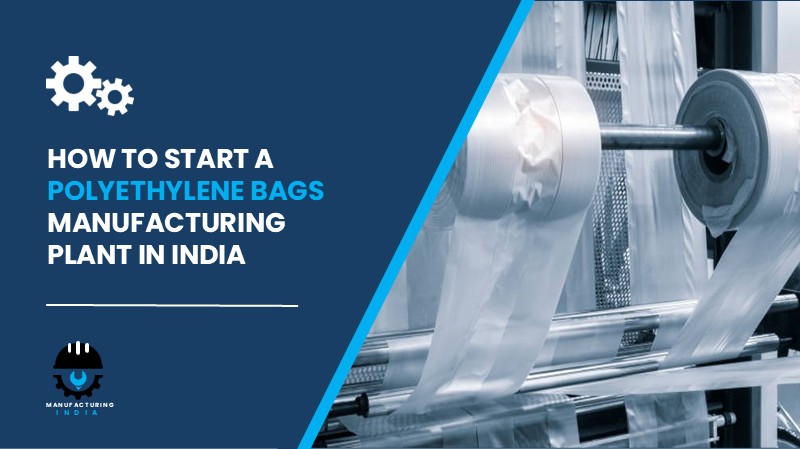
Polyethylene bags are flexible packaging products manufactured from polyethylene resin, a thermoplastic polymer derived from ethylene. Depending on density and molecular structure, polyethylene is classified into low-density polyethylene (LDPE), linear low-density polyethylene (LLDPE), and high-density polyethylene (HDPE), each offering distinct mechanical properties. These bags are lightweight, moisture-resistant, chemically inert, and exhibit good tensile strength and flexibility, making them suitable for packaging, storage, and transportation applications. Additives such as colorants, UV stabilizers, and slip agents are often incorporated to enhance performance characteristics. The polyethylene bags manufacturing process uses raw material procurement, extrusion, film cooling, film winding, cutting & sealing, bag formation, quality inspection, and packaging as the primary production method. Key end-use industries served include retail & supermarket, food & beverage industry, e-commerce & logistics, healthcare, and industrial & agriculture.
Cost of Setting Up a Polyethylene Bags Manufacturing Plant in India
The total cost of setting up a polyethylene bags manufacturing plant in India depends on several critical factors, including plant capacity, technology, location, automation levels, and regulatory compliance requirements.
1. Capital Expenditure (CapEx)
The total capital investment required for establishing a polyethylene bags manufacturing plant covers land acquisition, site preparation, and necessary infrastructure. The location must offer easy access to key raw materials such as LDPE/LLDPE/HDPE granules and masterbatch, with proximity to target markets to help minimize distribution costs. The site must have robust infrastructure, including reliable transportation, utilities, and waste management systems. Machinery costs account for the largest portion of the total capital expenditure. The cost of land and site development, including charges for land registration, boundary development, and other related expenses, forms a substantial part of the overall investment.
Key machinery required includes:
- Blown film extrusion machine
- Air ring & cooling system
- Film winding unit
- Bag cutting & sealing machine
- Punching machine
Other capital costs include civil works (production shed, quality control lab, raw material and finished goods storage, administrative block), effluent treatment systems, and pre-operative and commissioning expenses.
Request a Sample Report for In-Depth Market Insights: https://www.imarcgroup.com/polyethylene-bags-manufacturing-plant-project-report/requestsample
2. Operational Expenditure (OpEx)
The operating cost structure of a polyethylene bags manufacturing plant is primarily driven by raw material consumption, particularly LDPE/LLDPE/HDPE granules, which accounts for approximately 80-85% of total operating expenses (OpEx). Raw materials required include LDPE/LLDPE/HDPE granules and masterbatch. Implementing long-term contracts with reliable suppliers helps mitigate price volatility and ensure consistent supply of materials. Utilities (electricity, water, steam) account for 5-10% of OpEx. Other OpEx components include transportation costs, packaging costs, salaries and wages, repairs and maintenance, depreciation, and taxes. In the first year of operations, the operating cost is projected to be significant. By the fifth year, the total operational cost is expected to increase substantially due to factors such as inflation, market fluctuations, and potential rises in the cost of key materials.
3. Plant Capacity
The proposed manufacturing facility is designed with an annual production capacity ranging between 10,000-50,000 MT, enabling economies of scale while maintaining operational flexibility. Plant capacity can be customized per investor requirements. Profitability improves significantly with higher capacity utilization.
4. Profit Margins and Financial Projections
The project demonstrates healthy profitability potential under normal operating conditions. Gross profit margins typically range between 20-30%, supported by stable demand and value-added applications. Net profit margins are projected at 8-15%. Financial analysis includes comprehensive projections of net present value (NPV), internal rate of return (IRR), payback period, income projections, expenditure projections, and profit and loss accounts.
Why Set Up a Polyethylene Bags Plant in India?
High Market Demand: Continuous growth in retail, e-commerce, and food packaging sectors ensures sustained demand for polyethylene bags globally. The expansion of retail chains and the growth of e-commerce platforms require highly durable and lightweight polyethylene bags.
Growing Product Consumption: Growing product consumption of packaged food items is driving the demand for polyethylene film and bags. The rise in e-commerce platforms, urbanization, and changing lifestyles of people further boost product consumption.
Cost-Effective Production: PE bags can be manufactured at relatively low production costs due to efficient extrusion and automated bag-making technologies. Moisture resistance, chemical stability, and economic advantages are factors boosting the use of polyethylene bags.
Scalable Manufacturing: Production lines can be scaled from small to large capacities with automated systems to meet diverse market requirements. A wide range of bag sizes, thicknesses, and customization options supports diverse end-use industries.
Policy and Regulatory Tailwinds: The “Make in India” initiative and state-level industrial policies encourage domestic manufacturing. Governments may offer incentives such as capital subsidies, tax exemptions, reduced utility tariffs, or interest subsidies to promote manufacturing under various national or regional industrial policies.
Export Potential: Growing international trade and cross-border e-commerce create opportunities for bulk export of polyethylene packaging products. Increasing growth in developing countries and improving logistics and supply chain industries would increase product consumption.
Active Industry Investment: In September 2025, Mitsui and Idemitsu merged their Prime Polymer polyolefin joint venture with Sumitomo Chemical’s polypropylene and linear low-density polyethylene business in Japan. The deal includes the merger of their polyolefin operations, including polypropylene and linear low-density polyethylene used for the production of polyethylene bags. In November 2024, Amcor acquired Berry Global for roughly USD 8.40 billion to create one of the world’s prominent packaging firms, enhancing Amcor’s scale, innovation capabilities, and market reach in polyethylene-based packaging sectors.
Manufacturing Process – Step by Step
The polyethylene bags manufacturing process uses raw material procurement, extrusion, film cooling, film winding, cutting & sealing, bag formation, quality inspection, and packaging as the primary production method.
- Raw Material Procurement: Reliable suppliers must be secured for raw materials, LDPE/LLDPE/HDPE granules and masterbatch, to ensure consistent production quality. Long-term contracts should be negotiated to stabilize pricing and ensure a steady supply.
- Extrusion: LDPE/LLDPE/HDPE granules are fed into a blown film extrusion machine, where they are melted and extruded into a thin film.
- Film Cooling: The extruded film is cooled using an air ring and cooling system to solidify the material.
- Film Winding: The cooled film is wound into rolls using a film winding unit.
- Cutting and Sealing: The film rolls are fed into a bag cutting and sealing machine, where bags are cut to size and sealed.
- Punching: Holes are punched into the bags using a punching machine where required.
- Quality Inspection: Finished bags undergo quality inspection to ensure they meet industry standards for strength, thickness, and seal integrity.
- Packaging: Bags are packaged and dispatched to end-use industries including retail & supermarket, food & beverage industry, e-commerce & logistics, healthcare, and industrial & agriculture.
Key Applications
Polyethylene bags serve a diverse range of industries and applications:
- Retail & Supermarkets: Polyethylene carry bags are widely used for packaging purchased goods due to their lightweight nature and cost efficiency. Custom-printed bags enhance brand visibility.
- Food & Beverage Industry: Used for packaging fresh produce, frozen food items, and bulk ingredients. Food-grade polyethylene ensures safety and moisture protection.
- E-commerce & Logistics: Courier bags and tamper-evident mailing bags provide secure and durable packaging solutions for product shipment.
- Healthcare Sector: Medical waste disposal bags and sterile packaging solutions are manufactured using specialized PE grades to meet regulatory standards.
- Industrial & Agricultural Sector: Heavy-duty PE liners and sacks are used for fertilizer packaging, chemical storage, and protective coverings.
Leading Manufacturers
Leading manufacturers in the global polyethylene bags industry include several multinational companies with extensive production capacities and diverse application portfolios. Key players include:
- Amcor Plc
- Inteplast Group
- Sealed Air Corporation
- Printpack, Inc.
- Coveris AG
These key players serve end-use sectors such as retail & supermarket, food & beverage industry, e-commerce & logistics, healthcare, and industrial & agriculture.
Timeline to Start the Plant
- Feasibility study and project report preparation
- Land acquisition and site development
- Regulatory approvals and environmental clearances
- Factory licence and fire safety compliance
- Machinery procurement and installation
- Raw material supplier agreements and supply chain setup
- Trial production and quality testing
- Commercial production launch
Licences and Regulatory Requirements
Starting a polyethylene bags manufacturing unit in India requires several approvals:
- Business registration (Proprietorship, LLP, or Pvt Ltd)
- Factory Licence under the Factories Act
- Environmental Clearance from State Pollution Control Board
- GST Registration
- Fire Safety NOC
- Effluent Treatment Plant (ETP) operational clearance
- Occupational Health and Safety compliance
- Industry-specific permits for food-grade packaging
Compliance with local zoning laws and environmental regulations must also be ensured.
Key Challenges to Consider
- High Capital Requirements: Machinery costs for blown film extrusion machine, air ring & cooling system, film winding unit, bag cutting & sealing machine, and punching machine represent a significant portion of capital expenditure.
- Raw Material Price Volatility: Fluctuations in prices of LDPE/LLDPE/HDPE granules and masterbatch directly impact margins. Raw materials account for 80-85% of operating expenses.
- Regulatory Compliance: Navigating environmental clearances, factory licences, and pollution control board regulations requires careful planning. Effluent treatment systems are necessary to minimize environmental impact and ensure compliance with emission standards.
- Competition: The market includes established global players such as Amcor Plc, Inteplast Group, Sealed Air Corporation, Printpack, Inc., and Coveris AG.
- Skilled Manpower: Access to skilled workers for operating extrusion, sealing, and quality control equipment is essential.
- Technology and Innovation Pressure: Continuous advancements in extrusion and bag-making technology require ongoing capital reinvestment to remain competitive.
Frequently Asked Questions
- How much does it cost to set up a polyethylene bags manufacturing plant in India?
The total capital investment depends on plant capacity, technology, and location, covering land acquisition, site preparation, infrastructure, and machinery costs. - Is polyethylene bags manufacturing profitable in India in 2026?
Yes, gross profit margins typically range between 20-30%, with net profit margins of 8-15%, indicating healthy profitability potential. - What machinery is required for a polyethylene bags plant in India?
Essential equipment includes a blown film extrusion machine, air ring & cooling system, film winding unit, bag cutting & sealing machine, and punching machine. - What licences and approvals are required to start a polyethylene bags plant in India?
Required approvals include business registration, Factory Licence under the Factories Act, Environmental Clearance from State Pollution Control Board, GST Registration, Fire Safety NOC, and ETP operational clearance. - What raw materials are needed for polyethylene bags manufacturing?
Raw materials required include LDPE/LLDPE/HDPE granules and masterbatch. - What are the environmental compliance requirements for a polyethylene bags plant in India?
Facilities must implement effluent treatment systems, obtain environmental clearance from the State Pollution Control Board, and comply with emission standards. - What is the best location to set up a polyethylene bags plant in India?
The location must offer easy access to key raw materials such as LDPE/LLDPE/HDPE granules and masterbatch, with proximity to target markets to minimize distribution costs. - What is the break-even period for this type of plant in India?
Financial projections including break-even analysis are provided in detailed feasibility reports, with timelines varying based on capacity, utilization rates, and operating efficiencies. - What government incentives are available for manufacturers in India?
Investors benefit from the “Make in India” initiative, state-level industrial policies, and potential incentives such as capital subsidies, tax exemptions, reduced utility tariffs, or interest subsidies.
Key Takeaways for Investors
Setting up a polyethylene bags manufacturing plant in India offers a compelling investment opportunity, driven by strong demand from retail & supermarket, food & beverage, e-commerce & logistics, healthcare, and industrial & agriculture sectors. The project demonstrates healthy financial viability across various plant capacities (10,000-50,000 MT annually), with gross profit margins ranging between 20-30% and net margins of 8-15%. The global polyethylene bags market, valued at USD 26.00 billion in 2025, is expected to reach USD 50.69 billion by 2034, exhibiting a CAGR of 7.7%. With continuous growth in retail, e-commerce, and food packaging sectors, along with increasing urbanization and changing lifestyles, the polyethylene bags industry is poised for continued expansion, making now an opportune time for investors to enter this dynamic market.
About the Author