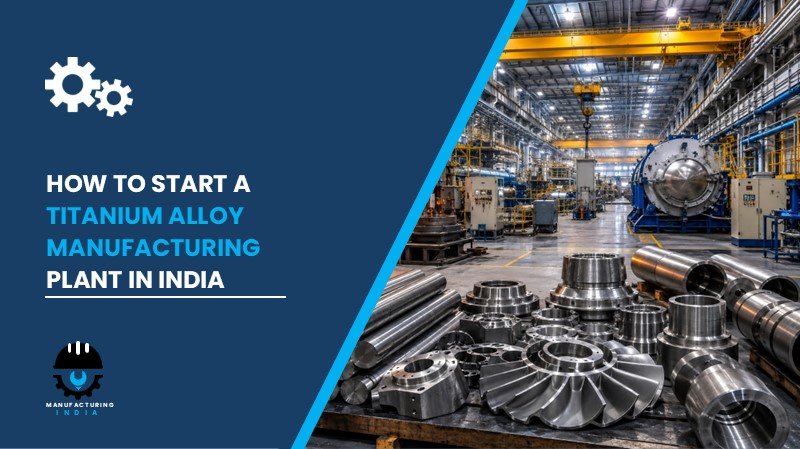
Setting up a titanium alloy manufacturing plant in India presents a compelling investment case for entrepreneurs seeking exposure to the advanced materials and aerospace sector. Demand is driven by aerospace & defense, automotive, medical & healthcare, chemical processing, marine, energy, and industrial equipment industries. Because it offers high tensile strength, low weight, and extreme corrosion resistance, titanium alloy is critical to India’s aerospace, defense, and advanced engineering economy.
India’s expanding aerospace and defense manufacturing base, growing medical device sector, and rising industrial equipment demand make the country a strategically sound base. Government investment in aerospace and defense manufacturing, space programs, and medical infrastructure is strengthening demand for titanium alloy. Localization initiatives encouraging advanced material supply chains further support this venture.
This investment case rests on government investment in aerospace, defense, and advanced transportation infrastructure, cost-competitive access to titanium sponge, aluminum, vanadium, and argon gas feedstock, and consistent demand from aerospace, medical, and industrial sectors. With gross profit margins of 24-34% and net profit margins of 8-16%, the project demonstrates a viable path to break-even and long-term profitability across a range of plant capacities.
What is Titanium Alloy?
A titanium alloy is a metal blend containing a mixture of titanium and other elements like aluminum, vanadium, or molybdenum. These materials offer high tensile strength, low weight, and extreme corrosion resistance, and industrial and scientific definitions classify them by crystal phases.
The titanium alloy manufacturing process relies on melting and alloying of titanium sponge with aluminum and vanadium under an argon inert atmosphere, followed by casting, forging or rolling, heat treatment, and finishing. The end products serve aerospace & defense, automotive, medical & healthcare, chemical processing, marine, energy, and industrial equipment industries.
Cost of Setting Up a Titanium Alloy Manufacturing Plant in India
The total cost of setting up the facility depends on capacity, technology, location, automation level, and regulatory compliance.
1. Capital Expenditure (CapEx)
Capital investment covers land acquisition, site preparation, and infrastructure, and can be planned around an industrial estate or SEZ location. Civil works costs cover the processing shed, laboratory, storage areas, and administrative block. Machinery costs account for the largest portion of total capital expenditure for a titanium alloy manufacturing plant, and equipment must be corrosion-resistant and tailored for this operation.
Key machinery required includes:
- Vacuum arc remelting (VAR) furnaces
- Induction melting furnaces
- Argon gas supply systems
- Casting units
- Forging presses
- Rolling mills
- Heat treatment furnaces
- Machining equipment
- Surface finishing systems
- Inspection/testing equipment
Other capital costs include land registration, boundary development charges, pre-operative expenses, and commissioning costs.
Request a Sample Report for In-Depth Market Insights: https://www.imarcgroup.com/titanium-alloy-manufacturing-plant-project-report/requestsample
2. Operational Expenditure (OpEx)
Raw material cost is the largest component of operating expenditure, with titanium sponge, aluminum, vanadium, and argon gas together accounting for approximately 55-65% of OpEx. Long-term supplier contracts are recommended to mitigate feedstock price volatility.
Utility costs account for approximately 20-28% of OpEx. Other operating costs include transportation, packaging, salaries, maintenance, depreciation, and taxes, rising by the fifth year due to inflation.
3. Plant Capacity
The proposed unit is designed with an annual manufacturing capacity of 5,000-20,000 MT, enabling economies of scale while maintaining operational flexibility. Capacity can be customized per investor requirements, and profitability improves with higher capacity utilisation.
4. Profit Margins and Financial Projections
Financial projections cover capital investment, operating costs, capacity utilisation, pricing trends, and demand outlook, including NPV, IRR, and payback period. Gross profit margins typically range between 24-34%, while net margins range between 8-16%.
Why Set Up a Titanium Alloy Plant in India?
Crucial High-Performance Material. Titanium alloys serve as essential materials for lightweight, high-strength, corrosion-resistant, and heat-resistant applications across aerospace, defense, automotive, medical, chemical processing, and energy industries, positioning them as a critical material for advanced engineering and demanding operating environments.
Moderate to High but Justifiable Entry Barriers. While requiring specialized melting, alloying, forging, and heat-treatment capabilities, stringent material specifications and prolonged qualification requirements create entry hurdles favouring experienced producers.
Megatrend Alignment. The rapid growth of aerospace production, defense modernization, lightweight automotive components, medical implants, and additive manufacturing is driving consistent demand for high-strength, lightweight titanium alloys, reflected in the FAA’s Air Traffic Organization serving more than 44,000 flights daily.
Policy and Infrastructure Push. Government investment in aerospace and defense manufacturing, space programs, advanced transportation, and medical infrastructure supports demand for titanium alloys, while localization initiatives and domestic manufacturing programs encourage the development of advanced material supply chains.
Active Industry Investment. In June 2025, QuesTek Innovations introduced new titanium alloy modeling capabilities within its ICMD (Integrated Computational Materials Design) Software Platform, a cloud-based platform enhanced to meet the evolving needs of materials engineers while reducing risk and accelerating development from concept to qualification.
Localization and Dependability in Supply Chains. OEMs and industrial manufacturers are increasingly favouring local, dependable titanium alloy suppliers to shorten lead times, reduce dependence on overseas sources, and improve supply continuity while meeting stringent material specifications.
Manufacturing Process – Step by Step
The titanium alloy manufacturing process uses melting and alloying of titanium sponge with aluminum and vanadium under an argon inert atmosphere as the primary production method.
- Melting and Alloying: Titanium sponge is melted and alloyed with aluminum and vanadium within vacuum arc remelting (VAR) furnaces and induction melting furnaces under an argon inert atmosphere.
- Casting: Molten alloy is processed through casting units to form ingots or billets.
- Forging or Rolling: Cast material is shaped using forging presses or rolling mills to achieve the required form.
- Heat Treatment: Shaped alloy is processed through heat treatment furnaces to achieve required mechanical properties.
- Machining: Heat-treated material is refined using machining equipment to precise dimensions.
- Surface Finishing: Machined components are treated using surface finishing systems to achieve required surface quality.
- Inspection and Testing: Finished components undergo inspection/testing equipment checks before dispatch to end-use industries.
Key Applications
Titanium alloy serves a wide range of downstream industries.
- Aerospace & Defense: Used in aircraft structures, engine components, landing gear, and missile systems.
- Automotive: Used in engine components, exhaust systems, suspension parts, and high-performance vehicle components.
- Medical: Used in orthopedic implants, dental implants, surgical instruments, and prosthetic components.
- Chemical & Industrial: Used in heat exchangers, pressure vessels, piping systems, and corrosion-resistant equipment.
Leading Manufacturers
Leading manufacturers in the global titanium alloy industry include:
- ATI Inc.
- Carpenter Technology Corporation
- TIMET (Titanium Metals Corporation)
- VSMPO-AVISMA Corporation
Timeline to Start the Plant
- Feasibility study and project report preparation
- Land acquisition and site development
- Regulatory approvals and environmental clearances
- Factory licence and fire safety compliance
- Machinery procurement and installation
- Raw material supplier agreements and supply chain setup
- Trial production and quality testing
- Commercial production launch
Licences and Regulatory Requirements
Starting a titanium alloy manufacturing unit in India requires several approvals:
- Business registration (Proprietorship, LLP, or Pvt Ltd)
- Factory Licence under the Factories Act
- Environmental Clearance from State Pollution Control Board
- GST Registration
- Fire Safety NOC
- Hazardous/Chemical compliance for argon gas and process handling
- Effluent Treatment Plant (ETP) operational clearance
- Occupational Health and Safety compliance
Key Challenges to Consider
High Capital Requirements. Machinery costs, including vacuum arc remelting furnaces, forging presses, and rolling mills, account for the largest share of capital expenditure.
Raw Material Price Volatility. Titanium sponge, aluminum, vanadium, and argon gas prices can fluctuate, and since raw materials account for 55-65% of OpEx, long-term supplier contracts are essential.
Regulatory Compliance. Safety protocols, effluent treatment, and emission standards must be maintained throughout operations.
Competition. Established players such as ATI Inc., Carpenter Technology Corporation, TIMET, and VSMPO-AVISMA Corporation operate with extensive capacities, so new entrants must compete on quality and reliability.
Skilled Manpower. The plant requires trained personnel across melting, forging, heat treatment, and quality assurance functions.
Site Selection Constraints. The location must offer easy access to titanium sponge, aluminum, vanadium, and argon gas feedstock, proximity to target markets, and compliance with zoning and environmental regulations.
Frequently Asked Questions
1. How much does it cost to set up a titanium alloy manufacturing plant in India?
Cost depends on capacity, technology, location, automation, and regulatory compliance, covering land, civil works, machinery, and other capital costs.
2. Is titanium alloy manufacturing profitable in India in 2026?
Yes, the project shows healthy profitability, with gross profit margins of 24-34% and net profit margins of 8-16% under normal operating conditions.
3. What machinery is required for a titanium alloy plant in India?
Key machinery includes vacuum arc remelting (VAR) furnaces, induction melting furnaces, inert gas supply equipment, casting units, forging presses, rolling mills, heat treatment furnaces, machining equipment, surface finishing systems, and inspection/testing equipment.
4. What licences and approvals are required to start a titanium alloy plant in India?
Requirements include business registration, a Factory Licence, Environmental Clearance, GST Registration, Fire Safety NOC, hazardous chemical compliance, ETP clearance, and Occupational Health and Safety compliance.
5. What raw materials are needed for titanium alloy manufacturing?
The primary raw materials are titanium sponge, aluminum, vanadium (as an Al-V master alloy or high-purity vanadium), and argon gas, together accounting for approximately 55-65% of operating expenditure.
6. What are the environmental compliance requirements for a titanium alloy plant in India?
Facilities require Environmental Clearance from the State Pollution Control Board, an operational Effluent Treatment Plant, and advanced monitoring systems for emission compliance.
7. What is the best location to set up a titanium alloy plant in India?
The site should offer easy access to titanium sponge, aluminum, vanadium, and argon gas, proximity to target markets, robust infrastructure, and compliance with zoning and environmental regulations.
8. What is the break-even period for this type of plant in India?
Break-even depends on capital investment, operating costs, and capacity utilisation, assessed through payback period, NPV, and IRR calculations.
9. What government incentives are available for manufacturers in India?
Government investment in aerospace, defense, and advanced transportation infrastructure, along with localization initiatives and domestic manufacturing programs, indirectly supports titanium alloy producers by strengthening demand and encouraging advanced material supply chains.
Key Takeaways for Investors
This investment offers a compelling opportunity backed by consistent demand from the aerospace & defense, automotive, medical & healthcare, chemical processing, marine, energy, and industrial equipment sectors. Financial viability holds across capacities from 5,000 MT to 20,000 MT, with gross margins of 24-34% and net margins of 8-16% supporting steady returns. The global titanium alloy market, valued at USD 5.4 Billion in 2025 and projected to reach USD 8.3 Billion by 2034 at a CAGR of 4.7%, reflects the scale of long-term demand this investment can capture. As aerospace, defense, and medical device demand continue to expand, titanium alloy demand is set to remain sustainable for years to come.
About the Author