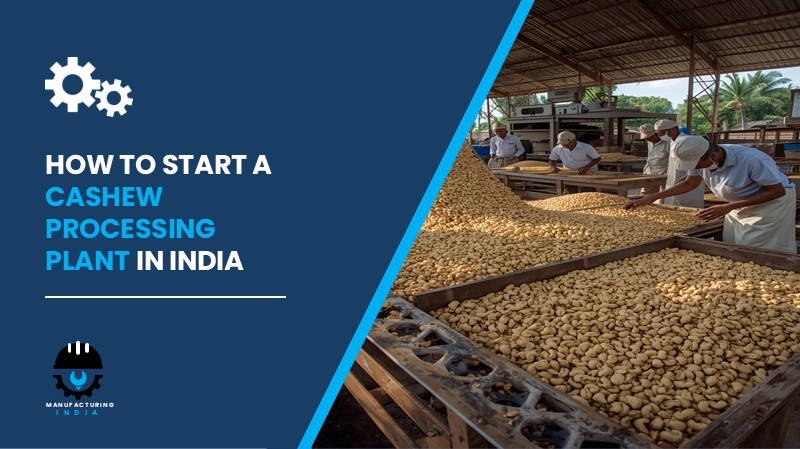
Setting up a cashew processing plant in India presents a compelling investment case, driven by sustained demand from the food and beverages, confectionery, bakery, dairy alternatives, and HoReCa sectors. Cashew kernels have emerged as a critical ingredient across snack foods, plant-based dairy products, and premium confectionery — categories expanding rapidly within India’s evolving consumer economy. As one of the world’s largest cashew producers and exporters, India occupies a strategically unmatched position in the global cashew value chain, making domestic processing both economically logical and commercially rewarding.
India’s advantages as a cashew processing hub are wide-ranging. The country’s urbanisation trajectory, infrastructure development under the Make in India initiative, and government support for agro-based MSME manufacturing create a highly enabling environment for processing investments. States such as Goa, Kerala, Maharashtra, and Odisha offer investors proximity to raw cashew nut supply, established port infrastructure for export, and an experienced workforce. With India’s cashew exports contributing USD 337.14 million in FY25 according to the India Brand Equity Foundation (IBEF), a well-planned cashew processing plant in India is positioned as a sustainable, export-ready enterprise.
India’s cashew processing sector benefits from strong policy support under agro-processing and MSME schemes, cost-competitive manufacturing conditions, and resilient demand from food, confectionery, and plant-based food industries — making a cashew processing plant in India a financially viable investment with gross margins of 15–25% and net margins of 5–10%.
What is Cashew?
Cashew is a tree nut derived from the cashew tree (Anacardium occidentale), originally found in Brazil and now extensively cultivated across India, Vietnam, Africa, and Southeast Asia. The nut is formed alongside the cashew apple — a pear-shaped fruit that can be consumed raw. Cashews are characterised by a creamy texture, slight sweetness, and a rich nutritional profile, delivering healthy fatty acids, proteins, vitamins, and essential minerals including magnesium, zinc, and iron. These properties have established cashews as one of the most preferred nuts globally, consumed directly as snacks or incorporated into diverse culinary and industrial applications.
In processed form, cashew kernels serve a broad range of end uses. Applications include snack foods, sweets, nut butters, vegan cheese, curries, and desserts. The cashew processing process involves cleaning, roasting or steaming, shelling, drying, peeling, grading, and packaging. End-use industries served include food and beverages, confectionery, bakery, dairy alternatives, and HoReCa.
Cost of Setting Up a Cashew Processing Plant in India
The cost of establishing a cashew processing plant in India depends on plant capacity, technology selection, geographic location, automation level, and regulatory compliance requirements.
1. Capital Expenditure (CapEx)
Capital investment in a cashew processing plant covers multiple cost heads. Land and site development — encompassing land registration, boundary development, and site preparation — form a substantial portion of the total investment. Investors may consider locating within Special Economic Zones (SEZs) or designated industrial estates to benefit from concessional land rates and integrated utility infrastructure. Civil works include construction of processing sheds, quality control laboratories, raw material storage areas, finished goods warehousing, and an administrative block.
Machinery and equipment represent the largest single component of capital expenditure. Key machinery required includes:
- Roasters or steamers
- Shelling machines
- Dryers
- Peelers
- Graders
- Packaging systems
Other capital costs include effluent treatment plant (ETP) setup, pre-operative expenses, commissioning charges, and applicable import duties on specialised equipment.
Request a Sample Report for In-Depth Market Insights: https://www.imarcgroup.com/cashew-processing-plant-project-report/requestsample
2. Operational Expenditure (OpEx)
The operating cost structure of this processing unit is primarily driven by raw material consumption. Raw cashew nuts account for approximately 80–85% of total operating expenses, making long-term supplier contracts a critical procurement strategy to mitigate price volatility and ensure consistent supply quality. Utility costs — covering electricity, water, and steam for roasting, steaming, and drying operations — represent a further 5–10% of OpEx. Other operating costs include transportation, packaging, salaries and wages, maintenance, depreciation, and taxes. By the fifth year, total operational costs are projected to increase substantially due to inflation, market fluctuations, and potential rises in the cost of key materials, compounded by supply chain disruptions and shifts in the global economy.
3. Plant Capacity
The proposed cashew processing facility is designed with an annual production capacity of 5,000–10,000 MT, enabling economies of scale while maintaining operational flexibility. Capacity can be customised per investor requirements, market access, and available capital. Profitability improves with higher capacity utilisation as fixed costs are distributed across a larger output volume, reducing per-unit cost and enhancing margin realisation.
4. Profit Margins and Financial Projections
The cashew processing plant demonstrates healthy profitability under normal operating conditions. Gross profit margins range between 15–25%, while net profit margins are projected at 5–10%. Financial projections encompass Net Present Value (NPV), Internal Rate of Return (IRR), payback period, income and expenditure statements, and break-even analysis — together providing a comprehensive view of the project’s long-term financial viability.
Why Set Up a Cashew Processing Plant in India?
Health-Conscious Consumer Demand: Cashews are classified as nutrient-dense foods, and demand is growing from health-conscious consumers and the premium snack sector globally. India’s evolving dietary preferences reinforce this trend domestically, creating sustained offtake for processed cashew kernels across retail and institutional channels.
High-Value Processing Opportunity: Processing raw cashew nuts into kernels significantly enhances margins and transforms commodity nut trading into a value-added manufacturing business. This margin enhancement is central to the investment thesis for cashew processing operations in India.
Export Demand Persistence: Global demand for cashew kernels remains stable, particularly in the United States, Europe, and the Middle East. India’s cashew exports contributed USD 337.14 million in FY25 according to IBEF, reflecting the country’s established export infrastructure and enduring international appetite for Indian-processed cashew.
Plant-Based Food Growth: Changing consumer preferences toward plant-based diets and clean-label food products are significantly boosting cashew kernel consumption. The growing popularity of cashew-based vegan dairy alternatives — including milk, cheese, butter, and cream substitutes — is expanding application areas into high-margin product categories well beyond traditional snack uses.
Policy and Regulatory Tailwinds: Government schemes for food processing, agri-exports, and MSME manufacturing provide financial incentives and infrastructural support for cashew processing investors. The Make in India initiative, combined with agro-based industry promotion policies, positions cashew processing as a sector with active and enduring policy backing.
Active Industry Investment: In September 2025, Gia Bảo Corporation inaugurated a new agricultural and food processing facility in Đồng Nai Province with an annual capacity of 4,000 tonnes, built on a 20,000 sq. m site. In November 2025, Nigeria and Vietnam formalised a strategic MoU at the VINACAS Golden Cashew Rendezvous 2025 in Hanoi to deepen cooperation in cashew processing and trade — reflecting global investor confidence in the cashew processing sector.
Manufacturing Process Step by Step
The cashew processing process uses cleaning, roasting/steaming, shelling, drying, peeling, grading, and packaging as the primary production method. Each stage is a critical unit operation contributing to kernel quality, yield, and final product consistency.
- Cleaning: Raw cashew nuts are thoroughly cleaned using dedicated equipment to remove dust, dirt, and foreign matter before processing begins.
- Roasting or Steaming: Cleaned nuts pass through roasters or steamers to loosen shells and prepare them for efficient shelling.
- Shelling: Shelling machines remove the outer shell, separating the raw kernel from the shell and cashew nut shell liquid (CNSL).
- Drying: Shelled kernels pass through dryers to reduce moisture content to the required level, ensuring product stability and extended shelf life.
- Peeling: Peelers remove the thin testa (skin) from the dried kernel, yielding the final white cashew kernel.
- Grading: Graders sort kernels by size, colour, and quality grade as per export and domestic market specifications.
- Packaging: Graded kernels are vacuum-packed using packaging systems and dispatched to end-use industries in food and beverages, confectionery, bakery, dairy alternatives, and HoReCa.
Key Applications
Cashew kernels serve a wide range of industries, making the cashew processing plant a versatile agro-industrial investment.
- Food and Snacks: Cashew kernels used as roasted, salted, and flavoured snack foods across retail and foodservice channels.
- Confectionery and Bakery: Used in chocolates, sweets, cookies, cakes, and energy bars for texture and flavour enhancement.
- Plant-Based Foods: Key ingredient in vegan milk, cheese, butter, and cream substitutes, serving the rapidly growing dairy alternatives segment.
- Culinary and HoReCa: Used in sauces, desserts, and continental cuisines across hotel, restaurant, and catering sectors.
Leading Manufacturers
The global cashew processing industry features established players across domestic and international markets, serving food and beverages, confectionery, bakery, dairy alternatives, and HoReCa sectors.
- Nutty Yogi
- Aurora Products Inc.
- Divine Foods
- Kalbavi Cashews
- Delphi Organic GmbH
- Royal Dry Fruits Pvt Ltd.
- Lafooco
- Aryan International
Timeline to Start the Plant
- Feasibility study and project report preparation
- Land acquisition and site development
- Regulatory approvals and environmental clearances
- Factory licence and fire safety compliance
- Machinery procurement and installation
- Raw material supplier agreements and supply chain setup
- Trial production and quality testing
- Commercial production launch
Licences and Regulatory Requirements
Starting a cashew processing unit in India requires several approvals:
- Business registration (Proprietorship, LLP, or Pvt Ltd)
- Factory Licence under the Factories Act
- Environmental Clearance from State Pollution Control Board
- GST Registration
- Fire Safety NOC
- Effluent Treatment Plant (ETP) operational clearance
- Occupational Health and Safety compliance
Key Challenges to Consider
High Capital Requirements: Establishing a cashew processing plant involves significant upfront investment across land, civil construction, specialised machinery, and compliance infrastructure. Careful financial planning and access to institutional or government-backed funding are essential to managing this outlay.
Raw Material Price Volatility: Raw cashew nuts represent 80–85% of total operating costs, exposing the plant to global commodity price fluctuations driven by seasonal harvests, supply dynamics from West Africa and India, and currency movements. Long-term supplier contracts are a critical mitigation strategy.
Regulatory Compliance: Food processing operations must navigate multiple regulatory frameworks including environmental clearances, factory act compliance, and effluent treatment requirements — adding to operational complexity and ongoing cost obligations.
Competition: The cashew processing sector includes established players such as Kalbavi Cashews, Nutty Yogi, Royal Dry Fruits Pvt Ltd., and Aryan International. New entrants must differentiate through product quality, export certifications, and reliable supply chain management.
Technology Pressure: Advancements in automated shelling, grading, and packaging are reshaping competitive benchmarks in cashew processing. Investors adopting modern automation gain yield and quality advantages over manual processing operations.
Skilled Manpower: Peeling and grading operations remain labour-intensive. Securing trained workers while progressively integrating automation is a key operational challenge for cashew processing plant operators.
Frequently Asked Questions
1. How much does it cost to set up a cashew processing plant in India?
Total investment depends on capacity, technology, and location. A facility producing 5,000–10,000 MT annually involves costs across land, civil works, and equipment including roasters/steamers, shelling machines, dryers, peelers, graders, and packaging systems. Detailed CapEx figures are available through IMARC Group’s feasibility report.
2. Is cashew processing profitable in India in 2026?
Yes. Gross profit margins of 15–25% and net margins of 5–10%, supported by growing domestic consumption and stable export demand, confirm strong profitability potential for a well-managed cashew processing plant in India.
3. What machinery is required for a cashew processing plant in India?
Key equipment includes roasters or steamers, shelling machines, dryers, peelers, graders, and packaging systems.
4. What licences and approvals are required to start a cashew processing plant in India?
Investors need business registration, a Factory Licence, Environmental Clearance from the State Pollution Control Board, GST registration, Fire Safety NOC, and ETP operational clearance.
5. What raw materials are needed for cashew processing?
Raw cashew nuts are the primary input, accounting for 80–85% of total operating expenses. Securing long-term supply contracts with reliable suppliers is essential for cost stability.
6. What are the environmental compliance requirements for a cashew processing plant in India?
Plants must obtain Environmental Clearance from the State Pollution Control Board, operate a functional Effluent Treatment Plant (ETP), and maintain full occupational health and safety compliance.
7. What is the best location to set up a cashew processing plant in India?
States with strong cashew cultivation and port infrastructure — including Goa, Kerala, Maharashtra, and Odisha — offer strategic advantages in raw material proximity, export access, and availability of a trained processing workforce.
8. What is the break-even period for this type of plant in India?
Break-even timelines depend on capacity utilisation, pricing, and capital structure. IMARC Group’s cashew processing plant project report provides detailed payback period analysis under realistic financial assumptions.
9. What government incentives are available for manufacturers in India?
Government schemes for food processing, agri-exports, and MSME manufacturing provide financial incentives and infrastructural support. The Make in India initiative offers additional policy backing for cashew processing investors.
Key Takeaways for Investors
A cashew processing plant in India represents a well-grounded investment opportunity, supported by resilient demand across food and beverages, confectionery, bakery, dairy alternatives, and HoReCa industries. The project demonstrates financial viability across a range of capacities, with gross profit margins of 15–25% and net margins of 5–10% achievable under standard operating conditions. The global cashew market was valued at USD 7.98 billion in 2025 and is projected to reach USD 11.07 billion by 2034, growing at a CAGR of 3.7%, confirming the long-term demand sustainability of this investment. With India’s proven export credentials, active policy support under agro-processing and MSME schemes, cost-competitive manufacturing environment, and expanding domestic consumption base, a cashew processing plant in India offers investors both near-term profitability and durable long-term strategic relevance.
About the Author