Aluminum Air EV Battery Manufacturing Plant
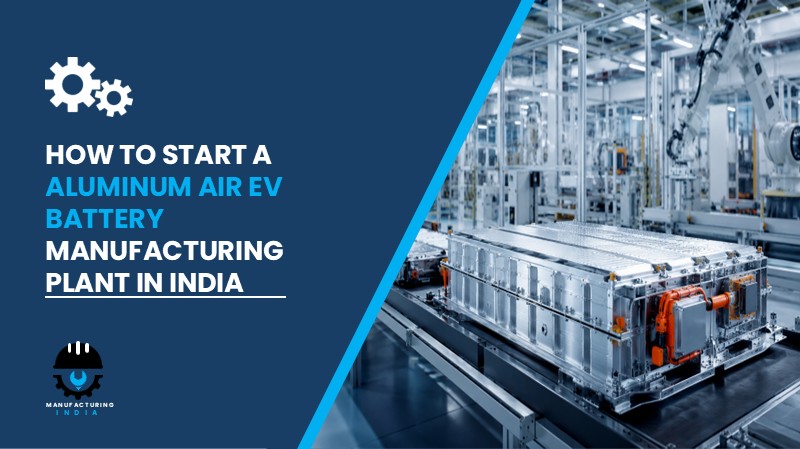
Setting up an aluminum air EV battery manufacturing plant in India presents a compelling investment case of exceptional strategic and commercial importance — one where India’s accelerating electric vehicle adoption, government commitment to clean energy, national aluminium abundance, and the urgent global search for battery technologies that transcend the limitations of lithium-ion chemistry are all converging around a single transformative energy storage solution. Aluminum air EV batteries — the metal-air battery systems that generate electricity through the electrochemical reaction between aluminium and atmospheric oxygen — offer electric vehicle manufacturers and fleet operators a fundamentally different value proposition compared to conventional lithium-ion alternatives: higher energy density, extended driving range, lightweight construction, lower raw material cost, and end-of-life recyclability of the aluminium anode that makes the entire technology cycle genuinely sustainable. As India’s EV market accelerates, its charging infrastructure develops, and its government deploys billions in clean mobility incentives, the case for establishing domestic aluminium air EV battery manufacturing capacity is both commercially timely and strategically critical.
India’s alignment with this technology is both structural and policy-backed. India is one of the world’s largest producers of aluminium, with Hindalco Industries and NALCO operating significant domestic smelting and rolling capacity — providing cost-competitive, domestically sourced access to the primary anode material that defines aluminium air battery production economics. The government’s PM-eBus Sewa Scheme, launched in 2023 with INR 20,000 Crore (USD 2.28 Billion) to deploy 10,000 electric buses through a public-private partnership model, directly creates institutional demand for high-energy-density battery solutions suited to urban public transport fleet operations — precisely the application category where aluminium air batteries’ extended range and lower weight provide their most commercially decisive advantages. The Make in India initiative, Production-Linked Incentive scheme for Advanced Chemistry Cell batteries, and FAME II incentive framework collectively create India’s most supportive ever policy environment for next-generation EV battery manufacturing investment.
Investing in an aluminum air EV battery manufacturing plant in India today aligns India’s aluminium production leadership, INR 20,000 Crore PM-eBus Sewa Scheme, and EV adoption acceleration with a global aluminum air EV battery market growing from USD 95.83 Million in 2025 to USD 304.32 Million by 2034 at an exceptional CAGR of 13.7%. With gross profit margins of 35–50% and net profit margins of 15–30% at an annual capacity of 5,000+ units, the unit economics are commercially strong and the investment’s positioning in next-generation EV battery technology supports extraordinary long-term strategic and financial returns.
What is an Aluminum Air EV Battery?
An aluminum air EV battery is a type of metal-air battery that generates electricity through the electrochemical reaction between aluminium and oxygen from the air. The lightweight batteries maintain cost efficiency while delivering high energy density, which makes them the best choice for electric vehicles that require long-distance travel and grid storage solutions. The battery system includes an aluminium anode and an air cathode together with an electrolyte system that has been designed to achieve maximum operational efficiency, safety measures, and environmental sustainability through recycling.
Aluminium air batteries operate effectively in all electric vehicle categories — including passenger cars, delivery vehicles, and buses — because they provide extended operational time that surpasses the battery performance of standard lithium-ion batteries. The technology is also environmentally friendly because aluminium exists in nature at high levels, lacks toxic properties, and can be recycled — making it a sustainable solution for energy storage and electric mobility that addresses the ethical and environmental concerns associated with lithium, cobalt, and nickel sourcing in conventional EV battery chemistry. The air cathode requires a catalyst such as transition metal oxides or carbon-based catalysts to facilitate the oxygen reduction reaction, while the aluminium anode incorporates alloying elements like tin, zinc, or indium to optimise electrochemical performance and corrosion resistance across operational cycles.
The primary production process covers aluminium sheet processing, electrolyte development, electrode manufacturing, battery cell assembly, quality control, and final packaging. End-use industries served include electric vehicle manufacturers, energy storage providers, transportation fleet operators, and renewable energy system integrators. Applications span automotive EV battery systems, stationary energy storage solutions, hybrid mobility vehicles, and backup power systems.
Cost of Setting Up an Aluminum Air EV Battery Manufacturing Plant in India
The cost of establishing an aluminum air EV battery manufacturing plant in India depends on annual unit production capacity, technology maturity and automation level, electrolyte system design selection, geographic location — particularly proximity to aluminium supply and EV manufacturer customers — and the quality compliance requirements applicable to battery products supplied to automotive OEM and fleet operator customers.
1. Capital Expenditure (CapEx)
Land and Site Development forms a foundational component of total capital investment, covering land acquisition charges, site registration, boundary development, drainage and chemical containment infrastructure for electrolyte handling, and site utilities. The location must offer easy access to key raw materials such as aluminium anode, air cathode catalyst materials, electrolyte, and separator. Proximity to target markets — particularly India’s growing EV manufacturing clusters in Pune, Chennai, Bengaluru, and Gurugram, and the government’s PM-eBus Sewa electric bus deployment cities — will help minimise distribution costs. The site must have robust infrastructure including reliable transportation, utilities, and waste management systems, with compliance with local zoning laws and environmental regulations also ensured.
Plant Layout Optimisation is critical for an aluminium air EV battery manufacturing facility — combining battery manufacturing cleanroom requirements with chemical electrolyte handling, aluminium sheet processing, and precision cell assembly. The layout must be optimised to enhance workflow efficiency, safety, and minimise material handling. Separate areas for raw material storage for aluminium anodes, air cathode catalyst materials, electrolyte solutions, and separators, aluminium sheet preparation, electrode fabrication, electrolyte filling, cell assembly, testing, and finished goods storage must be designated. Space for future expansion must be incorporated to accommodate production scaling as the domestic EV market and PM-eBus deployment volumes grow.
Machinery and Equipment represent the largest single component of total CapEx for an aluminum air EV battery manufacturing plant. Essential equipment includes:
- Aluminium sheet preparation systems
- Coating and electrode fabrication units
- Electrolyte mixers
- Cell assembly lines
- Testing equipment
- Automated packaging systems
Other Capital Costs include an effluent treatment plant (ETP) for managing electrolyte solution waste streams and aluminium processing effluents, advanced monitoring systems to detect leaks or deviations in the cell assembly process, pre-operative expenses, battery product safety certification and testing costs, commissioning charges, and import duties on specialised electrode fabrication or electrolyte filling equipment not available domestically.
Request a Sample Report for In-Depth Market Insights: https://www.imarcgroup.com/aluminum-air-ev-battery-manufacturing-plant-project-report/requestsample
2. Operational Expenditure (OpEx)
Raw Material Cost is the dominant operational expense, accounting for approximately 50–60% of total OpEx. The primary raw materials are aluminium anode, air cathode, electrolyte, and separator. The aluminium anode — as the electrochemically active material consumed during battery operation and the primary determinant of the battery’s energy capacity and discharge characteristics — drives the majority of raw material cost. India’s domestic aluminium production through Hindalco Industries and NALCO provides a competitive cost advantage over battery chemistries that rely on imported critical minerals such as lithium, cobalt, and nickel. The air cathode with its catalyst coating, electrolyte solution, and separator material complete the primary material bill. Long-term contracts with reliable suppliers for all raw materials are essential to stabilise pricing and ensure a steady supply across production cycles.
Utility Cost is the second-largest OpEx component, representing approximately 15–25% of total operating expenses — a relatively elevated proportion reflecting the energy requirements of aluminium sheet processing, electrolyte preparation, electrode coating operations, and cell assembly line climate control. Electricity for fabrication equipment and precision environmental control of the assembly environment, along with process water for electrolyte preparation, constitutes the primary utility input. Optimising energy consumption across the production process, particularly in aluminium sheet preparation and coating operations, is an important lever for improving facility economics.
Other Operating Costs include transportation and distribution to EV manufacturers, electric bus fleet operators, energy storage system integrators, and renewable energy project developers, specialised packaging materials for finished battery units, salaries and wages for electrochemical engineers and battery assembly technicians, routine machinery maintenance, depreciation on production equipment, and applicable taxes. By the fifth year, the total operational cost is expected to increase substantially due to factors such as inflation, market fluctuations, and potential rises in the cost of key materials. Additional factors, including supply chain disruptions, rising consumer demand, and shifts in the global economy, are expected to contribute to this increase.
3. Plant Capacity
The proposed manufacturing facility is designed with an annual production capacity of 5,000+ units, enabling economies of scale while maintaining operational flexibility to serve EV manufacturer customers, electric bus fleet operators, stationary energy storage system integrators, and hybrid vehicle platform developers across India’s growing clean energy and mobility sectors. Plant capacity can be customised per investor requirements and scaled through additional cell assembly lines and electrode fabrication capacity as EV customer qualification milestones and government fleet procurement contract volumes grow. Profitability improves with higher capacity utilisation, making secured supply agreements with EV manufacturers or government fleet programme implementers a strategic commercial foundation from the outset.
4. Profit Margins and Financial Projections
The financial projections for an aluminum air EV battery manufacturing plant demonstrate healthy profitability potential under normal operating conditions. Gross profit margins typically range between 35–50%, supported by stable and growing demand from EV manufacturers, electric bus fleet operators, and energy storage system integrators. Net profit margins are projected at 15–30% — among the strongest financial performance profiles in the advanced battery manufacturing segment. Break-even in an aluminium air EV battery manufacturing business typically ranges from 3 to 6 years, depending on scale, regulatory compliance costs, raw material pricing, and market demand. Efficient manufacturing and export opportunities can help accelerate returns. A comprehensive financial analysis covering NPV (net present value), IRR (internal rate of return), payback period, and five-year projections is essential before committing capital.
Why Set Up an Aluminum Air EV Battery Plant in India?
Accelerating EV Adoption and Government Clean Mobility Investment. The increasing adoption of electric vehicles, together with strict emission regulations, creates a need for battery solutions that provide both high performance and low costs. India’s Ministry of Housing and Urban Affairs launched the PM-eBus Sewa Scheme in 2023, with INR 20,000 Crore (USD 2.28 Billion) to deploy 10,000 electric buses through a PPP model. By July 2025, 7,293 e-buses were sanctioned across 14 states and 4 union territories — a government-funded procurement programme that directly creates institutional demand for high-energy-density, extended-range battery solutions suited to urban public transport operations where aluminium air technology’s range advantage is most commercially decisive.
High Energy Density and Lightweight Advantage Over Lithium-Ion. Aluminium air batteries provide better energy density than standard lithium-ion batteries, which results in extended driving range for electric vehicles. This performance advantage is particularly relevant for long-haul delivery vehicles, intercity buses, and heavy transport applications where lithium-ion batteries’ weight and range limitations impose practical constraints on commercial viability. As India’s EV adoption expands beyond personal passenger vehicles into commercial fleet applications, the demand for battery technologies with superior range-to-weight ratios will grow structurally.
Sustainability, Recyclability, and India’s Aluminium Resource Advantage. The technology achieves sustainable development because aluminium exists in large quantities and has environmental benefits, and it can be recycled — making aluminium air batteries a strategically superior solution from both supply chain security and environmental sustainability perspectives. India’s position as a major aluminium producer gives domestic aluminium air battery manufacturers a raw material cost advantage that no lithium-ion battery producer can replicate, since India holds no significant lithium reserves and relies entirely on imports for that critical mineral.
Scalable Production Potential and Market Demand Growth at 13.7% CAGR. The global aluminum air EV battery market, valued at USD 95.83 Million in 2025, is expected to reach USD 304.32 Million by 2034, exhibiting a CAGR of 13.7% — one of the highest growth rates across any EV battery technology category. The manufacturing processes enable production capacity to increase, which results in better market demand fulfilment while keeping costs down. The expansion of electric vehicle markets, together with renewable energy sectors, produces strong demand for aluminium air batteries that will continue structurally as both technology maturity and commercial deployment scale advance.
Active Global R&D and Commercial Development Confirming Technology Momentum. In December 2025, Graphene Manufacturing Group (GMG) unveiled a graphene aluminium-ion battery prototype capable of fully charging in about 6 minutes and delivering higher power density than conventional lithium-ion batteries — using a graphene cathode and aluminium anode and advancing toward commercial applications in consumer electronics and energy storage. In February 2025, the New York Power Authority and Israeli clean energy company Phinergy secured a USD 1.5 Million U.S. grant from the BIRD Foundation to demonstrate an emergency generator alternative using aluminium air technology — part of five Israel-U.S. projects awarded USD 7.5 Million under BIRD Energy. These investments signal the accelerating global commercialisation momentum of aluminium air battery technology that makes establishing production capacity in India today a strategically timed decision.
Cheaper and More Available Alternative to Lithium-Ion. The industry is expanding because there is more raw material supply, better battery performance technology, and cheaper alternatives to lithium-ion batteries are available. As EV manufacturers seek to reduce battery costs and vehicle prices to accelerate mass-market adoption, aluminium air battery technology’s cost advantage from cheaper and more abundant raw materials provides a commercial value proposition that strengthens with each improvement in manufacturing scale and process efficiency — a virtuous cycle that makes early production capacity establishment strategically valuable.
Manufacturing Process — Step by Step
The aluminum air EV battery manufacturing process uses aluminium sheet processing, electrolyte development, electrode manufacturing, battery cell assembly, quality control, and final packaging as the primary production method. Each stage requires precisely controlled material purity, dimensional accuracy, coating uniformity, and electrochemical performance verification to deliver aluminium air battery units meeting the voltage, capacity, safety, and operational reliability specifications required by EV manufacturer and fleet operator customers.
- Aluminium Anode Preparation: High-purity aluminium sheets or plates with the specified alloy composition — incorporating tin, zinc, or indium alloying additions to optimise electrochemical reactivity and corrosion resistance — are processed through aluminium sheet preparation systems including precision cutting, surface preparation, and quality inspection to produce anode plates of the specified dimensions and surface quality required for consistent electrochemical performance.
- Air Cathode Fabrication: Air cathode components are produced through coating and electrode fabrication units, where catalyst materials — transition metal oxides or carbon-based catalysts for the oxygen reduction reaction — are applied to conductive substrate materials in controlled coating thickness and uniformity, then dried and formed into the geometric configuration required for optimal oxygen access and current collection in the assembled cell.
- Electrolyte Development and Preparation: Aqueous or non-aqueous electrolyte solutions are formulated in electrolyte mixers at controlled concentration, temperature, and pH to achieve the conductivity, viscosity, and corrosion inhibitor content specifications that define the battery’s electrochemical performance and aluminium anode consumption characteristics during discharge.
- Separator Preparation: Separator materials providing ionic conductivity while maintaining electronic insulation and physical separation between anode and cathode are cut and prepared to the specified dimensions for cell assembly.
- Cell Assembly: Aluminium anode plates, air cathodes, electrolyte, and separators are assembled in the specified layered configuration on cell assembly lines under controlled conditions, with precise alignment, electrolyte filling at the specified volume and concentration, and cell sealing to prevent electrolyte leakage and maintain the controlled air access to the cathode required for efficient oxygen reduction.
- Sealing and Enclosure: Assembled battery cells are sealed using appropriate sealing equipment and enclosed in protective battery casing structures with terminal connections, electrolyte management systems, and any battery management electronics required for the target EV application.
- Testing and Quality Control: Completed battery units are subjected to comprehensive testing at testing equipment stations covering open circuit voltage measurement, discharge capacity testing at specified current rates, internal resistance measurement, electrolyte leakage inspection, dimensional compliance, and safety function verification — ensuring specification compliance before release for packaging.
- Final Packaging: Specification-compliant aluminium air EV battery units are packaged using automated packaging systems with appropriate protective materials and labelled with technical specifications, batch traceability, and safety information before dispatch to electric vehicle manufacturers, energy storage providers, transportation fleet operators, and renewable energy system integrators.
Key Applications
Aluminum air EV batteries manufactured in India serve commercially important and rapidly growing applications across the electric mobility and energy storage ecosystem:
- Electric Vehicle Manufacturing: Aluminium air batteries deliver lightweight energy storage solutions that enable electric vehicles to achieve extended range and enhanced operational efficiency — the primary commercial application driving global market growth.
- Energy Storage Solutions: Large stationary battery systems function as energy storage solutions, enabling renewable energy sources to be integrated into the power grid while maintaining grid reliability across solar and wind generation intermittency cycles.
- Transport Fleet Operators: The operational expenses of electric vehicles in fleets decrease because of reduced battery expenses and extended operational timeframes — making aluminium air technology commercially attractive for the electric bus and commercial delivery fleet segments targeted by India’s PM-eBus Sewa Scheme.
- Hybrid and Auxiliary Vehicles: The technology provides dependable backup systems and hybrid transportation solutions that use renewable energy storage systems, broadening the addressable application base beyond pure-electric vehicles.
Leading Manufacturers
The global aluminum air EV battery industry is served by a group of specialist technology companies and large diversified corporations with production capabilities and R&D investment across EV, stationary storage, and auxiliary power applications. Key players in the global market include:
- Phinergy
- Fuji Pigment Co., Ltd.
- Alcoa Corporation
- Aluminum Corporation of China Limited
- Xinjiang Joinworld Co., Ltd.
Timeline to Start the Plant
Establishing an aluminum air EV battery manufacturing plant in India involves a structured multi-phase development sequence. Usually, the timeline can range from 12 to 24 months to start this type of plant, depending on factors like site development, machinery installation, environmental clearances, safety measures, and trial runs. Investors should plan for the following phases:
- Feasibility study and project report preparation
- Land acquisition and site development
- Regulatory approvals and environmental clearances
- Factory licence and fire safety compliance
- Machinery procurement and installation
- Raw material supplier agreements and supply chain setup
- Trial production and quality testing
- Commercial production launch
Licences and Regulatory Requirements
Starting an aluminum air EV battery manufacturing unit in India requires several approvals spanning business registration, battery product safety, chemical handling, environmental, and EV industry compliance domains:
- Business registration (Proprietorship, LLP, or Pvt Ltd)
- Factory Licence under the Factories Act
- Environmental Clearance from the State Pollution Control Board
- GST Registration
- Fire Safety NOC
- Battery product safety certification under AIS 038 (Rev. 2) and other applicable automotive component safety standards for batteries supplied to EV manufacturers
- Hazardous/Chemical compliance applicable to electrolyte solution handling and aluminium processing under the Manufacture, Storage and Import of Hazardous Chemical (MSIHC) Rules
- Effluent Treatment Plant (ETP) operational clearance for managing electrolyte waste streams and aluminium processing effluents
- Occupational Health and Safety compliance
Key Challenges to Consider
Technology Maturity and Commercial Deployment Scale. While aluminium air battery technology is commercially proven in specific applications — including emergency power and stationary storage — its broad deployment in passenger EV applications is still in accelerating development compared to the mature lithium-ion supply chain ecosystem. New manufacturers must invest in process development, cell performance validation, and EV manufacturer qualification programmes that require significant pre-commercial revenue investment and technical risk management.
High Capital Requirements for Battery Manufacturing Infrastructure. Establishing an aluminium air EV battery manufacturing plant at the 5,000+ unit annual capacity required for commercial-scale economics demands significant capital investment in aluminium sheet preparation, electrode fabrication, cell assembly, and comprehensive testing infrastructure. Equipment procurement lead times and the specialised nature of battery manufacturing machinery extend construction-to-commissioning timelines that must be planned carefully against market development projections.
Electrolyte Management and Anode Replacement Economics. Aluminium air batteries are primary batteries — they consume the aluminium anode during discharge rather than recharging it — meaning the battery’s operational economics depend on efficient aluminium anode replacement logistics and the value recovery achieved through aluminium recycling from spent anodes. Building the anode replacement service network and recycling infrastructure alongside manufacturing capacity is essential for realising the full commercial value proposition of this technology category.
EV Manufacturer Qualification Cycles. Supplying aluminium air EV batteries to automotive OEM customers requires passage through rigorous battery qualification and vehicle integration processes covering electrochemical performance validation, safety testing, and long-term reliability demonstration. These qualification cycles can extend 18–36 months and require engineering partnership investment with EV manufacturers before production supply agreements are confirmed.
Competition from Established Lithium-Ion Ecosystem. The competitive landscape is dominated by the established lithium-ion battery ecosystem with massive production scale, falling costs, mature supply chains, and deeply embedded vehicle integration. Aluminium air battery producers must clearly demonstrate their range and weight advantages in target applications where lithium-ion’s limitations are commercially decisive — focusing initial market development on long-range fleet vehicles, electric buses, and stationary storage rather than competing directly in the high-volume short-range passenger vehicle segment.
Skilled Electrochemical Engineering Workforce. Maintaining consistent aluminium anode quality, electrolyte formulation, electrode coating uniformity, and cell assembly precision requires electrochemical engineers, battery materials specialists, and precision assembly technicians — a highly specialised technical workforce requiring ongoing investment in recruitment, university collaboration, and retention programmes.
Frequently Asked Questions
1. How much does it cost to set up an aluminum air EV battery manufacturing plant in India?
Capital requirements generally include land acquisition, construction, equipment procurement, installation, pre-operative expenses, and initial working capital. Equipment costs — including aluminium sheet preparation systems, coating and electrode fabrication units, electrolyte mixers, cell assembly lines, testing equipment, and automated packaging systems — represent a significant portion of capital expenditure. The total amount varies with capacity, technology, and location. A detailed project report with full CapEx and OpEx breakdowns is available on request.
2. Is aluminum air EV battery manufacturing profitable in India in 2026?
Yes. The project demonstrates gross profit margins of 35–50% and net profit margins of 15–30% under normal operating conditions, supported by growing demand from EV manufacturers and fleet operators, India’s PM-eBus Sewa Scheme creating 10,000 electric bus procurement demand, and the global aluminum air EV battery market’s exceptional 13.7% CAGR growth from USD 95.83 Million in 2025 to USD 304.32 Million by 2034.
3. What machinery is required for an aluminum air EV battery plant in India?
Key machinery includes aluminium sheet preparation systems, coating and electrode fabrication units, electrolyte mixers, cell assembly lines, testing equipment, and automated packaging systems. Cell assembly lines and testing equipment are the most technically critical equipment categories, determining production throughput, battery performance consistency, and safety compliance across each production batch.
4. What licences and approvals are required to start an aluminum air EV battery plant in India?
Required approvals include business registration, a Factory Licence under the Factories Act, Environmental Clearance from the State Pollution Control Board, GST registration, a Fire Safety NOC, battery product safety certification under AIS 038 (Rev. 2) for automotive supply, MSIHC Rules compliance for electrolyte chemical handling, ETP operational clearance, and Occupational Health and Safety compliance.
5. What raw materials are needed for aluminum air EV battery manufacturing?
The primary raw materials are aluminium anode, air cathode with catalyst coating, electrolyte solution, and separator. Aluminium anode accounts for approximately 50–60% of total operating expenses, with India’s domestic aluminium production through Hindalco and NALCO providing a competitive cost advantage that makes aluminium air battery manufacturing economics particularly favourable in the Indian context.
6. What are the environmental compliance requirements for an aluminum air EV battery plant in India? The unit must obtain Environmental Clearance from the State Pollution Control Board, operate a certified ETP for managing electrolyte waste streams and aluminium processing effluents, implement advanced monitoring systems to detect leaks or deviations in the cell assembly process, and maintain monitoring systems for wastewater discharge and air emissions in line with applicable state pollution control standards.
7. What is the best location to set up an aluminum air EV battery plant in India?
Optimal locations offer proximity to aluminium supply from domestic producers, reliable high-capacity electricity supply, access to EV manufacturer customer clusters, and logistics connectivity for battery distribution. Electronics and advanced manufacturing zones in Pune, Chennai, Bengaluru, and Gurugram — India’s primary EV manufacturing clusters — alongside locations with proximity to Hindalco or NALCO aluminium supply are among the most strategically relevant options.
8. What is the break-even period for this type of plant in India?
Break-even in an aluminium air EV battery manufacturing business typically ranges from 3 to 6 years, depending on scale, regulatory compliance costs, raw material pricing, and market demand. Efficient manufacturing, domestic aluminium cost advantage, and export opportunities can help accelerate returns beyond base case projections.
9. What government incentives are available for manufacturers in India?
Governments may offer incentives such as capital subsidies, tax exemptions, reduced utility tariffs, export benefits, or interest subsidies to promote manufacturing under various national or regional industrial policies. India’s PLI scheme for Advanced Chemistry Cell batteries, FAME II EV adoption incentives, and PM-eBus Sewa Scheme creating 10,000 electric bus procurement demand collectively constitute the most supportive government incentive framework for EV battery manufacturing investment in India’s history.
Key Takeaways for Investors
An aluminum air EV battery manufacturing plant in India represents a commercially compelling and strategically pre-emptive investment in a next-generation EV battery technology positioned at the intersection of India’s aluminium production leadership, government EV adoption incentive programmes — including the INR 20,000 Crore PM-eBus Sewa Scheme — and a global market growing at a 13.7% CAGR from USD 95.83 Million in 2025 to USD 304.32 Million by 2034. The project demonstrates strong financial viability at annual production capacities of 5,000+ units, with gross profit margins of 35–50% and net profit margins of 15–30% confirming highly attractive unit economics driven by the significant value-added conversion of aluminium anode, air cathode, and electrolyte materials into a complete, performance-validated EV energy storage system. With Graphene Manufacturing Group’s December 2025 aluminium-based battery prototype achieving 6-minute full charging at higher power density than lithium-ion, Phinergy’s February 2025 BIRD Foundation-backed emergency generator demonstration confirming commercial progress, and India’s EV market accelerating on the strength of government fleet programmes and rising consumer adoption, demand sustainability for India-based aluminum air EV battery manufacturing is structurally robust, policy-anchored, and represents one of the most strategically consequential next-generation technology manufacturing investments available in the Indian market today.
About the Author