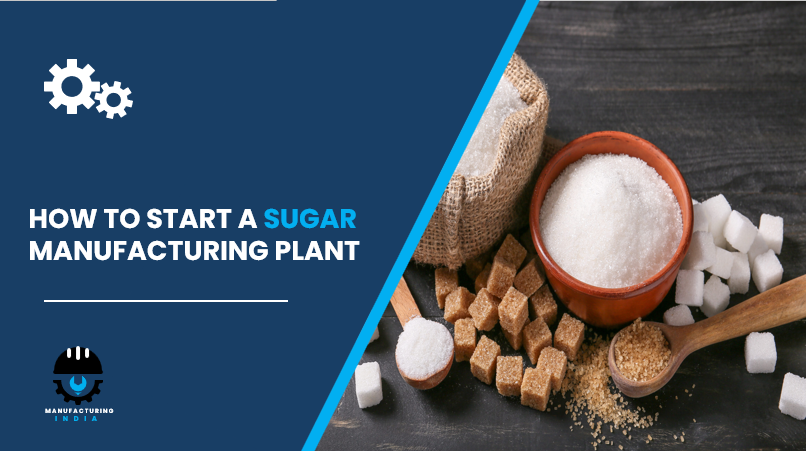
Setting up a sugar manufacturing plant in India presents a compelling investment case rooted in the country’s position as one of the world’s largest producers and consumers of sugar, sustained demand from the food and beverage, pharmaceutical, cosmetics, and chemical industries, and the growing strategic importance of sugarcane as a feedstock for bioethanol production. Sugar — a water-soluble, sweet-tasting crystalline compound composed primarily of fructose and glucose derived from sugarcane — is a fundamental ingredient in food products ranging from confectionery, baked goods, and beverages to pharmaceutical syrups and personal care formulations. As India’s food manufacturing market is projected to grow from USD 307 Billion in 2023 to USD 700 Billion by 2030 according to IBEF, the demand pipeline for domestically produced sugar across industrial and consumer applications continues to expand at a significant scale.
India’s structural advantages for this investment are unmatched within Asia. The country is the world’s second-largest producer of sugarcane, with dedicated cultivation belts in Uttar Pradesh, Maharashtra, Karnataka, and Tamil Nadu providing reliable and cost-competitive raw material access directly adjacent to established mill locations. The government’s agricultural subsidy programmes for sugarcane cultivation, policy support for bioethanol blending, and export-oriented sugar sector initiatives create a favourable operating environment for new and expanding production units. With the global sugar market valued at 198.56 million tonnes in 2025 and projected to reach 224.23 million tonnes by 2034 at a CAGR of 1.4%, the demand trajectory is steady and diversified across food, pharmaceutical, and biofuel applications — making India an undeniably strategic base for this production.
India’s sugar manufacturing investment is supported by government agricultural subsidies, policy tailwinds for bioethanol, and consistent demand from food and beverage, pharmaceutical, cosmetic, and chemical sectors. Gross margins of 20–30% and net margins of 8–12%, combined with a diversified multi-industry off-take base, make this facility type a financially sound and long-term viable investment across a range of production capacities.
What is Sugar?
Sugar refers to a general name for water-soluble, sweet-tasting crystalline compounds that serve as major energy suppliers to all life forms. Chemically, the compounds referred to as sugars are primarily monosaccharide or disaccharide compounds, comprising elements such as fructose and glucose present in monosaccharides and disaccharides — including those derived from sugarcane and sugar beet. The sugarcane-based production route, which is dominant in India, involves extracting sucrose-rich juice from the cane stalk and processing it through a sequence of milling, juice extraction, crystallisation, and refining to produce white or raw sugar in crystalline form.
The end-use industries served by a sugar manufacturing plant span food and beverage, pharmaceutical, cosmetics, and chemical sectors. Key applications include use in food products such as confectionery, baked goods, and beverages; pharmaceuticals including syrups and medications; cosmetics and personal care products; and chemical applications such as fermentation feedstocks and bioethanol production — the last of which is increasingly important to India’s renewable energy agenda.
Cost of Setting Up a Sugar Manufacturing Plant in India
The total cost of establishing a sugar manufacturing plant in India depends on production capacity, technology selection, geographic location, degree of automation, proximity to sugarcane growing zones, and regulatory compliance requirements. Investors must plan comprehensively across both capital expenditure (CapEx) and operational expenditure (OpEx) horizons to develop an accurate and bankable financial model for this unit.
1. Capital Expenditure (CapEx)
Land and site development costs form a substantial part of the overall capital investment, covering land registration, boundary development, drainage, cane carrier infrastructure, and related site preparatory works. Locating the facility within or adjacent to a major sugarcane cultivation belt — such as western Uttar Pradesh or the Marathwada region of Maharashtra — significantly reduces inbound raw material transport costs and is a critical determinant of operational profitability. Civil works and construction costs cover the main mill house, boiling house, clarification and evaporation building, crystalliser and centrifuge hall, bagging and dispatch area, process chemical storage, quality control laboratory, and administrative block.
Machinery and equipment represent the single largest component of capital expenditure for this type of plant. Key machinery required includes:
- Cane crushers and beet diffusers
- Clarifiers and evaporators
- Vacuum pans and crystallisers
- Centrifuges
- Refining columns and dryers
Other capital costs include effluent treatment plant (ETP) setup for mill effluents and press mud management, pre-operative and project development expenses, commissioning charges, boiler and co-generation infrastructure where bagasse is used as fuel, and import duties applicable to precision process control or automation equipment procured from international suppliers.
Request a Sample Report for In-Depth Market Insights: https://www.imarcgroup.com/sugar-manufacturing-plant-project-report/requestsample
2. Operational Expenditure (OpEx)
Raw material cost is the dominant operational driver. Sugarcane — the primary feedstock — accounts for approximately 70–80% of total OpEx. Establishing long-term procurement arrangements with local farmer collectives and cane development associations, consistent with the state-mandated Fair and Remunerative Price (FRP) framework, is essential for ensuring consistent feedstock supply and managing input cost predictability across crushing seasons. Process chemicals including lime for clarification, sulfur for sulfitation, phosphoric acid, and flocculants add to direct material costs but represent a smaller share of the overall input cost structure. Bagasse — the cane fibre by-product — serves as the primary boiler fuel, substantially reducing purchased energy costs. Packaging in jute or PP bags adds further operational expenditure. Utility costs covering residual electricity, water, and steam (above self-generation from bagasse) account for 10–15% of OpEx.
Other ongoing operational costs include transportation and logistics for inbound cane and outbound sugar in jute or PP bags, salaries and wages for mill workers, boiler operators, and quality control staff, routine maintenance of crushers, centrifuges, and evaporator systems, depreciation on civil and mechanical assets, and applicable taxes and levies including sugar cess where applicable. By the fifth year of operations, total operational cost is expected to increase substantially, driven by inflation, market fluctuations, sugarcane price revisions, supply chain disruptions, and shifts in the global sugar and biofuel economy.
3. Plant Capacity
The proposed manufacturing facility as described on the source page is designed with an annual production capacity ranging between 100,000 and 200,000 metric tonnes (MT) of sugar — a scale that enables meaningful economies of scale while maintaining operational flexibility to adapt to seasonal crushing volumes and market demand cycles. Capacity can be customised per investor requirements depending on available capital, land access, cane catchment area size, and target market. Profitability improves meaningfully with higher capacity utilisation, as the fixed costs of mill house infrastructure, boiling house equipment, and civil assets are distributed across a larger volume of finished sugar output.
4. Profit Margins and Financial Projections
The sugar manufacturing plant demonstrates steady profitability under normal operating conditions. Gross profit margins typically range between 20–30%, supported by stable demand and diversified off-take across food, pharmaceutical, cosmetics, and chemical buyer segments. Net profit margins average 8–12% over a five-year projection horizon. A comprehensive financial model should incorporate NPV (Net Present Value), IRR (Internal Rate of Return), payback period analysis, gross and net margin tracking by operating year, and sensitivity analysis around sugarcane price variations, sugar selling price cycles, and government export quota policies. This level of financial rigour is essential for securing term loans from nationalised banks, working capital facilities, or equity investment in the production unit.
Why Set Up a Sugar Manufacturing Plant in India?
Crucial Ingredient Across Multiple High-Demand Industries. Sugar serves as a fundamental ingredient in food and beverages, pharmaceuticals, and chemical applications — positioning it as an essential product for both everyday consumption and industrial use. This multi-industry demand base ensures that a well-run sugar manufacturing plant in India maintains diversified revenue streams that are not solely dependent on any single end-use sector’s performance cycle.
Growing Demand from India’s Expanding Food Manufacturing Market. The food manufacturing market in India is projected to grow from USD 307 Billion in 2023 to USD 700 Billion by 2030 according to IBEF, creating a rapidly expanding domestic demand pipeline for sugar as an ingredient across confectionery, bakery, beverages, and packaged food categories. Indian manufacturers are well placed to supply this growing industrial buyer base with locally produced sugar at a logistics cost advantage over imported supply.
Bioethanol and Biofuel Demand Creating New Revenue Streams. The increased demand for bioethanol obtained from sugar as an alternative source of energy is providing a new commercial dimension to sugar manufacturing. India’s ethanol blending programme — which mandates progressive increases in the ethanol content of petrol — is creating a structured government-backed off-take channel for sugar mills that integrate distillery operations, directly improving revenue diversification and margin stability for integrated producers.
Megatrend Alignment with Processed Food and Beverage Growth in Asia. The growing demand for processed foods, packaged beverages, and sweetener-based products in emerging markets — particularly across Asia-Pacific — is providing the sugar industry with stable and expanding downstream demand. India sits at the centre of this regional consumption growth, benefiting from both domestic demand and its role as a major exporter to neighbouring markets.
Policy and Agricultural Infrastructure Support. Government policies regarding agricultural subsidies for sugarcane cultivation, support for renewable energy through bioethanol blending mandates, and export promotion frameworks provide a supportive operating environment for sugar manufacturing units in India. Improvements in production technology and energy efficiency, including the widespread use of bagasse for cogeneration, are also adding new dimensions of cost-effectiveness to sugar manufacturing operations.
Active Global Investment Confirming Sector Momentum. In December 2025, Sucro and GAICO Construction and General Services Inc. executed a joint venture agreement to form Demerara Sugar Refinery Inc., targeting development of a white sugar refinery at Wales, West Bank Demerara, Guyana, with capital costs estimated at USD 20 million. This active greenfield investment in sugar refining infrastructure by established global players confirms continued private sector confidence in the long-term commercial viability of the sugar production business.
Manufacturing Process – Step by Step
The sugar manufacturing process uses milling, juice extraction, crystallisation, and refining as the primary production method — a multi-stage thermal and chemical processing sequence that converts raw sugarcane into commercial-grade white or refined sugar.
- Cane Reception and Preparation: Harvested sugarcane is received at the mill via cane carrier drives, weighed, and cleaned. Cane is shredded and prepared for juice extraction using preliminary knives and shredders to maximise surface area for milling.
- Milling and Juice Extraction: Prepared cane is fed through cane crushers to extract the sucrose-rich juice. Multiple mill tandems progressively squeeze the crushed cane, and imbibition water is added to maximise sugar extraction. The residual fibre — bagasse — is collected for use as boiler fuel.
- Juice Clarification: Extracted raw juice is treated with lime and subjected to sulfitation using sulfur to raise pH, precipitate impurities, and improve colour. The juice passes through clarifiers where suspended solids and mud settle or are removed using flocculants, producing a cleaner, clarified juice for evaporation.
- Evaporation: Clarified juice is concentrated in a multiple-effect evaporator system to produce a thick syrup known as massecuite by progressively reducing water content using steam heating, significantly reducing the energy cost per unit of water removed.
- Crystallisation (Vacuum Pans): Concentrated syrup is further processed in vacuum pans and crystallisers under reduced pressure and controlled temperature conditions to induce and grow sugar crystals of the specified size and purity within the massecuite.
- Centrifugation: Massecuite containing sugar crystals and molasses is loaded into centrifuges that spin at high speed to separate the sugar crystals from the surrounding molasses mother liquor. Crystals are washed with water or steam to improve colour and purity.
- Refining and Drying: Separated crystals are processed through refining columns and dryers to achieve the final white sugar specification — removing remaining colour bodies, adjusting moisture content, and producing free-flowing, commercially packaged sugar.
- Packaging and Dispatch: Finished sugar is packed into jute or PP bags on bagging lines, weighed, sealed, and dispatched to buyers in the food and beverage, pharmaceutical, cosmetics, and chemical sectors.
Key Applications
A sugar manufacturing plant serves a broad range of industries requiring crystalline sucrose as a primary ingredient or industrial feedstock. Key applications include:
- Food and Beverage: Confectionery, baked goods, beverages, jams, sauces, and dairy products requiring sugar as a primary sweetening and preserving ingredient.
- Pharmaceutical: Syrups, tablet coatings, oral suspensions, and medications where sugar serves as an excipient, sweetener, and carrier.
- Cosmetics and Personal Care: Personal care products including scrubs, lip balms, and moisturisers where sugar functions as a humectant and exfoliant ingredient.
- Chemical and Biofuel: Fermentation feedstocks for bioethanol production, chemical synthesis, and industrial fermentation applications supporting India’s renewable energy blending mandates.
Leading Manufacturers
The global sugar industry is served by several large-scale manufacturers with extensive production capacities and multi-industry application portfolios. Key players in the sector include:
- Illovo Sugar
- Tate & Lyle
- Associated British Foods
- Wilmar International
- Südzucker AG
Timeline to Start the Plant
- Feasibility study and project report preparation
- Land acquisition and site development
- Regulatory approvals and environmental clearances
- Factory licence and fire safety compliance
- Machinery procurement and installation
- Raw material supplier agreements and supply chain setup
- Trial production and quality testing
- Commercial production launch
Licences and Regulatory Requirements
Starting a sugar manufacturing unit in India requires several approvals:
- Business registration (Proprietorship, LLP, or Pvt Ltd)
- Factory Licence under the Factories Act
- Environmental Clearance from the State Pollution Control Board
- GST Registration
- Fire Safety NOC
- FSSAI (Food Safety and Standards Authority of India) licence for food-grade sugar production and packaging
- Compliance with the Sugarcane (Control) Order and state-level cane area reservation and supply regulations
- Effluent Treatment Plant (ETP) operational clearance for mill effluent and press mud management
- Occupational Health and Safety compliance
Key Challenges to Consider
High Capital Requirements. Establishing a sugar manufacturing plant at the scale of 100,000–200,000 MT per year requires substantial investment in mill house equipment including cane crushers, vacuum pans, crystallisers, centrifuges, and evaporators, as well as food-grade civil infrastructure and boiler systems — a capital commitment that demands disciplined project finance structuring and long-term debt management.
Raw Material Price and Supply Volatility. Sugarcane — accounting for 70–80% of OpEx — is subject to seasonal availability constraints, state-mandated Fair and Remunerative Price revisions, weather-related crop yield variability, and competition for cane supply among mills in the same catchment area. Managing cane procurement risk through farmer development programmes and advance supply agreements is a critical operational priority.
Regulatory and Government Policy Sensitivity. India’s sugar sector is one of the most extensively regulated agricultural industries, with government controls on cane prices, sugar release quotas, export permissions, and levy sugar obligations affecting revenue realisation and operational flexibility. Changes in government policy — including ethanol blending mandates and export quota adjustments — directly impact plant economics.
Seasonal Production Cycle Management. Sugar manufacturing in India is tied to the crushing season, typically running from October to April. Managing cash flow, working capital, and finished goods inventory across the off-season while maintaining plant readiness and workforce retention requires careful financial planning and treasury management.
Competition from Established Players. The presence of large integrated sugar manufacturers including Illovo Sugar, Wilmar International, Associated British Foods, Tate and Lyle, and Südzucker AG, alongside India’s own extensive domestic mill network, means that new entrants must compete on operational efficiency, product quality consistency, and strategic positioning near captive cane supply zones.
Skilled Manpower for Integrated Mill Operations. Operating vacuum pans, centrifuges, evaporator systems, and process chemistry controls requires trained chemical engineers, boiler operators, instrumentation technicians, and quality assurance staff — a skilled workforce that must be recruited, trained to food safety standards, and retained across crushing and off-season periods.
Frequently Asked Questions
1. How much does it cost to set up a sugar manufacturing plant in India?
Total setup cost depends on production capacity, technology selection, location relative to cane growing zones, and automation level. Capital investment covers land acquisition, civil works for the mill house and boiling house, machinery including cane crushers, clarifiers, evaporators, vacuum pans, crystallisers, centrifuges, and refining columns, ETP setup, boiler infrastructure, pre-operative expenses, and initial working capital. The IMARC project report provides a detailed CapEx breakdown for a facility producing 100,000–200,000 MT per year.
2. Is sugar manufacturing profitable in India in 2026?
Yes. Gross profit margins of 20–30% and net margins of 8–12% indicate solid profitability for well-located and efficiently managed facilities. India’s growing food manufacturing sector, government bioethanol blending mandates, and consistent industrial demand from pharmaceutical and chemical buyers support sustained revenue generation across the production year.
3. What machinery is required for a sugar manufacturing plant in India?
Key equipment includes cane crushers and beet diffusers, clarifiers and evaporators, vacuum pans and crystallisers, centrifuges, and refining columns and dryers.
4. What licences and approvals are required to start a sugar manufacturing plant in India?
Required approvals include business registration, a Factory Licence, Environmental Clearance from the State Pollution Control Board, GST Registration, a Fire Safety NOC, FSSAI food manufacturing licence, compliance with the Sugarcane (Control) Order, ETP operational clearance, and Occupational Health and Safety compliance.
5. What raw materials are needed for sugar manufacturing?
The primary raw material is sugarcane. Process chemicals include lime for clarification, sulfur for sulfitation, phosphoric acid, and flocculants. Bagasse — the cane fibre by-product — serves as the primary boiler fuel, and jute or PP bags are used for finished product packaging.
6. What are the environmental compliance requirements for a sugar manufacturing plant in India?
The facility must obtain Environmental Clearance from the State Pollution Control Board, operate a certified Effluent Treatment Plant for mill effluents and process wastewater, manage press mud and molasses by-products in compliance with hazardous waste rules, and maintain boiler emission standards for bagasse combustion.
7. What is the best location to set up a sugar manufacturing plant in India?
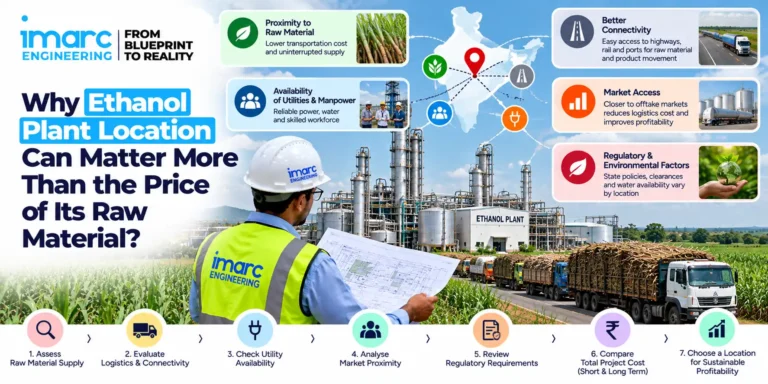
States with large sugarcane cultivation areas including Uttar Pradesh, Maharashtra, Karnataka, and Tamil Nadu offer the strongest location advantages due to proximity to raw material supply, existing mill infrastructure, skilled agricultural and processing workforces, and state government policies supportive of the sugar sector. Western Uttar Pradesh and the Marathwada region of Maharashtra are particularly established corridors for sugar mill investment.
8. What is the break-even period for this type of plant in India?
Break-even period depends on installed capacity, capacity utilisation during the crushing season, sugarcane procurement costs, sugar selling price, and byproduct revenue from molasses and bagasse. A detailed payback period and NPV analysis, as included in the IMARC project report, provides project-specific projections based on realistic operating and revenue assumptions.
9. What government incentives are available for manufacturers in India?
India’s agricultural subsidy programmes for sugarcane cultivation, the national bioethanol blending mandate creating structured demand for distillery-integrated mills, APEDA export promotion for sugar, Pradhan Mantri Kisan Samman Nidhi (PM-KISAN) support for cane farmers, and state-level industrial investment incentives are among the policy frameworks that benefit sugar manufacturing investors. Specific incentive structures should be confirmed with state sugar directorates and the Ministry of Food Processing Industries.
Key Takeaways for Investors
The sugar manufacturing plant investment opportunity in India is underpinned by deep structural demand from food and beverage, pharmaceutical, cosmetics, and chemical industries — all sectors requiring crystalline sugar at consistent quality and large scale. The facility demonstrates financial viability across its target production range of 100,000 to 200,000 MT per year, with gross profit margins of 20–30% and net margins of 8–12% supporting a clear return on investment horizon. With the global sugar market projected to grow from 198.56 million tonnes in 2025 to 224.23 million tonnes by 2034 at a CAGR of 1.4%, and India’s own food manufacturing market on a trajectory toward USD 700 Billion by 2030, domestic demand visibility for this investment is both long-term and policy-supported. Investors who secure production capacity close to established sugarcane belts — and who integrate bioethanol distillery operations to capitalise on India’s renewable fuel blending mandates — are positioned to maximise revenue diversification and margin resilience across the full commercial life of the facility.
About the Author