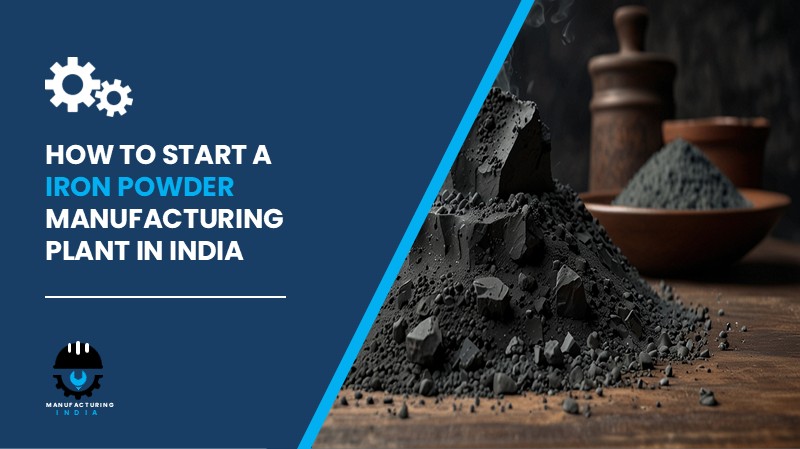
Setting up an iron powder manufacturing plant in India presents a compelling investment case driven by the country’s rapidly expanding automotive sector, growing aerospace manufacturing ambitions, accelerating adoption of powder metallurgy processes, and the emergence of 3D printing and additive manufacturing as commercially significant industrial technologies. Iron powder — finely powdered iron produced through atomisation, reduction of iron ore, or electrolysis — serves as a critical raw material for manufacturing precision components in automotive, aerospace, electronics, chemical processing, and energy storage applications. Its versatility across such a broad range of high-growth end-use industries, combined with India’s abundant iron ore reserves and established steel industry infrastructure, makes the country one of the most strategically sound locations in the world for building dedicated iron powder production capacity at commercial scale.
India’s structural advantages make it ideally placed to develop a strong domestic iron powder industry. The country holds some of the world’s largest iron ore reserves, concentrated in states such as Odisha, Jharkhand, Chhattisgarh, and Karnataka, providing cost-competitive access to the dominant raw material input. The Make in India initiative and Production-Linked Incentive (PLI) schemes for automotive components and advanced materials are actively supporting the development of precision materials manufacturing infrastructure, while India’s growing powder metallurgy sector — supplying sintered gears, bushings, and bearings to domestic and export vehicle manufacturers — creates an immediate and expanding customer base for domestically produced iron powder. Industrial estates in Odisha, Jharkhand, Gujarat, and Maharashtra offer the land, logistics connectivity, power infrastructure, and regulatory frameworks that a technically sophisticated iron powder plant requires to operate efficiently and competitively.
Investing in an iron powder manufacturing plant in India today aligns abundant domestic iron ore availability, growing powder metallurgy demand from automotive and aerospace OEMs, and emerging opportunities in additive manufacturing and battery components with strong policy support under Make in India. With gross profit margins of 25–35% and net profit margins of 12–18%, the unit economics are compelling, and the facility’s scalable production model — designed for annual capacities of 5,000 to 15,000 MT — supports commercially viable returns across a well-defined multi-year investment horizon.
What is Iron Powder?
Iron powder is finely powdered iron, typically produced through methods such as atomisation, reduction of iron ore, or electrolysis. It is widely used in powder metallurgy, where it serves as a raw material for manufacturing components in automotive, aerospace, and industrial applications with a level of geometric complexity and dimensional precision that conventional casting or forging cannot achieve economically. Iron powder also finds applications in sintering, magnetic materials, battery manufacturing, and chemical processing.
The product is available in various grades — including reduced, sponge, and atomised forms — each characterised by specific particle size, density, and purity profiles that determine its suitability for particular end-use applications. Reduced iron powder, produced through hydrogen reduction of iron ore, is widely used in powder metallurgy and magnetic applications. Sponge iron powder is used in welding and some metallurgical applications. Atomised iron powder, produced by water or gas atomisation of molten iron, is preferred for high-performance powder metallurgy and additive manufacturing applications requiring tight particle size control and high purity. The product’s versatility makes it an essential material in industries requiring precise, high-performance materials for complex component manufacturing.
The production process covers iron ore reduction, atomisation, reduction via hydrogen, grinding or milling, screening for particle size control, and packaging. End-use industries served include automotive, aerospace, electronics, powder metallurgy, chemical manufacturing, and energy. Applications span manufacturing of powder metallurgy parts, magnetic materials, chemical catalysts and additives, 3D printing and additive manufacturing, battery components and electrode production, and welding and cutting applications.
Cost of Setting Up an Iron Powder Manufacturing Plant in India
The cost of establishing an iron powder manufacturing plant in India depends on plant capacity, production technology selection between atomisation and reduction processes, raw material sourcing strategy, geographic location, degree of automation, and the safety and environmental compliance requirements applicable to iron ore processing and hydrogen handling operations.
1. Capital Expenditure (CapEx)
Land and Site Development forms a foundational component of total capital investment, covering land acquisition charges, site registration, boundary development, drainage and containment infrastructure, and site utilities. Investors may explore industrial estates and special economic zones in iron ore-rich states such as Odisha and Jharkhand, where proximity to iron ore supply chains substantially reduces inbound logistics costs for the dominant raw material input and land acquisition is facilitated through state industrial promotion agencies with mining and heavy industry experience.
Civil Works and Construction cover the main production building housing reduction furnaces and atomisation systems, raw material storage facilities for iron ore, scrap, and hydrogen supply infrastructure, a quality control laboratory equipped for particle size analysis, purity measurement, and density testing, finished goods warehousing for packaged iron powder in moisture-controlled conditions, an administrative block, and utilities infrastructure including high-capacity electrical supply for furnace operations and gas handling systems for hydrogen reduction processes.
Machinery and Equipment represent the largest single component of total CapEx for an iron powder manufacturing plant. Key machinery required includes:
- Atomisation equipment
- Reduction furnaces
- Grinding and milling machines
- Sifting and sieving systems
- Packaging lines
Other Capital Costs include an effluent treatment plant (ETP) for managing process water and any acid-washing effluents, dust collection and containment systems for iron powder handling, hydrogen gas safety infrastructure including leak detection and ventilation systems, pre-operative expenses, commissioning charges, and import duties on specialised water atomisation or gas atomisation equipment not available through domestic machinery suppliers.
Request a Sample Report for In-Depth Market Insights: https://www.imarcgroup.com/iron-powder-manufacturing-plant-project-report/requestsample
2. Operational Expenditure (OpEx)
Raw Material Cost is the dominant operational expense, accounting for approximately 70–80% of total OpEx. The primary raw materials are iron ore or scrap and reducing gas, specifically hydrogen. Iron ore and scrap — as the ferrous feedstock consumed in the largest volumes — drive the majority of input cost, with pricing tied to domestic and global iron ore markets and secondary steel scrap availability. Hydrogen, used as the reducing atmosphere in the reduction furnace process, is a significant secondary input whose cost and supply reliability depend on the production method and local industrial gas availability. Long-term procurement contracts with reliable suppliers for both iron ore and hydrogen are strongly advisable to stabilise production economics and protect margins against commodity price volatility.
Utility Cost is the second-largest OpEx component, representing 15–20% of total operating expenses — a higher proportion than many other manufacturing processes, reflecting the energy intensity of reduction furnace operations, atomisation systems, and grinding and milling equipment. Electricity, natural gas or hydrogen fuel for furnace heating, and process water for water atomisation operations are the primary utility inputs requiring careful site infrastructure planning and tariff negotiation.
Other Operating Costs include transportation and distribution to powder metallurgy, automotive, aerospace, electronics, chemical, and energy storage customers, moisture-controlled packaging materials for iron powder preservation, salaries and wages for furnace operators, quality control metallurgists, and process engineers, routine machinery maintenance including furnace refractory upkeep and atomisation nozzle replacement, depreciation on high-value production equipment, and applicable taxes. By the fifth year of operations, total operational costs are projected to increase substantially due to inflation, market fluctuations, potential rises in iron ore and hydrogen prices, supply chain disruptions, rising customer demand, and shifts in the global economy — factors that must be carefully incorporated into the five-year financial planning model.
3. Plant Capacity
The proposed manufacturing facility for an iron powder plant is designed with an annual production capacity ranging between 5,000 and 15,000 metric tonnes, enabling economies of scale while maintaining the operational flexibility to serve a diversified customer base across powder metallurgy, automotive sintered parts, aerospace components, electronics, chemical manufacturing, and energy storage applications. Plant capacity can be customised per investor requirements and phased in line with market demand growth and secured customer volumes. Profitability improves meaningfully with higher capacity utilisation, making long-term supply agreements with powder metallurgy components manufacturers, automotive OEM tier-1 suppliers, or additive manufacturing service providers a strategic commercial foundation for the investment.
4. Profit Margins and Financial Projections
The financial projections for an iron powder manufacturing plant demonstrate healthy profitability potential under normal operating conditions. Gross profit margins typically range between 25–35%, supported by stable multi-sector demand and the value-added performance properties — particle size precision, purity grade, and density consistency — that higher-specification iron powder grades command relative to their raw material cost. Net profit margins are projected at 12–18%, reflecting the meaningful value addition achieved through the conversion of iron ore feedstock into precision-graded industrial powder. A comprehensive financial analysis covering NPV (net present value), IRR (internal rate of return), payback period, gross margin progression, and net margin development across a five-year horizon is essential before committing capital. The project’s ROI profile and long-term sustainability are assessed against realistic assumptions on capital investment, production capacity utilisation, iron ore and hydrogen pricing trends, and demand outlook from the automotive, aerospace, electronics, powder metallurgy, chemical manufacturing, and energy end-use sectors.
Why Set Up an Iron Powder Plant in India?
High and Growing Demand in Powder Metallurgy Across Automotive and Aerospace. The increasing adoption of powder metallurgy to produce complex and durable components in automotive, aerospace, and industrial applications is a primary structural driver of iron powder demand. A typical U.S. light-duty vehicle contains approximately 35 pounds of powder metallurgy parts, with pickup trucks containing 55 pounds, driving sustained demand for iron powder as a key PM production material. Additionally, an estimated 1.5 billion PM hot-forged connecting rods have been manufactured for light-duty vehicles in the U.S., Europe, and Japan, while commercial aircraft engines contain 1,500–4,400 pounds of PM superalloy extruded forgings per engine — each data point illustrating the enormous and growing scale of iron powder consumption in precision component manufacturing that Indian producers can participate in.
Emerging Opportunities in 3D Printing and Additive Manufacturing. Iron powder’s ability to provide high precision in manufacturing processes, along with its cost-effectiveness, makes it increasingly popular in 3D printing and additive manufacturing applications. As India’s advanced manufacturing sector develops and additive manufacturing adoption grows across aerospace, defence, and industrial equipment sectors, the demand for high-quality atomised iron powder suitable for metal printing applications is emerging as a significant incremental growth layer beyond traditional powder metallurgy.
Battery Components and Energy Storage Expansion. Iron powder is used in the creation of anodes, cathodes, and electrode components for batteries and fuel cells, positioning it within India’s rapidly expanding energy storage and electric vehicle battery ecosystem. As domestic battery manufacturing scales under government incentive frameworks, the demand for iron powder as an electrode material input creates a forward-looking application segment with strong growth potential.
Global Innovation Momentum in Iron Powder Technology. In September 2025, Metalot@Work held a landmark demonstration of Holon 0 — the world’s first complete iron powder chain demonstration — at the Future Energy Lab in Budel, connecting innovators, industry leaders, and governments to advance the energy transition through iron powder-based energy systems. In January 2024, JFE Steel Corporation successfully utilised its insulation-coated pure-iron powder Denjiro to design and test an axial-gap motor that delivers the same power as larger radial-gap motors while being 48% thinner and 40% lighter — demonstrating the performance innovation frontiers that high-specification iron powder enables across electric motor applications.
Versatility Across Multiple High-Growth Industries. Iron powder’s wide range of applications — from automotive sintered parts and magnetic inductors to chemical catalysts, hydrogen production, and welding applications — ensures demand diversification across multiple industrial sectors that grow in different economic cycles, reducing the investment’s exposure to single-sector demand volatility. This multi-sector applicability is a commercially distinctive feature of iron powder relative to more application-specific advanced materials.
Cost-Competitive Production with Domestic Raw Material Access. India’s abundant iron ore reserves in Odisha, Jharkhand, Chhattisgarh, and Karnataka provide cost-competitive access to the dominant raw material input, while an established secondary steel scrap market offers an alternative feedstock channel for certain powder grades. Production in India means import dependence for domestic powder metallurgy and electronics manufacturers can be reduced, supply chains stabilised, and local industrial specifications met directly — giving domestic producers clear commercial advantages over import-dependent buyers.
Manufacturing Process — Step by Step
The iron powder manufacturing process uses iron ore reduction, atomisation, reduction via hydrogen, grinding or milling, screening for particle size control, and packaging as the primary production method. Each stage requires precisely controlled process parameters and quality assurance to deliver iron powder of the specified particle size distribution, purity, density, and surface characteristics required by powder metallurgy, additive manufacturing, electronics, and chemical end-use customers.
- Iron Ore Preparation and Crushing: Raw iron ore or scrap feedstock is received, inspected for grade and composition, crushed using ore crushers, and ground using grinders or ball mills to reduce particle size in preparation for reduction or atomisation processing.
- Reduction Process (Hydrogen Reduction): Prepared iron ore is loaded into reduction furnaces operating under a controlled hydrogen atmosphere, where the reducing gas reacts with iron oxide at elevated temperatures to produce metallic iron sponge by removing oxygen from the ore. Process temperature, gas flow rate, and residence time are precisely controlled to achieve the target degree of reduction and carbon content.
- Atomisation: Alternatively or additionally, molten iron produced from high-purity scrap or refined iron is processed through atomisation equipment — water atomisation or gas atomisation — where high-pressure water or gas jets disintegrate the molten iron stream into fine droplets that solidify into iron powder particles with controlled size and morphology.
- Cooling and Collection: Reduced sponge or atomised powder is cooled under inert or controlled atmosphere conditions to prevent re-oxidation, then collected and transferred for particle size processing.
- Grinding and Milling: Collected iron powder is processed through grinding and milling machines to break up agglomerates and reduce particle size to the target distribution range for the intended end-use application grade.
- Sifting and Sieving for Particle Size Control: Milled powder is passed through sifting and sieving systems to separate the powder into particle size fractions, with on-specification fractions retained for packaging and off-specification fractions recycled through the milling stage.
- Quality Inspection: Finished iron powder undergoes laboratory testing for particle size distribution, apparent density, flow rate, purity, carbon content, and surface oxide levels, ensuring specification conformance across reduced, sponge, and atomised grades before release for packaging.
- Packaging: Inspected iron powder is filled into moisture-protected bags or drums using packaging lines for dispatch to automotive powder metallurgy, aerospace, electronics, chemical manufacturing, additive manufacturing, and energy storage customers.
Key Applications
Iron powder manufactured in India serves a commercially broad and technically demanding range of applications across multiple industries:
- Automotive: Used in the production of sintered parts including gears, bushings, and bearings, providing lightweight, high-strength materials that reduce vehicle weight and improve fuel efficiency.
- Aerospace: Utilised in the manufacturing of aerospace components including gears, turbine blades, and structural parts requiring high precision and consistent material properties.
- Electronics: Used in the production of magnetic components including inductors and transformers, essential for efficient electrical systems and power electronics in consumer, industrial, and automotive electronic assemblies.
- Powder Metallurgy (PM): A key material in PM processes to produce complex parts with high precision for machinery, tools, and equipment across multiple industrial sectors.
- Chemical Manufacturing: Used as a catalyst in various chemical processes including the production of hydrogen, ammonia, and other industrial chemicals.
- Energy and Batteries: Used in the creation of anodes and cathodes for batteries, fuel cells, and other energy storage systems, including emerging iron-based battery technologies.
Leading Manufacturers
The global iron powder industry is served by a group of large multinational corporations with extensive production capacities and diversified application portfolios across powder metallurgy, automotive, aerospace, and electronics segments. Key players in the global market include:
- BASF
- GKN Powder Metallurgy
- Höganäs AB
- Industrial Metal Powders (IMP)
- JFE Steel Corporation
- Kobe Steel (Kobelco)
- Laiwu Iron and Steel Group
- Rio Tinto Metal Powders
Timeline to Start the Plant
Establishing an iron powder manufacturing plant in India involves a structured multi-phase development sequence. Investors should plan for the following phases:
- Feasibility study and project report preparation
- Land acquisition and site development
- Regulatory approvals and environmental clearances
- Factory licence and fire safety compliance
- Machinery procurement and installation
- Raw material supplier agreements and supply chain setup
- Trial production and quality testing
- Commercial production launch
Licences and Regulatory Requirements
Starting an iron powder manufacturing unit in India requires several approvals spanning business registration, environmental, hazardous gas handling, industrial safety, and mining-related compliance domains:
- Business registration (Proprietorship, LLP, or Pvt Ltd)
- Factory Licence under the Factories Act
- Environmental Clearance from the State Pollution Control Board
- GST Registration
- Fire Safety NOC
- Hazardous/Chemical compliance applicable to hydrogen gas storage, handling, and reduction furnace operations under gas safety regulations
- Effluent Treatment Plant (ETP) operational clearance for process water and any acid-washing effluent management
- Occupational Health and Safety compliance
Key Challenges to Consider
High Raw Material Cost Concentration and Commodity Price Exposure. Iron ore and scrap together with reducing gas — primarily hydrogen — account for 70–80% of total OpEx, creating significant exposure to iron ore commodity price cycles and hydrogen supply cost variations. Iron ore pricing is influenced by global steel demand, domestic mining policy, and export-import dynamics. Long-term procurement contracts with reliable iron ore suppliers and hydrogen producers are essential for cost stability and supply chain resilience across the investment horizon.
High Utility Cost Intensity. Utility costs representing 15–20% of total OpEx — higher than most other manufacturing categories — reflect the energy intensity of reduction furnace operations at elevated temperatures and atomisation systems requiring high-pressure water or gas at scale. Securing competitive industrial electricity tariffs and exploring captive power generation options are important levers for managing the utility cost structure.
Hydrogen Safety and Regulatory Compliance. The use of hydrogen as a reducing gas in the production process creates flammability and explosion risk that requires robust safety infrastructure including gas leak detection systems, explosion-proof electrical equipment, ventilation systems, and emergency shutdown procedures. Regulatory compliance under gas safety legislation and factory safety norms is mandatory and adds capital and operating cost that must be planned from the outset.
Particle Size and Purity Quality Standards. Supplying powder metallurgy, additive manufacturing, electronics, and aerospace customers requires strict consistency in particle size distribution, apparent density, flow rate, purity, and surface oxide levels across production batches. Achieving and maintaining these specifications demands calibrated laboratory instruments, experienced metallurgical quality engineers, and well-documented statistical process control systems that add ongoing operational complexity.
Competition from Established Global Producers. The competitive landscape is dominated by large multinationals including Höganäs AB, GKN Powder Metallurgy, Rio Tinto Metal Powders, JFE Steel Corporation, and Kobe Steel, which collectively hold long-standing customer relationships, proprietary process technology, and significant production scale advantages. New Indian entrants must compete on price competitiveness, supply reliability, localisation benefits, and responsiveness to domestic customer specifications to win and retain accounts.
Skilled Manpower for Metallurgical Process Operations. Maintaining process consistency across reduction furnace and atomisation operations requires experienced metallurgical process engineers, furnace operators, quality control analysts, and safety specialists — a technically specialised workforce demanding ongoing investment in recruitment, advanced training, and competitive retention programmes.
Frequently Asked Questions
1. How much does it cost to set up an iron powder manufacturing plant in India?
The total setup cost depends on plant capacity, production technology selection between atomisation and reduction processes, location, and automation level. CapEx covers land and site development, process-grade civil construction including furnace foundations and gas safety infrastructure, core machinery including atomisation equipment, reduction furnaces, grinding and milling machines, sifting and sieving systems, and packaging lines, along with ETP, dust collection, and hydrogen safety systems. A detailed project report with full CapEx and OpEx breakdowns is available on request.
2. Is iron powder manufacturing profitable in India in 2026?
Yes. The project demonstrates gross profit margins of 25–35% and net profit margins of 12–18% under normal operating conditions, supported by growing demand from automotive powder metallurgy, aerospace, electronics, additive manufacturing, and energy storage sectors that collectively constitute one of India’s most technically sophisticated and industrially important advanced materials markets.
3. What machinery is required for an iron powder plant in India?
Key machinery includes atomisation equipment, reduction furnaces, grinding and milling machines, sifting and sieving systems, and packaging lines. The production technology selection — water atomisation, gas atomisation, or hydrogen reduction — determines the specific equipment configuration and capital investment profile.
4. What licences and approvals are required to start an iron powder plant in India?
Required approvals include business registration, a Factory Licence under the Factories Act, Environmental Clearance from the State Pollution Control Board, GST registration, a Fire Safety NOC, hazardous/chemical compliance approvals for hydrogen gas handling and reduction furnace operations, ETP operational clearance, and Occupational Health and Safety compliance.
5. What raw materials are needed for iron powder manufacturing?
The primary raw materials are iron ore or scrap and reducing gas, specifically hydrogen. Iron ore and scrap account for approximately 70–80% of total operating expenses together with hydrogen, making raw material procurement strategy and long-term supplier contracts the most critical cost management levers for the investment.
6. What are the environmental compliance requirements for an iron powder plant in India?
The unit must obtain Environmental Clearance from the State Pollution Control Board, operate a certified ETP for managing process water and any acid-washing effluent streams, install dust collection and containment systems for iron powder handling operations, comply with hydrogen gas safety and hazardous material regulations, and maintain monitoring systems for air emissions and wastewater discharge.
7. What is the best location to set up an iron powder plant in India?
Optimal locations offer proximity to iron ore mining and processing zones, reliable high-capacity electricity supply, access to hydrogen industrial gas supply or on-site hydrogen production capability, and logistics connectivity to powder metallurgy, automotive, and electronics manufacturing customer clusters. Industrial estates in Odisha, Jharkhand, Gujarat, and Maharashtra are among the most strategically relevant options for this investment.
8. What is the break-even period for this type of plant in India?
The break-even period depends on plant capacity, capacity utilisation rate, iron ore and hydrogen pricing trends, and demand conditions across powder metallurgy, automotive, and energy storage segments. A detailed financial analysis including payback period, NPV, and IRR projections is included in the full project report, available via the sample request link.
9. What government incentives are available for manufacturers in India?
The Make in India initiative, PLI schemes for automotive components and advanced materials, and state-level industrial promotion policies provide financial and regulatory support for iron powder and powder metallurgy manufacturing investments. State investment promotion boards in Odisha, Jharkhand, and Gujarat may offer capital subsidies, power tariff concessions, and land cost benefits depending on the chosen plant location and production profile.
Key Takeaways for Investors
An iron powder manufacturing plant in India represents a technically sophisticated and financially rewarding investment opportunity underpinned by growing demand from the automotive, aerospace, electronics, powder metallurgy, chemical manufacturing, and energy storage industries that collectively form one of the most diverse and industrially critical customer bases available to any advanced materials producer. The project demonstrates financial viability across annual production capacities of 5,000 to 15,000 MT, with gross profit margins of 25–35% and net profit margins of 12–18% confirming healthy unit economics under normal operating conditions. The global iron powder market, valued at USD 1.56 Billion in 2025, is projected to reach USD 2.58 Billion by 2034, growing at a CAGR of 5.8% from 2026 to 2034, with India’s expanding automotive PM sector, growing additive manufacturing adoption, and rising energy storage demand placing domestically produced iron powder at the centre of several of the country’s most strategically important industrial growth trajectories. With abundant domestic iron ore availability, strong government policy support for advanced materials manufacturing, and global innovation in iron powder applications — from compact electric motors to energy transition iron powder chains demonstrated at Holon 0 in September 2025 — demand sustainability for India-based iron powder production is structurally robust across the full investment horizon.
About the Author