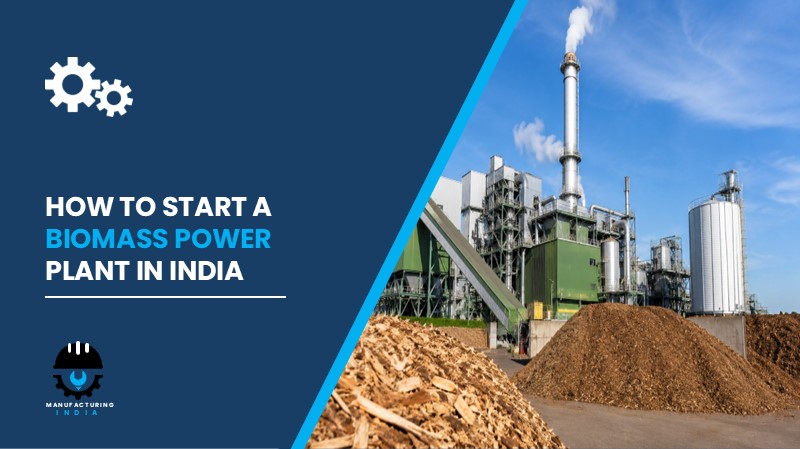
Setting up a biomass power plant in India presents a compelling investment case driven by the country’s rapidly expanding demand for reliable, dispatchable renewable energy. India’s power utilities and independent power producers are actively seeking alternatives to intermittent renewables like solar and wind, making biomass power an increasingly strategic asset. Industrial captive power generation facilities, rural and decentralised energy systems, and municipal waste-to-energy projects are all fuelling a robust domestic demand environment that rewards early movers with stable off-take and long-term revenue visibility.
India’s structural advantages make it one of the most strategically sound locations globally for biomass power production. The country generates vast quantities of agricultural residues, forestry waste, and organic municipal waste — the core feedstocks for this industry — giving domestic producers a natural, cost-competitive supply chain advantage. Government initiatives such as Make in India and the national push to reduce greenhouse gas emissions through renewable energy targets have created a supportive regulatory environment. Manufacturing clusters in states such as Gujarat, Maharashtra, Uttar Pradesh, and Punjab, which are rich in agri-residue supply, offer investors ready access to biomass feedstock, logistics infrastructure, and industrial utilities.
Biomass power production in India combines policy-driven demand growth, locally available feedstock, and a proven technology base to deliver gross margins of 30–45% and net profit margins of 12–25% – making this investment financially viable across a range of plant capacities. With the India biomass market expected to grow from USD 2,206.10 Million in 2025 to USD 4,015.07 Million by 2034, investors who establish a biomass power plant in India today are positioned to capture a decade of compounding demand growth across power, industrial, and rural energy sectors.
What is Biomass Power?
Biomass power refers to electricity generated by converting organic materials — such as agricultural residues, forestry waste, animal manure, and organic municipal waste — into usable energy. Biomass feedstock is processed through thermochemical or biochemical pathways to produce heat, steam, or combustible gases that drive turbines or engines for power generation. Common technologies include direct combustion, gasification, anaerobic digestion, and co-firing with coal.
A defining characteristic that sets biomass power apart from other renewables is its dispatchability: unlike solar or wind, a biomass power plant can provide stable, controllable electricity generation and can operate as either a base-load or flexible power system. This makes it uniquely valuable to grid operators, industrial facility managers, and rural energy planners alike. The production process covers feedstock collection, combustion, steam generation, power generation, and ash handling.
The facility serves a broad range of end-use industries, including power utilities and independent power producers, industrial captive power generation operations, rural and decentralised energy systems, and municipal waste-to-energy facilities.
Cost of Setting Up a Biomass Power Plant in India
The total cost of establishing a biomass power plant in India depends on several interrelated variables, including plant capacity, chosen technology pathway, geographic location, degree of process automation, and the complexity of regulatory compliance requirements. Investors must account for both one-time capital outlays and ongoing operational expenditures when constructing a project feasibility model.
1. Capital Expenditure (CapEx)
Land and Site Development represents a substantial component of total capital investment. Investors should evaluate industrial estates and Special Economic Zones (SEZs) in agri-residue-rich states, as proximity to biomass feedstock sources directly reduces transportation costs. Costs include land registration, boundary development, and site preparation charges.
Civil Works and Construction cover the main production shed, quality control laboratory, raw material storage yards, finished goods storage area, and the administrative block. Given the scale of equipment involved in a biomass power plant – particularly boilers and turbine halls – civil engineering costs are significant and must be planned with long-term capacity expansion in mind.
Machinery and Equipment account for the largest share of total capital expenditure. Key machinery required includes:
- Preprocessing systems
- Boilers and combustion chambers
- Gasifiers and anaerobic digesters
- Steam turbines
- Emission control equipment
- Ash handling systems
Other Capital Costs include effluent treatment plant (ETP) installation, pre-operative expenses, commissioning charges, and import duties where applicable on specialised equipment.
Request a Sample Report for In-Depth Market Insights: https://www.imarcgroup.com/biomass-power-plant-project-report/requestsample
2. Operational Expenditure (OpEx)
Raw Material Cost is the single largest driver of operating expenditure, accounting for approximately 50–60% of total OpEx. The primary raw materials are biomass in the form of agri-residue and wood chips, along with water and boiler chemicals. Given the seasonal variability of agri-residue availability, investors should establish long-term supply contracts with multiple feedstock aggregators to mitigate price volatility and ensure consistent production throughput.
Utility Cost — covering electricity consumption, water supply, and steam requirements — constitutes a further 15–25% of total operating expenditure. Optimising utility procurement, including captive solar supplementation, can help manage this cost category over the facility’s operating life.
Other Operating Costs encompass transportation and logistics for feedstock and ash disposal, packaging, salaries and wages, routine maintenance, depreciation on fixed assets, and applicable taxes. By the fifth year of operations, total operational expenditure is expected to increase substantially due to inflation, market fluctuations, and potential rises in the cost of key raw materials, as well as supply chain disruptions and rising consumer demand.
3. Plant Capacity
The proposed facility is designed with an annual production capacity ranging between 5 and 25 MW, enabling economies of scale while maintaining operational flexibility. This capacity band allows investors to enter the market at a smaller scale and expand incrementally as power purchase agreements and revenue streams are secured. Profitability improves meaningfully with higher capacity utilisation, making ramp-up planning a critical success factor in the early operational years.
4. Profit Margins and Financial Projections
Financial projections for a biomass power plant in India are built on realistic assumptions related to capital investment, operating costs, production capacity utilisation, pricing trends, and demand outlook. Gross profit margins typically range between 30% and 45%, supported by stable power demand and the value-added nature of dispatchable renewable electricity. Net profit margins range between 12% and 25% under normal operating conditions. A detailed financial analysis incorporating Net Present Value (NPV), Internal Rate of Return (IRR), payback period, liquidity analysis, and sensitivity analysis is essential to secure project funding and formulate a sound financial strategy.
Why Set Up a Biomass Power Plant in India?
Dispatchable Renewable Energy Demand. Unlike solar and wind, biomass power provides continuous and controllable electricity generation, making it indispensable for grid operators seeking to balance intermittent renewable capacity. As India’s renewable energy capacity grows, the need for reliable base-load and flexible power systems like biomass will intensify proportionally.
Waste-to-Energy Opportunity. India generates enormous quantities of agricultural residues, forestry waste, and organic municipal waste annually — all of which are viable feedstocks for a biomass power plant. Utilising these locally available organic waste resources reduces landfill volumes, cuts open-burning incidents, and aligns with national clean air and climate commitments.
Energy Security and Local Sourcing. Biomass power relies on locally available feedstock, directly reducing India’s dependence on imported fossil fuels. This domestic supply chain structure also buffers the facility against global commodity price shocks, improving long-term cost predictability for investors.
Policy and Regulatory Tailwinds. The Government of India offers tax benefits and incentives to promote the use of biomass in electricity generation as part of its broader strategy to reduce greenhouse gas emissions. Renewable energy targets, feed-in tariffs, and biomass-specific incentives — combined with the Make in India initiative — significantly support project viability and financing.
Active Industry Investment. In August 2025, Mondi announced plans to boost energy self-sufficiency to around 90% at its pulp and paper mill in Ružomberok, Slovakia, by constructing a new biomass-fired power plant to generate renewable heat and electricity from wood residues. In February 2026, Malaysian biomass producer Bio Eneco commissioned a new 240,000 t/yr palm kernel shell processing plant in Gebeng, Pahang, aimed at converting palm oil waste into export-grade biomass fuel — signalling strong global momentum in biomass infrastructure investment.
Potential for Combined Heat and Power (CHP) Integration. Biomass plants can simultaneously produce electricity and useful process heat, improving overall plant efficiency and enabling industrial facility clients to meet both electricity and process heat requirements from a single installation — enhancing energy security and cost control.
Manufacturing Process – Step by Step
The biomass power manufacturing process uses feedstock collection, combustion, steam generation, power generation, and ash handling as the primary production method. Each stage involves specific unit operations, material handling protocols, and quality checks to ensure consistent output and regulatory compliance.
- Feedstock Collection and Preprocessing: Agricultural residues, wood chips, and other approved biomass feedstocks are collected, sorted, and size-reduced using preprocessing systems to prepare uniform fuel for combustion or gasification.
- Combustion or Gasification: Prepared biomass feedstock is fed into boilers and combustion chambers or gasifiers and anaerobic digesters, where thermochemical or biochemical conversion releases heat energy or combustible gases.
- Steam Generation: Heat produced during combustion is transferred to generate high-pressure steam within the boiler system, forming the working fluid for power generation.
- Power Generation: High-pressure steam drives steam turbines connected to electrical generators, converting thermal energy into grid-quality electricity.
- Emission Control: Flue gases and process emissions pass through emission control equipment to ensure compliance with applicable pollution standards before discharge.
- Ash Handling and Dispatch: Residual ash from combustion is collected, processed, and managed through dedicated ash handling systems; the generated electricity is metered and dispatched to grid-connected utilities, industrial captive consumers, or rural microgrids.
Key Applications
A biomass power plant in India serves diverse end-use industries spanning grid-scale power generation, industrial energy supply, municipal waste management, and rural electrification.
- Power Utilities and Independent Power Producers: Grid-scale renewable electricity generation, providing dispatchable power to complement solar and wind resources.
- Industrial Facilities: Captive power plants meeting electricity and process heat requirements, improving energy security and cost control for manufacturing operations.
- Municipal and Waste Management Systems: Conversion of organic waste into electricity while reducing landfill volumes and methane emissions.
- Rural and Decentralised Energy: Off-grid or mini-grid power generation in agricultural and forest-rich regions, supporting rural electrification and microgrid development.
Leading Manufacturers
The global biomass power industry is served by several multinational companies with extensive production capacities and diverse technology portfolios across power generation scales and feedstock types. Key players operating in this sector include:
- Mitsubishi Heavy Industries, Ltd.
- Suez
- Xcel Energy Inc.
- Ramboll Group A/S
- Babcock & Wilcox Enterprises, Inc.
- Ørsted A/S
Timeline to Start the Plant
- Feasibility study and project report preparation
- Land acquisition and site development
- Regulatory approvals and environmental clearances
- Factory licence and fire safety compliance
- Machinery procurement and installation
- Raw material supplier agreements and supply chain setup
- Trial production and quality testing
- Commercial production launch
Licences and Regulatory Requirements
Starting a biomass power manufacturing unit in India requires several approvals:
- Business registration (Proprietorship, LLP, or Private Limited Company)
- Factory Licence under the Factories Act
- Environmental Clearance from State Pollution Control Board
- GST Registration
- Fire Safety NOC
- Hazardous and chemical handling compliance (applicable to boiler chemicals and ash management)
- Effluent Treatment Plant (ETP) operational clearance
- Occupational Health and Safety compliance
Key Challenges to Consider
High Capital Requirements. Establishing a biomass power plant involves substantial upfront investment across land, civil works, and specialised equipment including boilers, turbines, and emission control systems, which can be a barrier for smaller investors without access to project finance.
Raw Material Price Volatility. The primary raw materials — biomass in the form of agri-residue and wood chips — are subject to seasonal availability fluctuations and price variability, which can compress margins if procurement contracts are not structured carefully.
Regulatory Compliance. Meeting environmental clearance requirements, emission standards, and effluent treatment norms demands ongoing investment in monitoring systems and compliance management, adding to operational overhead.
Technology and Innovation Pressure. The biomass power sector continues to evolve across combustion, gasification, and anaerobic digestion technologies, and investors must remain current with efficiency improvements to stay competitive.
Competition from Global Players. Established global manufacturers such as Mitsubishi Heavy Industries, Babcock & Wilcox Enterprises, and Ørsted compete across technology supply and project development, creating pressure on domestic players to differentiate on cost efficiency and feedstock sourcing.
Skilled Manpower. Operating boilers, steam turbines, emission control systems, and ash handling equipment requires trained engineering personnel, and attracting and retaining qualified operators remains a challenge in many biomass-rich but industrially developing regions of India.
Frequently Asked Questions
1. How much does it cost to set up a biomass power manufacturing plant in India?
The total cost depends on plant capacity, technology pathway, location, and automation level. The facility is designed with a capacity range of 5–25 MW. A detailed CapEx breakdown covering land, civil works, machinery, and other capital costs is available in the full project report.
2. Is biomass power manufacturing profitable in India in 2026?
Yes. Gross profit margins typically range between 30% and 45%, and net profit margins between 12% and 25%, demonstrating healthy profitability potential under normal operating conditions.
3. What machinery is required for a biomass power plant in India?
Key machinery includes preprocessing systems, boilers and combustion chambers, gasifiers and anaerobic digesters, steam turbines, emission control equipment, and ash handling systems.
4. What licences and approvals are required to start a biomass power plant in India?
Required approvals include business registration, Factory Licence, Environmental Clearance, GST Registration, Fire Safety NOC, ETP clearance, chemical handling compliance, and Occupational Health and Safety certification.
5. What raw materials are needed for biomass power manufacturing?
The primary raw materials are biomass (agri-residue and wood chips), water, and boiler chemicals.
6. What are the environmental compliance requirements for a biomass power plant in India?
Investors must obtain Environmental Clearance from the State Pollution Control Board, operate a certified Effluent Treatment Plant, maintain emission control equipment, and comply with applicable pollution and occupational safety standards.
7. What is the best location to set up a biomass power plant in India?
Ideal locations are states with high agri-residue generation such as Punjab, Uttar Pradesh, Haryana, Maharashtra, and Gujarat, where feedstock supply is abundant and logistics costs are minimised.
8. What is the break-even period for this type of plant in India?
The break-even period is determined by plant capacity, capital investment, operating costs, and power tariff realisation. A detailed payback period analysis is provided in the project’s financial projections section.
9. What government incentives are available for manufacturers in India?
The Government of India offers tax benefits and incentives to promote biomass-based electricity generation. Renewable energy targets, feed-in tariffs, and biomass-specific incentive schemes – alongside the Make in India programme – support project viability for eligible investors.
Key Takeaways for Investors
A biomass power manufacturing plant in India represents a multi-sector investment opportunity driven by stable demand from power utilities, industrial captive users, rural electrification programmes, and municipal waste-to-energy projects. Financial projections confirm viability across the 5–25 MW capacity range, with gross margins of 30–45% and net margins of 12–25% providing a compelling return profile relative to the investment base. The India biomass market, valued at USD 2,206.10 Million in 2025, is projected to reach USD 4,015.07 Million by 2034 at a CAGR of 6.9%, underpinning a decade of sustained revenue growth for well-positioned producers. With locally abundant feedstock, a supportive policy framework, and rising demand for dispatchable renewable energy, the long-term demand sustainability for biomass power in India is firmly established.
About the Author