Medical Oxygen Manufacturing Plant Setup in India
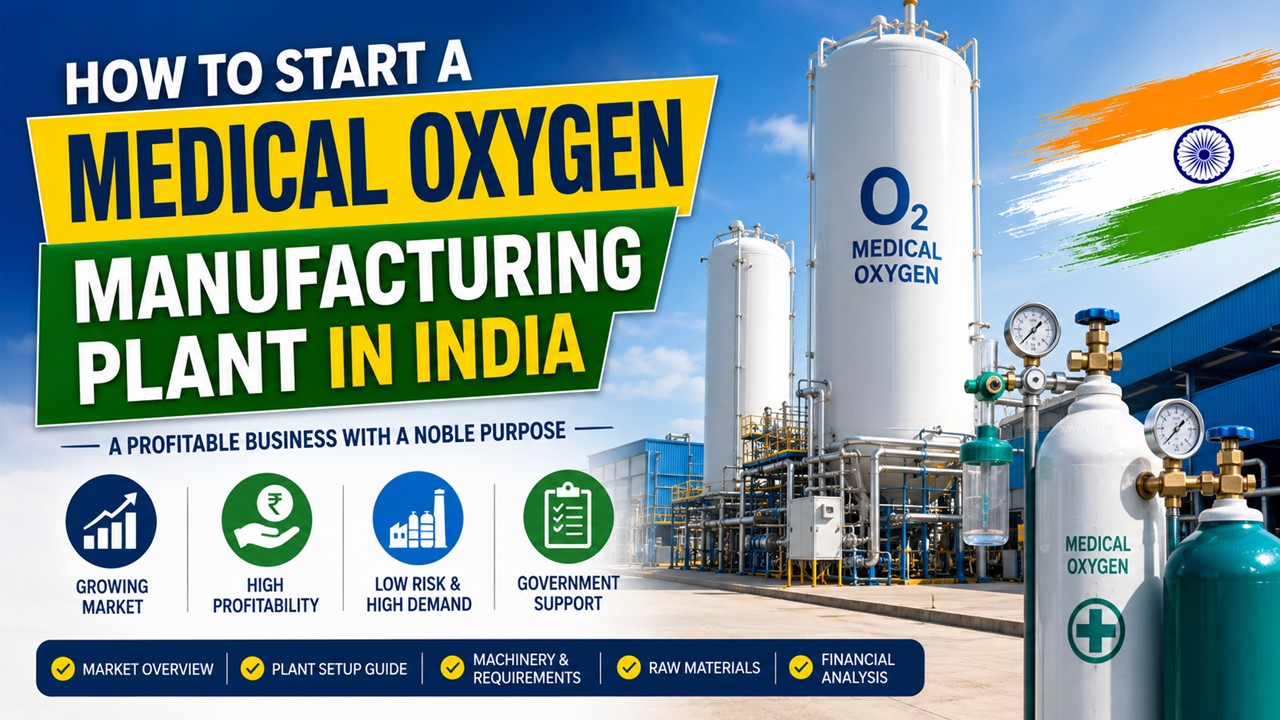
Setting up a medical oxygen manufacturing plant in India presents a compelling investment case, driven by the growing number of respiratory therapies and enhanced medical facilities across the country. This vital gas is critical for treating severe respiratory diseases such as COPD, asthma, and pneumonia. As India’s healthcare infrastructure expands and the prevalence of respiratory disorders rises, the strategic value of domestic production has become paramount.
India’s push for healthcare self-reliance, supported by the Make in India initiative and state-level industrial policies, creates a robust foundation for new ventures. States like Gujarat, Maharashtra, and Tamil Nadu, with their established industrial gas ecosystems, offer significant logistical advantages. With the domestic market projected to grow substantially and a clear national focus on increasing in-house production, this investment aligns with both health priorities and economic objectives, offering a strong return on investment.
The India medical oxygen market is poised for rapid growth, supported by strong policy backing for healthcare infrastructure and rising domestic demand. With gross profit margins typically ranging between 50-60% and a clear path to operational efficiency, a medical oxygen manufacturing plant in India offers a high-viability, high-impact investment opportunity with a healthy break-even viability.
What is Medical Oxygen?
This product is an important therapeutic gas used in treatment settings including hospitals, emergency care, and home health environments. It is manufactured to a minimum purity of 99% and is utilized for patients with illnesses that affect the lungs and the absorption of oxygen.
Key properties include its high purity, crucial for safe human application, and its role as a life-saving element in respiratory therapy. The primary production techniques include fractional distillation, pressure swing adsorption (PSA), and liquid oxygen methods. The product is delivered through various forms, including cylinders, oxygen concentrators, and bulk oxygen to meet different healthcare needs. The medical oxygen manufacturing process involves air compression and filtration, separation of gases, purification, compression and packaging, and quality control and testing. Its critical end-use industries include healthcare, home healthcare, emergency medical services (EMS), and industrial use.
Cost of Setting Up a Medical Oxygen Manufacturing Plant in India
The overall cost of setting up a medical oxygen manufacturing plant in India depends on several factors, including plant capacity, technology choice, location, level of automation, and the extent of regulatory compliance.
- Capital Expenditure (CapEx)
Capital expenditure for this type of plant involves significant upfront investment. The largest portion of the total CapEx is typically accounted for by machinery costs. Costs are also allocated to land and site development, which includes land registration, boundary development, and other related expenses to ensure a solid foundation for operations. Key machinery required includes:
- Air separation units (ASU)
- PSA systems
- Compression units
- Oxygen concentrators
- Quality control instruments
Other capital costs include civil works for the production shed, laboratory, and storage, as well as expenses for environmental compliance systems like effluent treatment plants (ETP), pre-operative expenses, and commissioning costs.
Request a Sample Report for In-Depth Market Insights: https://www.imarcgroup.com/medical-oxygen-manufacturing-plant-project-report/requestsample
- Operational Expenditure (OpEx)
The operating cost structure of this facility is primarily driven by raw material consumption and utility expenses. Raw materials account for approximately 30-40% of total OpEx, with the main raw material being air. Developing long-term contracts with reliable suppliers is a key strategy for mitigating price volatility and ensuring a consistent supply. Utility costs, covering electricity, water, and steam, represent a significant portion of OpEx, typically ranging from 40-50% of total operating expenses. Other operating costs include transportation, packaging, salaries and wages, depreciation, taxes, and repairs and maintenance. By the fifth year of operations, the total operational cost is expected to increase substantially due to factors such as inflation, market fluctuations, and rising material costs. - Plant Capacity
The proposed facility is designed with an annual production capacity ranging between 50,000 to 100,000 cylinders. This range enables the plant to achieve economies of scale while maintaining operational flexibility. Plant capacity can be customized to meet specific investor requirements. Profitability typically improves with higher capacity utilization as fixed costs are spread over a larger output. - Profit Margins and Financial Projections
The project demonstrates healthy profitability potential under normal operating conditions. Gross profit margins typically range between 50-60%, supported by stable demand and value-added applications. Net profit margins are projected to be in the range of 25-30%. A detailed financial analysis, including income projections, expenditures, break-even points, NPV, and IRR, is essential for securing funding and formulating a clear financial strategy.
Why Set Up a Medical Oxygen Plant in India?
High Demand from Respiratory Disease Treatment: The rise in cases of chronic respiratory diseases such as COPD and asthma, along with a growing senior population, is projected to augment the requirement for this gas. The global number of COPD cases is projected to reach approximately 600 million by 2050, fueling demand for oxygen therapy.
Increasing Prevalence of Respiratory Disorders: With the aging population globally and environmental factors contributing to respiratory problems, the use of this commodity and its supply systems has been on a steady increase. This trend is particularly pronounced in India’s urban centers.
Growth of Home Healthcare Sector: Portable oxygen concentrators and cylinders have made it easier for patients to receive therapy at home, resulting in an increasing market for home-use products. The shift towards home healthcare has gained significant momentum, with patients preferring convenient, cost-effective care at home.
Active Industry Investment: The Indian sector is witnessing significant investment. In June 2026, Air Liquide inaugurated an Air Separation Unit (ASU) in Mathura with an investment of Rs. 350 crore, capable of producing 300 tonnes per day. In April 2026, INOX Air Products, India’s largest manufacturer, ramped up its production capacity. Linde India also started up a new ASU in Ludhiana to meet growing demand. These investments underscore the sector’s robust growth.
Government Support for Healthcare Infrastructure: The Indian government is actively working to streamline logistics and expand infrastructure. In December 2024, the government announced plans to install 32 PSA plants in Jammu and Kashmir as part of a nationwide initiative of 1,561 plants to strengthen healthcare infrastructure. This provides a stable and supportive environment for new entrants.
Manufacturing Process — Step by Step
The medical oxygen manufacturing process uses air compression and filtration, separation of gases, purification, compression and packaging, and quality control and testing as the primary production method. The main stages involved are:
- Air Intake and Filtration: Ambient air is drawn into the system and passed through filters to remove dust and other impurities.
- Air Compression: The filtered air is compressed to high pressures, which is essential for the subsequent separation of its component gases.
- Gas Separation (e.g., PSA or Cryogenic Distillation): The core of the process, where oxygen is separated from other atmospheric gases like nitrogen and argon. PSA systems use molecular sieves to selectively adsorb nitrogen, allowing oxygen to pass through.
- Oxygen Purification: The separated gas is further purified to achieve the required medical-grade purity of over 99%.
- Quality Control and Testing: Analytical instruments are used to monitor product concentration, purity, and stability, ensuring the gas meets stringent medical standards.
- Compression and Packaging: The purified gas is compressed and filled into cylinders or transferred as bulk liquid oxygen for distribution.
Key Applications
The gas serves a wide range of applications within the healthcare sector and beyond. Its primary uses are:
- Healthcare Sector: Used extensively in hospitals, clinics, emergency care centers, ICUs, operation theatres, and recovery wards.
- Home Healthcare: Increasingly used by patients with COPD, asthma, or sleep apnea for home therapy via concentrators and portable cylinders.
- Emergency Medical Services (EMS): Ambulance services and first response vehicles use portable versions to attend to patients with critical conditions.
- Industrial and Scientific Applications: Used in medical research, aerospace companies, and certain industrial processes that require high purity levels.
Leading Manufacturers
The global medical oxygen industry includes several multinational companies with extensive production capacities. Key players in the market include:
- Drive DeVilbiss Healthcare, Inc.
- Philips Healthcare
- Invacare Corporation
- Nidek Medical
- AirSep Corporation
- Linde Group
- Air Liquide
Timeline to Start the Plant
- Feasibility study and project report preparation
- Land acquisition and site development
- Regulatory approvals and environmental clearances
- Factory licence and fire safety compliance
- Machinery procurement and installation
- Raw material supplier agreements and supply chain setup
- Trial production and quality testing
- Commercial production launch
Licences and Regulatory Requirements
Starting a medical oxygen manufacturing plant in India requires several approvals:
- Business registration (Proprietorship, LLP, or Pvt Ltd)
- Factory Licence under the Factories Act
- Environmental Clearance from State Pollution Control Board
- GST Registration
- Fire Safety NOC
- Hazardous/Chemical compliance for handling high-pressure gases
- Effluent Treatment Plant (ETP) operational clearance
- Occupational Health and Safety compliance
Key Challenges to Consider
High Capital Requirements: Establishing this type of facility requires substantial upfront investment in land, specialized machinery like air separation units, and advanced quality control instruments.
Raw Material Price Volatility: Although the primary raw material is air, costs for utilities and ancillary materials can fluctuate. Changes in energy prices directly impact the 40-50% of OpEx attributed to utilities.
Regulatory Compliance: The industry is subject to strict regulations for this product, requiring rigorous quality control, safety protocols, and environmental clearances for compliance with emission standards.
Competition: The market features established global players like Linde Group and Air Liquide, alongside strong domestic manufacturers. A new entrant must differentiate itself through operational efficiency or market focus.
Skilled Manpower: Operating advanced machinery like cryogenic distillation units requires a technically skilled workforce, which can be a challenge to source and retain.
Frequently Asked Questions
- How much does it cost to set up a medical oxygen manufacturing plant in India?
The cost depends on capacity, technology, and location, with machinery costs forming the largest portion of capital expenditure. Land, site development, and civil works also contribute significantly. - Is medical oxygen manufacturing profitable in India in 2026?
Yes, the project demonstrates healthy profitability, with gross profit margins typically ranging between 50-60% and net margins of 25-30% under normal operating conditions. - What machinery is required for a medical oxygen plant in India?
Essential equipment includes air separation units (ASU), PSA systems, compression units, oxygen concentrators, and quality control instruments. - What licences and approvals are required to start a medical oxygen plant in India?
Key approvals include a Factory Licence under the Factories Act, Environmental Clearance from the State Pollution Control Board, GST Registration, Fire Safety NOC, and hazardous chemical compliance. - What raw materials are needed for this manufacturing process?
The primary raw material is air, along with cryogenic distillation units or PSA systems, cylinders, and the infrastructure for a filling station. - What are the environmental compliance requirements for a medical oxygen plant in India?
Plants must implement safety protocols, install advanced monitoring systems to detect leaks, and have effluent treatment systems to minimize environmental impact and ensure compliance with emission standards. - What is the best location to set up this type of plant in India?
An ideal location offers easy access to raw materials (air), is near target markets to minimize distribution costs, and has robust infrastructure, including reliable transportation and utilities. - What is the break-even period for a plant in India?
The break-even period depends on factors like plant capacity, capital cost, and market conditions. A detailed financial analysis including break-even points is essential for project planning. - What government incentives are available for manufacturers in India?
The Indian government provides support through initiatives like the installation of PSA plants in hospitals and policies to strengthen healthcare infrastructure, creating a favorable environment for manufacturers.
Key Takeaways for Investors
The Indian market for this product represents a strong investment opportunity, driven by rising demand from the healthcare, home healthcare, and emergency medical services sectors. A well-planned medical oxygen manufacturing plant in India demonstrates healthy financial viability across various capacities, with projected gross margins of 50-60% and net margins of 25-30%. The India medical oxygen market, valued at USD 172.2 Million in 2025, is expected to reach USD 280.3 Million by 2034, growing at a CAGR of 5.40%, indicating a sustainable and expanding market for the foreseeable future. With sustained demand from an aging population, increasing respiratory ailments, and ongoing government support for healthcare infrastructure, investment in this sector is well-positioned for long-term growth.
About the Author