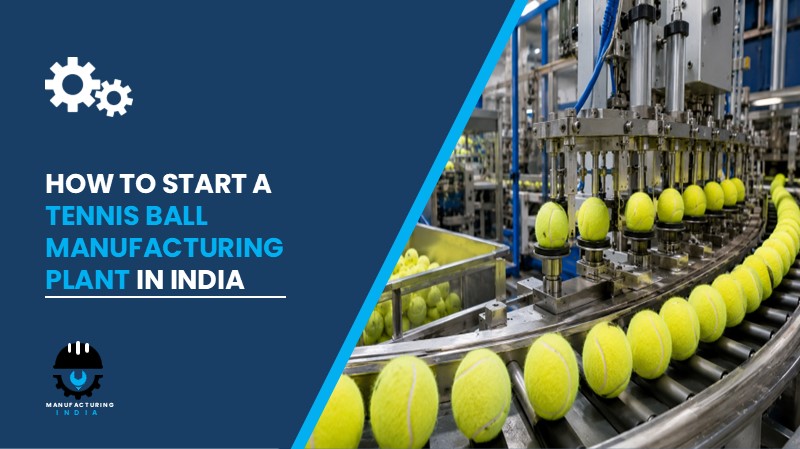
Setting up a tennis ball manufacturing plant in India presents a compelling investment case for entrepreneurs and corporate groups looking to tap into a growing global sports goods value chain. Demand for tennis balls is anchored in sports and recreation, professional athletics, and educational institutions, where consistent consumption is driven by training academies, tournaments, schools, colleges, and sports clubs. Because tennis balls become unplayable after a limited usable life, replacement demand remains continuous, making this category an attractive choice for manufacturers seeking steady, recurring revenue streams rather than one-time sales cycles.
India’s manufacturing landscape offers several structural advantages for a tennis ball manufacturing plant. Rapid urbanisation, growing investment in sports infrastructure, and rising health consciousness are expanding access to tennis courts, academies, and coaching programmes across the country. A young, increasingly fitness-oriented population, combined with the expansion of organised tournaments and institutional sports programmes, supports long-term volume growth for both pressurized and pressureless balls. With access to a large domestic market, a growing base of educational institutions, and export potential to international markets, India is strategically positioned for this type of light manufacturing investment.
This is an investment opportunity built on consistent global sports demand, balanced entry barriers compared to advanced athletic equipment, and rising institutional and event-driven consumption. With gross margins reported between 35-45% and net margins of 15-25%, the plant offers attractive break-even viability across a flexible production capacity range of 10-50 million balls annually.
What is Tennis Ball?
A tennis ball is a hollow, pressurized or pressureless spherical sports equipment item designed for use in the game of tennis. The production process begins with a rubber core, which manufacturers create using natural or synthetic rubber compounds that undergo vulcanization to develop their elastic and bouncing properties. This rubber core is then covered with a woven felt fabric made from wool, nylon, or polyester blends, which influences the aerodynamics, durability, and playing speed of the finished ball. International sports governing bodies establish standardized dimensions, weight requirements, and rebound characteristics for tennis balls, ensuring players experience consistent performance across grass, clay, and hard court surfaces.
The two principal product variants are pressurized tennis balls, which continue to dominate professional play, and pressureless tennis balls, which are gaining traction in training and recreational segments owing to their longer lifespan. The manufacturing process relies on rubber compounding, molding, vulcanization, felt cutting, bonding, pressurization, and packaging as the core unit operations. The finished product serves end-use industries including sports and recreation, professional athletics, and educational institutions, with applications spanning professional tournaments, training academies, recreational play, schools, colleges, and sports clubs.
Cost of Setting Up a Tennis Ball Manufacturing Plant in India
The total cost of a tennis ball manufacturing plant depends on production capacity, technology selection, location, automation level, and regulatory compliance requirements.
1. Capital Expenditure (CapEx)
Capital expenditure for a tennis ball manufacturing plant begins with land and site development. Investors can choose between dedicated industrial estates, Special Economic Zones (SEZs), or standalone plots, with the cost of land registration, boundary development, and related site preparation forming a substantial part of the overall investment. Civil works and construction cover the production shed, quality testing laboratory, raw material and finished goods storage areas, and the administrative block, all of which must be designed for efficient workflow, safety, and future expansion.
Machinery represents the largest portion of capital expenditure for the plant. Key machinery required includes:
- Rubber mixing equipment
- Core molding machinery
- Vulcanization units
- Felt cutting machinery
- Bonding equipment
- Pressurization systems
Other capital costs include effluent treatment plant (ETP) installation, pre-operative expenses, commissioning costs, and applicable import duties on specialized machinery sourced from overseas suppliers. Together, these components determine the overall capital outlay for the facility.
Request a Sample Report for In-Depth Market Insights: https://www.imarcgroup.com/tennis-ball-manufacturing-plant-project-report/requestsample
2. Operational Expenditure (OpEx)
Operating expenditure for the unit is dominated by raw material costs, which account for approximately 55-65% of total OpEx. The primary raw materials required include rubber core, felt made from wool or nylon, adhesive, and pressurized gas. Given that raw materials form the bulk of running costs, investors are advised to secure long-term supplier contracts to mitigate price volatility and ensure a stable supply chain for consistent production quality.
Utility costs, covering electricity, water, and steam, account for approximately 15-20% of OpEx and represent the second-largest component of operating expenses for the plant. Beyond raw materials and utilities, other operating costs include transportation, packaging, salaries and wages, repairs and maintenance, depreciation, and taxes. Over a five-year period, total operational costs for the facility are expected to increase substantially due to inflation, market fluctuations, supply chain disruptions, and rising input costs for key raw materials.
3. Plant Capacity
A typical tennis ball manufacturing plant is designed with an annual production capacity ranging between 10 and 50 million balls, enabling economies of scale while maintaining operational flexibility. Plant capacity can be customized according to individual investor requirements, allowing for smaller pilot-scale operations or larger export-oriented facilities. As with most manufacturing operations, profitability of the unit tends to improve with higher capacity utilisation, since fixed costs are spread across a larger production volume.
4. Profit Margins and Financial Projections
Financial projections for a tennis ball manufacturing plant are typically developed using capital investment estimates, operating cost structures, production capacity utilisation, pricing trends, and demand outlook, supported by metrics such as net present value (NPV), internal rate of return (IRR), and payback period. Reported gross profit margins for this type of plant range between 35-45%, supported by stable demand and value-added applications, while net profit margins range between 15-25%. These figures provide investors with a realistic basis for evaluating the long-term financial viability and sustainability of the project.
Why Set Up a Tennis Ball Plant in India?
Consistent Global Sports Demand. Tennis balls become unplayable after their usable period ends, which results in continuous replacement demand. This characteristic of the production cycle ensures recurring sales rather than one-time purchases, supporting stable utilisation of the manufacturing plant.
Balanced Entry Barriers. While the manufacturing process requires specialized skills to produce rubber components, bond felt materials, and operate pressurized systems, it requires less financial investment than advanced athletic equipment categories. This makes the segment accessible for medium-sized manufacturing businesses entering the sector for the first time.
Alignment with Fitness and Sports Trends. Demand for tennis balls is expected to grow as people become more health-conscious and as more young people take up sports. The continued establishment of tennis academies and the expansion of international tournaments further reinforce this demand trajectory.
Institutional and Event-Driven Consumption. Sports federations, schools, clubs, and event organisers purchase tennis balls on a regular basis, creating a steady stream of sales for the plant and helping operators forecast revenue with greater confidence.
Export and Private Label Opportunities. Rising global demand for affordable tennis balls from new production centres creates opportunities for international sales and contract manufacturing agreements with companies worldwide, positioning an Indian facility to serve both domestic and export markets.
Active Industry Investment and Market Momentum. The sector continues to attract strategic activity globally, with the broader market valued at USD 828.19 Million in 2025 and projected to reach USD 1,295.85 Million by 2034, growing at a CAGR of 5.1% from 2026 to 2034. In December 2025, VolleyBird, LLC announced an exclusive US distribution partnership with Renewaball for circular tennis balls, while in March 2025, Yonex was named the official tennis ball provider for major ATP Tour events including the Rolex Shanghai Masters 1000, Kinoshita Group Japan Open 500, and Chengdu Open 250 — signalling sustained brand and partnership-driven momentum across the industry.
Manufacturing Process – Step by Step
The tennis ball manufacturing process uses rubber compounding, molding, vulcanization, felt cutting, bonding, and pressurization as the primary production method.
- Rubber Compounding: Natural or synthetic rubber compounds are prepared using rubber mixing equipment to form the base material for the ball’s core.
- Core Molding: The compounded rubber is shaped into hollow spherical cores using core molding machinery.
- Vulcanization: The molded rubber cores undergo vulcanization to develop the elastic and bouncing properties required for play.
- Felt Cutting: Felt fabric made from wool, nylon, or polyester blends is cut into the precise shapes needed to cover the rubber core, using felt cutting machinery.
- Bonding: The cut felt panels are bonded onto the vulcanized rubber core using adhesive and bonding equipment.
- Pressurization: Pressurized gas is introduced into pressurized ball variants using pressurization systems to achieve the required internal pressure and rebound characteristics.
- Packaging: Finished tennis balls are packaged for dispatch to sports and recreation outlets, professional athletics bodies, and educational institutions.
Key Applications
A tennis ball manufacturing plant serves several end-use sectors driven by recreational, professional, and institutional demand.
- Professional Sports: Used in national and international tennis tournaments and leagues.
- Training and Academies: Utilized in practice sessions, coaching programmes, and sports institutes.
- Recreational Sports: Employed in amateur play in clubs, residential communities, and fitness centers.
- Educational Institutions: Used in physical education programmes in schools and colleges.
Leading Manufacturers
The global tennis ball industry includes several established multinational players with extensive production capacities and diverse application portfolios. Key players include:
- DHS
- Double Fish
- Nittaku
- STIGA
- Andro
- Xushaofa
- Butterfly
Timeline to Start the Plant
- Feasibility study and project report preparation
- Land acquisition and site development
- Regulatory approvals and environmental clearances
- Factory licence and fire safety compliance
- Machinery procurement and installation
- Raw material supplier agreements and supply chain setup
- Trial production and quality testing
- Commercial production launch
Licences and Regulatory Requirements
Starting a tennis ball manufacturing unit in India requires several approvals:
- Business registration (Proprietorship, LLP, or Pvt Ltd)
- Factory Licence under the Factories Act
- Environmental Clearance from State Pollution Control Board
- GST Registration
- Fire Safety NOC
- Effluent Treatment Plant (ETP) operational clearance
- Occupational Health and Safety compliance
Key Challenges to Consider
High Capital Requirements. Machinery for rubber mixing, core molding, vulcanization, felt cutting, bonding, and pressurization accounts for a significant share of the total capital expenditure, requiring careful financial planning before commissioning the unit.
Raw Material Price Volatility. Rubber core, felt (wool/nylon), adhesive, and pressurized gas are subject to price fluctuations, and since raw materials represent 55-65% of OpEx, even modest price changes can materially affect plant profitability.
Regulatory Compliance. Securing environmental clearances, factory licences, and effluent treatment approvals requires sustained coordination with multiple authorities throughout the setup phase.
Competition from Established Players. The plant will compete in a market shaped by established global manufacturers such as DHS, Double Fish, Nittaku, STIGA, Andro, Xushaofa, and Butterfly, requiring strong quality control and cost discipline.
Skilled Manpower. The manufacturing process needs specialized skills for handling rubber components, bonding felt materials, and operating pressurized systems, making workforce training a priority during commissioning.
Technology and Quality Assurance Pressure. Continuous improvements in rubber compounding and felt materials are improving durability, bounce consistency, and surface adaptability, requiring ongoing investment in quality assurance systems and technical testing.
Frequently Asked Questions
1. How much does it cost to set up a tennis ball manufacturing plant in India?
The total cost of setting up a tennis ball manufacturing plant depends on production capacity, technology selection, location, automation level, and regulatory compliance requirements. Major cost components include land and site development, civil works and construction, machinery (rubber mixing, core molding, vulcanization, felt cutting, bonding, and pressurization equipment), and other capital costs such as ETP installation, pre-operative expenses, and commissioning. A detailed capital expenditure breakdown is available in the full feasibility report.
2. Is tennis ball manufacturing profitable in India in 2026?
Tennis ball manufacturing demonstrates healthy profitability potential under normal operating conditions. Gross profit margins typically range between 35-45%, while net profit margins range between 15-25%, supported by stable demand from sports and recreation, professional athletics, and educational institutions. Continuous replacement demand, since tennis balls become unplayable after their usable period ends, also supports consistent revenue generation.
3. What machinery is required for a tennis ball plant in India?
Key machinery required for a tennis ball manufacturing plant includes rubber mixing equipment, core molding machinery, vulcanization units, felt cutting machinery, bonding equipment, and pressurization systems. All machinery must be corrosion-resistant and comply with industry standards for safety, efficiency, and reliability.
4. What licences and approvals are required to start a tennis ball plant in India?
Starting a tennis ball manufacturing unit in India requires several approvals, including business registration (Proprietorship, LLP, or Pvt Ltd), a Factory Licence under the Factories Act, Environmental Clearance from the State Pollution Control Board, GST Registration, a Fire Safety NOC, Effluent Treatment Plant (ETP) operational clearance, and Occupational Health and Safety compliance.
5. What raw materials are needed for tennis ball manufacturing?
The primary raw materials required for tennis ball manufacturing are rubber core (natural or synthetic rubber compounds), felt made from wool, nylon, or polyester blends, adhesive for bonding the felt to the core, and pressurized gas for pressurized ball variants. Long-term supplier contracts are recommended to manage price volatility, as raw materials account for approximately 55-65% of total operating expenses.
6. What are the environmental compliance requirements for a tennis ball plant in India?
Environmental compliance requirements include obtaining Environmental Clearance from the State Pollution Control Board and securing an operational clearance for the Effluent Treatment Plant (ETP) to minimize environmental impact and ensure compliance with emission standards. Safety protocols and monitoring systems should also be implemented throughout the manufacturing process to detect leaks or process deviations.
7. What is the best location to set up a tennis ball plant in India?
The ideal location offers easy access to key raw materials such as rubber core, felt (wool/nylon), adhesive, and pressurized gas, while minimizing distribution costs through proximity to target markets. The site should have robust infrastructure, including reliable transportation, utilities, and waste management systems, and must comply with local zoning laws and environmental regulations.
8. What is the break-even period for this type of plant in India?
The break-even period depends on capital investment, operating costs, production capacity utilisation, pricing trends, and demand outlook. Financial projections for the plant are developed using metrics such as net present value (NPV), internal rate of return (IRR), and payback period, with detailed break-even analysis provided as part of the full financial feasibility study.
9. What government incentives are available for manufacturers in India?
The source report does not specify particular government incentive schemes for tennis ball manufacturers. Investors are advised to consult the detailed feasibility study and relevant regulatory bodies for current information on applicable incentives, as part of the broader regulatory and compliance assessment covered in the report.
Key Takeaways for Investors
A tennis ball manufacturing plant in India represents a viable opportunity supported by demand from sports and recreation, professional athletics, and educational institutions, alongside ongoing momentum from international tournaments and academies. Financial projections indicate healthy profitability across flexible capacity ranges of 10-50 million balls annually, with gross margins of 35-45% and net margins of 15-25% making the unit attractive at multiple investment scales. The global tennis ball market, valued at USD 828.19 Million in 2025 and projected to reach USD 1,295.85 Million by 2034 at a CAGR of 5.1%, underscores a sustained long-term demand trajectory. With continuous replacement demand, institutional consumption, and export potential, this investment is well-positioned for durable, long-term growth.
About the Author