Clay Brick Manufacturing Plant Setup in India
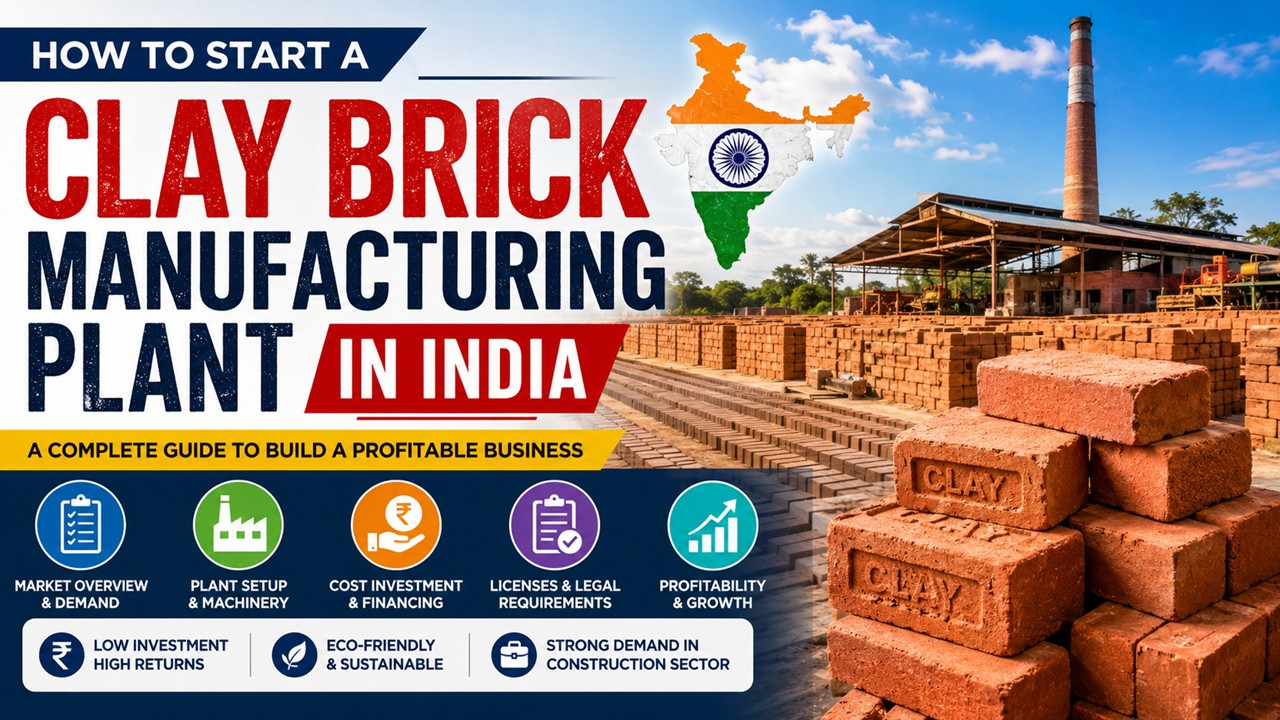
Setting up a clay brick manufacturing plant in India presents a compelling investment case, driven by rapid urbanization, large-scale infrastructure development, housing construction demand, and the long-term preference for durable masonry materials in residential and commercial buildings. Clay bricks remain a foundational material in residential, commercial, and infrastructure construction worldwide due to their ability to regulate indoor temperatures and withstand harsh environmental conditions. The construction and infrastructure sectors rely heavily on clay bricks for structural walls, paving, retaining structures, facade cladding, thermal linings, and chimney construction, making them critical to India’s ongoing economic development.
India’s accelerated urbanization, expansion in residential and commercial infrastructure projects, and the government’s “Make in India” initiative provide strong tailwinds for domestic manufacturing. Key manufacturing states such as Gujarat, Maharashtra, Uttar Pradesh, and Rajasthan offer robust industrial infrastructure, access to clay deposits, and well-established supply chain networks. Government-led housing programs, smart city initiatives, rural development schemes, and infrastructure investments (roads, public buildings, utilities) directly stimulate demand for clay bricks, while policies promoting domestic manufacturing and local materials further strengthen the sector. With accelerating disposable income, rising urbanization levels, and increasing construction activity, India offers a strategically sound environment for establishing a clay brick manufacturing facility.
India’s clay brick market presents strong investment potential, bolstered by policy support like Make in India, rapid urbanization, and a booming construction sector. With gross margins typically ranging between 20-30% and net margins of 8-12%, investors can achieve healthy profitability and a viable break-even timeline. The global clay brick market, valued at USD 1,137.78 Billion in 2025, is expected to reach USD 1,458.80 Billion by 2034, exhibiting a CAGR of 2.8%.
What is Clay Brick?
Clay bricks are masonry units manufactured primarily from natural clay through shaping, drying, and high-temperature firing processes. They are known for their compressive strength, thermal mass, durability, fire resistance, and long service life. Clay bricks are typically rectangular and are produced in various sizes, textures, and colors depending on raw material composition and firing conditions. The manufacturing process transforms plastic clay into a hardened ceramic material with low water absorption and high structural stability. The production process used is extrusion, drying, and firing. End-use industries served include construction, landscaping, civil engineering, architectural design, and industrial manufacturing.
Cost of Setting Up a Clay Brick Manufacturing Plant in India
The total cost of setting up a clay brick manufacturing plant in India depends on several critical factors, including plant capacity, technology, location, automation levels, and regulatory compliance requirements.
1. Capital Expenditure (CapEx)
The total capital investment required for establishing a clay brick manufacturing plant covers land acquisition, site preparation, and necessary infrastructure. Machinery costs account for the largest portion of the total capital expenditure. Land and site development costs, including charges for land registration, boundary development, and other related expenses, form a substantial part of the overall investment. This allocation ensures a solid foundation for safe and efficient plant operations.
Key machinery required includes:
- Clay crushers
- Mixers and pug mills
- Extruders or molding presses
- Cutting wires
- Drying chambers
- Kilns (tunnel or periodic)
- Cooling zones
- Packaging or palletizing systems
All machinery must comply with industry standards for safety, efficiency, and reliability. Other capital costs include civil works (production shed, quality control lab, raw material and finished goods storage, administrative block), effluent treatment systems, and pre-operative and commissioning expenses.
Request a Sample Report for In-Depth Market Insights: https://www.imarcgroup.com/clay-brick-manufacturing-plant-project-report/requestsample
2. Operational Expenditure (OpEx)
The operating cost structure of a clay brick manufacturing plant is primarily driven by raw material consumption. Raw materials, including clay, water, coal/rice husk (for firing), are a major part of operating costs, accounting for approximately 30-40% of total operating expenses (OpEx). Utilities (electricity, water, steam) account for approximately 25-35% of OpEx. Implementing long-term contracts with reliable suppliers will help mitigate price volatility and ensure a consistent supply of materials. Other OpEx components include transportation costs, packaging costs, salaries and wages, repairs and maintenance, depreciation, and taxes. By the fifth year, the total operational cost is expected to increase substantially due to factors such as inflation, market fluctuations, and potential rises in the cost of key materials.
3. Plant Capacity
The proposed manufacturing facility is designed with an annual production capacity ranging between 30-60 million bricks, enabling economies of scale while maintaining operational flexibility. Plant capacity can be customized per investor requirements. Profitability improves significantly with higher capacity utilization.
4. Profit Margins and Financial Projections
The project demonstrates healthy profitability potential under normal operating conditions. Gross profit margins typically range between 20-30%, supported by stable demand and value-added applications. Net profit margins are projected at 8-12%. Financial analysis includes comprehensive projections of net present value (NPV), internal rate of return (IRR), payback period, income projections, expenditure projections, and profit and loss accounts.
Why Set Up a Clay Brick Plant in India?
Rapid Urbanization and Infrastructure Development
The clay brick market is driven by rapid urbanization, large-scale infrastructure development, housing construction demand, and the long-term preference for durable masonry materials in residential and commercial buildings. Expanding residential and infrastructure construction, particularly in emerging economies experiencing urban population growth, continues to sustain brick demand.
Durability and Thermal Performance
Clay bricks are favored for their durability, fire resistance, and thermal performance, supporting their use in long-term structures. Their ability to regulate indoor temperatures and withstand harsh environmental conditions makes them a preferred choice for builders and contractors.
Policy and Regulatory Tailwinds
Government-led housing programs, smart city initiatives, rural development schemes, and infrastructure investments (roads, public buildings, utilities) directly stimulate demand for clay bricks. Policies promoting domestic manufacturing and local materials further strengthen the sector. The “Make in India” initiative encourages domestic production.
Localization and Supply Chain Reliability
Builders and contractors prefer nearby brick manufacturers to reduce transportation costs, ensure timely supply, and maintain consistent quality. This creates strong opportunities for regional producers with efficient operations and reliable raw material sourcing.
Active Industry Investment
In August 2024, Oldcastle APG disclosed the acquisition of Master Block, Inc., a single-site concrete block producer in El Mirage, Arizona. The addition of Master Block’s manufacturing facilities to Oldcastle APG’s vast portfolio will enhance the company’s current output of fence, masonry, and hardscapes in the area. This demonstrates ongoing consolidation and investment activity in the masonry products sector.
Moderate Entry Barriers Favor Experienced Manufacturers
While capital requirements are lower than highly advanced industries, consistent access to quality clay, controlled firing processes, energy-efficient kilns, compliance with building standards, and long-term relationships with contractors create meaningful barriers that favor experienced, quality-focused manufacturers.
Manufacturing Process — Step by Step
The clay brick manufacturing process uses extrusion, drying, and firing as the primary production method.
- Raw Material Sourcing: Reliable suppliers must be secured for raw materials like clay, water, coal/rice husk (for firing) to ensure consistent production quality.
- Crushing: Clay is processed through clay crushers to achieve the desired particle size.
- Mixing and Pugging: Crushed clay is mixed with water in mixers and pug mills to achieve a homogeneous plastic mass suitable for shaping.
- Extrusion or Molding: The plastic clay mass is shaped into brick forms using extruders or molding presses.
- Cutting: Extruded clay columns are cut into individual brick units using cutting wires.
- Drying: Green bricks are dried in drying chambers to remove excess moisture before firing, preventing cracking during the high-temperature process.
- Firing: Dried bricks are fired in kilns (tunnel or periodic) at high temperatures to achieve ceramic hardening, structural strength, and durability.
- Cooling: Fired bricks pass through cooling zones to gradually reduce temperature, ensuring product integrity and preventing thermal shock.
- Quality Assurance: A comprehensive quality control system should be established throughout production. Analytical instruments must be used to monitor product concentration, purity, and stability. Documentation for traceability and regulatory compliance must be maintained.
- Packaging and Dispatch: Finished bricks are packaged using packaging or palletizing systems and dispatched to end-use industries including construction, landscaping, civil engineering, architectural design, and industrial manufacturing.
Key Applications
Clay bricks serve a diverse range of industries and applications:
- Structural Masonry: Load-bearing and non-load-bearing clay bricks for walls and foundations.
- Residential Construction: Facing bricks, partition walls, and housing projects.
- Commercial & Industrial Buildings: Durable bricks for factories, warehouses, and commercial complexes.
- Infrastructure & Landscaping: Paving bricks, boundary walls, and architectural features.
Leading Manufacturers
Leading manufacturers in the global clay brick industry include several multinational companies with extensive production capacities and diverse application portfolios. Key players include:
- Wienerberger AG
- Ibstock Plc
- Acme Brick Company
- Forterra
- General Shale
- China National Building Material Group
These key players serve end-use sectors such as construction, landscaping, civil engineering, architectural design, and industrial manufacturing.
Timeline to Start the Plant
- Feasibility study and project report preparation
- Land acquisition and site development
- Regulatory approvals and environmental clearances
- Factory licence and fire safety compliance
- Machinery procurement and installation
- Raw material supplier agreements and supply chain setup
- Trial production and quality testing
- Commercial production launch
Licences and Regulatory Requirements
Starting a clay brick manufacturing unit in India requires several approvals:
- Business registration (Proprietorship, LLP, or Pvt Ltd)
- Factory Licence under the Factories Act
- Environmental Clearance from State Pollution Control Board
- GST Registration
- Fire Safety NOC
- Effluent Treatment Plant (ETP) operational clearance
- Occupational Health and Safety compliance
Key Challenges to Consider
- High Capital Requirements: Machinery and infrastructure investments represent significant upfront costs. Machinery costs account for the largest portion of total capital expenditure.
- Raw Material Price Volatility: Fluctuations in prices of clay, water, and coal/rice husk (for firing) directly impact margins. Raw materials account for 30-40% of operating expenses.
- Regulatory Compliance: Navigating environmental clearances, factory licences, and pollution control board regulations requires careful planning. Effluent treatment systems are necessary to minimize environmental impact and ensure compliance with emission standards.
- Competition from Alternative Materials: Alternative materials such as concrete blocks are gaining share, although clay bricks maintain strong demand in regions where local clay availability, established building codes, and skilled labor support their continued adoption.
- Skilled Manpower: Access to skilled labor for kiln operation, quality control, and machinery maintenance is essential.
- Energy Costs: Utilities account for 25-35% of OpEx, making energy efficiency a critical factor for profitability.
Frequently Asked Questions
- How much does it cost to set up a clay brick manufacturing plant in India?
The total capital investment depends on plant capacity, technology, and location, covering land acquisition, site preparation, infrastructure, and machinery costs. Equipment costs, such as those for clay crushers, mixers and pug mills, extruders, cutting wires, drying chambers, kilns, cooling zones, and packaging systems, represent a significant portion of capital expenditure. - Is clay brick manufacturing profitable in India in 2026?
Yes, gross profit margins typically range between 20-30%, with net profit margins of 8-12%, indicating healthy profitability potential under normal operating conditions. - What machinery is required for a clay brick plant in India?
Essential equipment includes clay crushers, mixers and pug mills, extruders or molding presses, cutting wires, drying chambers, kilns (tunnel or periodic), cooling zones, and packaging or palletizing systems. - What licences and approvals are required to start a clay brick plant in India?
Required approvals include business registration, Factory Licence under the Factories Act, Environmental Clearance from State Pollution Control Board, GST Registration, Fire Safety NOC, ETP operational clearance, and Occupational Health and Safety compliance. - What raw materials are needed for clay brick manufacturing?
Raw materials required include clay, water, and coal/rice husk (for firing). - What are the environmental compliance requirements for a clay brick plant in India?
Facilities must implement effluent treatment systems, obtain environmental clearance from the State Pollution Control Board, and comply with emission standards. - What is the best location to set up a clay brick plant in India?
Ideal locations offer easy access to key raw materials such as clay, water, and coal/rice husk (for firing), with proximity to target markets to minimize distribution costs. Sites must have robust infrastructure, including reliable transportation, utilities, and waste management systems. - What is the break-even period for this type of plant in India?
Financial projections including break-even analysis are provided in detailed feasibility reports, with timelines varying based on capacity, utilization rates, and operating efficiencies. A detailed financial analysis, including income projections, expenditures, and break-even points, must be conducted to aid in securing funding and formulating a clear financial strategy. - What government incentives are available for manufacturers in India?
Investors benefit from the “Make in India” initiative, state-level industrial policies, and potential benefits under the Production Linked Incentive (PLI) scheme for construction materials, depending on the specific sector and location.
Key Takeaways for Investors
Setting up a clay brick manufacturing plant in India offers a compelling investment opportunity, driven by strong demand from construction, landscaping, civil engineering, architectural design, and industrial manufacturing end-use sectors. The project demonstrates healthy financial viability across various plant capacities, with gross profit margins typically ranging between 20-30% and net margins of 8-12%. The global clay brick market size was valued at USD 1,137.78 Billion in 2025 and is expected to reach USD 1,458.80 Billion by 2034, exhibiting a CAGR of 2.8% from 2026 to 2034. With ongoing urbanization, infrastructure growth, government housing programs, and the enduring preference for durable, fire-resistant, and thermally efficient masonry materials, the clay brick industry is poised for continued expansion, making now an opportune time for investors to enter this dynamic market.
About the Author