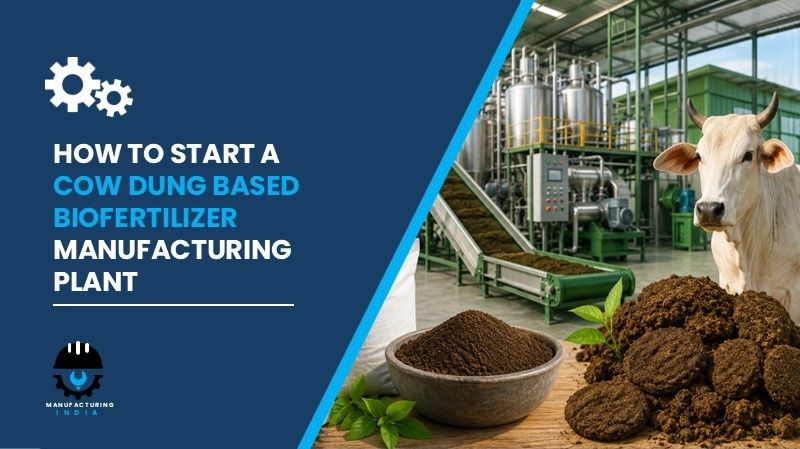
Cow dung based biofertilizer manufacturing plant setup in India presents a compelling investment case, driven by rising demand from the organic farming sector, the horticulture and floriculture industry, the plantation crops segment, and broader sustainable agriculture initiatives. As soil degradation concerns mount and farmers move away from chemical inputs, cow dung based biofertilizer has become a critical product for restoring soil microbial balance, improving nutrient cycling, and supporting long-term crop productivity without leaving behind chemical residue.
India’s livestock-rich regions give the country a natural advantage for this kind of production, since cow dung is widely and consistently available as a low-cost raw material. Growing government support for sustainable, natural farming and rising organic food exports further support setting up this type of plant for both domestic and export-oriented organic farming.
This investment opportunity is backed by government support for sustainable agriculture, abundant and cost-competitive raw material availability, and gross profit margins of 35-45%, making this manufacturing plant a scalable, environment-friendly, and reasonably capital-efficient venture, though detailed break-even figures are not disclosed in the available report.
What is Cow Dung Based Biofertilizer?
Cow dung based biofertilizer is an organic agricultural input produced by processing and enriching cattle manure with beneficial microorganisms that enhance soil fertility and plant growth. It contains essential nutrients such as nitrogen, phosphorus, potassium, and micronutrients, along with naturally occurring microbial populations that improve soil structure and nutrient availability. Through controlled composting, fermentation, and microbial inoculation, raw cow dung is transformed into a stable, pathogen-free fertilizer suitable for crops, horticulture, and plantations.
The product enhances soil microbial activity, increases water retention capacity, and supports sustainable crop yields without causing chemical residue buildup. The cow dung based biofertilizer manufacturing process relies on composting and controlled microbial fermentation, supported by enrichment, curing, drying, sieving, and quality testing stages. The end-use industries served include the organic farming sector, the horticulture and floriculture industry, the plantation crops segment, and sustainable agriculture initiatives more broadly.
Cost of Setting Up a Cow Dung Based Biofertilizer Manufacturing Plant in India
The cost of setting up this type of plant depends on capacity, technology, location, automation level, and regulatory compliance requirements.
1. Capital Expenditure (CapEx)
Capital investment for the plant is built around land acquisition and site preparation, civil construction, machinery, and other miscellaneous capital costs. Land and site development costs – covering acquisition, registration, and boundary development – form a substantial part of the overall investment and lay the foundation for safe, efficient operations. Civil works costs cover the construction needed to house production, storage, and quality-control activities.
Machinery represents the largest single share of total capital expenditure for this type of plant. Key machinery required includes:
- Shredders
- Compost turners
- Fermentation tanks or pits
- Screening machines
- Drying units
- Mixers for microbial inoculation
- Weighing systems
- Packaging machines
Other capital costs include effluent treatment systems, required to minimize environmental impact and meet emission standards, along with miscellaneous pre-operative expenses tied to commissioning.
Request a Sample Report for In-Depth Market Insights: https://www.imarcgroup.com/cow-dung-based-biofertilizer-manufacturing-plant-project-report/requestsample
2. Operational Expenditure (OpEx)
Raw material cost is the single largest component of operating expenditure, accounting for approximately 40-50% of total OpEx. The key raw materials required are cow dung, microbial cultures, and carrier material such as cocopeat or lignite. Because raw material costs can fluctuate, long-term supplier contracts are recommended to stabilize pricing and ensure a steady, consistent supply.
Utility cost is the second-largest component, accounting for roughly 20-30% of OpEx, covering electricity, water, and steam needed for composting, drying, and processing operations. Other operating costs include transportation, packaging, salaries and wages, depreciation, taxes, and repairs and maintenance, all of which form part of the first-year operating cost structure. By the fifth year, total operational cost is expected to rise substantially due to inflation, market fluctuations, rising material costs, and supply chain disruptions.
3. Plant Capacity
The proposed facility is designed for an annual production capacity ranging between 10,000 and 50,000 MT, which allows the plant to benefit from economies of scale while retaining operational flexibility. Capacity can be customized based on individual investor requirements, and profitability of the unit is closely tied to how effectively this capacity is utilized.
4. Profit Margins and Financial Projections
This type of plant demonstrates healthy profitability potential under normal operating conditions. Gross profit margins typically range between 35-45%, while net profit margins range between 18-28%. The full financial analysis for this manufacturing plant also covers net present value (NPV), internal rate of return (IRR), payback period, liquidity, and detailed profit and loss projections, though specific figures for these parameters are not disclosed in the available report summary.
Why Set Up a Cow Dung Based Biofertilizer Plant in India?
Rising Demand for Organic Produce: Increasing consumer awareness about chemical-free food is encouraging farmers to adopt biofertilizers as a sustainable nutrient source, expanding the addressable market for this type of plant’s output.
Government Support for Sustainable Agriculture: Agricultural policies and subsidy programs that promote organic inputs and bio-based fertilizers help reduce adoption barriers for both producers and farmers.
Soil Health Restoration Needs: Continuous chemical fertilizer use has degraded soil quality, driving demand for natural alternatives that restore microbial balance through the product’s soil-conditioning properties.
Abundant and Cost-Competitive Raw Material Availability: Cow dung is widely available in livestock-rich regions, ensuring a stable, cost-effective, locally sourced supply that keeps a major share of operating costs predictable.
Active Industry Research and Development: In November 2025, a review study in the International Journal for Research in Applied Science and Engineering Technology highlighted cow dung’s expanding role as a biotechnological feedstock for biofertilizers, biopesticides, renewable nanomaterials, and soil microbial growth media. In March 2024, research from SRM Institute of Science and Technology, the Khadi & Village Industries Commission, and the Kumarappa National Handmade Paper Institute found that liquors from handmade paper production using cow dung were suitable for agricultural application.
Export-Oriented Organic Farming Growth: Growing exports of organic foods are also helping drive demand for organic fertilizers, giving manufacturers an additional growth avenue beyond the domestic organic farming sector.
Manufacturing Process – Step by Step
The cow dung based biofertilizer manufacturing process uses composting and controlled microbial fermentation as the primary production method.
- Collection and Sorting: Raw cow dung is collected and sorted before processing begins.
- Composting and Fermentation: The sorted material undergoes composting and controlled fermentation using compost turners and fermentation tanks or pits.
- Microbial Enrichment and Curing: Beneficial microorganisms are introduced using mixers for microbial inoculation, followed by a curing period.
- Drying: The enriched material is processed through drying units to achieve the required moisture content.
- Sieving: Screening machines are used to achieve uniform particle size.
- Quality Testing: The product undergoes quality assurance checks and technical tests to confirm nutrient content, purity, and stability.
- Packaging and Labeling: Weighing systems and packaging machines are used to prepare the finished product for dispatch to organic farming, horticulture, plantation, and sustainable agriculture end users.
Key Applications
The end product serves several agricultural and horticultural end-use segments.
- Organic Farming Sector: Used extensively in certified organic farms to enhance soil fertility, improve nutrient cycling, and maintain long-term soil productivity without synthetic inputs.
- Horticulture and Floriculture Industry: Applied in fruit, vegetable, and ornamental crop cultivation to improve plant vigor, root development, and overall yield quality.
- Plantation Crops Segment: Utilized in tea, coffee, sugarcane, and spice plantations to restore soil health and support sustainable nutrient management practices.
- Landscaping and Nurseries: Supports healthy plant establishment and soil conditioning in gardens, parks, and commercial nurseries.
Leading Manufacturers
Several established players operate in this industry, serving organic farming, horticulture, plantation crops, and sustainable agriculture programs.
- Vetri Dairy Farms
- VRINDVAN FARMS
- DesiNaturals
- Truly Desi
- Kalagura Gampa
Timeline to Start the Plant
- Feasibility study and project report preparation
- Land acquisition and site development
- Regulatory approvals and environmental clearances
- Factory licence and fire safety compliance
- Machinery procurement and installation
- Raw material supplier agreements and supply chain setup
- Trial production and quality testing
- Commercial production launch
Licences and Regulatory Requirements
Starting a cow dung based biofertilizer manufacturing unit in India requires several approvals:
- Business registration (Proprietorship, LLP, or Pvt Ltd)
- Factory Licence under the Factories Act
- Environmental Clearance from State Pollution Control Board
- GST Registration
- Fire Safety NOC
- Effluent Treatment Plant (ETP) operational clearance
- Occupational Health and Safety compliance
Key Challenges to Consider
High Capital Requirements: Machinery, civil works, and land development together require significant upfront investment before the facility becomes operational.
Raw Material Price Volatility: Pricing and supply consistency for cow dung, microbial cultures, and carrier material such as cocopeat or lignite can fluctuate, making long-term supplier contracts important for cost stability.
Regulatory Compliance: Environmental clearances, effluent treatment requirements, and ongoing safety monitoring add complexity and cost to operations.
Technology and Process Innovation Pressure: Ongoing research into cow dung as a feedstock for biofertilizers, biopesticides, and other applications means manufacturers must keep pace with evolving production techniques and quality expectations.
Competition: Established players such as Vetri Dairy Farms, VRINDVAN FARMS, DesiNaturals, Truly Desi, and Kalagura Gampa already operate in this space, requiring new entrants to differentiate on quality.
Skilled Manpower: Operating fermentation, microbial inoculation, and quality-testing processes requires trained personnel, a constraint in some regions.
Frequently Asked Questions
1. How much does it cost to set up a cow dung based biofertilizer manufacturing plant in India?
Cost is driven by plant capacity, technology, and location, with machinery forming the largest share of capital expenditure, followed by land and site development. Operating costs are led by raw materials (40-50% of OpEx) and utilities (20-30% of OpEx).
2. Is cow dung based biofertilizer manufacturing profitable in India in 2026?
Yes – the business shows healthy profitability under normal operating conditions, with gross profit margins of 35-45% and net profit margins of 18-28%, supported by stable demand from organic farming and horticulture.
3. What machinery is required for a cow dung based biofertilizer plant in India?
Shredders, compost turners, fermentation tanks or pits, screening machines, drying units, mixers for microbial inoculation, weighing systems, and packaging machines.
4. What licences and approvals are required to start a cow dung based biofertilizer plant in India?
Business registration (Proprietorship, LLP, or Pvt Ltd), a Factory Licence under the Factories Act, Environmental Clearance from the State Pollution Control Board, GST Registration, a Fire Safety NOC, Effluent Treatment Plant (ETP) operational clearance, and Occupational Health and Safety compliance.
5. What raw materials are needed for cow dung based biofertilizer manufacturing?
Cow dung, microbial cultures, and carrier material such as cocopeat or lignite, ideally secured through long-term supplier contracts to stabilize pricing and supply.
6. What are the environmental compliance requirements for a cow dung based biofertilizer plant in India?
Environmental Clearance from the State Pollution Control Board, an operational ETP clearance, and effluent treatment systems to minimize environmental impact and meet emission standards.
7. What is the best location to set up a cow dung based biofertilizer plant in India?
A site with easy access to raw materials (cow dung, microbial cultures, carrier material), proximity to target markets, reliable transportation and utilities, and compliance with local zoning and environmental regulations.
8. What government incentives are available for manufacturers in India?
Government policies and subsidy programs actively support the use of organic inputs and bio-based fertilizers, with broader policy backing for sustainable agriculture and natural farming driving growth in this segment.
Key Takeaways for Investors
This investment opportunity is supported by demand from the organic farming sector, horticulture and floriculture industry, plantation crops segment, and broader sustainable agriculture initiatives. Financial viability holds up well across the proposed capacity range of 10,000-50,000 MT annually, supported by gross margins of 35-45% and net margins of 18-28%. With the Asia Pacific region already holding over 35% share of the total market, demand for the facility’s output is well distributed across major agricultural economies. As soil degradation concerns and organic farming adoption continue to grow, demand for this type of plant’s output is positioned to remain sustainable over the long term.
About the Author