Setting up a rice husk based charcoal powder manufacturing plant in India represents a highly attractive investment proposition underpinned by robust and structurally growing demand from the energy and fuel sector, expanding adoption of sustainable industrial raw materials, rising utilisation of agricultural waste for value-added applications, and the accelerating global transition toward renewable, low-carbon alternatives to conventional coal-based charcoal and carbon materials. As environmental awareness deepens, regulatory frameworks tighten around fossil fuel use, and industries seek bio-based substitutes for carbon-intensive inputs, rice husk charcoal powder available in standard carbonised and activated forms occupies an increasingly important position across fuel briquettes, activated carbon production, metallurgy, agriculture, and water treatment applications. This growth trajectory, combined with abundant raw material availability in rice-producing regions, low feedstock cost, and strong by-product value recovery potential, creates a highly favourable manufacturing environment for new entrants with efficient carbonisation, processing, and quality systems.
What is Rice Husk Based Charcoal Powder?
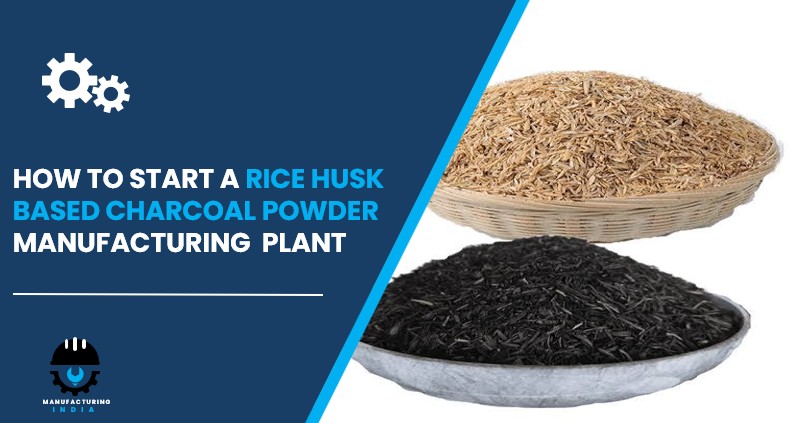
Rice husk based charcoal powder is a fine carbon-rich material produced through the controlled carbonisation (pyrolysis) of rice husk, an abundant agricultural by-product generated during paddy milling. The material contains high fixed carbon content and a highly porous structure, making it well suited for applications such as fuel briquettes, activated carbon production, metallurgy, agriculture as a soil conditioner (biochar), and water treatment. Rice husk charcoal powder serves as a renewable alternative to conventional coal-based charcoal and contributes to agricultural waste valorisation, transforming a low-value milling residue into a commercially significant industrial input.
The powder is lightweight, exhibits high adsorption capacity particularly when subjected to chemical or physical activation processes, and demonstrates efficient combustion characteristics, making it increasingly popular in environmentally sustainable industrial processes. Beyond energy applications, activated rice husk charcoal powder finds growing use in water and wastewater treatment, air purification, chemical filtration, and soil remediation applications owing to its well-developed pore structure and high surface area.
The global rice husk based charcoal powder market was valued at a significant volume in 2025 and is expected to expand at a healthy CAGR through 2034, supported by rising demand for sustainable biofuels, growing industrial adoption of bio-based carbon materials, and increasing regulatory and corporate pressure to reduce reliance on fossil-fuel-derived carbon inputs across multiple end-use industries.
Cost of Setting Up a Rice Husk Based Charcoal Powder Manufacturing Plant
The total capital investment required to establish a rice husk based charcoal powder manufacturing plant is shaped by several key parameters: annual production capacity (typically ranging from 5,000 to 20,000 MT per annum), the processing route adopted (simple carbonisation versus carbonisation with integrated activation), the degree of automation across feeding, carbonisation, cooling, grinding, sieving, and packaging sections, facility specification, raw material sourcing strategy, and applicable regulatory and environmental compliance requirements. Below is a structured breakdown of the major cost components.
1. Capital Expenditure (CapEx)
Total capital investment in a rice husk based charcoal powder manufacturing plant covers the following major heads:
Land and Site Development
This encompasses land acquisition or lease, site preparation, boundary development, and utilities connectivity. Site selection should prioritise proximity to rice milling clusters to ensure a steady, low-transport-cost supply of rice husk, which is a bulky, low-density material with high logistics sensitivity. Access to reliable power for grinding, conveying, and packaging equipment, road infrastructure for inbound rice husk and outbound charcoal powder and briquettes, availability of process water for cooling operations, and a trained local workforce are critical site selection criteria. Compliance with industrial zoning regulations, pollution control norms applicable to biomass carbonisation operations (emissions, particulate matter, smoke), and waste management frameworks must be assessed from project initiation.
Civil Works and Construction
Building costs cover the main processing facility including the rice husk reception and storage yard, pre-drying area, carbonisation unit, cooling and discharge area, crushing and grinding section, sieving and classification area, optional activation section (chemical or steam activation), product storage and packaging hall, quality control laboratory, administrative block, and utility infrastructure including power supply, water systems, particulate emission control (cyclone separators, bag filters), and effluent management. Construction must comply with applicable factory act requirements, pollution control board clearances, and local building regulations.
Machinery and Equipment
Machinery represents the single largest CapEx component. Key equipment required for a rice husk based charcoal powder manufacturing plant includes:
- Rice Husk Reception and Storage Systems: Receiving hoppers, conveying systems, and covered storage bays for rice husk, with inventory management for consistent feedstock availability to carbonisation units.
- Pre-Drying Equipment: Rotary dryers or fixed-bed dryers to reduce moisture content of incoming rice husk to optimal levels (below 15%) for efficient, uniform carbonisation and high fixed carbon yield.
- Carbonisation Units: Fixed-bed carbonisation kilns, continuous rotary carbonisation furnaces, or carbonisation retorts operating under controlled temperature and oxygen-limited atmospheres to convert dry rice husk into charcoal with target fixed carbon content and low ash residue.
- Cooling and Discharge Systems: Cooling chambers or rotary coolers to reduce the temperature of hot carbonised material safely before handling, crushing, and grinding, minimising fire risk and product quality loss.
- Crushing and Grinding Equipment: Jaw crushers and hammer mills or ring mills for size reduction of carbonised rice husk lumps into fine charcoal powder of specified particle size distributions for downstream applications.
- Sieving and Classification Systems: Vibrating screen classifiers to separate charcoal powder into particle size fractions meeting customer specifications for different end-use applications including briquetting, activated carbon production, and metallurgy.
- Optional Activation Units: Chemical activation reactors (using phosphoric acid or zinc chloride) or steam activation furnaces (using superheated steam) to develop high specific surface area and pore volume in activated charcoal powder for water treatment and adsorption applications.
- Dust Collection and Emission Control: Cyclone separators and bag filter units to capture fine charcoal dust during grinding, conveying, and packaging operations, ensuring occupational safety compliance and minimising product loss and environmental emissions.
- Briquetting Presses (Optional): Mechanical or hydraulic briquetting machines to compress charcoal powder into fuel briquettes, a higher-value product format for biomass energy markets and cooking fuel applications.
- Packaging Lines: Automated bag filling, sealing, and palletising equipment for retail packaging (5–50 kg bags) and bulk packaging (jumbo bags, bulk containers) for industrial customers, along with labelling and dispatch infrastructure.
- Quality Control Laboratory Equipment: Instruments for fixed carbon content, ash content, volatile matter, moisture, particle size distribution, calorific value, and surface area analysis to verify compliance with product quality standards.
- Material Handling and Warehousing: Belt conveyors, bucket elevators, pneumatic conveying systems for carbonised and powdered material, and finished goods warehousing with appropriate fire prevention measures for carbon powder storage.
Other Capital Costs
These include pre-operative expenses, commissioning charges, staff training and competency development for carbonisation process operation and quality management, initial raw material and consumable inventory for production commissioning, regulatory compliance setup including Pollution Control Board clearances, Factory License, environmental impact assessment compliance, and quality management system establishment costs.
Request a Sample Report for In-Depth Market Insights: https://www.imarcgroup.com/rice-husk-based-charcoal-powder-manufacturing-plant-project-report/requestsample
2. Operational Expenditure (OpEx)
Raw materials principally rice husk procured from rice milling units constitute the dominant operating cost, typically representing 40–50% of total OpEx. Utility costs, driven primarily by electricity consumption of grinding, conveying, and packaging equipment, fuel for carbonisation furnaces or dryers, and emission control system operation, account for 25–30% of OpEx. Labour, maintenance, quality control, packaging materials, transportation, depreciation, taxes, and overhead costs constitute the remainder of the operating cost base.
3. Plant Capacity
The proposed rice husk based charcoal powder manufacturing facility is designed with an annual production capacity ranging between 5,000–20,000 MT, enabling economies of scale while maintaining operational flexibility. This capacity range supports a diversified product portfolio of standard carbonised rice husk powder, fine-ground charcoal powder, and activated charcoal powder, serving domestic energy, industrial, agricultural, and water treatment markets as well as export channels.
4. Profit Margins and Financial Projections
The project demonstrates healthy profitability potential under normal operating conditions. Financial projections encompass capital investment, operating costs, capacity utilisation ramp-up schedule, product mix between standard charcoal powder, activated carbon, and fuel briquettes, and forward demand outlook underpinned by growing sustainable energy adoption and industrial bio-carbon demand. A comprehensive feasibility analysis includes sensitivity analysis, Net Present Value (NPV), Internal Rate of Return (IRR), and Payback Period calculations.
Why Set Up a Rice Husk Based Charcoal Powder Manufacturing Plant?
Rising Demand for Sustainable Biofuels and Renewable Energy
Accelerating global commitments to reduce greenhouse gas emissions and transition away from fossil fuels are driving sustained demand for biomass-derived energy materials. Rice husk based charcoal powder and briquettes, as renewable, carbon-neutral alternatives to coal and conventional charcoal, are increasingly preferred across industrial heating, cooking fuel, and power generation applications. Policy frameworks in Asia, Africa, and South America supporting biomass energy adoption and restricting coal use are creating structural, long-term tailwinds for bio-charcoal manufacturers positioned in or near major rice-producing regions.
Growing Industrial Adoption of Eco-Friendly Carbon Materials
Industries including metallurgy, foundry operations, chemical processing, and filtration are progressively shifting toward bio-based carbon substitutes to meet corporate sustainability commitments and regulatory requirements for reduced carbon footprints. Rice husk charcoal powder, with its competitive fixed carbon content, low sulphur levels, and renewable origin, is finding growing acceptance as a partial substitute for petroleum coke, coal-based carbon, and conventional activated carbon across industrial applications, opening significant volume opportunities for domestic producers.
Agricultural Waste Valorisation and Circular Economy Alignment
Rice husk is one of the largest-volume agricultural residues generated globally, with hundreds of millions of tonnes produced annually as a by-product of paddy milling. Historically managed through open burning a major source of air pollution and greenhouse gas emissions rice husk is increasingly recognised as a valuable feedstock for value-added manufacturing. Establishing a rice husk charcoal powder plant directly contributes to circular economy and agricultural waste valorisation goals, reducing open-field burning, improving income for milling communities, and aligning with sustainability mandates increasingly required by industrial buyers and export markets.
High and Growing Demand from Water and Wastewater Treatment
Rapid urbanisation, industrial expansion, and tightening water quality regulations across Asia, Africa, and developing markets are driving surging demand for cost-effective adsorbents for water treatment and wastewater purification. Activated rice husk charcoal powder, with its high surface area and effective adsorption characteristics, serves as a cost-competitive alternative to conventionally produced activated carbon from wood or coal, particularly for applications in municipal wastewater treatment, industrial effluent purification, and drinking water filtration, providing a significant and structurally growing end-use market for integrated producers.
Soil Amendment and Biochar Applications in Agriculture
The application of biochar including rice husk charcoal as a soil conditioner is gaining significant traction in sustainable agriculture as a mechanism to improve soil organic carbon content, water retention, nutrient availability, and crop yields while simultaneously sequestering carbon in agricultural soils for extended periods. Growing awareness among farmers and agribusinesses of the soil health and productivity benefits of biochar application, combined with emerging carbon credit frameworks that incentivise biochar soil application, is expanding demand from the agricultural sector and creating additional diversified offtake channels for charcoal powder producers.
Asia Pacific Market Dominance and Export Opportunities
Asia Pacific dominated the global rice husk based charcoal powder market with a revenue share of over 68% in 2025, reflecting the region’s dual advantage as both the largest producer of rice husk feedstock and the largest consumer of bio-charcoal across energy, industrial, and agricultural applications. India, China, Southeast Asia, and South Asia represent the largest domestic markets. In parallel, growing import demand from Europe, the Middle East, and East Africa for sustainable bio-carbon materials and activated carbon presents significant export revenue opportunities for well-positioned manufacturers in rice-producing nations.
Low-Cost, Abundant, and Geographically Concentrated Feedstock
India’s position as one of the world’s largest rice-producing nations generates substantial volumes of rice husk as a milling by-product, concentrated around major paddy-milling clusters across Uttar Pradesh, Punjab, Haryana, West Bengal, Andhra Pradesh, Telangana, and Chhattisgarh. This geographic concentration of low-cost feedstock allows processors to establish plants in proximity to supply sources, minimising inbound logistics costs and ensuring consistent, year-round raw material availability a key structural cost advantage relative to other bio-carbon feedstocks that are more geographically dispersed or price-volatile.
Scalable Operations and Phased Investment Flexibility
The rice husk charcoal powder value chain, spanning carbonisation, size reduction, and optional activation and briquetting, allows investors to begin operations at a moderate scale with carbonisation and grinding only, and progressively add activation capacity, briquetting lines, and quality upgrade capabilities as volumes and customer relationships develop. This phased investment approach reduces initial capital commitment while enabling market entry, with subsequent process upgrades improving margin capture through higher-value product segments such as activated carbon and premium fuel briquettes.
Manufacturing Process Overview
The rice husk based charcoal powder manufacturing operation transforms raw rice husk sourced from paddy milling units into carbonised charcoal powder, and optionally into activated charcoal powder or compressed fuel briquettes, through a sequence of pre-treatment, carbonisation, cooling, size reduction, classification, and packaging operations. The key process stages are:
- Raw Material Reception and Storage: Rice husk received from rice mills is weighed, sampled for moisture content and quality assessment, and transferred to covered storage bays. Inventory management ensures a consistent buffer stock to maintain uninterrupted carbonisation operations.
- Pre-Drying: Rice husk with moisture content above 15% is passed through rotary or fixed-bed dryers to reduce moisture to the target level for efficient carbonisation. Adequate drying ensures consistent carbonisation temperatures, high fixed carbon yields, and minimised smoke generation during the carbonisation process.
- Carbonisation: Dried rice husk is fed into carbonisation kilns, retorts, or continuous rotary carbonisation furnaces operating under controlled temperature profiles (typically 300–700°C) in limited-oxygen or inert atmospheres. The carbonisation process drives off volatile matter (moisture, tars, and gases), leaving behind a carbon-rich charcoal material with target fixed carbon content, ash content, and calorific value specifications.
- Cooling and Discharge: Hot carbonised material is transferred to cooling chambers or rotary coolers where it is brought to ambient temperature under controlled conditions to prevent spontaneous combustion, oxidation, and product quality loss before further size reduction and handling.
- Crushing and Grinding: Cooled carbonised rice husk is processed through jaw crushers and ring mills or hammer mills to reduce particle size to the target fineness specifications. Grinding parameters are adjusted based on end-use requirements, with finer grinding for activated carbon and water treatment applications and coarser product for fuel briquettes.
- Sieving and Classification: Ground charcoal powder is passed through vibrating screen classifiers to separate into particle size fractions. Oversized material is recycled to the grinding stage, and undersized or specification-matched powder is transferred to product storage. Multiple size fractions may be packaged separately for different market segments.
- Optional Activation: For activated charcoal powder production, classified charcoal powder undergoes chemical activation (impregnation with phosphoric acid or zinc chloride followed by heat treatment) or steam activation (treatment with superheated steam in a rotating or fixed activation furnace) to develop high specific surface area, micropore volume, and adsorption capacity. Activation significantly increases product value for water treatment, air purification, and industrial filtration applications.
- Optional Briquetting: Charcoal powder intended for fuel briquette markets is mixed with a natural binder (starch or molasses) and compressed in mechanical or hydraulic briquetting presses into standardised briquette shapes, dried, and packaged for cooking fuel and industrial heating markets.
- Quality Control: Charcoal powder and briquettes are tested for fixed carbon content, ash content, volatile matter, moisture, particle size distribution, calorific value, and activated carbon surface area (where applicable) to verify compliance with product quality specifications and customer requirements before release for packaging.
- Packaging and Dispatch: Charcoal powder is packed in polyethylene-lined woven bags (5–50 kg), jumbo bags, or bulk containers for industrial customers. Fuel briquettes are packed in retail and institutional formats. Products are labelled with quality specifications and dispatched to domestic and export markets.
Key Applications of Rice Husk Based Charcoal Powder
The rice husk based charcoal powder market serves several major end-use segments across energy, industrial, agricultural, and environmental sectors:
- Energy and Fuel Sector: Rice husk charcoal powder is compacted into fuel briquettes used as a renewable, higher-calorific-value substitute for firewood and conventional charcoal in domestic cooking fuel, restaurant and food service fuel, and small industrial heating applications. Charcoal briquettes derived from agricultural waste are gaining regulatory and market acceptance as a cleaner cooking fuel in developing markets.
- Water and Wastewater Treatment: Activated rice husk charcoal powder, with its high specific surface area and effective adsorption characteristics, is used in water treatment plants, effluent treatment facilities, and point-of-use water filters to remove organic pollutants, heavy metals, colour, and odour from water and wastewater streams, offering a cost-competitive, renewable alternative to conventional coal-derived activated carbon.
- Metallurgy and Foundry Industry: Carbon-rich rice husk charcoal powder is used as a reducing agent in metal smelting, as a carburizing agent in steel production, and as a cover material in foundry operations to prevent oxidation during casting, replacing or supplementing conventional coke and coal-derived carbon materials in select metallurgical applications.
- Agriculture and Soil Amendment: Rice husk charcoal powder applied as biochar to agricultural soils improves soil carbon content, porosity, water retention, and microbial activity, supporting better crop yields and reduced fertiliser requirements. Growing farmer adoption of biochar-based soil management practices, combined with emerging carbon sequestration credit programmes, is expanding this application as a sustainable and commercially viable outlet for charcoal powder producers.
- Chemical and Industrial Filtration: Activated rice husk charcoal powder serves as an adsorbent in gas and liquid phase filtration systems across chemical manufacturing, pharmaceutical, food and beverage processing, and air purification applications, leveraging its renewable origin, competitive cost, and effective adsorption performance for removal of impurities, colours, odours, and pollutants.
Global Rice Husk Based Charcoal Powder Market Outlook
The global rice husk based charcoal powder market is on a sustained growth trajectory, driven by multiple structural demand drivers spanning the energy, industrial, agricultural, and environmental sectors. Asia Pacific dominated the global market with a revenue share of over 68% in 2025, reflecting the region’s large rice production base, abundant feedstock availability, and high domestic demand for bio-energy and agricultural carbon products. The market benefits from the following structural growth drivers:
- Rising demand for sustainable biofuels and renewable energy materials as governments and industries accelerate decarbonisation commitments and transition away from fossil-fuel-derived carbon inputs
- Growing industrial adoption of eco-friendly carbon materials across metallurgy, filtration, and chemical processing driven by corporate sustainability mandates and regulatory requirements
- Expanding water and wastewater treatment infrastructure in rapidly urbanising developing economies requiring cost-effective activated carbon adsorbents
- Increasing farmer and agribusiness adoption of biochar soil amendment practices for soil health improvement and emerging carbon sequestration credit monetisation
- Regulatory pressure on open-field burning of agricultural residues, particularly rice husk, incentivising value-added utilisation through carbonisation and charcoal powder manufacturing
- Growing export demand from Europe, the Middle East, and East Africa for sustainable bio-carbon materials sourced from rice-producing nations with large-scale carbonisation capacity
- Supportive government policies and incentive frameworks in major rice-producing countries encouraging agricultural waste valorisation and renewable energy manufacturing
- Increasing R&D investment and commercialisation of rice husk derived activated carbon for specialised applications in pharmaceuticals, food and beverage, and advanced filtration, expanding addressable market scope for integrated producers
Major players in the global rice husk based charcoal powder and bio-carbon industry include established biomass energy producers, agricultural waste processing companies, and activated carbon manufacturers operating across India, China, Vietnam, Thailand, Indonesia, and other major rice-producing nations. End-use sectors served include the energy and fuel sector, water and wastewater treatment industry, metallurgy and foundry industry, agriculture and soil amendment market, and chemical and industrial filtration sector.
Licenses and Regulatory Requirements
Establishing a rice husk based charcoal powder manufacturing unit requires a range of approvals and certifications, which may vary by country and jurisdiction, including:
- Business registration and company incorporation under applicable company law
- Factory License under applicable state Factories Act provisions for manufacturing operations
- Pollution Control Board Clearances Consent to Establish (CTE) and Consent to Operate (CTO) for manufacturing operations involving biomass carbonisation, particulate emissions, and effluent generation
- Environmental clearance under applicable environmental impact assessment regulations, depending on plant scale and category classification
- Fire Safety No-Objection Certificate from competent fire safety authority, given the fire risk associated with carbon powder handling, storage, and carbonisation operations
- FSSAI (Food Safety and Standards Authority of India) License, where activated charcoal powder is intended for food and beverage processing or drinking water treatment applications
- Bureau of Indian Standards (BIS) certification for activated carbon products, where applicable, for water treatment and other regulated applications
- ISO 9001:2015 Quality Management System Certification for quality management infrastructure compliance
- ISO 14001:2015 Environmental Management System Certification, increasingly required by export market buyers and industrial customers seeking environmental supply chain compliance
- Occupational Health and Safety management compliance (ISO 45001 / Factories Act provisions) for worker safety in carbonisation, grinding, and carbon powder handling environments
- Weights and Measures (Legal Metrology) registration for packaged commodity labelling and net quantity declaration
- Export-Import Code (IEC) for international market access and export sales
- Trademark and Brand Registration for proprietary branded product launch
Key Challenges to Consider
Raw Material Supply Consistency and Seasonal Availability
Rice husk is a seasonal by-product of paddy milling, with availability concentrated in the post-harvest processing seasons and subject to variation based on rice production output, milling practices, and competing uses (biomass power generation, silica extraction, composting). Securing consistent, year-round rice husk supply at competitive prices requires establishing structured long-term procurement arrangements with multiple milling units, investing in covered storage capacity to buffer seasonal supply variations, and potentially sourcing from geographically dispersed milling clusters to mitigate localised supply disruptions.
Carbonisation Process Control and Product Quality Consistency
Achieving consistent charcoal powder quality including target fixed carbon content, ash content, volatile matter, particle size distribution, and calorific value requires disciplined carbonisation temperature control, consistent feedstock moisture management, and rigorous process monitoring across all production batches. Variation in rice husk quality, moisture content, and ash composition between supply sources can affect carbonisation efficiency and product consistency, requiring incoming raw material quality assessment and process parameter adjustment to maintain output quality within customer specification limits.
Emissions Control and Environmental Compliance
Biomass carbonisation generates smoke, particulate matter, volatile organic compounds, and combustion gases including carbon monoxide and polycyclic aromatic hydrocarbons. Managing emissions from carbonisation kilns and dryers to comply with Pollution Control Board standards and applicable air quality norms requires investment in emission control infrastructure including cyclone separators, afterburners, and bag filter systems, along with operational discipline in maintaining equipment performance. Failure to adequately manage emissions creates regulatory exposure and community relations risks that can disrupt production.
Fire and Safety Risk Management
Carbon powder particularly fine charcoal powder presents significant fire and dust explosion risks during grinding, conveying, storage, and packaging operations. Effective fire prevention requires grounding and bonding of equipment, spark detection and suppression systems, anti-static packaging materials, controlled atmospheres in storage areas, regular housekeeping to prevent dust accumulation, and comprehensive occupational health and safety training for all plant personnel. Any fire incident in a carbon powder facility can result in significant production loss, asset damage, and regulatory action.
Market Pricing Volatility and Competition
Rice husk charcoal powder prices in domestic and export markets are influenced by competing bio-carbon materials (bamboo charcoal, wood charcoal, coconut shell charcoal), conventional activated carbon from coal and wood sources, and seasonal supply dynamics in major producing regions. Periods of excess bio-charcoal supply or low energy commodity prices can compress selling prices and margins, requiring producers to differentiate on product quality, consistency, value-added activation, and reliable supply performance to maintain competitive positioning and margin stability through commodity price cycles.
Quality Certification and Export Market Access
Access to premium export markets in Europe, the Middle East, and industrialised Asia requires compliance with international product quality standards, environmental certification requirements, and increasingly, supply chain sustainability documentation and third-party audits. Building and maintaining the quality infrastructure, laboratory capability, and certification portfolio necessary to serve these markets requires sustained investment and operational discipline but creates significant pricing and volume advantages relative to commodity domestic markets and justifies the compliance overhead through improved revenue per tonne.
Capital Intensity of Activation and Briquetting Upgrades
While basic carbonisation and grinding operations can be established at moderate capital investment, adding integrated activation capacity and briquetting lines to upgrade product value represents a substantial incremental capital commitment. New entrants must carefully evaluate the phasing of investment starting with carbonisation-only operations selling standard charcoal powder, then progressively adding activation and briquetting as volumes and customer relationships develop to manage capital deployment efficiently while building operational expertise and market presence.
Frequently Asked Questions (FAQs)
1. How much does it cost to set up a rice husk based charcoal powder manufacturing plant?
The total investment depends on plant capacity (5,000–20,000 MT per annum), the processing route adopted (simple carbonisation versus carbonisation with integrated activation and/or briquetting), automation level, facility specification, location, and target market certifications. Costs cover land, civil construction (carbonisation unit, cooling area, grinding section, emission control systems, storage, quality laboratory, utilities), machinery (dryers, carbonisation furnaces, crushers, mills, sieving classifiers, optional activation units and briquetting presses, packaging lines), quality certifications, working capital, and regulatory compliance. A comprehensive feasibility study from IMARC Group provides detailed, capacity-specific cost estimates covering all CapEx and OpEx components.
2. Is rice husk based charcoal powder manufacturing a profitable business in 2026?
Yes. Sustained and growing demand from the energy sector (fuel briquettes), water and wastewater treatment (activated carbon), metallurgy, and agriculture (biochar) combined with gross profit margins of 35–45% and net profit margins of 18–25% make rice husk charcoal powder manufacturing financially attractive. Low-cost, abundant feedstock availability in major rice-producing regions provides a significant structural cost advantage, while product mix optimisation through activation and briquetting enables margin enhancement.
3. What machinery and equipment are required for a rice husk based charcoal powder manufacturing plant?
Key equipment includes rice husk reception and storage systems, pre-drying equipment, carbonisation kilns or continuous rotary carbonisation furnaces, cooling and discharge systems, jaw crushers and grinding mills (hammer mills or ring mills), vibrating screen classifiers, optional activation units (chemical or steam activation furnaces), optional briquetting presses, dust collection and emission control systems (cyclone separators, bag filters), automated packaging lines for bags and jumbo bags, and quality control laboratory equipment for fixed carbon, ash, volatile matter, moisture, particle size, and calorific value analysis.
4. What licenses and approvals are required?
Required approvals include company registration, Factory License, Pollution Control Board Consent to Establish and Consent to Operate for carbonisation operations, environmental clearance under applicable regulations, Fire Safety NOC, ISO 9001:2015 and ISO 14001:2015 certifications (often required by export market buyers), and FSSAI licensing where the product is intended for food or water treatment applications. Export-Import Code registration is required for international market access.
5. How long does it take to commission a rice husk based charcoal powder manufacturing plant?
Typically 9–18 months from project initiation to commercial production launch, depending on project scale, facility construction timeline, equipment procurement lead times for carbonisation and grinding systems, regulatory approval timelines, and Pollution Control Board clearance processing, which should be initiated early in the project to avoid delays to commercial launch.
6. What are the key raw materials for rice husk charcoal powder manufacturing?
The primary raw material is rice husk sourced from rice milling units, which should be relatively dry (moisture below 15% for efficient carbonisation) and free of excessive contaminants. Other key inputs include fuel or electricity for dryers and carbonisation furnaces, activation chemicals (phosphoric acid or zinc chloride for chemical activation, or steam for physical activation), natural binders (starch or molasses) for briquette production, and packaging materials including woven bags, jumbo bags, and industrial bulk containers.
7. What is the break-even period for a rice husk based charcoal powder manufacturing plant?
The break-even period depends on capacity utilisation ramp-up trajectory, the product mix between standard charcoal powder, activated carbon, and fuel briquettes, raw material supply consistency, and product offtake arrangements with industrial buyers and export market customers. Securing long-term supply agreements with rice mills and stable offtake contracts with water treatment companies, industrial fuel users, and activated carbon distributors significantly improves revenue predictability and supports faster break-even achievement.
8. What are the main product forms of rice husk charcoal and their applications?
The principal product forms include standard carbonised rice husk powder (for fuel briquettes, metallurgy, and industrial fuel applications), fine-ground charcoal powder (for filtration, agriculture, and lower-grade activated carbon applications), chemically or steam-activated charcoal powder (for water and wastewater treatment, air purification, and industrial adsorption applications), and compressed fuel briquettes (for cooking fuel, restaurant fuel, and small industrial heating applications). Activation significantly increases product value and unlocks premium industrial and environmental application segments.
9. What government incentives are available for rice husk charcoal powder manufacturers?
Manufacturers may benefit from agricultural waste utilisation and biomass energy incentive schemes, state-level industrial investment incentives and capital subsidies for agro-processing and biomass energy units, renewable energy sector promotional policies, infrastructure support under food and agro-processing park schemes, carbon credit and environmental service monetisation frameworks for biochar soil application, and export promotion benefits for activated carbon and bio-carbon material exports. Evolving waste management and open-burning restriction policies are also creating supportive regulatory environments for rice husk value-added processing.
10. How does rice husk charcoal powder manufacturing compare to other biomass carbon materials?
Compared to coconut shell charcoal or bamboo charcoal, rice husk based charcoal powder benefits from a geographically concentrated, very low-cost, and highly abundant feedstock available in large volumes from rice milling clusters. However, rice husk charcoal typically has higher ash content due to the silica content of rice husk, which can limit its suitability for some premium activated carbon applications relative to coconut shell carbon. Effective ash management through process optimisation, feedstock blending, or application targeting is important to maintain competitive product quality and realise the cost and volume advantages of rice husk as a feedstock.
Key Takeaways for Investors
The rice husk based charcoal powder manufacturing industry represents a structurally resilient and financially attractive investment opportunity positioned at the convergence of growing global demand for sustainable bio-carbon materials, accelerating agricultural waste valorisation, and expanding industrial and environmental applications for bio-derived activated carbon and fuel briquettes. Gross profit margins of 35–45% and net profit margins of 18–25% make the business fundamentals compelling, while the abundant, geographically concentrated, and low-cost rice husk feedstock base in major rice-producing nations such as India provides a structural cost advantage that is difficult to replicate with alternative bio-carbon feedstocks.
Asia Pacific’s dominance of over 68% of the global market, combined with growing export demand from Europe, the Middle East, and Africa for sustainable bio-carbon materials, presents significant volume and revenue growth opportunities for manufacturers with quality-certified products and reliable supply infrastructure. The scalable, modular nature of carbonisation and grinding operations allows investors to begin at moderate scale and progressively add higher-value capabilities activation, briquetting, and export-oriented quality systems as operational experience and market positioning develop, managing capital deployment risk while building long-term competitive advantage.
The convergence of tightening agricultural waste burning regulations, growing industrial sustainability procurement requirements, expanding water and wastewater treatment infrastructure investment, and emerging biochar carbon credit frameworks creates multiple simultaneous demand growth drivers across different end-use segments, providing resilience against single-sector demand volatility. For investors seeking a commercially viable, environmentally aligned agro-industrial manufacturing opportunity with proven technology, abundant feedstock, and multiple growing market channels, rice husk based charcoal powder manufacturing represents a compelling and well-timed investment proposition.
About the Author