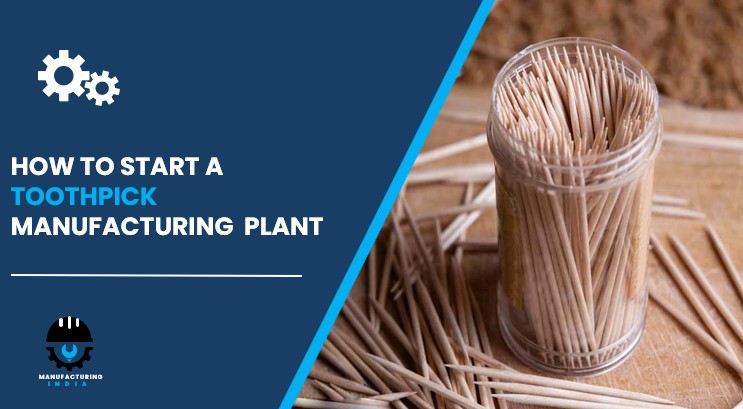
Setting up a toothpick manufacturing plant in India represents an attractive, low-capital investment opportunity underpinned by consistent, non-cyclical demand from the foodservice and hospitality sector, rising hygiene awareness, growing retail and FMCG distribution networks, and the accelerating global shift toward biodegradable, eco-friendly disposable products. As the global hospitality and quick-service dining industry expands and consumers exhibit increasing awareness of oral hygiene and sustainable consumption habits, toothpicks made from wood, bamboo, and other biodegradable materials continue to occupy an essential position across households, restaurants, catering services, and specialty retail channels. This steady demand trajectory, combined with relatively simple processing technology, low capital intensity, and abundant raw material availability, creates a highly favourable manufacturing environment for new entrants seeking a scalable, high-volume consumer staple business.
What is a Toothpick?
A toothpick is a small, slender stick, typically made from wood, bamboo, or plastic, designed primarily for oral hygiene and food handling purposes. Toothpicks are used to remove food particles lodged between teeth, as well as for serving appetisers, garnishing cocktails, and holding food items together in culinary applications. Wooden and bamboo variants are the most widely produced owing to their biodegradability, low production cost, and ease of mass manufacturing at scale.
Toothpicks are manufactured and sold in several forms, including round, flat, single-pointed, and double-pointed variants, depending on the target application and end-use segment. Beyond oral hygiene and food service, toothpicks are extensively used in handicrafts, model making, and light industrial applications owing to their uniform size, consistent structure, and ready availability, making them a staple low-cost consumable across both household and commercial environments globally.
The global toothpick market was valued at approximately USD 0.67 Billion in 2025 and is expected to reach USD 0.92 Billion by 2034, exhibiting a CAGR of 3.6% from 2026 to 2034, supported by rising foodservice demand, growing hygiene awareness, and the expanding hospitality sector.
Cost of Setting Up a Toothpick Manufacturing Plant
The total capital investment required to establish a toothpick manufacturing plant is shaped by several key parameters: annual production capacity (typically ranging from 5 to 20 Billion pieces per annum), the raw material employed (birch wood versus bamboo), the level of automation across cutting, forming, and packaging sections, facility specification, raw material sourcing strategy, and applicable regulatory and quality compliance requirements. Below is a structured breakdown of the major cost components.
1. Capital Expenditure (CapEx)
Total capital investment in a toothpick manufacturing plant covers the following major heads:
Land and Site Development
This encompasses land acquisition or lease, site preparation, boundary development, and utilities connectivity. Site selection should prioritise proximity to birch or bamboo sourcing regions to ensure a steady, low-transport-cost supply of raw logs, along with access to reliable power for cutting and drying operations, strong road logistics for inbound timber and outbound finished goods, availability of process water where required, and a trained workforce for plant operations and quality control. Compliance with industrial zoning regulations, food-contact manufacturing standards, and timber sourcing and environmental clearance frameworks must be assessed from project initiation.
Civil Works and Construction
Building costs cover the main processing facility including the log reception and storage yard, cutting and slicing section, stick forming and rounding house, polishing and drying section, sorting and quality inspection area, automated packaging and dispatch infrastructure, quality control laboratory, administrative block, and utility infrastructure including power backup, drying kilns, and effluent and waste handling systems. Construction must comply with applicable factory act requirements, food-contact material manufacturing standards, and fire safety norms for timber handling and drying areas.
Machinery and Equipment
Machinery represents the single largest CapEx component. Key equipment required for a toothpick manufacturing plant includes:
- Log Reception and Debarking Systems: Log intake handling equipment, debarking machines, and cross-cutting saws to prepare raw birch or bamboo logs prior to slicing
- Veneer Slicing Machines: Rotary veneer-cutting equipment that slices conditioned logs into continuous thin sheets of uniform thickness suitable for downstream cutting into toothpick blanks
- Toothpick Forming and Rounding Machines: High-speed cutting and rounding equipment that shapes veneer strips into individual round or flat toothpick blanks with single or double-pointed tips
- Pointing and Sharpening Units: Precision equipment for forming clean, consistent points on toothpick ends to meet retail and foodservice quality specifications
- Polishing Drums: Rotary polishing and burnishing equipment that smooths surface fibres and removes splinters, producing a uniform, splinter-free finish
- Drying Systems: Continuous or batch drying kilns and conveyor dryers that reduce moisture content of formed toothpicks to prevent mould growth and ensure dimensional stability during storage
- Sorting and Grading Equipment: Automated sorting lines that separate toothpicks by length, diameter, and quality grade, rejecting broken or malformed pieces prior to packaging
- Quality Control Laboratory Equipment: Equipment for moisture content, dimensional accuracy, splinter, and food-contact safety testing to verify compliance with applicable quality standards
- Automated Packaging Lines: Counting, filling, and sealing equipment for retail dispensers, boxes, and bulk cartons, along with bulk loading facilities for wholesale and institutional dispatch
- Material Handling and Warehousing: Conveyors, log yard handling equipment, and finished goods warehousing with FIFO stock management for both raw material and packaged output
Other Capital Costs
These include pre-operative expenses, commissioning charges, import duties on specialised forming and polishing equipment, staff training and competency development, initial raw material and consumable inventory for production commissioning, and regulatory compliance setup including food-contact material certification, sustainable timber sourcing documentation, and quality management system establishment costs.
Request a Sample Report for In-Depth Market Insights: https://www.imarcgroup.com/toothpick-manufacturing-plant-project-report/requestsample
2. Operational Expenditure (OpEx)
Raw materials, principally birch or bamboo wood procured from timber suppliers, along with packaging consumables, constitute the dominant operating cost, typically representing 60-70% of total OpEx. Utility costs, driven primarily by electricity consumption of cutting, forming, and drying equipment, account for 10-15% of OpEx. Labour, maintenance, quality control, packaging, transportation, depreciation, taxes, and overhead costs constitute the remainder of the operating cost base.
3. Plant Capacity
The proposed toothpick manufacturing facility is designed with an annual production capacity ranging between 5-20 Billion pieces, enabling economies of scale while maintaining operational flexibility. This capacity range supports a diversified product portfolio spanning round, flat, single-pointed, and double-pointed toothpick variants, serving foodservice, household retail, and handicraft channels.
4. Profit Margins and Financial Projections
The project demonstrates healthy profitability potential under normal operating conditions. Financial projections encompass capital investment, operating costs, capacity utilisation ramp-up schedule, product mix across toothpick variants, and forward demand outlook underpinned by sustained foodservice and hospitality sector growth. A comprehensive feasibility analysis includes sensitivity analysis, Net Present Value (NPV), Internal Rate of Return (IRR), and Payback Period calculations. Gross profit margins for toothpick manufacturing typically range from 30-40%, supported by stable demand, low raw material complexity, and efficient high-volume production. Net profit margins of 15-25% are achievable with disciplined cost management, optimal capacity utilisation, and effective distribution channel management.
Why Set Up a Toothpick Manufacturing Plant?
Consistent, Non-Cyclical Everyday Demand
Toothpicks are essential low-cost consumables with continuous demand across households, restaurants, and commercial establishments, largely insulated from broader economic cycles. This steady baseline demand, driven by routine oral hygiene use and everyday foodservice applications, provides new entrants with a resilient revenue base and predictable production planning relative to more cyclical manufacturing categories.
Low Capital Intensity and Simple Processing Technology
Compared to many other industrial manufacturing categories, toothpick production requires relatively simple and moderately priced machinery, with a straightforward process flow from log slicing through forming, polishing, and packaging. This lower capital intensity makes the sector accessible to new entrants and enables faster commissioning timelines and quicker paths to positive cash flow.
Eco-Friendly, Biodegradable Product Positioning
Bamboo and wooden toothpicks are fully biodegradable, aligning with growing consumer and regulatory preference for sustainable disposable products and away from single-use plastics. As governments and retailers increasingly restrict plastic disposables, manufacturers of wood and bamboo-based toothpicks are well positioned to capture demand shifting away from plastic alternatives.
Expanding Foodservice and Hospitality Sector Demand
Growth in restaurants, cafes, catering services, and quick-service dining formats is driving sustained institutional demand for toothpicks used in food presentation, garnishing, and serving applications. The global hospitality industry’s continued expansion, particularly across developing markets, provides a structural demand tailwind for toothpick manufacturers with strong foodservice distribution relationships.
Wide, Low-Complexity Distribution Network
Toothpicks can be distributed efficiently through retail, wholesale, and institutional channels with minimal logistics complexity given their light weight and compact packaging. This ease of distribution supports rapid market entry and scalable expansion into new geographies and customer segments without significant incremental logistics investment.
Manufacturing Process Overview
The toothpick manufacturing operation transforms raw birch or bamboo logs into finished, packaged toothpicks through a sequence of cutting, forming, drying, and packaging operations. The key process stages are:
- Raw Material Selection and Cutting: Birch or bamboo logs are selected for straightness and quality, then cross-cut into manageable lengths suited to downstream slicing equipment
- Debarking and Log Conditioning: Logs are debarked and, where required, steamed or soaked to soften fibres and improve slicing quality prior to veneer cutting
- Slicing into Thin Veneers: Conditioned logs are rotary-sliced into continuous thin veneer sheets of uniform thickness, which serve as the base material for individual toothpick blanks
- Stick Shaping and Rounding: Veneer sheets are cut into narrow strips and shaped into round or flat toothpick blanks using precision cutting and rounding equipment
- Pointing: Toothpick blanks are precision-cut or ground at one or both ends to form clean, consistent single or double points
- Polishing: Formed and pointed toothpicks are tumbled in rotary polishing drums to smooth surface fibres, remove splinters, and achieve a uniform finish
- Drying: Polished toothpicks are dried in continuous or batch drying systems to reduce moisture content, preventing mould growth and preserving dimensional stability during storage and transit
- Sorting and Grading: Dried toothpicks pass through automated sorting equipment that separates finished pieces by length and diameter, rejecting broken, warped, or malformed units
- Quality Inspection: Finished toothpicks are tested for moisture content, dimensional accuracy, and surface finish to verify compliance with food-contact safety and quality specifications
- Packaging and Dispatch: Toothpicks are counted and packed into retail dispenser boxes, cartons, or bulk cases for household, foodservice, and wholesale distribution channels
Key Applications of Toothpicks
The toothpick market serves several major end-use segments across foodservice, household, retail, and craft sectors:
- Foodservice and HoReCa Sector: Toothpicks are extensively used for serving snacks, appetisers, and cocktail garnishes, ensuring hygiene and presentation quality in restaurants, hotels, and catering services
- Household Consumption: Toothpicks are commonly used for oral hygiene and small kitchen applications, offering an inexpensive and readily available everyday solution
- Retail and FMCG Distribution: Packaged toothpicks are sold through supermarkets, convenience stores, and local outlets, catering to daily consumer needs with high turnover rates
- Handicraft Industry: Toothpicks are widely used in craftwork, model making, and DIY projects due to their uniform size, rigidity, and easy availability
Global Toothpick Market Outlook
The global toothpick market was valued at approximately USD 0.67 Billion in 2025. According to IMARC Group estimates, the market is expected to reach USD 0.92 Billion by 2034, exhibiting a CAGR of 3.6% from 2026 to 2034. The toothpick market benefits from multiple structural demand drivers:
- Rising demand from the foodservice sector, including restaurants, cafes, and catering services, requiring toothpicks for food serving, presentation, and garnishing applications
- Increasing hygiene awareness, particularly across developing countries, supporting sustained household consumption of toothpicks for oral care
- Continued expansion of the global hospitality industry, providing a steady institutional demand base for foodservice-grade toothpicks
- Growing consumer and regulatory preference for eco-friendly, biodegradable disposable products, favouring wooden and bamboo toothpicks over plastic alternatives
- Expansion of retail and FMCG distribution networks, improving product availability and driving incremental household consumption
- Government-backed initiatives promoting biodegradable materials and viable plastic alternatives, including the establishment of dedicated centres of excellence in several countries to advance sustainable material innovation
Major players in the global toothpick manufacturing industry include TePe Oral Hygiene Products Ltd (U.K.), Jordan (Scandinavia), Panda Bambu (China), Daneson Ltd (Canada), and Bluem (U.K.), serving end-use sectors including the foodservice and HoReCa sector, household consumption, the hospitality industry, catering services, and the retail packaging industry.
Latest Industry Developments
- October 2025: A teenager in Naperville, Illinois set a new benchmark for the tallest toothpick tower, surpassing the existing Guinness World Record. The structure incorporated more than 20,000 toothpicks and close to 400 glue sticks, drawing attention to toothpick-based structural design and highlighting continued public interest in the product beyond its conventional uses.
- July 2024: A published case report from a Saudi Arabian medical group described an instance of gastric perforation caused by accidental ingestion of a toothpick, which had migrated through the stomach wall. The case, identified through imaging and endoscopic evaluation and resolved through surgical intervention, underscores the continued relevance of consumer safety awareness and product design considerations within the toothpick industry.
Licenses and Regulatory Requirements
Establishing a toothpick manufacturing unit requires a range of approvals and certifications, which may vary by country and jurisdiction, including:
- Business registration and company incorporation under applicable company law
- Factory License under applicable state Factories Act provisions for manufacturing operations
- Food-contact material compliance certification for products intended for use in food serving and oral hygiene applications
- BIS (Bureau of Indian Standards) certification or equivalent quality certification applicable to wooden consumable products, where applicable
- Sustainable timber sourcing documentation and, where applicable, Forest Stewardship Council (FSC) or equivalent certification for responsibly sourced wood and bamboo
- Pollution Control Board clearances, including Consent to Establish (CTE) and Consent to Operate (CTO), for manufacturing operations involving wood processing and waste generation
- ISO 9001:2015 Quality Management System Certification for quality management infrastructure compliance
- Weights and Measures (Legal Metrology) registration for packaged commodity labelling and net quantity declaration
- Export-Import Code (IEC) for international market access
- Trademark and Brand Registration for proprietary branded product launch
- Occupational Health and Safety management compliance (ISO 45001 / Factories Act provisions) for manufacturing worker safety in cutting and drying areas
Key Challenges to Consider
Raw Material Supply and Price Volatility
Birch and bamboo wood, which account for 60-70% of total operating costs, are subject to seasonal availability, regional supply constraints, and price fluctuations linked to broader timber and forestry market conditions. Securing long-term supply arrangements with reliable timber suppliers and maintaining adequate raw material inventory are critical operational priorities to avoid production disruptions.
Thin Margins and Price-Based Competition
As a high-volume, low-unit-value consumer staple, toothpick manufacturing is characterised by intense price-based competition, particularly from established regional and international producers operating at significant scale. New entrants must achieve efficient production economics and cost discipline to sustain margins in a market where pricing power at the individual unit level is limited.
Sustainable Sourcing and Environmental Compliance
Growing regulatory and consumer scrutiny of timber sourcing practices requires manufacturers to demonstrate responsible forestry sourcing and, in many markets, obtain sustainability certifications. Failure to maintain verifiable sustainable sourcing practices can restrict market access, particularly in export markets with stringent environmental compliance requirements.
Product Quality and Safety Consistency
Producing splinter-free, dimensionally consistent toothpicks that meet food-contact safety requirements across all production batches requires disciplined process control at the polishing, drying, and sorting stages. Any lapse in quality control can result in product recalls, reputational damage, and loss of retail or institutional accounts.
Competition from Low-Cost Import Sources
Toothpick manufacturing benefits from low technological barriers to entry, resulting in significant import competition from low-cost manufacturing hubs in several regions. Domestic manufacturers must leverage logistics advantages, quality differentiation, and distribution relationships to compete effectively against low-priced imported product.
Frequently Asked Questions (FAQs)
1. How much does it cost to set up a toothpick manufacturing plant?
The total investment depends on plant capacity (5-20 Billion pieces per annum), the raw material employed (birch wood or bamboo), automation level, facility specification, and location. Costs cover land, civil construction (log storage, cutting and forming sections, drying and polishing areas, quality laboratory, utilities), machinery (slicing machines, forming and rounding equipment, polishing drums, drying systems, sorting and packaging lines), quality certifications, working capital, and regulatory compliance. A comprehensive feasibility study from IMARC Group provides detailed, capacity-specific cost estimates covering all CapEx and OpEx components.
2. Is toothpick manufacturing a profitable business in 2026?
Yes. Sustained demand from the foodservice sector, household consumption, and retail distribution channels, combined with gross margins of 30-40% and net profit margins of 15-25%, make toothpick manufacturing a financially attractive, low-capital-intensity business. The relatively simple production process and consistent everyday demand further support favourable investment economics.
3. What machinery and equipment are required for a toothpick manufacturing plant?
Key equipment includes log reception and debarking systems, veneer slicing machines, toothpick forming and rounding machines, pointing and sharpening units, polishing drums, drying systems, sorting and grading equipment, quality control laboratory equipment, and automated packaging lines for retail and bulk dispatch.
4. What licenses and approvals are required?
Required approvals include company registration, Factory License, food-contact material compliance certification, quality certification for wooden consumable products where applicable, sustainable timber sourcing documentation, Pollution Control Board clearances, and ISO 9001 quality management system certification. Food-contact compliance is a key requirement given the product’s use in food serving applications.
5. How long does it take to commission a toothpick manufacturing plant?
Typically, 6-12 months from project initiation to commercial production launch, depending on project scale, facility construction timeline, equipment procurement lead times, and regulatory approval timelines, which should be initiated early in the project to avoid delays to commercial launch.
6. What are the key raw materials for toothpick manufacturing?
The primary raw materials are birch or bamboo wood logs sourced from timber suppliers. Other key inputs include packaging materials such as dispenser boxes, cartons, and bulk cases for finished product distribution.
7. What is the break-even period for a toothpick manufacturing plant?
The break-even period generally depends on capacity utilisation ramp-up trajectory, raw material supply consistency, and the strength of distribution arrangements across foodservice, retail, and wholesale channels. Securing long-term timber supply agreements and stable offtake arrangements with retail and institutional buyers significantly improves revenue predictability and supports faster break-even achievement.
8. What are the main forms of toothpicks and their applications?
The principal forms are round toothpicks, flat toothpicks, single-pointed toothpicks, and double-pointed toothpicks. Round and single-pointed variants are commonly used for oral hygiene and general food handling, while flat and double-pointed variants are frequently used in cocktail garnishing, appetiser serving, and craft applications.
9. What government incentives are available for toothpick manufacturers?
Processors may benefit from small and medium enterprise investment incentives, state-level industrial investment subsidies for wood-based manufacturing units, and government-backed initiatives supporting biodegradable and sustainable material innovation, including centres of excellence established to promote viable plastic alternatives in several countries.
10. How does toothpick manufacturing compare to other wood-based manufacturing in terms of setup?
Compared to other wood-processing industries, toothpick manufacturing benefits from lower capital intensity, simpler machinery, and shorter commissioning timelines, though it requires precision forming and polishing equipment to achieve the dimensional consistency and splinter-free finish demanded by foodservice and retail customers. The relatively low technological barrier to entry also means new entrants face meaningful competition from established low-cost producers.
Key Takeaways for Investors
The toothpick manufacturing industry represents an accessible and financially attractive investment opportunity positioned at the intersection of consistent everyday consumer demand, the expanding global foodservice and hospitality sector, and the ongoing shift toward biodegradable, eco-friendly disposable products. Stable demand from household, foodservice, retail, and handicraft channels provides resilience against single-segment demand volatility, while the sector’s relatively low capital intensity and simple processing technology make it accessible to new entrants seeking faster commissioning timelines and quicker paths to profitability. Growing regulatory and consumer preference for sustainable, biodegradable alternatives to plastic disposables provides a structural tailwind for wood and bamboo-based toothpick manufacturers, while the wide, low-complexity distribution network supports scalable expansion into new markets and customer segments. Investors evaluating this opportunity should carefully assess raw material sourcing strategy, quality control systems, and distribution relationships to build a competitive and durable market position.
About the Author