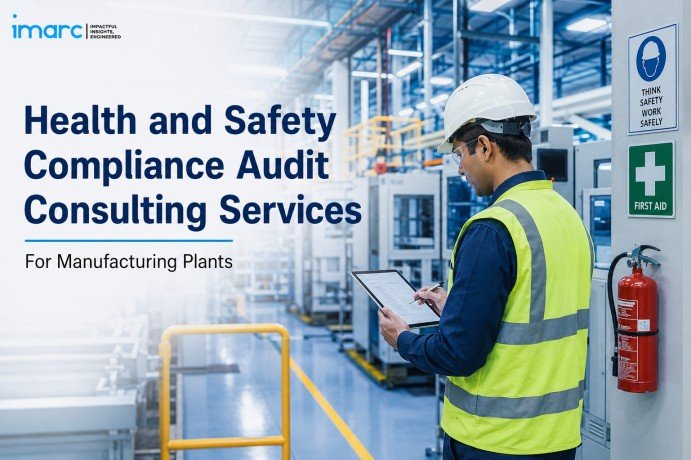
Health and Safety Compliance Audit Consulting
If you run or manage a manufacturing plant, you’ve probably heard “safety audit” used loosely , sometimes to mean a fire extinguisher check, sometimes a full regulatory review. That ambiguity matters, because a plant that treats every audit as a checklist exercise is very different from one that treats it as a genuine risk-management process.
This guide covers what a health and safety compliance audit consulting involves, why the timing matters for Indian manufacturers, what auditors look for on the ground, and how to prioritize what an audit finds , because not every gap deserves the same urgency.
What Sets a Compliance Audit Apart From a Safety Inspection
A safety inspection asks a narrow question: does a document, sign, or piece of equipment exist? A compliance audit asks a harder one: does it actually work, and is it actually followed?
That distinction plays out constantly on the shop floor. A plant might have a written lockout-tagout procedure on file, satisfying a paperwork check. A proper audit goes further and asks:
- Are isolation points on the equipment identified and labeled?
- Do technicians isolate machines before maintenance every time, or only when someone’s watching?
- Are the workers doing the isolating trained and authorized?
- Do contractors follow the same rule as in-house staff, or a looser version of it?
An inspection typically confirms presence. An audit tests effectiveness , comparing what’s written against what’s practiced, and treating the gap between them as the primary source of risk.
Why the Timing Matters for Indian Manufacturers
India’s Occupational Safety, Health and Working Conditions Code, 2020, which consolidates several earlier labour laws into a single framework, came into force on 21 November 2025. That makes 2026 an important period for manufacturers to reassess their compliance framework against current requirements.
The Code places specific obligations on employers, including keeping workplaces free of hazards likely to cause injury or occupational disease, meeting applicable OSH standards, providing health examinations where prescribed, and maintaining safe systems of work, safe handling of hazardous substances, and safe access and egress for factories.
It also formalizes safety committee and safety officer requirements for certain categories of factories , for instance, those with 500 or more workers, or those running hazardous processes with 250 or more.
Reassessment should be treated as more than routine housekeeping. It gives manufacturers an opportunity to confirm that their safety systems, controls, and documentation remain aligned with current legal requirements.
How ISO 45001 Fits Into the Picture
ISO 45001 and statutory compliance are related but distinct. ISO 45001 complements legal compliance by providing a structured management-system framework for identifying hazards, managing OH&S risks, and driving continual improvement , though certification alone doesn’t guarantee every legal obligation has been met.
| What legal compliance asks | What ISO 45001 adds |
| Do you meet the minimum legal requirement? | Do you have a system that catches gaps before they become violations? |
| Did an incident get reported? | Was the root cause investigated and fixed? |
| Does a policy exist? | Do workers understand and act on it? |
For plants pursuing certification, an audit built around ISO 45001’s structure can double as pre-certification preparation, giving compliance insight and certification readiness from the same exercise.
What Auditors Actually Inspect on the Ground
A thorough audit moves through the physical plant, not just the document register. Common areas include:
- Machinery and equipment , guarding, interlocks, emergency stop accessibility, and whether preventive maintenance records match actual activity.
- Electrical systems , panel access and labeling, earthing and isolation practices, and whether only authorized personnel handle electrical work.
- Chemical and process safety (particularly relevant to chemical, pharmaceutical, specialty chemical, and other process-intensive plants) , Safety Data Sheet accuracy, storage compatibility and labeling, and spill response readiness.
- Fire and emergency preparedness , detection and suppression systems, unobstructed evacuation routes, and whether mock drills actually happen, not just whether a schedule exists.
- Occupational health exposures , dust, fumes, noise, heat, and vibration levels; manual handling and ergonomic risk; ventilation, lighting, and sanitation.
- Work at height and confined spaces , permit requirements, access systems, fall protection, rescue arrangements, and atmospheric testing.
- Material handling and lifting , cranes, slings, forklifts, load limits, operator authorization, and inspection records.
Contractors Are Often the Weakest Link
Manufacturing plants rarely run on in-house labor alone. Maintenance crews, installation teams, housekeeping agencies, and logistics providers move through the site constantly, and their safety standards don’t always match the plant’s.
A meaningful audit checks whether contractors receive:
- Site-specific safety induction, not just a generic briefing
- Competency verification, work permits, and toolbox talks for high-risk tasks
- The same PPE requirements as full-time staff
- Clear incident-reporting expectations and tracked safety performance
This matters most during brownfield expansions, where construction, commissioning, and production can run simultaneously. In these simultaneous-operations (SIMOPS) scenarios, contractor work and live production interact in ways that introduce risks neither activity carries alone.
Worker Participation Adds Evidence Documents Can’t
Documentation review and management interviews only tell part of the story. Frontline interviews reveal whether documented procedures are actually understood and followed , so a thorough audit asks workers directly, as well as managers.
Useful questions include how they’d report a hazard, what they’d do in the first minute of an emergency, which PPE applies to their specific task, and who they’d escalate an unsafe condition to. If the answers vary widely by shift or department, that’s a signal the safety system exists on paper more than in practice.
What Documents Are Reviewed During the Audit
Alongside site inspection and interviews, auditors typically review:
- Risk assessments, hazard registers, and standard operating procedures
- Training, competency, incident, and near-miss records
- Inspection and maintenance records, and emergency response plans
- Permits (work at height, confined space, hot work)
- Contractor documentation, safety performance records, and statutory registers required under applicable law
A Practical Audit Process
- Define the audit scope
- Identify applicable legal and regulatory requirements
- Review documentation
- Conduct site inspection
- Interview workers and stakeholders
- Assess and prioritize findings
- Develop and verify corrective actions
Not Every Finding Deserves the Same Urgency
A common mistake is treating all non-conformities as equally urgent. A practical classification looks like this:
- Critical , immediate risk of fatality, fire, explosion, or toxic exposure
- High , significant risk requiring prompt action
- Medium , a compliance or operational gap that needs a defined timeline
- Low , a minor documentation or housekeeping issue
The exact classification methodology should be aligned with the plant’s own risk-assessment framework and applicable requirements. An unguarded high-speed machine and a missing training log might both technically count as non-conformities, but they don’t belong on the same action list with the same deadline.
What Happens After the Audit
An audit’s value is realized after the report is delivered, not when it’s issued:
Findings → prioritization → corrective action → implementation → verification → management reporting.
Each finding should have a clear owner, a defined timeline, and a verification method , confirming the corrective action actually reduced the risk, not just that the item was closed on paper.
Measure More Than Past Incidents
Most plants default to lagging indicators: lost-time injuries, recordable incidents, severity rates. These only tell you what already went wrong.
Leading indicators offer an earlier signal of how well the system works: the percentage of corrective actions closed on schedule, completion rates for inspections and risk assessments, training and refresher completion, near-miss reporting frequency, and contractor safety performance trends. A plant tracking these has a better chance of catching weaknesses before they contribute to an incident.
When to Schedule an Audit
Certain moments make an audit particularly worthwhile:
- Before commissioning a new facility, while layout and equipment choices are still adjustable
- During brownfield expansion, when construction and production risks overlap
- After significant process, equipment, chemical, or layout changes, or before restarting after a prolonged shutdown
- Ahead of ISO 45001 certification, as a gap assessment
- After a significant incident, repeated near misses, or a change in applicable regulatory requirements
- Across multiple sites, to benchmark safety performance with one consistent framework
How IMARC Engineering Can Help
IMARC Engineering provides engineering-led health and safety compliance audit consulting for manufacturing plants, combining regulatory compliance review with practical site assessment across workplace safety, equipment, contractor management, ISO 45001 readiness, and brownfield expansion risk. Beyond identifying non-conformities, we help determine whether corrective action requires a procedural change, equipment modification, guarding improvement, or layout adjustment, backed by a structured roadmap your team can implement.
Consult With An Expert: https://www.imarcengineering.com/contact?service=health-safety-compliance-audit
Conclusion
A health and safety compliance audit is only as valuable as the gap it closes between what a plant has documented and what actually happens on the shop floor. With India’s Occupational Safety, Health and Working Conditions Code now in force, manufacturers have good reason to reassess whether their safety systems hold up against current requirements , not just on paper, but in how machines are guarded, contractors are managed, and workers respond when something goes wrong. Prioritizing findings by actual risk, rather than paperwork convenience, is what separates a routine inspection from an audit that genuinely reduces the chance of someone getting hurt.
Contact Us:
IMARC Engineering
Phone: +91-120-433-0800
Email: sales@imarcengineering.com
India: C-130, Sector 2, Noida, Uttar Pradesh 201301
LinkedIn: https://www.linkedin.com/showcase/imarc-engineering/
About the Author