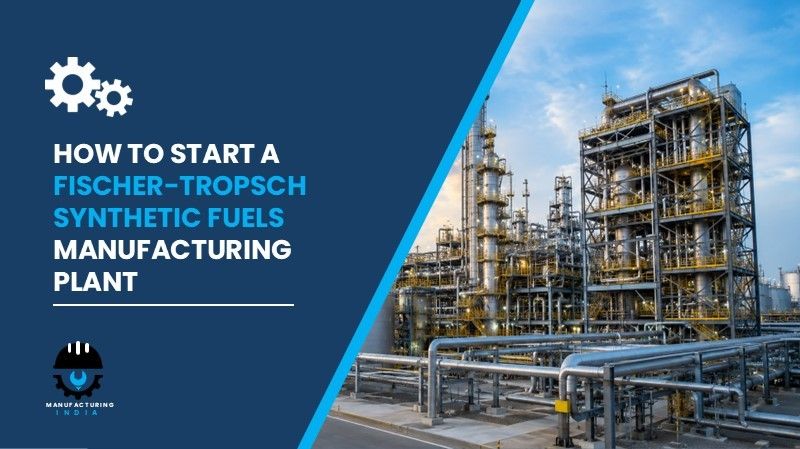
Fischer-Tropsch synthetic fuels manufacturing plant setup in India presents a compelling investment case at a moment when the global energy transition is reshaping fuel demand across transportation, aviation, shipping, and petrochemical sectors. FT synthetic fuels – which include synthetic diesel, jet fuel, naphtha, and specialty waxes – are produced from syngas derived from feedstocks such as natural gas, coal, biomass, and municipal solid waste. As India accelerates its decarbonisation agenda and domestic demand for cleaner fuel alternatives rises, market conditions for establishing a production facility in this sector have become increasingly favourable.
India’s strategic advantages are substantial. The country has a large and growing energy consumption base, competitive land and labour costs, and a rapidly evolving renewable feedstock ecosystem. As of November 2025, India sourced 51.5% of its installed electricity capacity – totalling 262.7 GW – from non-fossil fuels, achieving its Paris Agreement target five years ahead of schedule. This clean energy transition is expanding the policy and market environment for FT fuels as a sustainable bridging option for transport and industry. States such as Gujarat and Maharashtra offer well-developed infrastructure, port connectivity, and SEZ access for energy-sector investments.
The investment case for a Fischer-Tropsch synthetic fuels manufacturing plant in India rests on three pillars: strong policy support for clean energy, cost-competitive access to diverse feedstocks, and fast-growing demand from transportation, aviation, and petrochemical sectors. With gross margins of 25-35% and net margins of 12-18%, the facility can achieve viable break-even within a competitive payback window.
What is Fischer-Tropsch Synthetic Fuel?
Fischer-Tropsch synthetic fuels are liquid hydrocarbons produced from syngas – a mixture of carbon monoxide and hydrogen – through the Fischer-Tropsch chemical process. The product range spans synthetic diesel, kerosene, naphtha, and specialty waxes, offering cleaner-burning alternatives to conventional petroleum fuels. FT fuels are characterised by low sulfur content, high cetane numbers, and reduced greenhouse gas emissions compared to traditional fossil fuels. A defining advantage is feedstock versatility: the FT manufacturing process can utilise natural gas, coal, biomass, and municipal solid waste, making it adaptable to local resource availability and supply chain economics.
The fuels are fully compatible with existing engines and distribution infrastructure, enabling a seamless transition from conventional fossil fuels without engine modification. Advanced plants deploy high-efficiency catalysts and modern reactor designs – including fixed-bed and slurry-phase configurations – to maximise yield and energy efficiency while maintaining environmental compliance. End-use industries served include the transportation fuel sector, aviation, shipping, petrochemicals, and power generation.
Cost of Setting Up a Fischer-Tropsch Synthetic Fuels Manufacturing Plant in India
The total investment required depends on plant capacity, technology choice, location, automation level, and regulatory compliance requirements. Investors must plan for both capital expenditure during construction and ongoing operational expenditure through the production lifecycle.
1. Capital Expenditure (CapEx)
The largest component of CapEx is machinery and equipment, followed by land and civil infrastructure costs. Land and site development expenses include land registration, boundary development, and site grading. Industrial estates and SEZs in Gujarat or Maharashtra can offer reduced land costs, infrastructure sharing, and single-window clearances. Civil works cover the production shed, quality control laboratory, raw material and finished goods storage, and the administrative block.
Key machinery required includes:
- High-quality reactors (fixed-bed or slurry-phase Fischer-Tropsch synthesis reactors)
- Heat exchangers
- Syngas cleaning units
- Distillation columns
- Storage tanks
Other capital costs encompass the ETP, pre-operative expenses, commissioning charges, and import duties applicable to specialised reactor or catalyst equipment.
Request a Sample Report for In-Depth Market Insights: https://www.imarcgroup.com/fischer-tropsch-synthetic-fuels-manufacturing-plant-project-report/requestsample
2. Operational Expenditure (OpEx)
Raw material costs are the dominant driver of operating expenditure, accounting for 60-70% of total OpEx. The primary feedstocks – natural gas, coal, biomass, and municipal solid waste – must be sourced under long-term supplier contracts to stabilise pricing and ensure supply continuity. Catalyst procurement and replenishment represent an additional recurring cost. Utility expenses covering electricity, water, and steam consumed across gasification, synthesis, and refining stages account for 20-25% of OpEx. Other ongoing costs include transportation, packaging, salaries, equipment maintenance, depreciation, and taxes. By the fifth year of operations, total OpEx is expected to increase due to inflation, market fluctuations, and potential rises in feedstock and utility costs.
3. Plant Capacity
The proposed facility is designed with an annual production capacity of 50,000 to 200,000 MT, enabling economies of scale while maintaining operational flexibility. Capacity can be customised per investor requirements, with modular design options available for phased expansion. Profitability improves meaningfully with higher capacity utilisation, making ramp-up planning a critical investment consideration.
4. Profit Margins and Financial Projections
The project demonstrates healthy profitability under normal operating conditions. Gross profit margins typically range between 25-35%, while net profit margins are projected at 12-18%. The financial assessment covers NPV, IRR, payback period, and sensitivity analysis to stress-test assumptions against feedstock price volatility. A detailed five-year income and expenditure projection provides investors with a clear view of overall financial viability.
Why Set Up a Fischer-Tropsch Synthetic Fuels Plant in India?
Rising Demand for Clean Transportation Fuels: India’s transportation sector faces increasing regulatory pressure to adopt low-sulfur, low-emission fuels. FT synthetic diesel and jet fuel meet these standards, positioning the unit to serve domestic transport operators and the growing aviation segment as airport capacity expands.
India’s Clean Energy Transition Creating Market Opportunity: As of November 2025, India sourced 51.5% of its 262.7 GW installed capacity from non-fossil fuels, achieving its Paris Agreement target five years early. This shift is accelerating demand for FT fuels in sectors where direct electrification remains constrained.
Feedstock Versatility and Domestic Availability: The ability to utilise natural gas, coal, biomass, and municipal solid waste gives investors flexibility to optimise input costs based on regional availability. India’s coal reserves, expanding biomass sector, and growing municipal waste processing capacity support diverse feedstock strategies.
Government Incentives and Policy Tailwinds: Tax credits, renewable fuel mandates, and green energy programmes – including India’s Make in India initiative and clean fuel policy frameworks – support investments in the sector and improve project IRR during early operational years.
Active Global Industry Investment: In October 2025, Sasol and Topsoe signed a cooperation agreement with the German Aerospace Center (DLR) and Griesemann to develop an FT fuels demonstration plant backed by EUR 130 million, targeting 2,500 tons of e-fuels annually by Q4 2027. In February 2026, Mitsubishi Heavy Industries demonstrated an integrated system combining SOEC co-electrolysis with FT synthesis to produce sustainable aviation fuel – underscoring accelerating global technology investment in this space.
Scalable Production and Cost-Competitiveness: Modern FT plants offer modular design, high conversion efficiency, and advanced catalyst technologies. India’s competitive land and labour costs, combined with domestic supply chains, make the unit economics here particularly attractive against established international producers.
Manufacturing Process – Step by Step
The FT fuels manufacturing process uses feedstock gasification and catalytic synthesis as the primary production method, following a multi-stage sequence of feedstock conversion, syngas purification, synthesis, and product refining.
- Feedstock Preparation: Natural gas, coal, biomass, or municipal solid waste is pre-treated and sized to meet gasification input specifications.
- Feedstock Gasification: Prepared feedstock is converted into syngas (carbon monoxide and hydrogen) through high-temperature gasification reactors.
- Syngas Cleaning: Syngas cleaning units remove sulfur compounds, particulates, and contaminants that degrade catalyst performance and product quality.
- Fischer-Tropsch Synthesis: Purified syngas is fed into fixed-bed or slurry-phase reactors where catalysts convert CO and H₂ into liquid hydrocarbon products.
- Product Upgrading and Refining: Raw outputs are processed through distillation columns to separate and refine synthetic diesel, jet fuel, naphtha, and specialty waxes.
- Heat Recovery: Heat exchangers recover thermal energy from synthesis and refining stages, improving plant energy efficiency.
- Storage and Dispatch: Finished products are stored in dedicated tanks before dispatch to transportation, aviation, and industrial customers.
Key Applications
The facility serves a broad range of end-use industries, with demand anchored in transport, aviation, and petrochemical processing.
- Transportation Fuel Sector: FT diesel meets low-sulfur, high-performance fuel standards for commercial and passenger vehicles.
- Aviation Industry: Synthetic kerosene reduces emissions and meets strict performance standards for aircraft.
- Shipping Industry: Clean-burning synthetic fuels enhance engine performance and reduce maritime emissions.
- Petrochemicals and Industrial Applications: Naphtha and waxes from FT synthesis are used in chemical processing, lubricants, and specialty industrial products.
- Renewable Energy Blends: FT fuels can be blended with biodiesel and other low-carbon fuels to help operators meet sustainability targets.
- Power Generation: Synthetic fuels support stationary power applications where liquid fuel reliability is critical.
Leading Manufacturers
The global Fischer-Tropsch synthetic fuels industry is served by several multinational producers with extensive capacities and diverse application portfolios. Key players include:
- Sasol Limited
- Royal Dutch Shell plc
- Velocys plc
- CompactGTL plc
- Indian Oil Corporation Ltd.
Timeline to Start the Plant
- Feasibility study and project report preparation
- Land acquisition and site development
- Regulatory approvals and environmental clearances
- Factory licence and fire safety compliance
- Machinery procurement and installation
- Raw material supplier agreements and supply chain setup
- Trial production and quality testing
- Commercial production launch
Licences and Regulatory Requirements
Starting a Fischer-Tropsch synthetic fuels manufacturing unit in India requires several approvals:
- Business registration (Proprietorship, LLP, or Pvt Ltd)
- Factory Licence under the Factories Act
- Environmental Clearance from State Pollution Control Board
- GST Registration
- Fire Safety NOC
- Hazardous and chemical compliance under applicable safety statutes
- Effluent Treatment Plant (ETP) operational clearance
- Occupational Health and Safety compliance
Key Challenges to Consider
High Capital Requirements: Establishing this type of plant involves substantial upfront CapEx across land, civil works, specialised reactors, and syngas infrastructure, requiring careful project financing and phased investment planning.
Raw Material Price Volatility: Feedstock costs – natural gas, coal, biomass, and municipal solid waste – along with catalyst procurement, are subject to market fluctuations and geopolitical factors that directly impact operating margins.
Regulatory Compliance: FT fuel production involves complex environmental, chemical handling, and emissions requirements. Maintaining environmental clearances, ETP status, and occupational safety standards requires ongoing management and investment.
Technology and Innovation Pressure: The global industry is advancing rapidly, with Mitsubishi Heavy Industries’ SOEC-FT integration and the Sasol-Topsoe EUR 130 million e-SAF facility demonstrating technology evolution that operators must track to maintain competitive efficiency.
Competition from Established Players: The sector is dominated by global producers with scale advantages, including Sasol Limited, Royal Dutch Shell plc, and Velocys plc. New entrants must differentiate through feedstock strategy and domestic market focus.
Skilled Manpower: Operating reactors, syngas cleaning systems, and distillation units requires specialised process engineering expertise, necessitating investment in workforce training and retention.
Frequently Asked Questions
1. How much does it cost to set up a Fischer-Tropsch synthetic fuels manufacturing plant in India?
Total setup cost depends on plant capacity (50,000-200,000 MT per annum), technology, location, and automation level. CapEx covers land, civil works, reactors, heat exchangers, syngas cleaning units, distillation columns, and storage tanks.
2. Is Fischer-Tropsch synthetic fuels manufacturing profitable in India in 2026?
Yes. The project demonstrates gross margins of 25-35% and net margins of 12-18% under normal operating conditions, supported by stable demand growth across transportation, aviation, and petrochemical sectors.
3. What machinery is required for a Fischer-Tropsch synthetic fuels plant in India?
Key equipment includes high-quality reactors (fixed-bed or slurry-phase), heat exchangers, syngas cleaning units, distillation columns, and storage tanks.
4. What licences and approvals are required to start a Fischer-Tropsch synthetic fuels plant in India?
Required approvals include business registration, Factory Licence, Environmental Clearance, GST Registration, Fire Safety NOC, hazardous chemical compliance, ETP clearance, and occupational health and safety compliance.
5. What raw materials are needed for Fischer-Tropsch synthetic fuels manufacturing?
Primary feedstocks are natural gas, coal, biomass, and municipal solid waste. Catalyst is also a critical process input requiring reliable supply arrangements.
6. What are the environmental compliance requirements for a Fischer-Tropsch synthetic fuels plant in India?
The facility must obtain Environmental Clearance from the State Pollution Control Board, maintain an operational ETP, comply with hazardous chemical handling regulations, and implement continuous emission monitoring.
7. What is the best location to set up a Fischer-Tropsch synthetic fuels plant in India?
Ideal locations offer proximity to feedstock sources, robust transport infrastructure, reliable utilities, and access to industrial estate or SEZ benefits. Gujarat and Maharashtra are strong candidates.
8. What is the break-even period for this type of plant in India?
Break-even depends on capacity utilisation, CapEx scale, and operating cost management. The IMARC project report includes detailed payback period analysis, NPV, and IRR calculations based on realistic project assumptions.
9. What government incentives are available for manufacturers in India?
India offers tax credits, capital subsidy schemes, export incentives under SEZ frameworks, and renewable fuel mandates aligned with the Make in India initiative and clean energy policy targets.
Key Takeaways for Investors
A Fischer-Tropsch synthetic fuels manufacturing plant in India represents a strategically timed investment opportunity, with demand anchored across the transportation fuel sector, aviation, shipping, and petrochemical industries as India’s energy transition accelerates. The project demonstrates strong financial viability across the 50,000-200,000 MT annual capacity range, with gross margins of 25-35% and net margins of 12-18% supporting an attractive return profile at multiple plant scales. The global FT fuels market was valued at USD 15.44 Billion in 2025 and is projected to reach USD 32.70 Billion by 2034 at a CAGR of 8.7%, providing sustained demand tailwinds for new production capacity established during this investment window. With feedstock versatility, compatibility with existing fuel infrastructure, and growing regulatory support for clean fuel alternatives, the long-term demand outlook for this production category remains robust.
About the Author