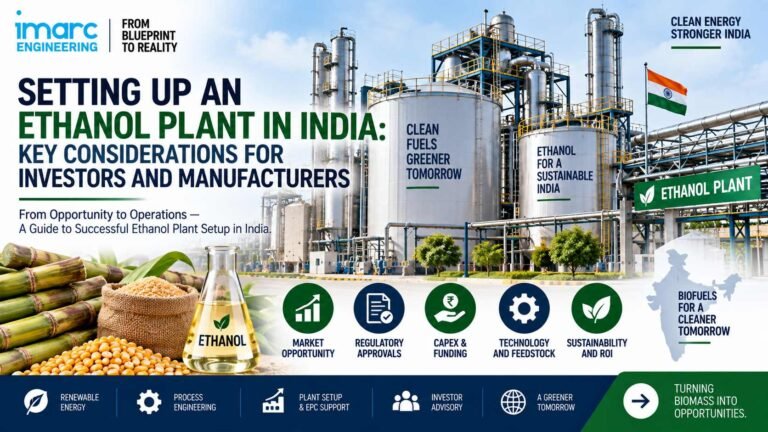
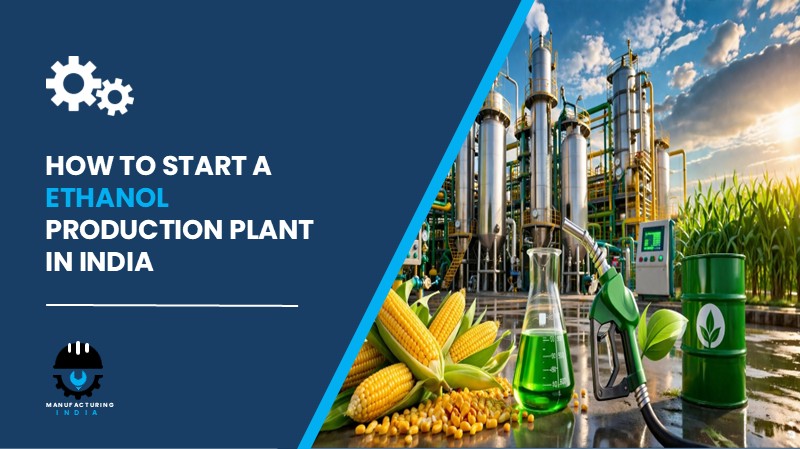
Setting up an ethanol production plant in India presents a compelling investment case, driven by surging demand across transportation, chemical and industrial production, food and beverage, and pharmaceutical sectors. Ethanol a renewable biofuel derived from plant materials such as corn, sugarcane, and other grains is central to India’s clean energy transition. The transportation industry’s appetite for ethanol as a fuel additive is expanding rapidly, while the chemical, food and beverage, and pharmaceutical industries rely on it as a critical industrial input.
India holds strong advantages for this investment. The country’s vast agricultural base supplies sugarcane and corn the primary feedstocks for ethanol. Urbanisation, infrastructure development, and the Make in India initiative are accelerating domestic industrial growth. States such as Maharashtra, Uttar Pradesh, and Gujarat offer established industrial corridors and state-level incentive frameworks. With the Indian government actively removing quantitative restrictions on ethanol feedstocks and mandating blending targets, the regulatory environment firmly supports a new ethanol production plant in India.
Establishing a production facility in India combines robust policy support, cost-competitive agricultural feedstocks, and multi-sector demand across transportation, pharmaceuticals, food and beverage, and industrial chemicals to deliver gross profit margins of 20–30% and a break-even window of three to five years, making this one of the more compelling greenfield opportunities in Indian production today.
What is Ethanol?
Ethanol, also known as ethyl alcohol, is a renewable biofuel derived primarily from plant materials such as corn, sugarcane, and other grains. It is a colorless, flammable liquid widely used in the automotive industry as an alternative fuel or fuel additive and in the production of alcoholic beverages, solvents, and industrial chemicals. Fuel-grade ethanol is blended with gasoline; E10 -10% ethanol and 90% gasoline is the most common blend, while E15 and E85 serve flex-fuel vehicles.
The ethanol production process involves raw material sourcing, milling and pre-treatment, fermentation, distillation, dehydration, and packing and distribution. End-use industries include transportation, chemical and industrial production, food and beverage, and pharmaceutical and healthcare.
Cost of Setting Up an Ethanol Production Plant in India
The total investment for an ethanol production plant depends on plant capacity, technology, automation, location, and regulatory compliance. Both capital and operational expenditure must be modelled carefully before committing.
1. Capital Expenditure (CapEx)
Land and site development – including registration, boundary work, drainage, and internal roads — forms a substantial share of initial outlay. Investors may reduce land costs by choosing plots within Special Economic Zones (SEZs) or state-notified industrial estates. Civil works cover the production shed, quality control laboratory, raw material storage, finished goods warehouse, and administrative block.
Machinery and equipment represent the largest portion of capital expenditure for this type of production facility. Key machinery required includes:
- Milling equipment (crushers or mills for feedstock processing)
- Fermentation tanks
- Distillation columns
- Dehydration units
- Boilers
- Storage tanks
- Heat exchangers
- Packaging equipment
- Control systems for process monitoring and safety
Other capital costs include the effluent treatment plant (ETP), pre-operative expenses, commissioning charges, and import duties on specialist machinery.
Request a Sample Report for In-Depth Market Insights: https://www.imarcgroup.com/ethanol-production-plant-project-report/requestsample
2. Operational Expenditure (OpEx)
The operating cost structure is heavily weighted toward raw materials. Corn or sugarcane molasses account for approximately 70–80% of total OpEx; enzymes and yeast are additional fermentation inputs. Long-term contracts with regional agricultural cooperatives hedge against price volatility. Utility costs electricity, water, and steam represent 10–15% of OpEx. Other operating costs cover transportation, packaging, salaries, maintenance, depreciation, and taxes. By the fifth year, total OpEx is projected to increase substantially due to inflation and rising input costs.
3. Plant Capacity
The proposed ethanol plant is designed with an annual capacity of 100,000–200,000 KL, enabling economies of scale while maintaining flexibility. Capacity can be customised per investor requirements. Profitability improves with higher utilisation as fixed costs are spread across greater output.
4. Profit Margins and Financial Projections
Gross profit margins typically range between 20–30%; net profit margins fall in the 8–12% range. Financial projections incorporate Net Present Value (NPV), Internal Rate of Return (IRR), payback period, and sensitivity analysis. Break-even is typically achieved within three to five years depending on scale and feedstock cost management.
Why Set Up an Ethanol Plant in India?
Renewable Energy and Fuel Blending Demand. India’s commitment to blending 20% ethanol into gasoline by the 2025/26 supply year creates a policy-backed demand floor. The transportation industry’s reliance on ethanol as a renewable fuel additive will grow consistently with fleet expansion and decarbonisation targets.
Government Policy Tailwinds. The Indian government withdrew all quantitative restrictions on the use of sugarcane juice, syrup, and all kinds of molasses for ethanol production from November 1, 2025, directly enabling producers to scale output and providing first-mover advantages for new investors.
Multi-Sector Industrial Demand. Beyond transportation, ethanol serves chemical and industrial production as a solvent for paints, coatings, and cleaners, the food and beverage industry as a fermentation agent and preservative, and the pharmaceutical sector as a disinfectant and liquid dosage carrier.
Cost-Competitive Production Base. Competitive land costs in industrial zones, a large labour pool, and an established agricultural supply chain make India an attractive production destination. Proximity to surplus cane states such as Uttar Pradesh and Maharashtra reduces inbound logistics costs.
Active Industry Investment and Market Growth. The global ethanol market was valued at USD 104.80 Billion in 2025 and is projected to reach USD 158.45 Billion by 2034 at a CAGR of 4.5%. In January 2026, U.S. biofuel groups discussed year-round E15 authorisation. In September 2025, Winterthur Gas and Diesel introduced its first ethanol-fuelled marine engine with deliveries expected from 2027, expanding the addressable market into maritime.
Production Process Step by Step
The ethanol production process follows a multi-stage pathway from raw agricultural feedstocks to finished anhydrous ethanol. Mastering the ethanol production process is essential for effective plant layout and equipment planning.
- Raw Material Sourcing: Corn, sugarcane molasses, or starch-rich crops are procured and quality-checked for sugar content.
- Milling and Pre-Treatment: Milling equipment crushes feedstock; enzymes convert starches into fermentable sugars.
- Fermentation: Slurry enters fermentation tanks where yeast converts sugars into ethanol and carbon dioxide.
- Distillation: Fermented wash passes through distillation columns, separating ethanol from water and residual solids.
- Dehydration: Dehydration units remove remaining water to produce anhydrous ethanol for fuel blending and pharmaceutical applications.
- Quality Control: Analytical instruments monitor concentration, purity, and stability; documentation supports regulatory traceability.
- Packing and Distribution: Finished ethanol is dispatched to transportation, chemical, food and beverage, and pharmaceutical customers.
Key Applications
The ethanol plant serves four major industrial segments:
- Transportation Industry: Fuel additive in E10, E15, and E85 blends, reducing carbon emissions and fossil fuel dependence.
- Chemical and Industrial Production: Solvent and intermediate in paints, coatings, and industrial cleaners.
- Food and Beverage Industry: Fermentation agent, solvent, and preservative in beverages, extracts, and colorings.
- Pharmaceutical and Healthcare: Disinfectant, liquid dosage solvent, and antiseptic in hand rubs and topical formulations.
Leading Manufacturers
Key players in the global ethanol industry include:
- ADM
- POET LLC
- Valero Energy Corporation
- Green Plains Inc.
- Koch Industries
- Raizen Energia
- Cargill Inc.
Timeline to Start the Plant
The typical timeline to commission an ethanol production plant in India ranges from 12 to 24 months:
- Feasibility study and project report preparation
- Land acquisition and site development
- Regulatory approvals and environmental clearances
- Factory licence and fire safety compliance
- Machinery procurement and installation
- Raw material supplier agreements and supply chain setup
- Trial production and quality testing
- Commercial production launch
Licences and Regulatory Requirements
Starting an ethanol production unit in India requires several approvals:
- Business registration (Proprietorship, LLP, or Pvt Ltd)
- Factory Licence under the Factories Act
- Environmental Clearance from the State Pollution Control Board
- GST Registration
- Fire Safety NOC
- Hazardous and Chemical Substance compliance (applicable given flammable inputs)
- Effluent Treatment Plant (ETP) operational clearance
- Occupational Health and Safety compliance
Key Challenges to Consider
High Capital Requirements. Substantial upfront investment in land, civil works, distillation columns, dehydration units, and fermentation tanks makes financing strategy critical.
Raw Material Price Volatility. Corn and sugarcane molasses account for 70–80% of operating costs and are subject to seasonal price swings; long-term diversified contracts are essential.
Regulatory Compliance. Ethanol is flammable, subjecting the production unit to multi-agency oversight; delays in environmental clearances inflate pre-operative costs.
Technology and Innovation Pressure. Advances in fermentation technology and cellulosic ethanol production continuously shift efficiency benchmarks, requiring careful technology selection.
Competition from Established Players. Global operators including ADM, POET LLC, Valero Energy Corporation, and Green Plains Inc. set high efficiency standards.
Skilled Manpower. Operating distillation, dehydration, and fermentation systems requires trained chemical engineers and structured workforce development programmes.
Frequently Asked Questions
1. How much does it cost to set up this type of production plant in India? Total cost depends on capacity, technology, automation, and location — covering land, civil works, machinery, utilities, and pre-operative expenses.
2. Is ethanol production profitable in India in 2026? Yes — gross profit margins typically range 20–30% with net margins of 8–12%, improving with higher capacity utilisation.
3. What machinery is required for an ethanol plant in India? Key equipment includes milling units, fermentation tanks, distillation columns, dehydration units, boilers, storage tanks, heat exchangers, and packaging and control systems.
4. What licences and approvals are required to start an ethanol plant in India? Business registration, Factory Licence, Environmental Clearance, GST Registration, Fire Safety NOC, Chemical compliance, ETP clearance, and OHS compliance.
5. What raw materials are needed for ethanol production? Primary inputs are corn, sugarcane molasses, and other sugar-rich or starch-based crops, plus enzymes and yeast for fermentation.
6. What are the environmental compliance requirements for an ethanol plant in India? Operators must obtain Environmental Clearance from the State Pollution Control Board, operate an approved ETP, comply with emission standards, and install process monitoring systems.
7. What is the best location to set up an ethanol plant in India? Proximity to sugarcane or corn surplus regions such as Uttar Pradesh, Maharashtra, and Karnataka, with access to SEZs or state industrial estates, is ideal.
8. What is the break-even period for this type of plant in India? Break-even typically ranges from three to five years, depending on capacity, feedstock costs, and prevailing ethanol prices.
9. What government incentives are available for manufacturers in India? Incentives may include capital subsidies, tax exemptions, reduced utility tariffs, interest subsidies, and export benefits under national and state industrial promotion schemes.
Key Takeaways for Investors
The ethanol production plant presents a high-conviction investment opportunity in India, underpinned by demand from transportation, pharmaceuticals, food and beverage, and chemical and industrial production. Financial viability is confirmed across a range of capacities, with gross margins of 20–30% and net margins of 8–12% achievable under normal operating conditions. The global market valued at USD 104.80 Billion in 2025 and projected to reach USD 158.45 Billion by 2034 at a CAGR of 4.5% provides the long-term demand trajectory to justify this investment today. With policy mandates locking in domestic ethanol consumption and feedstock supply liberalised from November 2025, demand sustainability for a well-positioned Indian production unit is robust across multiple investment horizons.
About the Author