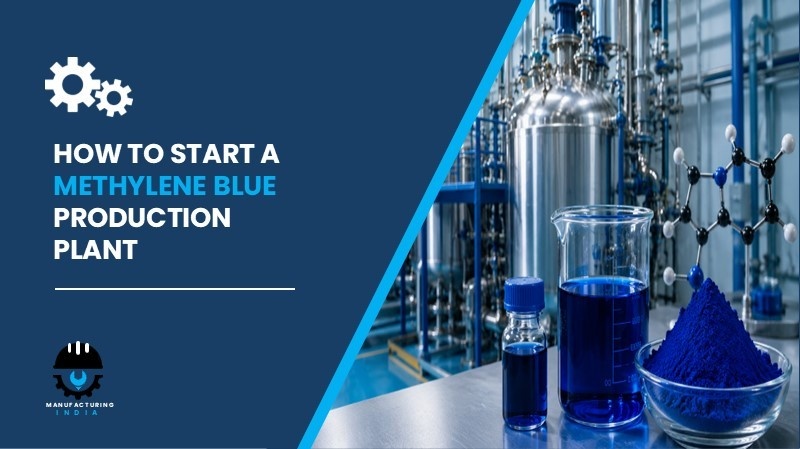
A methylene blue production plant setup in India presents a compelling investment case for entrepreneurs targeting the pharmaceuticals, aquaculture, textiles, chemicals, research laboratory, and water treatment sectors. Methylene blue’s established role as a medical antidote for methemoglobinemia, combined with its widespread use as a biological stain, redox indicator, and specialty textile dye, gives this product a stable, diversified demand base that is not tied to a single industry cycle. As pharmaceutical manufacturing and diagnostic testing volumes expand across the country, investors are increasingly evaluating this specialty chemical as a resilient, mid-scale manufacturing opportunity.
India’s broader economic momentum strengthens the case further. Growing pharmaceutical and healthcare infrastructure investment, expanding life sciences research, and a large domestic textile industry all create built-in offtake for a methylene blue production plant. Government-backed domestic chemical production initiatives are indirectly supporting local sourcing, and states with established chemical and pharma clusters offer investors access to skilled technical manpower, existing effluent treatment infrastructure, and proximity to end-use industries. Together, these factors make India a strategically sound base for this type of specialty chemical production.
This investment case rests on a combination of steady multi-sector demand, moderate entry barriers that favour technically capable producers, and healthy gross margins of 28-38%, supported by growing pharmaceutical, diagnostic, and textile consumption across India and global markets.
What is Methylene Blue?
Methylene blue is a synthetic heterocyclic compound initially developed in 1876 as a textile dye. Its defining property is the ability to cycle between oxidized and reduced states, which makes it a highly versatile tool in both chemistry and medicine. As a medical treatment, it acts as an oxidation-reduction agent primarily used by healthcare providers to treat methemoglobinemia, a blood disorder that impairs oxygen delivery, by donating electrons that convert oxidized hemoglobin back to its functional form. Beyond its clinical role, methylene blue also serves as a biological stain used to visualize microscopic cells and tissues, and as an indicator in chemical reactions.
The methylene blue production process uses oxidation and condensation of dimethylaniline, followed by reaction with sodium thiosulfate, acidification, purification, filtration, drying, and packaging. The end product serves a wide spread of industries, including pharmaceuticals, aquaculture, textiles, chemicals, research laboratories, and water treatment.
Cost of Setting Up a Methylene Blue Production Plant in India
The cost of setting up this production plant depends on capacity, technology, location, automation level, and regulatory compliance requirements.
1. Capital Expenditure (CapEx)
Land and site development form a significant part of the total capital outlay, and investors can consider options within notified industrial estates or chemical-specific SEZs to benefit from ready infrastructure and faster clearances. Civil works cover the construction of the production shed, quality control laboratory, raw material and finished goods storage, and the administrative block, all of which must be designed to accommodate corrosion-resistant process equipment.
Key machinery required for a methylene blue production plant includes:
- Reaction vessels
- Storage tanks
- Dosing systems
- Oxidation reactors
- Filtration units
- Centrifuges
- Drying systems
- Crystallizers
- Material handling equipment
- Wastewater treatment facilities
- Packaging machines
Other capital costs cover the effluent treatment plant, pre-operative expenses, machinery commissioning, and, where applicable, import duties on specialised process equipment. Machinery costs account for the largest portion of total capital expenditure for this type of plant, with land and site development forming the next major component.
Request a Sample Report for In-Depth Market Insights: https://www.imarcgroup.com/methylene-blue-manufacturing-plant-project-report/requestsample
2. Operational Expenditure (OpEx)
Raw material cost is the single largest component of operating expenditure for a methylene blue production plant, with dimethylaniline, sodium thiosulfate, ferric chloride, and sulfuric acid together accounting for roughly 50-60% of total OpEx. Investors are advised to negotiate long-term supplier contracts to stabilize pricing and secure a consistent supply of these inputs, since raw material price volatility is one of the biggest swing factors in overall plant economics.
Utility costs, covering electricity, water, and steam, typically account for 9-13% of OpEx. Other operating costs include transportation, packaging, salaries and wages, repairs and maintenance, depreciation, and taxes. Total operational cost for the plant is expected to increase substantially by the fifth year of operation, driven by inflation, market fluctuations, potential rises in raw material costs, supply chain disruptions, and shifts in the global economy.
3. Plant Capacity
A representative methylene blue production plant is designed around an annual production capacity of 1,000 MT, which balances economies of scale with operational flexibility. Capacity for a new plant can be customized to investor requirements, and profitability generally improves as capacity utilisation increases.
4. Profit Margins and Financial Projections
The project demonstrates healthy profitability potential under normal operating conditions. Gross profit margins for the plant typically range between 28-38%, while net profit margins range between 16-24%. Detailed financial planning for the plant covers income projections, expenditure, break-even analysis, net present value (NPV), internal rate of return (IRR), and payback period, giving investors a comprehensive view of the project’s financial viability and long-term sustainability.
Why Set Up a Methylene Blue Plant in India?
Essential Specialty Chemical Across Multiple Industries: Methylene blue is a widely used specialty dye and chemical reagent in pharmaceuticals, aquaculture, textiles, laboratories, biotechnology, water treatment, and diagnostic applications, positioning it as an important product with diverse industrial and scientific relevance.
Megatrend Alignment: Growing demand for pharmaceutical ingredients, diagnostic reagents, biotechnology research materials, aquaculture health management solutions, and advanced laboratory chemicals is supporting sustained consumption of methylene blue across global markets, including India.
Policy and Healthcare Sector Push: Expanding investments in pharmaceutical manufacturing, healthcare infrastructure, life sciences research, water quality management, and domestic chemical production initiatives are indirectly supporting demand for high-quality methylene blue and related specialty chemicals.
Moderate but Justifiable Entry Barriers: Production requires controlled chemical synthesis, stringent purity standards, specialised handling of intermediates, environmental compliance, and consistent quality assurance, which creates entry barriers that favour technically proficient producers capable of delivering reliable product performance.
Active Industry Investment: In June 2026, Glenmark Pharmaceuticals, USA, announced the launch of Methylene Blue Injection USP, 50 mg/10 mL, a single-dose vial stated to be bioequivalent and therapeutically equivalent to the reference listed drug, signalling continued commercial activity around methylene blue-based products.
Localization and Dependability in Supply Chains: Pharmaceutical companies, research institutions, chemical distributors, and industrial users increasingly prefer dependable regional suppliers to reduce lead times, ensure regulatory compliance, and secure uninterrupted supply, creating an opening for producers with robust capabilities and efficient sourcing networks. This is reinforced by India’s large textile sector, valued at USD 146.55 Billion in 2024 and projected to reach USD 213.51 Billion by 2033, which represents a steady domestic dyeing and coloration demand base for methylene blue producers.
Methylene Blue Production Process – Step by Step
The methylene blue production process uses oxidation and condensation of dimethylaniline as the primary production method, followed by a series of controlled unit operations.
- Oxidation and Condensation: Dimethylaniline undergoes oxidation and condensation to form the core intermediate structure.
- Reaction with Sodium Thiosulfate: The intermediate reacts with sodium thiosulfate inside the reaction vessels and oxidation reactors to build the final compound.
- Acidification: The reaction mixture is acidified using sulfuric acid to stabilise the product.
- Purification: The acidified mixture undergoes purification to remove impurities and by-products.
- Filtration: The purified product passes through filtration units and centrifuges to separate solids from liquids.
- Drying: Drying systems and crystallizers convert the filtered material into a stable, crystalline finished form.
- Packaging: The finished methylene blue is packed using dedicated packaging machines and dispatched to pharmaceutical, aquaculture, textile, chemical, laboratory, and water treatment end-users.
Key Applications
A methylene blue production plant primarily serves industries that value its redox activity, staining, and dyeing properties, since methylene blue dye remains central to many of these end-uses.
- Pharmaceuticals: Used as an antidote for methemoglobinemia and in various therapeutic formulations.
- Diagnostics & Healthcare: Applied in medical staining, biological imaging, and diagnostic procedures.
- Aquaculture: Used to treat fungal and parasitic infections in fish and aquatic species.
- Textile Industry: Used for dyeing and coloring of fabrics, silk, wool, and paper products.
Leading Producers
Leading producers in the global methylene blue industry include multinational companies with extensive production capacities and diverse application portfolios. Key players include:
- Macsen Laboratories
- Merck KGaA
- Thermo Fisher Scientific
Timeline to Start the Plant
- Feasibility study and project report preparation
- Land acquisition and site development
- Regulatory approvals and environmental clearances
- Factory licence and fire safety compliance
- Machinery procurement and installation
- Raw material supplier agreements and supply chain setup
- Trial production and quality testing
- Commercial production launch
Licences and Regulatory Requirements
Starting a methylene blue production unit in India requires several approvals:
- Business registration (Proprietorship, LLP, or Pvt Ltd)
- Factory Licence under the Factories Act
- Environmental Clearance from State Pollution Control Board
- GST Registration
- Fire Safety NOC
- Hazardous/Chemical compliance for handling dimethylaniline and sulfuric acid
- Effluent Treatment Plant (ETP) operational clearance
- Occupational Health and Safety compliance
Key Challenges to Consider
High Capital Requirements: Machinery for this production plant, including reaction vessels, oxidation reactors, and drying systems, represents a significant share of upfront investment.
Raw Material Price Volatility: Dimethylaniline, sodium thiosulfate, ferric chloride, and sulfuric acid are all subject to price fluctuations that can affect plant margins if long-term supplier contracts are not secured.
Regulatory Compliance: Environmental clearances, effluent treatment, and hazardous chemical handling requirements demand continuous monitoring and documentation.
Competition: Established global players such as Macsen Laboratories, Merck KGaA, and Thermo Fisher Scientific set a high bar for product purity and reliability that new entrants must match.
Skilled Manpower: Controlled chemical synthesis and stringent purity standards require technically trained operators and quality assurance personnel, which can be a constraint in some locations.
Frequently Asked Questions
1. How much does it cost to set up a methylene blue production plant in India?
Total cost depends on plant capacity, technology, automation level, and location, and covers land, civil works, machinery, and other capital costs alongside first-year operating expenses.
2. Is methylene blue production profitable in India in 2026?
Yes, the project shows healthy profitability potential, with gross profit margins of 28-38% and net profit margins of 16-24% under normal operating conditions.
3. What machinery is required for a methylene blue plant in India?
Key machinery includes reaction vessels, storage tanks, dosing systems, oxidation reactors, filtration units, centrifuges, drying systems, crystallizers, material handling equipment, wastewater treatment facilities, and packaging machines.
4. What licences and approvals are required to start a methylene blue plant in India?
Requirements include business registration, a Factory Licence, Environmental Clearance, GST Registration, Fire Safety NOC, hazardous chemical compliance, ETP clearance, and Occupational Health and Safety compliance.
5. What raw materials are needed for methylene blue production?
The main raw materials are dimethylaniline, sodium thiosulfate, ferric chloride, and sulfuric acid.
6. What are the environmental compliance requirements for a methylene blue plant in India?
Plants must secure Environmental Clearance from the State Pollution Control Board, operate an Effluent Treatment Plant, and maintain hazardous chemical handling and safety monitoring systems.
7. What is the best location to set up a methylene blue plant in India?
The location should offer easy access to raw materials such as dimethylaniline, sodium thiosulfate, ferric chloride, and sulfuric acid, proximity to target markets, reliable transportation and utility infrastructure, and compliance with local zoning and environmental regulations.
8. What is the break-even period for this type of plant in India?
Break-even timing depends on capacity utilisation, pricing, and cost structure, and is assessed as part of the project’s financial analysis alongside NPV, IRR, and payback period calculations.
9. What government incentives are available for manufacturers in India?
The report highlights that expanding pharmaceutical manufacturing, healthcare infrastructure, and domestic chemical production initiatives are indirectly supporting sector growth; investors should verify current scheme-specific incentives with relevant authorities.
Key Takeaways for Investors
A methylene blue production plant serves stable, diversified demand from pharmaceuticals, diagnostics, aquaculture, textiles, chemicals, and water treatment – sectors in India that are not dependent on a single economic cycle. The project shows financial viability across capacity levels, with gross margins of 28-38% and net margins of 16-24%, alongside a 1,000 MT/year reference capacity that can be scaled to investor requirements. The global methylene blue market, valued at USD 350.00 Million in 2025, is projected to reach USD 566.68 Million by 2034 at a CAGR of 5.5%, while India’s own textile sector, worth USD 146.55 Billion in 2024, adds a substantial domestic demand base. With continued investment in pharmaceutical manufacturing and healthcare infrastructure, demand for high-quality methylene blue is well positioned to remain sustained over the long term.
About the Author