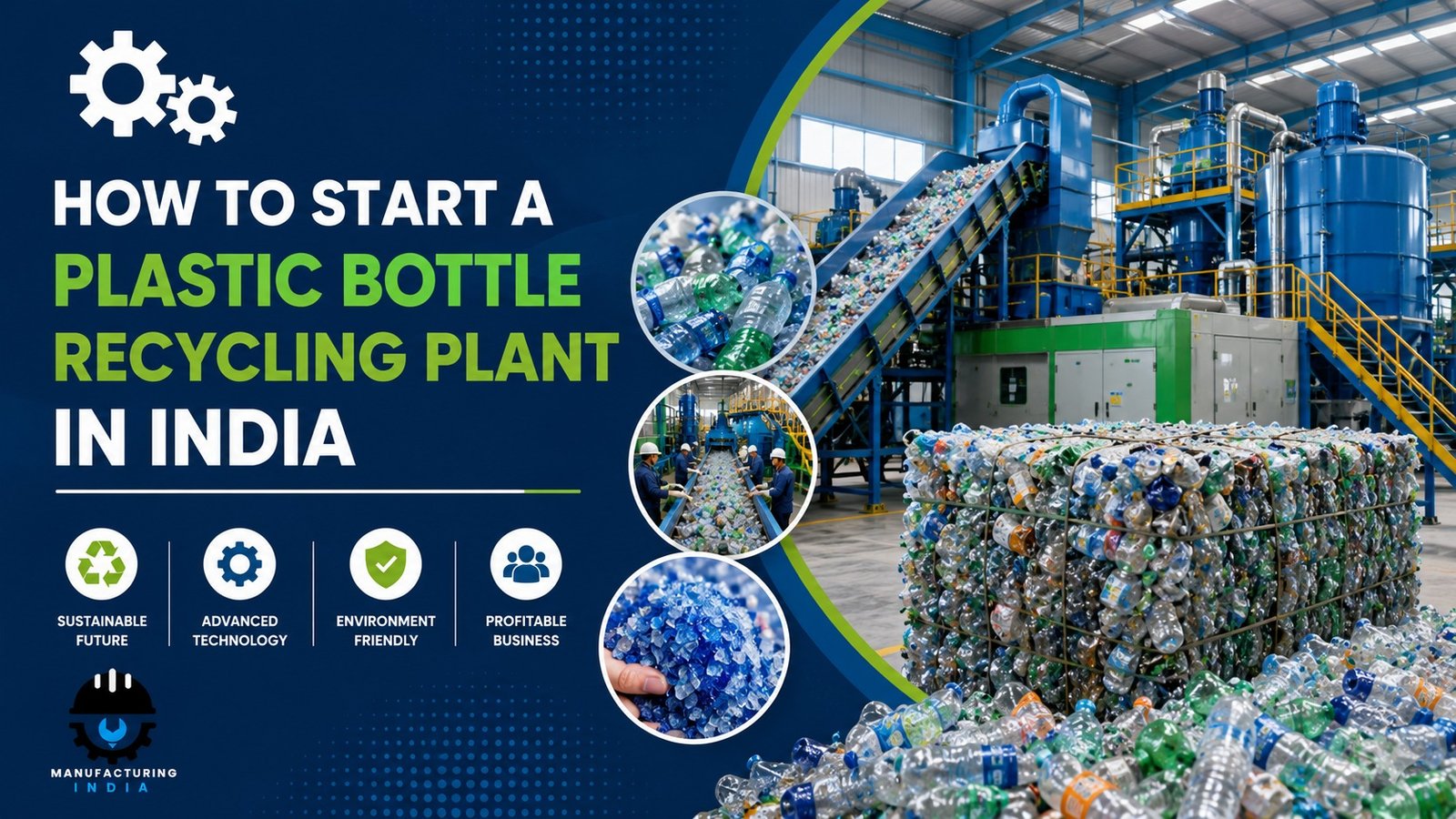
Setting up a plastic bottle recycling plant in India presents a compelling investment case, driven by demand from the beverage packaging, food packaging, textiles, consumer products, plastic manufacturing, and packaging industries. Post-consumer PET bottles are increasingly treated as a valuable secondary raw material, processed into flakes and pellets that feed packaging, polyester fiber, sheet, and strapping applications. This positions organized recycling capacity as the link between plastic-waste generation and resource conservation.
India’s regulatory environment favours this investment. Extended producer responsibility (EPR) frameworks push producers and brand owners to secure verified recycled-content supplies: as of March 5, 2026, India had recycled 196.97 lakh metric tonnes of plastic waste through 2,986 registered recyclers under its EPR framework. This expanding ecosystem gives new entrants a regulatory pathway and a growing base of demand from packaging, textile, and consumer-goods manufacturers seeking reliable rPET supply.
This plant’s investment case is anchored in EPR-driven recycled-content demand, gross margins of 20–28%, and a capacity range of 10,000–40,000 MT that lets the facility scale to match market reach while working toward measurable payback and ROI.
What is Plastic Bottle Recycling?
Plastic bottle recycling is the recycling process of collecting discarded plastic bottles, particularly PET bottles, and converting them into reusable plastic raw materials. It begins with collection and sorting by polymer type and colour, after which bottles are baled, de-baled, separated from foreign materials, and crushed into flakes. Labels, caps, and adhesives are removed through dry and wet separation, and flakes undergo hot and cold washing, rinsing, drying, and optical or mechanical sorting. For higher-value output, clean flakes pass through extrusion and melt-filtration and are converted into rPET pellets, with quality judged on intrinsic viscosity, moisture, colour, contamination level, bulk density, and polymer purity.
The process relies on mechanical recycling — collection, sorting, bale breaking, crushing, washing, separation, drying, flake purification, extrusion, filtration, pelletization, quality testing, and packaging — as its primary method, serving the beverage packaging, food packaging, textiles, consumer products, plastic manufacturing, and packaging industries.
Cost of Setting Up a Plastic Bottle Recycling Plant in India
Cost depends on capacity, technology, location, automation, and regulatory compliance.
1. Capital Expenditure (CapEx)
CapEx begins with land and site development — registration, boundary development, and related charges — with options such as industrial estates or SEZ-linked plots. Civil works cover the processing shed, a testing laboratory, storage areas, and the administrative block.
Machinery is the largest share of capital investment. Key machinery required includes:
- Bale breakers
- Conveyors
- Sorting tables
- Magnetic separators
- Label removers
- Bottle crushers or granulators
- Pre-wash systems
- Friction washers
- Hot-wash tanks
- Rinsing systems
- Centrifuges
- Thermal dryers
- Air classifiers
- Optical sorting machines
- Flake sorters
- Storage silos
- Extrusion lines
- Melt filters
- Pelletizers
- Cooling systems
- Packaging equipment
Other capital costs include effluent treatment plant (ETP) installation, pre-operative expenses, and commissioning costs.
Request a Sample Report for In-Depth Market Insights: https://www.imarcgroup.com/plastic-bottle-recycling-plant-project-report/requestsample
2. Operational Expenditure (OpEx)
OpEx is dominated by raw material cost: Post-consumer PET bottles account for 40-55% of operating expenses, making long-term supplier contracts important for stable pricing. Utility cost — electricity, water, and steam — accounts for 16-20% of OpEx. Other costs include transportation, packaging, salaries, maintenance, depreciation, and taxes. Total operational cost is expected to rise from year one to year five due to inflation, market fluctuations, and rising raw material costs.
3. Plant Capacity
The facility is designed for an annual capacity of 10,000-40,000 MT, enabling economies of scale with operational flexibility. Capacity can be customised to investor requirements, and profitability generally improves with higher capacity utilisation.
4. Profit Margins and Financial Projections
Projections are built around capital investment, operating costs, utilisation, pricing trends, and demand outlook, covering NPV, IRR, payback period, and profit-and-loss analysis. Gross margins typically range between 20-28%, supported by stable demand and value-added applications, while net margins range between 7-14%, giving a realistic basis for assessing viability.
Why Set Up a Plastic Bottle Recycling Plant in India?
Growing Plastic-Waste Volumes. Rising consumption of packaged beverages and plastic products creates a substantial stream of post-consumer bottles requiring recovery.
India’s Expanding EPR-Driven Recycling Ecosystem. As of March 5, 2026, India had recycled 196.97 lakh metric tonnes of plastic waste through 2,986 registered recyclers under its EPR framework — a scale that points to continued demand for collection, sorting, and processing infrastructure.
Recycled-Content Demand from Brand Owners. EPR and recycled-content requirements push packaging manufacturers and brands to secure reliable rPET supplies, creating structural pull for bottle-to-bottle and bottle-to-fibre recycling capacity.
Multiple End-Use Applications. The output serves packaging, textile, fibre, sheet, and strapping applications, and converting bottles into clean flakes and pellets adds value compared with selling unsorted waste.
Active Global Industry Investment. On November 1, 2024, ALPLA opened a PET recycling facility in Ballito, South Africa, after a €60 million investment, with initial capacity of 35,000 tonnes of mechanically recycled rPET flakes a year — illustrating global capital commitment to this segment.
Local Supply Chain Sourcing Advantage. Site selection favours locations with easy access to Post-consumer PET bottles, since proximity to raw material sources and markets minimises transportation costs and stabilises supply.
Manufacturing Process – Step by Step
The plastic bottle recycling manufacturing process uses mechanical recycling as its primary production method.
- Collection and Sorting: Post-consumer PET bottles are collected and sorted by polymer type and colour.
- Baling and De-baling: Bottles are baled for transport, then de-baled and separated from foreign materials.
- Crushing: Bottles are crushed into flakes using bottle crushers or granulators.
- Contaminant Removal: Labels, caps, and dirt are removed via dry and wet separation using label removers and magnetic separators.
- Washing: Flakes pass through pre-wash systems, friction washers, and hot-wash tanks.
- Rinsing and Drying: Rinsing systems, centrifuges, and thermal dryers remove residual moisture.
- Flake Purification and Sorting: Air classifiers, optical sorting machines, and flake sorters separate clean flakes by purity.
- Extrusion and Filtration: Flakes pass through extrusion lines and melt filters to remove impurities.
- Pelletization and Cooling: Pelletizers and cooling systems convert filtered material into rPET pellets.
- Quality Testing: Output is checked for intrinsic viscosity, moisture, colour, contamination, bulk density, and polymer purity.
- Packaging and Dispatch: Flakes or pellets are packaged and dispatched to beverage packaging, food packaging, textile, and plastic manufacturing customers.
Key Applications
This output serves a wide range of downstream industries.
- New PET Bottles: High-quality recycled PET can become preforms and bottles for beverage packaging, subject to food-contact requirements.
- Food & Beverage Packaging: Recycled PET can be used in packaging products meeting required purity and regulatory standards.
- Textile & Polyester Fiber: rPET flakes and pellets become polyester fibers for clothing, home textiles, carpets, and nonwoven products.
- Plastic Sheets and Strapping: Industrial packaging materials such as sheets and strapping can be made from recycled PET.
- Consumer Products: Recycled PET can be used in selected molded products where recycled material specifications suit.
Leading Manufacturers
Several established global players operate across this value chain, including:
- Cospack America Corporation
- Amcor Limited
- BERICAP GmbH & Co. KG
- Rexam, Inc.
- Berry Global, Inc
- Graham Packaging Company Inc.
Timeline to Start the Plant
- Feasibility study and project report preparation
- Land acquisition and site development
- Regulatory approvals and environmental clearances
- Factory licence and fire safety compliance
- Machinery procurement and installation
- Raw material supplier agreements and supply chain setup
- Trial production and quality testing
- Commercial production launch
Licences and Regulatory Requirements
Starting a plastic bottle recycling manufacturing unit in India requires several approvals:
- Business registration (Proprietorship, LLP, or Pvt Ltd)
- Factory Licence under the Factories Act
- Environmental Clearance from State Pollution Control Board
- GST Registration
- Fire Safety NOC
- Hazardous/Chemical compliance for washing and effluent-handling
- Effluent Treatment Plant (ETP) operational clearance
- Occupational Health and Safety compliance
Key Challenges to Consider
High Capital Requirements. Machinery accounts for the largest share of capital expenditure, representing significant upfront investment.
Raw Material Price Volatility. Post-consumer PET bottles are the dominant cost driver at 40-55% of OpEx, so price swings directly affect profitability.
Regulatory Compliance. Environmental clearances, effluent treatment obligations, and EPR-related documentation require ongoing attention and resourcing.
Process Efficiency Pressure. Achieving food-grade purity depends on continuous improvement in washing efficiency and contamination removal.
Competition from Established Players. Global producers such as Amcor Limited, Berry Global, Inc, and Graham Packaging Company Inc. operate extensive capacities, creating a competitive landscape.
Skilled Manpower. Operating specialised equipment such as optical sorting machines and extrusion lines requires trained technical staff.
Frequently Asked Questions
1. How much does it cost to set up a plastic bottle recycling plant in India?
Cost depends on capacity, machinery, automation, and site development, covering land, civil works, machinery, and other capital costs.
2. Is plastic bottle recycling manufacturing profitable in India in 2026?
Gross margins of 20-28% and net margins of 7-14% are supported by stable demand.
3. What machinery is required for a plastic bottle recycling plant in India?
Bale breakers, sorting tables, magnetic separators, crushers, washing systems, dryers, optical sorters, extrusion lines, and pelletizers.
4. What licences and approvals are required to start a plastic bottle recycling plant in India?
Business registration, a Factory Licence, Environmental Clearance, GST Registration, Fire Safety NOC, ETP clearance, and occupational health and safety compliance.
5. What raw materials are needed for plastic bottle recycling manufacturing?
Post-consumer PET bottles are the primary raw material, at 40-55% of operating expenses.
6. What are the environmental compliance requirements for a plastic bottle recycling plant in India?
Environmental Clearance from the State Pollution Control Board, an operational ETP, and hazardous/chemical and occupational health and safety compliance.
7. What is the best location to set up a plastic bottle recycling plant in India?
Sites with easy access to Post-consumer PET bottles, proximity to markets, and robust transport and utility infrastructure.
8. What is the break-even period for this type of plant in India?
Break-even depends on capacity utilisation and the CapEx-OpEx structure, assessed through payback period, NPV, and IRR analysis.
9. What government incentives are available for manufacturers in India?
India’s EPR framework, which had supported recycling of 196.97 lakh metric tonnes of plastic waste through 2,986 registered recyclers as of March 5, 2026, drives structural demand for this processing infrastructure.
Key Takeaways for Investors
This plant taps into consistent demand from the beverage packaging, food packaging, textiles, consumer products, plastic manufacturing, and packaging sectors. Financial viability holds across the 10,000-40,000 MT capacity range, with gross margins of 20-28% and net margins of 7-14%. The global market, valued at USD 15.00 Billion in 2025 and projected to reach USD 20.44 Billion by 2034 at a CAGR of 3.5%, underscores sustained demand that should remain durable beyond the current investment cycle.
About the Author