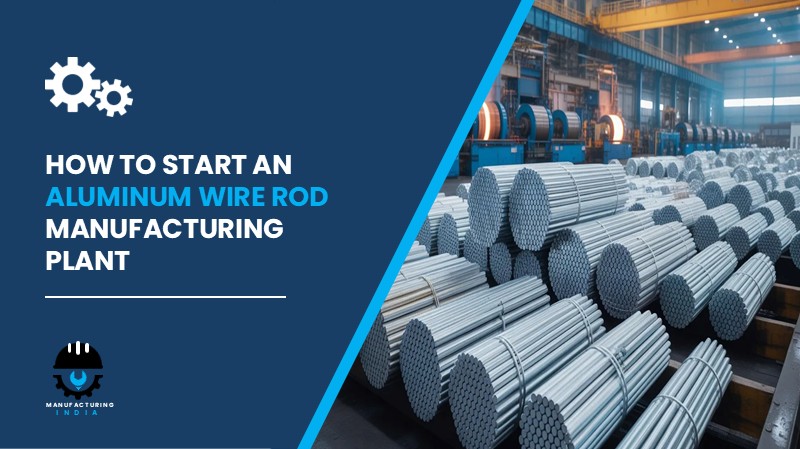
Setting up an aluminum wire rods manufacturing plant in India presents a compelling investment case as the country rapidly emerges as one of the most cost-competitive and high-demand destinations for metal processing and electrical conductor manufacturing. Driven by booming demand from the automotive, electrical power transmission, construction, and electronics industries, aluminum wire rods have become an indispensable part of India’s industrial economy.
“With over 1.4 billion consumers, a rapidly industrializing economy, make in India policy support, and a booming automotive and infrastructure sector, India offers one of the most financially attractive environments for aluminum wire rods manufacturing with gross margins of 10-15% and a break-even window of 3-5 years.”
What is Aluminum Wire Rod?
Aluminum wire rods are long, cylindrical metal products that are extruded from high-quality aluminum to form rods that are generally used as raw material for wire drawing. The rods are made from aluminum alloys to provide the best electrical conductivity, strength, and durability. Aluminum wire rods are mainly used for making wires and cables, automotive components, and other electrical devices. The lightness, corrosion resistance, and high electrical conductivity of the aluminum wire rods make them highly suitable for use in power transmission lines, industrial machinery, and automotive wiring systems.
Globally respected industry standards, including those from the International Electrotechnical Commission (IEC), certify aluminum wire rods for electrical and industrial applications. In India, the growing push for energy-efficient, lightweight, and cost-effective electrical conductors is further accelerating aluminum wire rod demand across both urban and rural electrification projects.
Request for a Sample Report: https://www.imarcgroup.com/aluminum-wire-rods-manufacturing-plant-project-report/requestsample
Cost of Setting Up an Aluminum Wire Rods Manufacturing Plant in India
The aluminum wire rods manufacturing plant cost in India depends on several parameters including production capacity, technology used, plant location, level of automation, and regulatory compliance. Here is a structured breakdown of all major cost components:
1. Capital Expenditure (CapEx)
The total capital investment in an aluminum wire rods manufacturing plant typically covers the following:
Land and Site Development
This includes land acquisition, boundary development, land registration charges, and basic site preparation. Cost varies significantly depending on whether the land is in an industrial estate, Special Economic Zone (SEZ), or a privately purchased plot.
Civil Works and Construction
Building costs cover the main manufacturing shed, utility area, raw material storage, quality control laboratory, administrative block, and worker amenities. Construction specifications depend on plant scale and local compliance norms.
Machinery and Equipment
This is the single largest component of CapEx. Key machinery required for an aluminum wire rods plant includes:
- Billet Preheaters
- Extrusion Presses
- Rolling Mills
- Annealing Furnaces
- Drawing Machines
- Spooling and Coiling Systems
- Quality Control and Testing Equipment
- Packaging Lines
Machinery costs represent the largest share of overall capital expenditure, reflecting the high degree of precision engineering involved in aluminum wire rod production.
Other Capital Costs
These include pre-operative expenses, commissioning charges, import duties (if machinery is sourced internationally), utilities installation, fire safety systems, and Effluent Treatment Plant (ETP) setup.
2. Operational Expenditure (OpEx)
Once the plant is commissioned, the ongoing cost structure is dominated by a few key components:
Raw Material Cost (Aluminum Ingots): 85-90% of Total OpEx
Aluminum ingots are the primary raw material and account for the majority of operating expenses. Additional materials may include alloying elements depending on the wire rod grade and application.
Utility Cost: 5-8% of Total OpEx
Utilities include electricity (heavily consumed by extrusion presses, rolling mills, and annealing furnaces), water (used in cooling systems), and compressed air supply.
Other Operating Costs
The remaining budget covers transportation, packaging, salaries and wages, maintenance, depreciation, taxes, and miscellaneous overhead.
3. Plant Capacity
The proposed manufacturing facility is designed with an annual production capacity of 50,000 MT. This capacity allows the plant to achieve economies of scale while maintaining flexibility to serve multiple end-use segments including automotive, electrical power transmission, construction, and electronics industries.
Smaller pilot setups with limited automation may start at a lower capacity, but profitability significantly improves with higher capacity utilization.
4. Profit Margins and Financial Projections
- Gross Profit Margin: 10-15%
- Net Profit Margin: 4-8%
- Break-Even Period: 3 to 5 years, depending on production scale, market demand, raw material cost management, and sales efficiency.
Financial projections must account for capital investment, operating costs, capacity utilization rates, pricing trends, and demand outlook. A thorough analysis should also include sensitivity analysis, Net Present Value (NPV), Internal Rate of Return (IRR), and Payback Period.
Why Set Up an Aluminum Wire Rods Plant in India?
India presents a uniquely favorable environment for establishing an aluminum wire rods manufacturing plant:
Surging Domestic Demand
India’s automotive, electrical infrastructure, and construction industries are growing rapidly. The sales of electric cars are near to reaching 20 million in 2025, and these account for over a quarter of the total cars sold worldwide, as per the International Energy Agency. This creates massive demand for lightweight aluminum conductors in electric vehicle wiring systems.
Policy and Regulatory Tailwinds
The Government of India’s emphasis on domestic manufacturing under the Make in India initiative, renewable energy targets, rural electrification programs, and smart city infrastructure is creating a policy-friendly environment for efficient aluminum wire rod manufacturers.
Cost-Competitive Manufacturing
India offers competitive land costs, a large pool of trained labor, and a well-established metal processing supply chain, making it one of the most cost-effective locations for aluminum wire rod production in Asia.
Export Opportunities
India-based manufacturers can tap into growing export demand from Southeast Asia, the Middle East, and Africa, where local conductor manufacturing capacity remains limited.
Local Supply Chain Preference
Automotive, power transmission, and electrical equipment companies increasingly prefer sourcing conductors locally to reduce logistics costs, improve responsiveness, and maintain better quality control – a direct opportunity for domestic aluminum wire rod manufacturers.
Manufacturing Process Overview
The aluminum wire rods manufacturing process primarily uses several key technologies:
- Rod Casting – used to produce aluminum billets from molten aluminum
- Extrusion – used to form aluminum rods from billets
- Rolling – used to reduce rod diameter and improve properties
- Wire Drawing – used to convert rods into final wire specifications
- Annealing – used to improve ductility and electrical conductivity
The complete process flow involves raw material sourcing and preparation, billet preheating, extrusion or rolling, annealing heat treatment, wire drawing, quality inspection, and final packaging for dispatch.
Key Applications of Aluminum Wire Rods
Aluminum wire rods manufactured in India serve a wide variety of end-use industries:
- Automotive: Wiring harnesses, battery cables, charging systems, and lightweight electrical components
- Electrical Power Transmission: Overhead conductors, power distribution cables, and grounding conductors
- Electronics: Conductive components, power distribution wiring, and electrical connectors
- Construction: Electrical wiring, power transmission cables, and building electrical systems
- Telecommunication: Overhead conductors, signal transmission cables, and network power lines
Global Market Outlook
The global aluminum wire rods market was valued at USD 17.56 billion in 2025 and is projected to reach USD 20.08 billion by 2034, growing at a CAGR of 1.5% from 2026 to 2034. This sustained growth is driven by urbanization, increasing electrification projects, electric vehicle adoption, renewable energy expansion, and rising demand for lightweight and energy-efficient electrical conductors.
Leading global players in this industry include:
- Alcoa Corporation
- Norsk Hydro
- Vedanta Resources
- BHP Group
- Rio Tinto Group
Timeline to Start an Aluminum Wire Rods Plant
Setting up an aluminum wire rods manufacturing plant from ideation to commissioning typically requires 12 to 18 months. This covers:
- Feasibility study and project report preparation
- Land acquisition and site development
- Regulatory approvals and environmental clearances
- Factory license and fire safety compliance
- Machinery procurement and installation
- Trial production and quality testing
- Commercial production launch
Licenses and Regulatory Requirements
Starting an aluminum wire rods manufacturing unit in India requires several approvals, including:
- Business registration (Proprietorship, LLP, or Private Limited Company)
- Factory License under the Factories Act
- Environmental Clearance from the State Pollution Control Board
- GST Registration
- Fire Safety NOC
- BIS Certification (for specific electrical applications)
- Industry-specific certifications for quality standards
Key Challenges to Consider
Before investing, entrepreneurs should be aware of the common challenges in this business:
- High Capital Requirements: Initial CapEx for machinery and infrastructure is significant, especially for large-scale plants.
- Raw Material Price Volatility: Aluminum ingot prices are linked to global commodity markets and can fluctuate, directly impacting margins.
- Regulatory Compliance: Meeting electrical conductivity standards, quality specifications, and environmental requirements requires continuous investment in quality systems.
- Competition: The market has both organized large players and regional manufacturers, requiring a clear differentiation strategy.
- Skilled Manpower: Operating precision extrusion, rolling, and drawing equipment requires trained technical staff.
Latest Industry Developments
- September 2025: Diamond Power Infrastructure Ltd declared that its subsidiary, DICABS NextGen Special Alloys Private Limited, had begun commercial production at its second fully integrated aluminum rod mill in Vadodara. The new unit, with an installed capacity of 2,500 MT per month (30,000 MT per annum), is dedicated to manufacturing AL59 Wire Rods, advanced aluminum-based alloys designed for high-efficiency power transmission conductors.
- June 2025: Vedanta Aluminium announced that its unit, Bharat Aluminium Company (BALCO) is expanding its wire rod production capacity as part of its ongoing overall 1 metric tonnes per annum expansion. The company sees a huge potential for high-quality aluminum wire rods to meet the demand created by India’s rapid growth in digital and industrial infrastructure.
Frequently Asked Questions
The following questions are answered in the report:
- How much does it cost to set up an aluminum wire rods manufacturing plant in India?
- Is aluminum wire rods manufacturing profitable in India in 2026?
- What machinery is required for an aluminum wire rods plant in India?
- What licenses and approvals are required to start an aluminum wire rods plant in India?
- How long does it take to commission an aluminum wire rods manufacturing plant in India?
- What is the best state or location to set up an aluminum wire rods plant in India?
- What government incentives are available for aluminum wire rod manufacturers in India?
- What is the break-even period for an aluminum wire rods plant in India?
- What are the quality and compliance requirements for aluminum wire rods manufacturing in India?
Key Takeaways for Investors
The aluminum wire rods manufacturing industry in India represents a strong and scalable investment opportunity backed by growing domestic demand from automotive, power transmission, and construction sectors, along with supportive government policy. With gross margins of 10-15% and a break-even window of 3-5 years, a well-planned aluminum wire rods manufacturing plant cost in India remains competitive and financially viable across plant capacities.
How IMARC Can Help?
IMARC Group is a global management consulting firm that helps the world’s most ambitious changemakers to create a lasting impact. The company provides a comprehensive suite of market entry and expansion services. IMARC offerings include thorough market assessment, feasibility studies, company incorporation assistance, factory setup support, regulatory approvals and licensing navigation, branding, marketing and sales strategies, competitive landscape and benchmarking analyses, pricing and cost research, and procurement research.
About the Author