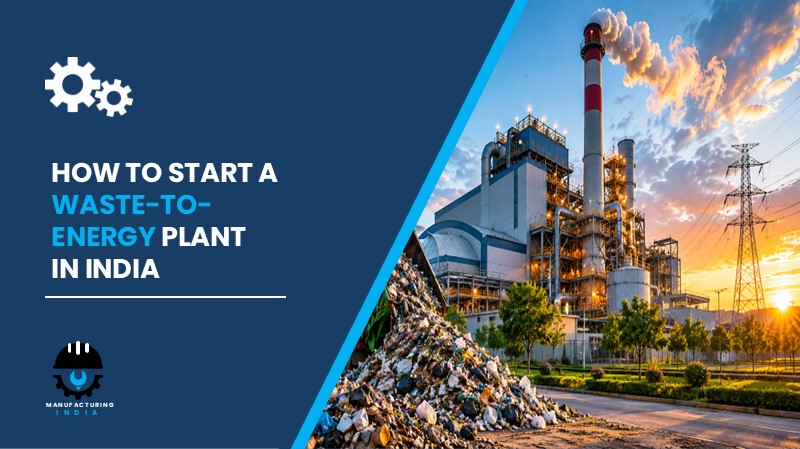
Setting up a waste-to-energy plant in India presents a compelling investment case driven by the nation’s rapidly expanding urban waste volumes, the urgent need for sustainable power generation, and the growing industrial demand for alternative energy. India’s power generation sector, waste management ecosystem, and industrial base — encompassing paper, cement, and textile industries — are the primary demand drivers for waste-to-energy output. As municipal solid waste continues to accumulate at an unprecedented pace in Indian cities, converting this waste stream into commercially viable electricity, heat, and biofuels has become not just environmentally necessary but financially attractive for forward-looking investors.
India’s strategic advantages for establishing a waste-to-energy plant are compelling across multiple dimensions. The country’s rapid urbanisation, expanding infrastructure footprint, and the Central Government’s Make in India initiative together create a favourable policy and market environment. States such as Gujarat, Maharashtra, and Karnataka have emerged as active manufacturing destinations, with Karnataka itself recently witnessing a major INR 100 crore waste-to-energy investment at Koppal in July 2025. With competitive land and labour costs, proximity to large urban waste generators, and supportive renewable energy regulations, India is strategically positioned as one of the most viable global destinations for this production.
India’s waste-to-energy sector sits at the intersection of two urgent national priorities — waste management and clean energy generation. With gross profit margins of 25–40% and a global market projected to reach USD 76.30 billion by 2034, establishing a waste-to-energy manufacturing plant in India offers robust financial returns, strong policy tailwinds under Make in India, and sustainable demand from power generation, industrial, and residential sectors — making break-even timelines commercially credible across a wide range of plant capacities.
What is Waste-to-Energy?
Waste-to-energy can be defined as the utilisation of municipal solid waste to produce various forms of energy, such as electricity, heat, or biofuels. This is achieved through various processes, including incineration, gasification, pyrolysis, or anaerobic digestion. The core objective of the process is dual in nature: waste reduction and energy production. The method entails the burning of chemicals and processing of waste materials to produce energy, thereby providing a sustainable alternative to traditional fossil fuel-based energy sources. Waste-to-energy methods are regarded as environmentally sustainable when proper emission control and efficient energy recovery methods are utilised throughout the production cycle.
The production relies on four established conversion technologies — incineration, gasification, pyrolysis, and anaerobic digestion — each suited to different waste streams and energy output requirements. End-use industries served by the facility include power generation, waste management, industrial consumers, and the residential and commercial sector, making the investment relevant to a broad and diversified demand base across India’s economy.
Cost of Setting Up a Waste-to-Energy Plant in India
The total cost of establishing a waste-to-energy plant in India depends on several interrelated factors, including plant capacity, technology selection, geographic location, degree of process automation, and adherence to environmental and regulatory compliance standards.
1. Capital Expenditure (CapEx)
The capital investment structure of a waste-to-energy plant covers several major cost heads. Land and site development — including charges for land registration, boundary development, and related infrastructure work — forms a substantial portion of the overall investment. Investors may consider locating the facility within a Special Economic Zone (SEZ) or a designated industrial estate to benefit from fiscal incentives and pre-cleared infrastructure. Civil works and construction costs cover the fabrication of the main processing shed, quality control laboratory, raw material storage areas, effluent handling zones, and the administrative block.
Machinery costs account for the largest portion of the total capital expenditure. Key machinery required includes:
- Incinerators
- Gasification units
- Pyrolysis units
- Anaerobic digesters
- Energy recovery systems
- Emission control systems
- Waste heat recovery boiler (WHRB)
Other capital costs include the installation of an Effluent Treatment Plant (ETP), pre-operative project development expenses, trial run and commissioning charges, and import duties on specialised equipment where applicable.
Request a Sample Report for In-Depth Market Insights: https://www.imarcgroup.com/waste-to-energy-plant-project-report/requestsample
2. Operational Expenditure (OpEx)
The operating cost structure of a waste-to-energy plant is primarily driven by raw material consumption. Municipal solid waste (MSW), the core feedstock, accounts for approximately 20–30% of total operating expenses, along with auxiliary fuel where required. Establishing long-term supplier contracts with urban local bodies and industrial waste generators is advisable to stabilise feedstock pricing and ensure uninterrupted supply. Utility costs – covering electricity, water, and steam – constitute approximately 15–25% of OpEx, reflecting the energy-intensive nature of conversion and emission control processes.
Other ongoing operating costs include transportation of incoming waste and outgoing energy products, packaging, staff salaries and wages, equipment maintenance, depreciation on plant and machinery, and applicable taxes. By the fifth year of operations, the total operational cost is expected to increase substantially due to factors such as inflation, market fluctuations, potential rises in the cost of key materials, supply chain disruptions, and shifts in broader economic conditions.
3. Plant Capacity
The proposed facility is designed with an annual production capacity ranging between 100–1,000 TPD (tonnes per day), enabling economies of scale while maintaining operational flexibility. Capacity can be customised per investor requirements, depending on the volume of available waste feedstock and the target energy output. Profitability improves meaningfully with higher capacity utilisation, as fixed costs are spread across a larger volume of processed waste and energy generated.
4. Profit Margins and Financial Projections
The waste-to-energy plant demonstrates healthy profitability potential under normal operating conditions. Gross profit margins typically range between 25–40%, supported by stable demand across the power generation, industrial, and waste management sectors. Net profit margins fall in the range of 10–25%, making the investment financially viable across multiple capacity configurations. Comprehensive financial projections — covering NPV, IRR, payback period, liquidity analysis, and sensitivity analysis — are detailed in the full feasibility report, providing investors with a complete view of the plant’s long-term sustainability.
Why Set Up a Waste-to-Energy Plant in India?
Increasing Urban Waste Generation. According to the World Bank, global municipal solid waste production is approximately 2.01 billion tons per annum and is expected to reach 3.40 billion tons by 2050. India, as one of the world’s most populous and rapidly urbanising nations, contributes significantly to this volume, creating a large and reliable feedstock base for waste-to-energy operators positioned near metropolitan and Tier-2 cities.
Dual Environmental and Energy Benefits. Waste-to-energy addresses two critical national challenges simultaneously — sustainable waste disposal and clean energy generation. The process minimises the volume of waste directed to landfills and reduces reliance on fossil fuels, directly supporting India’s renewable energy targets and greenhouse gas emission reduction commitments.
Policy and Regulatory Tailwinds. Governments are increasingly mandating waste reduction, recycling, and the production of renewable energy, with tax credits, subsidies, and emissions trading mechanisms providing financial incentives to investors. India’s Make in India initiative and expanding clean energy policy framework further improve the investment climate for waste-to-energy manufacturing units across multiple states.
Cost-Competitive Manufacturing Environment. India offers significant cost advantages in land acquisition, civil construction, and semi-skilled and skilled labour relative to comparable production economies. Proximity to large urban waste generators in states such as Gujarat, Maharashtra, and Karnataka further reduces feedstock transportation costs and improves plant-level economics.
Active Industry Investment. In July 2025, Vanya Steels invested INR 100 crore to set up a 10 MW waste-to-energy plant at its Koppal facility in Karnataka, India, using waste heat recovery boiler (WHRB) technology to convert industrial waste heat into clean electricity. This real-world investment signals growing private-sector confidence in the financial viability of waste-to-energy operations in India.
Energy Diversification and Baseload Stability. Unlike solar or wind energy, waste-to-energy is not affected by weather conditions, making it a stable source of baseload power. This characteristic makes it particularly valuable within India’s evolving energy grid, where reliable non-intermittent renewable energy sources are in strong demand.
Manufacturing Process – Step by Step
The waste-to-energy manufacturing process uses collection and sorting of waste, energy conversion, energy generation, and emission control as the primary production method. Each stage involves dedicated equipment and quality checks to ensure safe and efficient operation.
- Collection and Sorting of Waste: Municipal solid waste and auxiliary fuel (where required) are collected from designated sources and sorted to remove non-combustible materials, improving the calorific value of the feedstock entering the conversion system.
- Energy Conversion — Incineration: Sorted waste is fed into incinerators, where controlled combustion generates high-temperature heat used to produce steam.
- Energy Conversion — Gasification: Gasification units convert organic waste into syngas (a combustible gas mixture) under high temperature and limited oxygen conditions, enabling cleaner energy generation.
- Energy Conversion — Pyrolysis: Pyrolysis units thermally decompose organic waste in the absence of oxygen, producing bio-oil, syngas, and biochar for varied energy applications.
- Energy Conversion — Anaerobic Digestion: Anaerobic digesters break down organic waste biologically to produce biogas, which is used for electricity generation or converted into biofuels.
- Energy Generation: Steam or syngas produced through conversion technologies drives turbines and energy recovery systems to generate electricity or thermal energy for grid supply or industrial use.
- Emission Control: Emission control systems treat flue gases and other by-products before release, ensuring compliance with environmental standards and minimising atmospheric pollution.
- Dispatch to End-Use Industries: Generated electricity is supplied to the power grid or directly to industrial consumers, while biofuels and industrial steam are dispatched to paper, cement, textile, and other industrial end-users.
Key Applications
The waste-to-energy facility serves a diverse range of industries and energy demand segments across India’s economy.
- Power Generation: Waste-to-energy plants are connected to the power grid, where electricity is produced using steam turbines driven by heat from combustion of waste, decreasing reliance on coal and fossil fuels.
- Waste Management: The facility serves as an integral component in reducing the amount of waste directed to landfills, supporting zero-waste municipal strategies and sustainable urban development.
- Industrial Applications: Industries such as paper, cement, and textiles can use energy derived from waste as a cost-effective alternative source of steam or heat for their operations.
- Biofuels Production: Organic waste is converted into biofuels through anaerobic digestion and pyrolysis processes, serving as renewable energy sources for transportation and other energy applications.
Leading Manufacturers
The global waste-to-energy market is served by several multinational companies with extensive production capacities and diverse application portfolios across power generation, waste management, industrial, and residential and commercial sectors. Key players include:
- Veolia
- Huawei Enterprise
- China Everbright Limited
- Wheelabrator Technologies Inc.
- SUEZ
- Covanta
Timeline to Start the Plant
- Feasibility study and project report preparation
- Land acquisition and site development
- Regulatory approvals and environmental clearances
- Factory licence and fire safety compliance
- Machinery procurement and installation
- Raw material supplier agreements and supply chain setup
- Trial production and quality testing
- Commercial production launch
Licences and Regulatory Requirements
Starting a waste-to-energy manufacturing unit in India requires several approvals:
- Business registration (Proprietorship, LLP, or Pvt Ltd)
- Factory Licence under the Factories Act
- Environmental Clearance from State Pollution Control Board
- GST Registration
- Fire Safety NOC
- Hazardous and chemical waste handling compliance (relevant given MSW and auxiliary fuel inputs and emission by-products)
- Effluent Treatment Plant (ETP) operational clearance
- Occupational Health and Safety compliance
Key Challenges to Consider
High Capital Requirements. Establishing a waste-to-energy manufacturing plant demands substantial upfront capital investment across land, civil construction, and high-specification machinery including incinerators, gasification units, and emission control systems, which can be a barrier for smaller investors.
Raw Material Price Volatility. While municipal solid waste is an abundant feedstock, the composition and calorific value of MSW can vary significantly, and the cost and availability of auxiliary fuel inputs may fluctuate with market conditions, affecting plant-level OpEx predictability.
Regulatory Compliance. Waste-to-energy operations are subject to strict environmental and emission control regulations. Maintaining ongoing compliance with the State Pollution Control Board, ETP requirements, and hazardous waste handling standards requires continuous investment in monitoring systems and qualified personnel.
Technology and Innovation Pressure. The sector is evolving rapidly, with new conversion technologies — including advanced gasification and pyrolysis configurations — continually entering the market. Operators must stay current with technological developments to maintain efficiency and cost competitiveness.
Competition from Global Players. The presence of established multinationals such as Veolia, SUEZ, Covanta, Wheelabrator Technologies Inc., China Everbright Limited, and Huawei Enterprise means that new entrants must differentiate through location advantage, operational efficiency, or specialised feedstock contracts.
Skilled Manpower. Operating advanced conversion technologies, energy recovery systems, and emission control infrastructure requires trained engineers, plant operators, and quality control specialists, who may be in limited supply in certain manufacturing states.
Frequently Asked Questions
1. How much does it cost to set up a waste-to-energy plant in India?
The total setup cost depends on plant capacity (100–1,000 TPD), technology selection (incineration, gasification, pyrolysis, or anaerobic digestion), location, and automation level. A detailed breakdown of CapEx and OpEx is available in the full project report.
2. Is waste-to-energy profitable in India in 2026?
Yes. Gross profit margins typically range between 25–40% and net profit margins between 10–25%, making waste-to-energy manufacturing financially viable across plant capacity configurations in India’s current market environment.
3. What machinery is required for a waste-to-energy plant in India?
Essential equipment includes incinerators, gasification units, pyrolysis units, anaerobic digesters, energy recovery systems, emission control systems, and waste heat recovery boilers (WHRB).
4. What licences and approvals are required to start a waste-to-energy plant in India?
Key approvals include business registration, a Factory Licence under the Factories Act, Environmental Clearance from the State Pollution Control Board, GST Registration, Fire Safety NOC, ETP clearance, hazardous/chemical compliance, and Occupational Health and Safety certification.
5. What raw materials are needed for waste-to-energy manufacturing?
The primary raw material is municipal solid waste (MSW), along with auxiliary fuel where required by the specific conversion technology employed.
6. What are the environmental compliance requirements for a waste-to-energy plant in India?
Operators must comply with emission standards set by the State Pollution Control Board, operate a certified Effluent Treatment Plant, manage hazardous waste per applicable regulations, and install advanced monitoring systems to detect process deviations.
7. What is the best location to set up a waste-to-energy plant in India?
Ideal locations combine proximity to high-volume urban MSW sources, access to reliable transportation and utility infrastructure, and favourable state-level industrial policy. Karnataka, Gujarat, and Maharashtra are among the most active manufacturing destinations for energy sector investments in India.
8. What is the break-even period for this type of plant in India?
The break-even period depends on plant capacity, feedstock contract terms, energy off-take agreements, and financing structure. Detailed payback period and NPV analysis are covered in the full project feasibility report.
9. What government incentives are available for manufacturers in India?
Incentives include tax credits, subsidies, and emissions trading provisions under India’s renewable energy and clean energy policy framework, as well as state-level industrial incentives under Make in India and sector-specific schemes for waste management and power generation.
Key Takeaways for Investors
A waste-to-energy manufacturing plant in India represents a strategically well-timed investment opportunity, underpinned by strong and growing demand from power generation, waste management, industrial, and residential and commercial sectors. The plant demonstrates financial viability across a capacity range of 100–1,000 TPD, with gross profit margins of 25–40% and net profit margins of 10–25% providing a credible return profile across multiple financing scenarios. The global waste-to-energy market, valued at USD 48.77 billion in 2025, is projected to reach USD 76.30 billion by 2034 at a CAGR of 5.1%, confirming the long-term commercial durability of this investment category. With urban waste volumes globally set to grow from 2.01 billion to 3.40 billion tons per annum by 2050 according to the World Bank, demand for sustainable waste conversion infrastructure in India will only intensify — making this an investment supported by both current market fundamentals and durable structural tailwinds.
About the Author